We remain fully operational. Our teams are working around the clock to ensure your deliveries continue safely.

Descargar la aplicación


Servicios al cliente
Sobre nosotros
Copyright © 2025 Desertcart Holdings Limited
Descargar la aplicación
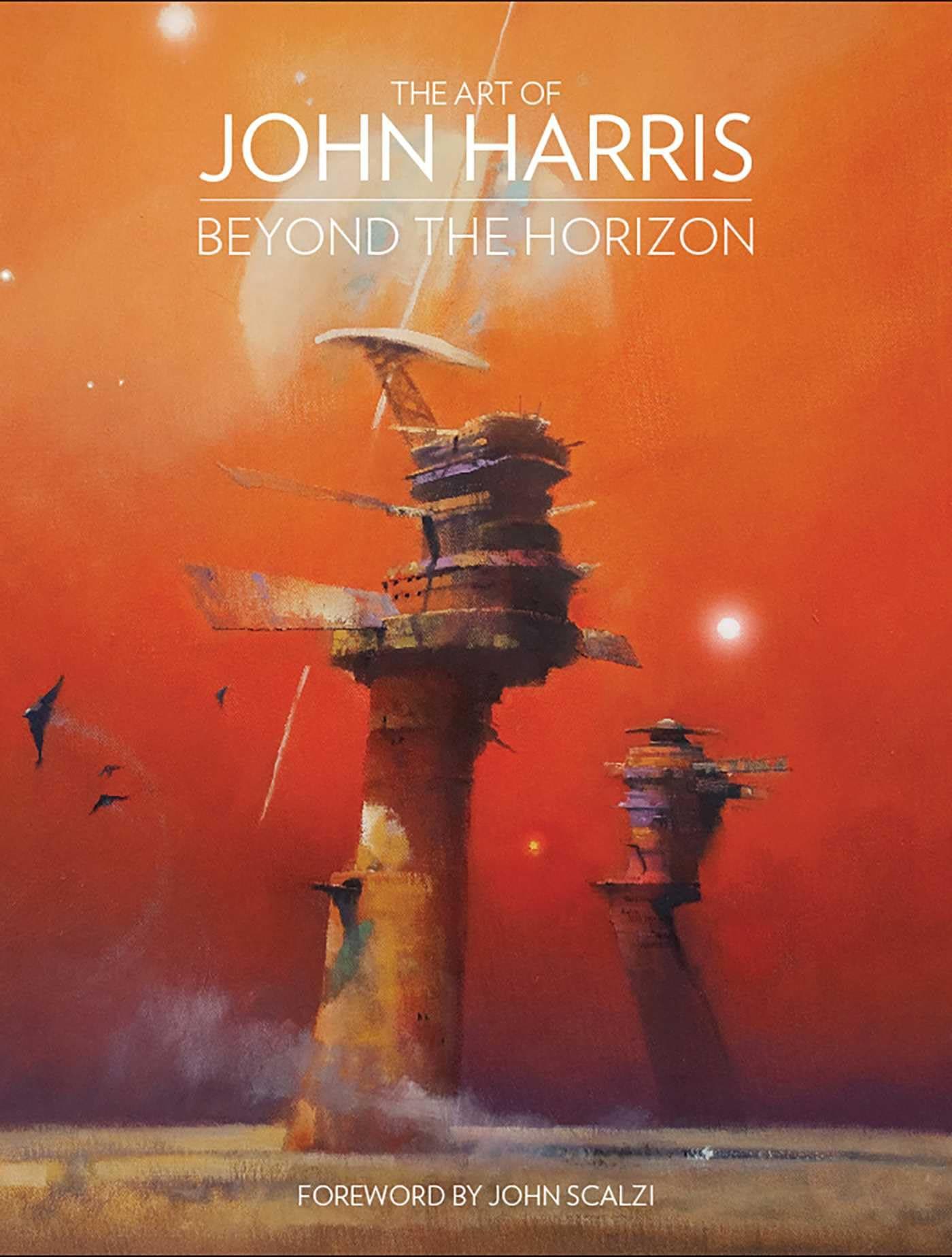
The Art of John Harris: Beyond the Horizon [Harris, John] on desertcart.com. *FREE* shipping on qualifying offers. The Art of John Harris: Beyond the Horizon Review: Iconic artwork from one of science fiction's premiere illustrators - John Harris and his iconic paintings have been a part of the science fiction community for nearly four decades. He brings an impressionistic sensibility to his bold, massive space landscapes that make each piece stand out as a distinct work of art. Generations of readers have discovered his work because of the science fiction novels graced with his creations. Harris continues to be a prolific creator whose work resides on the covers of some of the biggest names in SF literature. This new retrospective is a welcome body of work and should be added to your collection the moment it is released. John Scalzi provides the foreword to this collection of art, which is fitting given the volume of work Harris has created for John Scalzi’s Old Man’s War series over the past decade, including 13 original works to go along with each chapter, released weekly in 2013, for The Human Division. In it, Scalzi touches on the inspirational power of works of art, giving the example of how John Harris’ painting chosen for the cover of The Ghost Brigade, stirred his imagination at a time when he had hit a roadblock in the execution of that very novel. John Scalzi states, “John’s artwork, like that of Richard Powers or Frank Kelly Freas, is iconic, and also Bookstore Iconic–which is to say you can see it from across a bookstore, and when you see it, you know what you’re going to get in the pages of that book: A damn fine read that takes you places you can’t go any other way.”. I find that an apt description because, unlike some cover artists, John Harris is not creating a painting to illustrate specific scenes in a novel but is instead creating a work whose scope and scale evokes some sense of expectation and emotion. His paintings inspire daydreaming about the places they depict. The title of John Harris’ first art book is Mass, and it is a fitting title given that so much his work centers on great hulking ships, buildings, and planets and how these massive elements exist in relation to one another. In this new collection, Harris talks about how scientific concepts of mass and gravity and spatial relationships are important to him in his work and yet he will at times bend, or violate, those concepts in one way in order to promote them in another. The Art of John Harris: Beyond the Horizon covers some thirty-five plus years of his career and showcases not only paintings used as cover images for a variety of science fiction novels, but also works he has created over the years for an ongoing story in images that he regularly adds to, as well as paintings inspired by NASA images of Earth from space and other non-book-related works. While the look Harris achieves is accurately defined as “iconic”, this book shows the full range of his work, including some of the early roughs and pastel sketches that provide the foundation for his finished paintings. This glimpse at the process is insightful, especially as those roughs are also small works of art in and of themselves. I became aware of the work of John Harris at an early age and have been a fan from the first time I laid eyes on one of his book covers. His work for authors like Ben Bova, Orson Scott Card, John Scalzi and Jack McDevitt cover many years of creative effort and he continues to provide cover work for these authors today. I personally value cover art consistency across book series and I give kudos to the book companies and their creative directors who continue to employ John Harris to create beautiful art. When I think back to what attracted me to science fiction as a child, and what continues to spark my interest today, it is the sheer enormity and vastness of space. Our solar system is enormous, and that is but a speck of dust in comparison to the greater universe. John Harris captures that sense of the awesomeness of space and does so with rich, sometimes strikingly colorful images. Titan Books has created a wonderful tribute to John Harris’ career to date; it is a lovely volume worth adding to any collection of art books. The release of the book is timely given that John Harris is on the shortlist for Best Professional Artist at this year’s Hugo Awards in London. The May 27th release provides a gorgeous visual reminder of his talent and several of his eligible works from last year are included in this volume. As John Harris has strongly influenced my imagination over the years, I am pleased to see his work presented in a high quality volume at a price that everyone can enjoy. Review: This is the collection I have been waiting for. - I am not an artist. I’m an English teacher, and I love science fiction, and I love the art of John Harris - I could stare at his paintings for hours. Imagine my delight then, when last fall, my students and I were given the opportunity to interview John Harris about his career as a science fiction artist. For an hour we picked his brain about his upbringing, his inspiration, his techniques, and his relationships with publishers and writers. Harris told us about growing up in an English countryside littered with the rotting and rusting artifacts of World War II; he told us about how he draws on nature to create images; and he talked at length with us about two pieces in particular, Quiet Night and Cleaning the Ducts (both of which receive full spreads in this book). The conversation was fascinating and insightful, and, of course, left us all wanting more. Would you like more? Then I give you The Art of John Harris: Beyond the Horizon. While it’s true that a lot of Harris’s artwork can be seen on the internet, or indeed by walking up and down the SF/F aisles at Barnes and Noble, this beautiful and sturdy book provides a wealth of both his most popular artwork, and paintings that I have never seen before. In addition to the finished paintings, Harris has also included numerous pastels and sketches. These were my favorites, as, to my brain, the small colored sketches crackle with life and energy. But what this book provides, most importantly, is context. Harris explains over several pages that much of the work in this book is of a single world and culture, created in his head, just so he could paint it. As he explains, he imagines himself on a donkey, traveling into a world that humans have not seen before, and, rather than having the luxury of something as mundane as a camera, he paints what he sees as though he were going to return to humanity to show us for the first time exotic peoples, locations, architecture, cultures, and myths that inhabit the dark ares on the map. I’m having a hard time doing this concept justice - it seems corny when I read my explanation, but trust me, the depth of knowledge that Harris has created to pull from rivals the imagination of any science fiction writer. Almost every reader of science fiction knows Harris’s art and style, but, tragically, few readers know his name. Hopefully, this book will start to change that. The Art of John Harris: Beyond the Horizon is 150 pages of stunning paintings, sketches, and reflections pulled from over 40 years of work. Each vision that comes from the brain of John Harris is a masterpiece, and each image in this book personifies the awe, the grandeur and the mystery that made us all fall in love with science fiction in the first place.
| Best Sellers Rank | #115,127 in Books ( See Top 100 in Books ) #134 in Art of Film & Video #387 in Pop Culture Art #716 in Graphic Design (Books) |
| Customer Reviews | 4.8 out of 5 stars 753 Reviews |
C**.
Iconic artwork from one of science fiction's premiere illustrators
John Harris and his iconic paintings have been a part of the science fiction community for nearly four decades. He brings an impressionistic sensibility to his bold, massive space landscapes that make each piece stand out as a distinct work of art. Generations of readers have discovered his work because of the science fiction novels graced with his creations. Harris continues to be a prolific creator whose work resides on the covers of some of the biggest names in SF literature. This new retrospective is a welcome body of work and should be added to your collection the moment it is released. John Scalzi provides the foreword to this collection of art, which is fitting given the volume of work Harris has created for John Scalzi’s Old Man’s War series over the past decade, including 13 original works to go along with each chapter, released weekly in 2013, for The Human Division. In it, Scalzi touches on the inspirational power of works of art, giving the example of how John Harris’ painting chosen for the cover of The Ghost Brigade, stirred his imagination at a time when he had hit a roadblock in the execution of that very novel. John Scalzi states, “John’s artwork, like that of Richard Powers or Frank Kelly Freas, is iconic, and also Bookstore Iconic–which is to say you can see it from across a bookstore, and when you see it, you know what you’re going to get in the pages of that book: A damn fine read that takes you places you can’t go any other way.”. I find that an apt description because, unlike some cover artists, John Harris is not creating a painting to illustrate specific scenes in a novel but is instead creating a work whose scope and scale evokes some sense of expectation and emotion. His paintings inspire daydreaming about the places they depict. The title of John Harris’ first art book is Mass, and it is a fitting title given that so much his work centers on great hulking ships, buildings, and planets and how these massive elements exist in relation to one another. In this new collection, Harris talks about how scientific concepts of mass and gravity and spatial relationships are important to him in his work and yet he will at times bend, or violate, those concepts in one way in order to promote them in another. The Art of John Harris: Beyond the Horizon covers some thirty-five plus years of his career and showcases not only paintings used as cover images for a variety of science fiction novels, but also works he has created over the years for an ongoing story in images that he regularly adds to, as well as paintings inspired by NASA images of Earth from space and other non-book-related works. While the look Harris achieves is accurately defined as “iconic”, this book shows the full range of his work, including some of the early roughs and pastel sketches that provide the foundation for his finished paintings. This glimpse at the process is insightful, especially as those roughs are also small works of art in and of themselves. I became aware of the work of John Harris at an early age and have been a fan from the first time I laid eyes on one of his book covers. His work for authors like Ben Bova, Orson Scott Card, John Scalzi and Jack McDevitt cover many years of creative effort and he continues to provide cover work for these authors today. I personally value cover art consistency across book series and I give kudos to the book companies and their creative directors who continue to employ John Harris to create beautiful art. When I think back to what attracted me to science fiction as a child, and what continues to spark my interest today, it is the sheer enormity and vastness of space. Our solar system is enormous, and that is but a speck of dust in comparison to the greater universe. John Harris captures that sense of the awesomeness of space and does so with rich, sometimes strikingly colorful images. Titan Books has created a wonderful tribute to John Harris’ career to date; it is a lovely volume worth adding to any collection of art books. The release of the book is timely given that John Harris is on the shortlist for Best Professional Artist at this year’s Hugo Awards in London. The May 27th release provides a gorgeous visual reminder of his talent and several of his eligible works from last year are included in this volume. As John Harris has strongly influenced my imagination over the years, I am pleased to see his work presented in a high quality volume at a price that everyone can enjoy.
N**H
This is the collection I have been waiting for.
I am not an artist. I’m an English teacher, and I love science fiction, and I love the art of John Harris - I could stare at his paintings for hours. Imagine my delight then, when last fall, my students and I were given the opportunity to interview John Harris about his career as a science fiction artist. For an hour we picked his brain about his upbringing, his inspiration, his techniques, and his relationships with publishers and writers. Harris told us about growing up in an English countryside littered with the rotting and rusting artifacts of World War II; he told us about how he draws on nature to create images; and he talked at length with us about two pieces in particular, Quiet Night and Cleaning the Ducts (both of which receive full spreads in this book). The conversation was fascinating and insightful, and, of course, left us all wanting more. Would you like more? Then I give you The Art of John Harris: Beyond the Horizon. While it’s true that a lot of Harris’s artwork can be seen on the internet, or indeed by walking up and down the SF/F aisles at Barnes and Noble, this beautiful and sturdy book provides a wealth of both his most popular artwork, and paintings that I have never seen before. In addition to the finished paintings, Harris has also included numerous pastels and sketches. These were my favorites, as, to my brain, the small colored sketches crackle with life and energy. But what this book provides, most importantly, is context. Harris explains over several pages that much of the work in this book is of a single world and culture, created in his head, just so he could paint it. As he explains, he imagines himself on a donkey, traveling into a world that humans have not seen before, and, rather than having the luxury of something as mundane as a camera, he paints what he sees as though he were going to return to humanity to show us for the first time exotic peoples, locations, architecture, cultures, and myths that inhabit the dark ares on the map. I’m having a hard time doing this concept justice - it seems corny when I read my explanation, but trust me, the depth of knowledge that Harris has created to pull from rivals the imagination of any science fiction writer. Almost every reader of science fiction knows Harris’s art and style, but, tragically, few readers know his name. Hopefully, this book will start to change that. The Art of John Harris: Beyond the Horizon is 150 pages of stunning paintings, sketches, and reflections pulled from over 40 years of work. Each vision that comes from the brain of John Harris is a masterpiece, and each image in this book personifies the awe, the grandeur and the mystery that made us all fall in love with science fiction in the first place.
R**R
As close to perfect as it gets for me
John Harris is not an artist who needs to lecture us about his work. If you look the communication between his work and the viewer is crystal clear. He paints a future, not the future, but a possible one. One where humanity is not yet freed from the baser instincts that drive the species but sometimes a step closer to what we can be. Future landscapes that are inspired by nature itself are hopeful but not free of our pitfalls. Other images of huge blocks of concrete masses that house us can still inspire greatness if not our obvious hubris and defensive tendencies (maybe we have good reason at this point in time portrayed to be need of that stolid security). The spaceships set against the outer void can be as massive as small cities or as light as fireflies, pinpoint flashes of light against the vast blackness between galaxies. John Harris work reminds us to be hopeful of our future but also not to imagine all will be bliss. It's a reflection of humanity's hopes and our shortcomings. That doesn't mean we cannot be in awe of where we've been and especially of where we can go. The reproductions are very well done. No garish extremes. Textures and hues shape the images that become scenes and settings being revealed through the windows of our eyes and our minds. We also get the treat of examining his more personal efforts as well, beautiful studies of just colors, textures and shapes. John does a rare thing and outdoes his previous collection, MASS. This is worthy of study and especially appreciation by both SF readers and anyone looking for art that's grounded but still imaginative enough to carry them away to what could be, might be. One particular aspect of this artist's work is the way it feels pre-established, as if we're looking at a large slice of what already is. These are not flights of fancy but slices of existing points in time that we're treated to, as a visitor, yearning to step through, to get a better grasp on what we're seeing. There's what we see and what we're not knowing about it that gives the viewer that sense of having a personal relationship with what is being revealed, but there's still a lot to be known. That edge of reason keeps the eyes roaming and often fixed on things as if in studying it we'll learn more. Brilliant.
K**S
Excellent art collection
John Harris was the cover artist for one of the first science fiction books I ever bought new; one of the old "Best of Trek" anthologies. I was delighted to find that painting reproduced here, in larger size and without the wear and tear of years. Due to its subject matter, it may be dismissed by those who are more interested in "traditional" subjects, those that prefer another variation on "The Bishops Garden", or those who collect the factory-produced pastoralism of Thomas Kinkaid. Harris's art, like science fiction itself, looks not to a fossilized past, but rather imagines terrors and wonders of what may come. The works in this book cover a range of years and covers for different authors, and reflect changes in Harris's own technique. There is a conspicuous lack of photoshop-ery, the originals being frequently oil on canvas and have a quality that CGI cannot yet seem to match. The book itself is oversized, the paper heavy and the images are usually full page. The images are of a style that is--to my mind--associated with the likes of Chris Foss, John Berkey, and Robert McCall. It is "painterly" in that the scenes are by no means photo-realistic, but every image can--if you take the time to examine it--pull you in with its depth and layers of detail, of stories to be told (regardless of whatever book they might have been commissioned for), of simple wide-eyed wonder. I don't often find or am so emotionally moved by imagery such as is in this collection, and very happy to have it near to hand.
T**L
Beautiful art, but book was damaged
I bought this as a gift and was not disappointed by the quality of the book! The art is, of course, stunning, the pages and cover are good quality as well. Th dust jacket of my book was damaged (see picture) and it doesn't look like the damage happened while it was being shipped. Unfortunately a replacement wouldn’t be here on time, otherwise I’d exchange it. The cover beneath the dust jacket is gorgeous (and undamaged) though!
P**A
Beautiful. Breathtaking.
John Harris has been painting sci-fi art since the mid 1970s. His works are absolutely beautiful. I've seen a lot of sci-fi artbooks and nothing quite evokes the same kind of magical feeling that of a John Harris painting. I guess that's it, they have a very painterly feel to them as compared to digital paintings commonly seen nowadays. By painterly, I mean his masterly use of those hard and invisible edges. There are details where needed, and the less important bits are merely suggested. There's a very textural feel as he uses canvas, and it's wonderful to see how the colours work against the painting surface. Looking at his paintings, it's as if John Harris is painting plein air, or in this case plein space, in outer space from some space station or studio. The colours, design, composition are wonderful. I feel that the sense of scale is being conveyed very well. And the large size of the book makes the artworks look more majestic as well. The book's a 160-page hardcover. In addition to the sci-fi art, there's a section with paintings featuring an exotic location almost inspired by Asian architecture and his own imagination. The commentary is basically John Harris talking about his thought process, and some background to the worlds he paintings. This is a fantastic book. Highly recommended to sci-fi art fans. (See more pictures of the book on my blog. Just visit my Amazon profile for the link.)
P**S
Lavish images in an oversized book, all in glorious color - will take you places you can't go any other way.
The Art of John Harris - Beyond the Horizon - ( 0684 - Art - February 13, 2016) In 1959 I passed a newsstand window display every day on my paper route. Prominently displayed were that's months latest science fiction magazines. I was mesmerized by the cover artwork. Eventually I purchased some of those magazines and a life long interest in science and science-fiction was nurtured. What this has to do with "The Art of John Harris - Beyond the Horizon", was motivated by the foreword to this book by John Scalzi: "John's artwork is bookstore iconic - which is to say you can see it from across a bookstore, and when you see it you know what your going to get in the pages of that book: a damn fine read that takes you places you can't go any other way. People forget that cover art isn't just good art, it's also in a practical sense, a form of advertisement. It's also, in a very real way, a promise." Most of the images in this lavish, oversized book, all in glorious color I may add, were commissioned as cover art for science-fiction books. As a "promise" per John Scalzi the reproductions works for me - and I'm mesmerized again. Highly recommended.
S**S
High quality book
I got the hardcover book. The pages are thick cut and the book itself is of good quality. It will last awhile and it looks good enough for a coffee table. There is plenty of narration and description for the images in these books.
Trustpilot
Hace 2 semanas
Hace 1 mes