We remain fully operational. Our teams are working around the clock to ensure your deliveries continue safely.
Descargar la aplicación


Servicios al cliente
Sobre nosotros
Copyright © 2025 Desertcart Holdings Limited
Descargar la aplicación
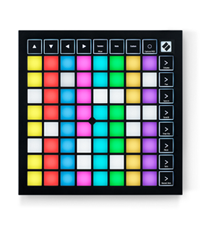
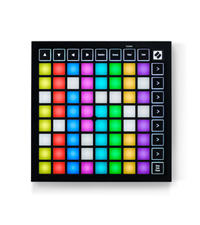
![Novation Launchpad Mini [MK3] — Portable MIDI 64-Pad, USB Grid Controller for Ableton Live and Logic Pro Performances](https://m.media-amazon.com/images/I/71Hw3GcriAL.jpg)
🎹 Elevate your beats anywhere with Launchpad Mini MK3 — the ultimate pocket-sized performance powerhouse!
The Launchpad Mini MK3 is a compact, USB-C powered 64-pad RGB MIDI grid controller designed for seamless Ableton Live and Logic Pro integration. Featuring 8 customizable MIDI modes, tactile Stop/Solo/Mute controls, and a lightweight, durable stainless steel build, it empowers millennial professionals to perform, produce, and customize their music workflow on the go with unmatched visual feedback and cross-DAW compatibility.




| ASIN | B07WNSHR3V |
| Batteries | 1 AAA batteries required. |
| Best Sellers Rank | #3,782 in Musical Instruments ( See Top 100 in Musical Instruments ) #18 in Computer Recording MIDI Controllers |
| Color Name | Black |
| Compatible Devices | PC |
| Connector Type | USB-C |
| Customer Reviews | 4.6 4.6 out of 5 stars (4,179) |
| Date First Available | September 20, 2019 |
| Hardware Interface | USB Type C |
| Hardware Platform | Mac/Windows |
| Instrument Key | Any |
| Is Discontinued By Manufacturer | No |
| Item Weight | 14.1 ounces |
| Item model number | AMS-LAUNCHPAD-MINI-MK3 |
| Material Type | Stainless Steel |
| Musical Style | Electronic |
| Number of Keyboard Keys | 64 |
| Operating System | Mac OS, Windows OS |
| Product Dimensions | 7.1 x 7.1 x 0.56 inches |
| Supported Software | Ableton, Logic, HUI |
P**N
It works in MPC 2.x, including accessing all 8 pad banks (64 pads at a time)
I love this controller. Most people are buying this to use in Ableton, but if you're using MPC 2.x as your DAW and want to access more than one pad bank at a time with physical pads, you know there are exceedingly few options out there. This gets the job done almost perfectly (I'll explain the "almost" below). Before that though, to review the controller more generally, outside of APC, I can say that while other people in the reviews seem to have complaints about the velocity pads, I've found them to be fantastic. To be clear, I'm not using the velocity function - I have it set to activate at full level with the lowest trigger threshold (in the controller's velocity settings), and adjust the velocity as necessary in MPC. Compared to the other controllers I own (The Mpk Mini Mk2 and the MPC Touch) though, these are by far the best in terms of fewest double-hits and in terms of missed-hits/consistent response. I can actually get decent finger drumming going on this, whereas with those other controllers, I could only do so for a very loose approximation of what I want to record, and have to adjust the grid after the fact. While there are features designed to work with Ableton exclusively, many of the best features on the LPX are baked into the device itself. First of those is the Scale Mode, a sub-setting in Note Mode, pictured above (Image 1) beside my MPC Touch. You can choose from 1 of 20 scales to enable at a time, decide which key the scale will play in, which key the scale plays in, and whether non-scale notes appear on the pad or not. Purple pads are the root notes, blue are the non-root scale notes, and unlit pads are non-scale notes. In the image above, the Scale Mode is set to display only scale notes, and is in 3-finger Overlap. The Overlap (5) settings decide at which point a given note repeats in the row(s) above it. Simply put, the first setting, Sequential, puts octaves on either side of a row with the scale notes in-between, giving you access to 8 octaves at once. The next 4 modes are a range of 2-Finger to 5-Finger, allowing you to play the scales ascending with 2 to 5 fingers, and allowing access to a range of 2 to 5 octaves at a time. It's not the easiest thing to describe but it's quite intuitive once you get hands-on. Additionally, the first of the factory-installed custom modes (that can be removed/replaced or moved to a different Custom Mode slot) offers a keyboard layout with four octaves at once, pictured above (Image 2). The purple pads are set to C by default, and the L/R Transpose buttons will shift that by a half step at a time. A-G are in-between those in each octave, and the sharps/flats are appropriately placed above those. The Up/Down Octave buttons can be used to shift the octave range displayed. The most important Custom Mode setting for me is the Drum Pad template. You can configure and apply these to correspond to whichever inputs are appropriate in the DAW you're using, and you can use two custom settings so that it essentially works as the controller's Drum Mode designed for Ableton, only on non-Ableton DAWs. Pictured above (Images 3-4) are my two Custom Mode profiles designed to activate pad banks A-D and E-H, respectively. The two groups of 64 pads can be switched between as easily as pressing the corresponding program key on the right side of the controller. At this point, I should mention that if you thought the APC Mini might have some way of working in MPC as a drum pad, I've got bad news for you. It just won't work for four pad banks at a time. It's possible that Akai might update MPC's MIDI Learn function at some point in the future to allow for those mappings, but currently, you can only program the APC Mini (and any other MIDI controller) to access 16 pads (one pad bank) at a time. The Launchkey takes it all out of the DAW's hands with the custom programs, and allows you to bypass all of that noise. You may notice older reviews that mention that there are only 4 custom programs available, but the firmware has been updates since then, and the LPX now allows for 8 custom modes that can be switched between on the fly, regardless of connection. I used one of those modes to map some basic MPC hotkeys, so that I can zoom the grid in and out vertically or horizontally, pan the grid vertically or horizontally, tap tempo, undo/redo, play/playstart, record, over dub, switch tracks forward/back, switch sequences forward/back and switch view modes. It helps a lot to be able to access a lot of those functions without moving over to my computer keyboard or my other controller while recording using the LPX. While I haven't tried it out, you can also apply customer sliders to the pads, and the pads can be set to be sensitive enough that you can run your finger along a row or column like piano keys and activate them all neatly, so I expect they'd actually make for decent slider controls. There are only a couple of minor downsides I can name. For one, it would be nice if it received feedback from non-Ableton DAWs so that corresponding lights on the controller activate when those inputs are being played back in the DAW. If you're particularly interested in Scale Mode, while I love it on the LPX, I noticed the APC Mini had a couple of advantages in that regard, as well as a debatable one. The debatable one is that the scale modes are different between the two devices. It's subjective, and a matter of which scales people find more important to have accessible. If you want the Flamenco Scale, for example, you're out of luck on the LPX. Both devices contain 20 scales though. Where the LPX missed out on an opportunity that the APC Mini takes is that the APC Mini, in the chord settings, allows you to hold down a setting button, activating a marquee across the pads that spell out the function of the setting button being held. With 20 available scales, it's a really huge help to be able to have the labels for all of them within reach. Not just for the Scale Mode, but for any number of the numerous settings on these devices that aren't always easy to recall without a map. The LPX is certainly capable of displaying text. Pictured above (Image 5), you can see that the settings menus use the LEDs to display the name of the menu, and certain settings/mode switches activate marquee-style text. It just can't be used to identify setting buttons though, which means you need to have the manual handy if you want to know what all 20 scales are. It would be nice to be able to alter the colors that display in Note Mode, outside of Custom Mode(s). I'd like to establish a color scheme on it identical to MPC 2/x and my MPC Touch, but that's very minor. It's possible that it can be done in the LPX's Program Mode, but it's a pretty involved process that I don't entirely understand yet, and that doesn't seem to be for the faint of heart. As the name suggests, there is something resembling programming required to use that mode, and most people will find it easier to use the Novation software to customize the LPX for most purposes. A chord mode would be nice as well, seeing as how much of that heavy lifting was already done when the Scale Mode was designed. I can access some chords in MPC, but they won't activate if I play the corresponding notes on the LPX. It's good in its own way, as it allows me to have two modes for two devices - I can play chords with one hand on the Touch and notes with the other in the LPX. Still though, it would nice to be able to use those interchangeably. None of those are enough to knock a star off of my review though. This is a fantastic device, and works better in Akai's software than Akai's own comparable offering, which is frankly beyond me. Even aside from being virtually the only game in town in terms of accessing 4 pad banks at a time in MPC, the LPX is a great little controller for the price., and has greatly enhanced my workflow and general fun in MPC 2.x.
I**N
Reviewed as a hardware controller, no computer, for accessibility and playability.
I'm using the Launchpad Pro mk3 to play a hardware synth, no computer, no Ableton integration, and I love it. Here are my notes: Playability and accessibility If you have physical issues and need to play in different positions for comfort, there are some nice features here: -I like that there are several grid keyboard layouts to choose from; they don't list them as right/left handed, but they do work out that way. -When it's in one of the hands-on-playing modes, all of the other menu selection buttons around the bottom and side shut off so that you don't accidently change screens with an errant tap. -Besides the nice color contrasts, there are a few small nubs on the diagonal grid buttons that can help you find and keep your location while playing. -The buttons have very little travel and are soft to the touch; they aren't mushy or clacky and you don't have to thump them to register something. Very responsive. Comfortable to play on for several hours. You can lightly rest your hands on the buttons without triggering them. -Menus/settings are quick to queue up on the fly and I think the color patterning is a real bonus; you can see things at a glance much faster than if you had to scroll a tiny alpha-numeric screen. tldr: I like that it works well for low light, there's high contrast, and I don't have to squint at a screen. It's easy on my hands and can be customized for R/L/both; locking menus behind a "shift + button" for access means I can rest my hands on the edge without selecting things by mistake. _______________ Other notes: -UPDATE: Ah! For MIDI over USB, I just needed a cheapo USB hub to connect to my synth and the Launchpad. I dug something out of my junk drawer; it's probably 15 years old, no separate power, just a dongle with 3 usb ins and 1 usb out. -The sequencer is very quick/straight-forward to use. It helped to watch a tutorial, but I don't feel like I have to reference the manual each time or keep post-it notes with reminders of button combinations nearby. None of that. -Decent build quality and it's lightweight. I really like that the rubberized bottom isn't just a few nubs on the corners, but it outlines the perimeter of the box and gives a more stable base that won't slide around or become lopsided. _____________________ Summary I bought this thinking I would try out the Akai too and maybe a Linnstrument if everything was too DAW focused (I just want a grid controller for external synths), but I'm just going to stick with Novation on this. They've managed to tap into my lack of patience for learning menus and setups and created a really functional controller.
K**R
Great tool
This is a great tool for music and I would recommend it to anyone who produces music. It has great value, can be customized greatly, and integrates directly into Ableton Live. Five stars!
N**�
High quality, reasonable price, great sound and performance playback.
Great quality for the price! I purchased this controller in Sept. of 2025 and it's been a game changer for me. This sampler allows for seamless use in Ableton and Virtual DJ. I have used it in live gigs and now I've started producing my own loops and samples for future sets. Highly recommended for both DJ's and producers. Zero MIDI mapping headaches and the sound quality is excellent. Lightweight too, so I can easily travel with this on gigs.
M**E
Very nice and is of hig quality 😊👍👍
G**A
Well, this is good product. Although the pads are bit small for playing sometimes but great for beginners to learn and even for advance players
塩**環
導入環境はmacOS High Sierraで、Launchpad Xから乗り換えました。 専用のエディターはyoutubeにて瀬戸弘司さんがLaunchpad Xをレビューした動画にて解説されているのでそちらを参照してください。エディターソフトをインストールしてまず初めにドライバーとファームウェアをアップデートしないと後述のチュートリアルとアプリケーションは正常に動作しませんでした。 PCに接続するとUSB記憶容量として認識され、スタートアップマニュアルとwebサイトへのショートカットが格納されているのでwebサイトの方へジャンプして表示される内容に従って進めてください。英語ですが動画付きなので適宜google翻訳しながら進めていけば特に困ることはないと思います。 その後Launchpadと連動したwebアプリが起動しますが、google chrome等WebMIDI対応したブラウザでないと動作しないので注意して下さい。 導入までのステップで幾つかの注意点があるのでこういったデバイスを初めて導入される方はつまづきやすいのかなと感じました。 ・ドライバー ・ファームウェア の2点は特に外付けデバイスを日常的に使われる方以外は見落としがちな部分ですし、開封から接続して音を出すまでのワークフローがあまりスムーズではない上に英語なので慣れている方も注意が必要です。 私はAbleton Liveとcubase10.5を使用していますがAbletonとの連携に関してはなんの問題もありませんでした。ハードウェア側に搭載されているボタンもAbletonユーザーであればすんなりと馴染めると思いますし、扱いやすいと感じました。 cubase等他のDAWソフトウェアに関しては一般的なMIDIコントローラーとして使用する形になりますが、エディターソフトにてCCやノートなど割り当てれば自身のワークフローに沿ってカスタマイズできるので、その点が大きな強みだと言えます。 パッドの質感はPush2とほぼ同等の質感で、むしろ正方形な分こちらの方が使いやすいと感じました。 また、下位機種との差別化としてMIDIシーケンサー機能がありますが、ここは自分の勉強不足でまだ実用に至っていないので言及は控えます。 一点気になった点として、アクティベートした際にNovationのアカウントからバンドルされているソフトウェアを確認できるのですが、XLN Audio Addictive keysのシリアルコードだけ追加されていなかったのでそれ目当てで購入される方は注意が必要です。 (自分が既に他製品をアクティベートして2つシリアルを獲得しているので、それが原因かもしれません)
D**T
Leuke sequencer, piano, drumpad Aangenaam verrast door de RPG toetsen Alles oogt mooi Naar mijn smaak te moeilijk. Niet tegenstaande dat dit product kwalitatief top is. Enig minpuntje: de bijgevoegde gratis download codes. Geen voorstander van Ableton en deze zit bijna bij elk instrument!
J**S
Excelente aquisição. Expandiu minha criatividade e melhorou meu workflow no Ableton.
Trustpilot
Hace 1 día
Hace 2 semanas