We remain fully operational. Our teams are working around the clock to ensure your deliveries continue safely.

Descargar la aplicación


Servicios al cliente
Sobre nosotros
Copyright © 2025 Desertcart Holdings Limited
Descargar la aplicación


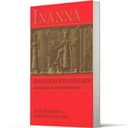

desertcart.com: Inanna, Queen of Heaven and Earth: Her Stories and Hymns from Sumer: 9780060908546: Diane Wolkstein, Samuel Noah Kramer: Books Review: Inspiring window on the great Sumerian goddess - The result of a collaboration between Sumerian scholar Noah Kramer and folklorist Diane Wolkstein, this book is a thoughtfully annotated translation of the major Sumerian cuneiform texts devoted to the goddess Inanna-among the oldest religious texts in the world. It is illustrated with black-and-white reproductions of ancient Sumerian art, mostly on clay tablets. Our understanding of Sumerian culture continues to grow as new texts are found and our perceptions change. This book was published in 1983, and included material unknown to the general public at the time. There are four major stories of Inanna told here: "The Huluppu Tree," "Inanna and the God Of Wisdom," "The Courtship of Inanna and Dumuzi," and the extended epic "The Descent of Inanna." Seven hymns to the goddess round out the collection. In "The Huluppu Tree," we meet the adolescent Inanna, expectantly awaiting the attainment of her queenship. The Huluppu tree, which she has planted and tended as a symbol of her hopeful authority, becomes infested with evil creatures, like personal demons, that will not depart and bring her to despair. She eventually appeals to Gilgamesh to vanquish the demons, and they exchange gifts made from the wood of the tree, bringing them both to greater power. In "Inanna and the God of Wisdom," Inanna, now sexually mature but still youthful and unproven, is welcomed by Enki, God of Wisdom, who acts the role of proud grandfather, giving a feast in her honor. Enki's magnamity increases as he drinks, and he ends up offering Inanna all the magical keys to human civilization. Inanna, with enthusiastic politeness, accepts the gifts, and then makes a quick exit, getting a head start before Enki thinks better of his generosity and sends his monsters in pursuit of the errant goddess. Inanna, with the help of her trusted companion goddess, gets passed the monsters and arrives in Uruk with her magical cargo, where she comes into her full power. Enki, apparently wise enough to let go of his greed in the face of fate, acknowledges Inanna's victory and ascendance. In "The Courtship of Inanna and Dumuzi," Inanna, after some initial resistance, enters into an erotic courtship with Dumuzi the shepherd. This text is strangely alluring, moving with untroubled ease from sexual frankness to touching detail. (The scene where Dumuzi knocks on the door of Inanna's house for the first time feels like it could have come straight from a modern teenager's diary). After the marriage is consummated, Dumuzi curtly informs Inanna that he's going to be very busy being king now-don't wait up, hon. This poignantly rapid slide from courtship to neglect sets the scene for events in the next narrative. In "The Descent of Inanna," the goddess, now Queen of Heaven and Earth, finds herself drawn to enter the underworld, realm of the dead, ruled by her evil and somehow tragic sister-self, Ereshkigal. One by one, she is stripped of all the symbols of her power at seven gates, to be left naked and alone before the Queen of the Underworld, who kills Inanna with a single blow and hangs her on a hook to dry. Inanna has planned her own rescue in advance, though, and escapes to the surface, thronged by demons intent on finding someone to take her place. Inanna will not surrender to them her loyal sons, but when she returns to find her husband Dumuzi, not in mourning, but proudly sitting on his thrown and dispensing authority, she strikes him down and sends the demons after him. The tale of Dumuzi's flight is nightmarish and filled with dream imagery. Thanks to the efforts of his compassionate and self-sacrificing sister, and the softening of Inanna's own anger, a Persephone-like bargain is reached, and Dumuzi is allowed to return to the living for half of each year. The hymns that round out this book are an exciting glimpse of the actual religious practice of the Sumerians. Especially interesting for modern Pagans is the annual ritual wedding between goddess and king. I'm someone who tends to be rather skeptical about the ancient precedents of modern goddess worship, but these texts caught me off my guard. They are amazingly modern (or is it timeless?) in their content. The goddess actually grows psychologically and spiritually through the series of narratives, and the portrayal of the sexual dynamic between men and women rings uncannily true across four millennia. Inanna's story is the original heroine's journey. And, unlike most of her male counterparts, she doesn't need to kill anything to attain her spiritual victory. (Well, almost. Dumuzi gets a serious lesson in raw goddess power!). Her character seems to flow from woman to goddess and back again so smoothly, that it is impossible not to feel a living religion in these texts, one in which there was an intimate dialog between the powers of the goddess and the human experience of her priestesses. These original texts are better than any modern retelling of Inanna's story I have come across, not just because they are more "authentic", but because they are hauntingly moving. Unlike the familiar mythology of the Greeks and Romans, which has come down to us in a more or less "literary" style, these works seem more spiritual, even liturgical. Repetition is combined with a directness of wording, and the result is often very powerful; there is a primal intensity about them. They disarm you with their open, almost child-like language, and then leave you sitting, mute and amazed, in that timeless central cavern of the human experience. Review: Who's Your Daddy? - Meaning no disrespect, Inanna had a very interesting creation (birth) and an equaly impressive life as Queen of the Indus Valley. She was a go-getter and dyanamic skycraft pilot (there are stone effigies that show her in goggles and some sort of a skycraft) -- according to Zechariah SItchin. Yes I am aware that Dr Kramer quetions Sitchin's interpretations of the 250,000 Sumerian tablets and scrolls, but she was a real person, and the headline to this article is a pointer to the fact that whereas the Anunnaki were reptilian, she was the first along with Marduk to be a human hybrid -- and a beautiful one! That genetic legacy has come down to us today in the 13 Families (Adapa +) called Elites-- bloodlines are very important. As for the book, it is very accurate, it reflects the MEs that she stole from Enki -- they were crystals containing the programming for many aspects of Sumerian society -- today we have something similar in our flashdrives. In addition, when she dies in the Underworld, she is brought back to life (pp 64-65) by the Water and Food of Life... Anunnaki had the ability to resurrect recently dead people... and that was also recorded in The Book of Enki. There is an interesting follow-on to Inanna's story as TJ Hegland examines The Sacred Feminine and also profiles her. Dr Kramer is an expert on Sumer and the hstory of that area, I have another of his books, and Diane Wolkstein has done a great job of making Inanna live thru poems, prose and elegies - very easy to read (not boring at all) she even provides one of the few geneological family trees of Inanna that I have ever seen (found prior to the Preface). Kudos to both authors.


| ASIN | 0060908548 |
| Best Sellers Rank | #51,226 in Books ( See Top 100 in Books ) #47 in Comparative Religion (Books) #85 in Folklore & Mythology Studies #1,568 in Classic Literature & Fiction |
| Customer Reviews | 4.7 4.7 out of 5 stars (487) |
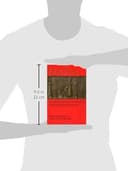
| Dimensions | 9.04 x 6.08 x 0.68 inches |
| Edition | First Edition |
| ISBN-10 | 9780060908546 |
| ISBN-13 | 978-0060908546 |
| Item Weight | 2.31 pounds |
| Language | English |
| Print length | 256 pages |
| Publication date | August 3, 1983 |
| Publisher | Harper Perennial |
T**S
Inspiring window on the great Sumerian goddess
The result of a collaboration between Sumerian scholar Noah Kramer and folklorist Diane Wolkstein, this book is a thoughtfully annotated translation of the major Sumerian cuneiform texts devoted to the goddess Inanna-among the oldest religious texts in the world. It is illustrated with black-and-white reproductions of ancient Sumerian art, mostly on clay tablets. Our understanding of Sumerian culture continues to grow as new texts are found and our perceptions change. This book was published in 1983, and included material unknown to the general public at the time. There are four major stories of Inanna told here: "The Huluppu Tree," "Inanna and the God Of Wisdom," "The Courtship of Inanna and Dumuzi," and the extended epic "The Descent of Inanna." Seven hymns to the goddess round out the collection. In "The Huluppu Tree," we meet the adolescent Inanna, expectantly awaiting the attainment of her queenship. The Huluppu tree, which she has planted and tended as a symbol of her hopeful authority, becomes infested with evil creatures, like personal demons, that will not depart and bring her to despair. She eventually appeals to Gilgamesh to vanquish the demons, and they exchange gifts made from the wood of the tree, bringing them both to greater power. In "Inanna and the God of Wisdom," Inanna, now sexually mature but still youthful and unproven, is welcomed by Enki, God of Wisdom, who acts the role of proud grandfather, giving a feast in her honor. Enki's magnamity increases as he drinks, and he ends up offering Inanna all the magical keys to human civilization. Inanna, with enthusiastic politeness, accepts the gifts, and then makes a quick exit, getting a head start before Enki thinks better of his generosity and sends his monsters in pursuit of the errant goddess. Inanna, with the help of her trusted companion goddess, gets passed the monsters and arrives in Uruk with her magical cargo, where she comes into her full power. Enki, apparently wise enough to let go of his greed in the face of fate, acknowledges Inanna's victory and ascendance. In "The Courtship of Inanna and Dumuzi," Inanna, after some initial resistance, enters into an erotic courtship with Dumuzi the shepherd. This text is strangely alluring, moving with untroubled ease from sexual frankness to touching detail. (The scene where Dumuzi knocks on the door of Inanna's house for the first time feels like it could have come straight from a modern teenager's diary). After the marriage is consummated, Dumuzi curtly informs Inanna that he's going to be very busy being king now-don't wait up, hon. This poignantly rapid slide from courtship to neglect sets the scene for events in the next narrative. In "The Descent of Inanna," the goddess, now Queen of Heaven and Earth, finds herself drawn to enter the underworld, realm of the dead, ruled by her evil and somehow tragic sister-self, Ereshkigal. One by one, she is stripped of all the symbols of her power at seven gates, to be left naked and alone before the Queen of the Underworld, who kills Inanna with a single blow and hangs her on a hook to dry. Inanna has planned her own rescue in advance, though, and escapes to the surface, thronged by demons intent on finding someone to take her place. Inanna will not surrender to them her loyal sons, but when she returns to find her husband Dumuzi, not in mourning, but proudly sitting on his thrown and dispensing authority, she strikes him down and sends the demons after him. The tale of Dumuzi's flight is nightmarish and filled with dream imagery. Thanks to the efforts of his compassionate and self-sacrificing sister, and the softening of Inanna's own anger, a Persephone-like bargain is reached, and Dumuzi is allowed to return to the living for half of each year. The hymns that round out this book are an exciting glimpse of the actual religious practice of the Sumerians. Especially interesting for modern Pagans is the annual ritual wedding between goddess and king. I'm someone who tends to be rather skeptical about the ancient precedents of modern goddess worship, but these texts caught me off my guard. They are amazingly modern (or is it timeless?) in their content. The goddess actually grows psychologically and spiritually through the series of narratives, and the portrayal of the sexual dynamic between men and women rings uncannily true across four millennia. Inanna's story is the original heroine's journey. And, unlike most of her male counterparts, she doesn't need to kill anything to attain her spiritual victory. (Well, almost. Dumuzi gets a serious lesson in raw goddess power!). Her character seems to flow from woman to goddess and back again so smoothly, that it is impossible not to feel a living religion in these texts, one in which there was an intimate dialog between the powers of the goddess and the human experience of her priestesses. These original texts are better than any modern retelling of Inanna's story I have come across, not just because they are more "authentic", but because they are hauntingly moving. Unlike the familiar mythology of the Greeks and Romans, which has come down to us in a more or less "literary" style, these works seem more spiritual, even liturgical. Repetition is combined with a directness of wording, and the result is often very powerful; there is a primal intensity about them. They disarm you with their open, almost child-like language, and then leave you sitting, mute and amazed, in that timeless central cavern of the human experience.
I**R
Who's Your Daddy?
Meaning no disrespect, Inanna had a very interesting creation (birth) and an equaly impressive life as Queen of the Indus Valley. She was a go-getter and dyanamic skycraft pilot (there are stone effigies that show her in goggles and some sort of a skycraft) -- according to Zechariah SItchin. Yes I am aware that Dr Kramer quetions Sitchin's interpretations of the 250,000 Sumerian tablets and scrolls, but she was a real person, and the headline to this article is a pointer to the fact that whereas the Anunnaki were reptilian, she was the first along with Marduk to be a human hybrid -- and a beautiful one! That genetic legacy has come down to us today in the 13 Families (Adapa +) called Elites-- bloodlines are very important. As for the book, it is very accurate, it reflects the MEs that she stole from Enki -- they were crystals containing the programming for many aspects of Sumerian society -- today we have something similar in our flashdrives. In addition, when she dies in the Underworld, she is brought back to life (pp 64-65) by the Water and Food of Life... Anunnaki had the ability to resurrect recently dead people... and that was also recorded in The Book of Enki. There is an interesting follow-on to Inanna's story as TJ Hegland examines The Sacred Feminine and also profiles her. Dr Kramer is an expert on Sumer and the hstory of that area, I have another of his books, and Diane Wolkstein has done a great job of making Inanna live thru poems, prose and elegies - very easy to read (not boring at all) she even provides one of the few geneological family trees of Inanna that I have ever seen (found prior to the Preface). Kudos to both authors.
I**Y
Innana's Lore and Poetry
There is absolutely nothing wrong with this book. It is a compilation of everything that is currently known about the Goddess Innana, of Mesopotamia, translated into English language, which is in itself a great linguistic feat in my opinion (and I am sure everyone will agree). She is the greatest goddess, of that very mysterious and ancient lore, despite the fact that she ain't a daughter or a wife of any major god of Mesopotamia such as Enki etc. Yet, she is all woman, capable of pain, love, and fury. She is a complicated goddess, but unlike Isis, or perhaps "as" Isis - she is many times almost lost; she comes looking for her lover Tammuz, she hates Gilgamesh for not wanting to take her.....I think she is worth knowing through this literature, best of luck iggy
C**R
Charming Vision of the First Religion
At any rate, the first goddess we have writings about. There is a naïveté in the simple, repetitive storytelling of the ancient Sumerians who discovered the magic of combining religion with the written word. Inanna (with the help of her faithful companion Ninshubur) lives out her motto "I'll take it!" to the full. Love, sex, war, feminine wiles, and probably rock-and-roll (yet to be discovered in archeological digs): no wonder Inanna (later Ishtar and probably Ashtoreth of Biblical infamy) was the most popular deity of thousands of years. One might say she still is!
C**E
Love Sumerian Literature/Culture
Bought 2 weeks ago, was able to complete it in 3-4 reading sessions. The poems are great and easy to get lost in. The Sumerians were ahead of their time in story telling. I believe many of these “gods” or “Annuna” were actually real kings and heros from long before the sumerians and these are stories that have been passed down over a very long time. Samuel Noah Kramer is a master of getting this information to us.
L**C
It is good to have this long poem in a book! The myth of Inanna's descent to the Underworld is quite well interpreted and translated. I don't regret my purchase. Thankyou
S**Y
A pesar de que tardó un día más de lo previsto, la entrega no fue lenta. Y el producto cumple con todas las características que se establecen. Es un magnífico libro para conocer a la diosa Inanna.
V**G
Fascinating read. A beautifully faithful translation of the stories of Inanna, followed by an academic discussion of how the language structure of the original text contributes to its meaning. There is also an interesting discussion of how the authors came to work together, how the stories were gradually discovered and stitched together. I was introduced to ancient Sumer at the age of 12 in history lessons at school. I have had a passing interest in Sumerian mythology ever since, but this book has brought the Queen of Heaven and Earth, the Great Inanna, to life for me.
S**A
Interessante e curioso. l'ho usato per la mia tesi ma èè interessante da leggere anche nel tempo libero
Y**N
Item delivered in excellent condition
Trustpilot
Hace 2 días
Hace 1 día