We remain fully operational. Our teams are working around the clock to ensure your deliveries continue safely.

Descargar la aplicación


Servicios al cliente
Sobre nosotros
Copyright © 2025 Desertcart Holdings Limited
Descargar la aplicación
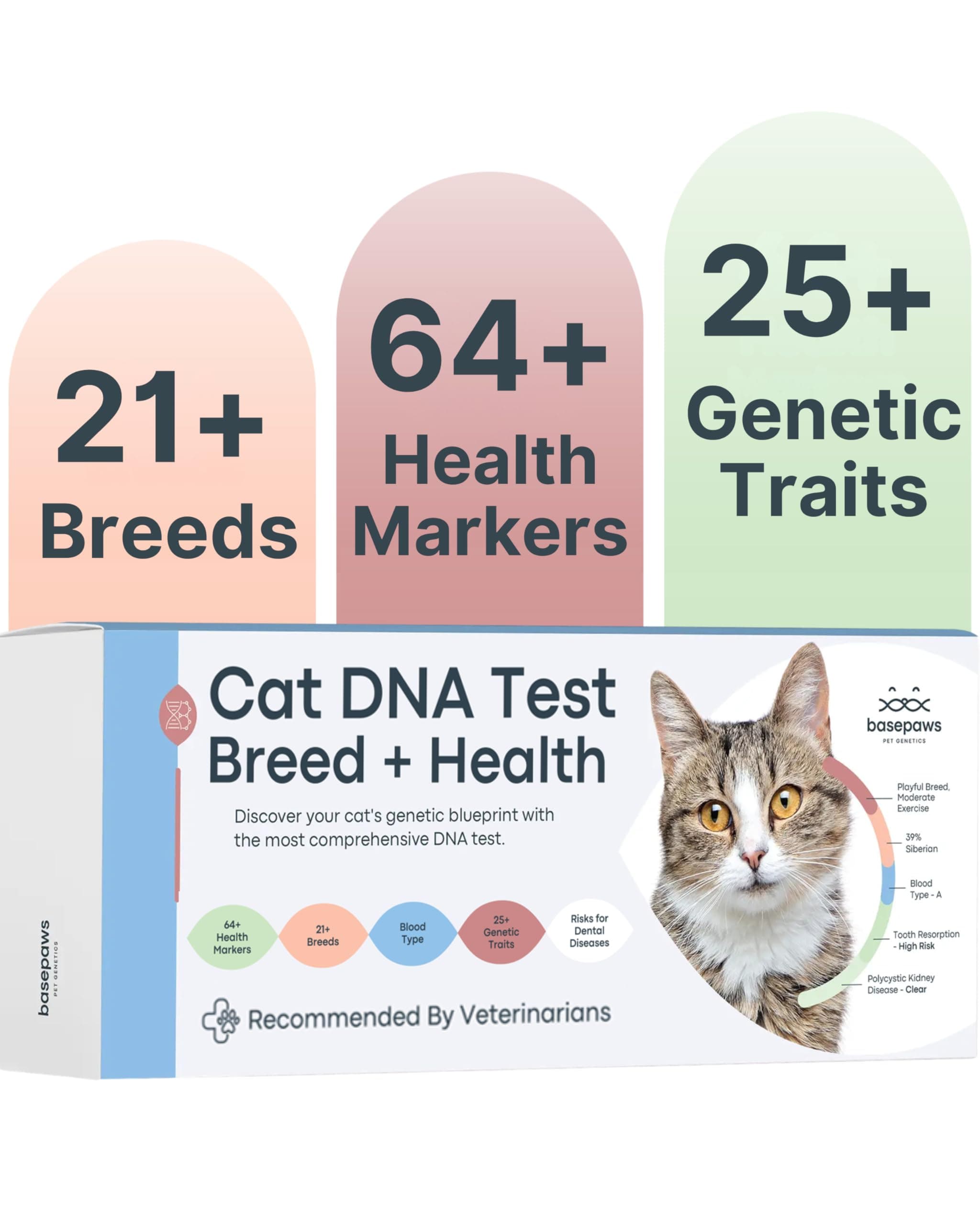





🧬 Know your cat like never before — because their DNA tells the story you can’t.
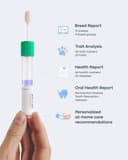
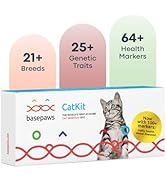
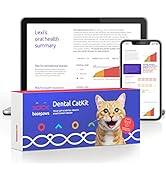
The Basepaws Cat DNA Test is a cutting-edge, vet-trusted kit that decodes your cat’s breed, health risks, and unique traits through 114 genetic markers. It screens for over 40 diseases and includes the only active oral health report on the market, empowering pet parents with early detection and personalized care insights. Easy to use at home, results arrive in 4-6 weeks with ongoing updates as the database grows.



| ASIN | B07NP4Q3Z8 |
| Batteries Included | No |
| Batteries required | No |
| Best Sellers Rank | 233,380 in Pet Supplies ( See Top 100 in Pet Supplies ) 243 in Dental Care for Cats |
| Colour | Basic |
| Customer Reviews | 4.3 4.3 out of 5 stars (1,524) |
| Date First Available | 14 April 2019 |
| Item Weight | 9.07 g |
| Package Dimensions | 24.51 x 10.39 x 2.59 cm; 9.07 g |
| Pet Type | Men, Women |
| Quantity | 1 |
| Size | Cat DNA Test |
T**T
This was easy enough to use if your pet is okay with you putting things in their mouth and not chewing on them, which fortunately mine was. The pdf I got back seems to be an exhaustive amount of data, though I did question one quirky result: It said the most recent thing my cat had eaten was dog, and we don't have one of those and don't often visit with people who have one (though I do love to see a pup, we just dont happen to know a lot of people who have dogs) and my kitty was an indoor kitty so there was little chance of her sneaking out and eating the neighbor's dog. I reached out to to Basepaw to ask about the result, mostly out of amusement, and was pleasantly surprised that not only did they answer back pretty quickly, but gave me some more information on what the result could mean, basically trouble shooting it with me. In the end, the dog thing still remains a mystery, but the other information of what her make up was, health concerns and more was very interesting to note and I was able to share the file with her vet so they could see the list of concerns she might be more predisposed to. Over all I was very happy with the product. Cons: Price-wise its not super cheap, and as to how accurate or effective testing this way is, well, I'm no scientist so impossible for me to say. It seemed to line up well with what I already knew about her, so I think at the very least I liked having it for some guidance on what might be the issue if she wasn't feeling well. I enjoyed going over it with friends and just having it, very similar in the way I think people enjoy things like 23 and me or other DNA testing kits for humans, so for me, it was worth the price, but I did wait for a Black Friday sale or similar discount. If you're getting a new pet, this might be a cool gift to ask for. If you've had your pet for years and just want a deeper dive into their specs, this again might be for you. If you do get it, sending it along to your vet might be helpful in their long term health letting them know what to look out for. Its not a fast process, you take the sample, then you send it in, and then you wait for them to receive it and then process it and get the results back to you. It takes the time it takes, but it does tell you as much on the box. It would be really cool if there was a data base to check so you find out a bit about the pet's family line if it was out there. Not information on the owners, but say how long they lived, if there were health concerns, if they had quirks like cat that really likes water, dog that figured out doors without being taught, etc, your dog's great great grand uncle was that dog that starred in Airbud or something. I'd love to see something like that as a future part of this type of product.
J**.
Well, I love genetics so as soon as I found out about Basepaws cat DNA tests I immediately wanted to have my 2 cats tested. I'm quite satisfied with the results. Basepaws compares your cat's DNA to the DNA in their database and then tells you which breed groups your cat has the most similar DNA to. And they rank the breeds in that group by how similar the DNA of your cat is to that breed. It's not like the dog DNA breed tests which are much more black & white because DNA breed testing for cats hasn't been around as long and cat's did not go through the same process of domestication that dogs did. Basepaws also tests for a number of diseases which can be very useful. Both my cats came back as carriers for a gene mutation that causes a hemophilia-like bleeding disorder, but they only have one copy of the gene so they don't have the disease, so that was a relief. Basepaws was really good about keeping you up to date on the progress of the DNA sample. I got numerous emails letting me know when the samples were being processed and analyzed. I does take a while after mailing in the samples for the results to be reported so it was nice to get the updates. All in all, this DNA test is definitely worth it. It seems pretty accurate and with more time and more DNA samples I expect Basepaws will continuously update their algorithms and send clients their updated DNA results. For now my cats came back as...Hazel is the torbie and she came back as a polycat (mixed breed) and Norwegian Forest Cat mix, and Ruby the orange tabby came back as a Ragdoll, polycat mix with a little Persian. Both had a small amount of Bengal. (I was told that Ruby is Hazel's mother, but not 100% sure.) I was expecting them to be Maine Coon mixes and I suspected Ruby had a tiny bit of Persian because she has such a pretty profile, so I was right about the Persian, but surprised to see the Ragdoll and NFC instead, but I can see it now that I know what to look for. NFC is so close to Maine Coon, anyway. The tests results have simply fascinated me. I recommend getting your cat tested through Basepaws. It's not just fun, it can be very helpful as far as health issues, too. And the more samples they get, the more their database will increase, thus making the tests more accurate and informative. We will actually all help each other to help our cats the more we get them tested. It's a snowball effect type thing.
A**S
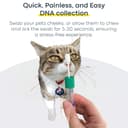
I ordered the Basepaws Cat DNA Test Kit to learn more about my tabby’s ancestry and screen for potential health issues, and overall I’m impressed. The swab-and-send process was straightforward—just gently rub the swab inside your cat’s cheek for 30 seconds, seal it up, and drop it in the mail. Basepaws kept me updated via email, and I received the detailed report in right around five weeks, well within their 4–6 week window. The ancestry breakdown was fascinating, identifying my cat’s primary breed group and even estimating wildcat heritage. The health section flagged one variant linked to a common condition, which prompted me to discuss preventive care with my vet—definitely a valuable heads-up. The trait insights (like coat color genetics and predicted personality tendencies) were a fun bonus, though I’d take those with a grain of salt. My only quibbles are the price—it’s a bit steep compared to human DNA kits—and the occasional delay in customer support responses. Otherwise, the online dashboard is user-friendly, and the downloadable PDF makes sharing results with my veterinarian easy. If you’re curious about your cat’s background or want a proactive look at genetic health, this kit is a great resource.
N**.
As I read my cats results I saw the breed area. The main bred they classified my cat as was "Maine coon" (20.1 percent). That shocked me because my cat isn't even 8 lbs. She is short haired, no ear Tufts, small, non-muscular frame. She hates water. She is all white with a few black hairs on top of her head. Then I noticed this category called "Polycat" (not even a breed) with no defined breeds under it and said my cat was 21.22 percent this category. Um... I thought the reason people were doing these DNA tests was to find out what breeds their mixed cat was, not to just say the main breed is an unknown mixed breed with no characteristics about what that fake breed meant. Most people know their cats are a mixed breed and it's why they are having this test done. Why not call it unknown because that is basically what was done here. Since I actually did this test because my now 11 month old cat is having major health problems, it makes me not trust the results if they cannot even get the breed right. My now 11 month old kitten is having seizures, tremors, intension tremors, ataxia, vestibular issues, issues getting her claws stuck out, she struggles to walk after resting or sleeping and even push herself up, she has a head tilt, she goes to jump up and misses her mark jumping too short. She relies a lot on her claws by gripping the carpet to get around, but she walks and runs normally at times too. She has seen a neurologist who doesn't know what is wrong with her, but says Multifocal brain disease or vestibular disease are most likely based on her symptoms. Given she might also have kidney disease too, we didn't do an MRI or a spinal test because they cost thousands of dollars each and even the neurologist said they mights show her nothing or show her the symptoms of what is wrong without the actual cause and that most causes are likely incurable. How much life she has left is unknown, a seizure could take her any day (or kidney disease in a year), and she has short seizures almost daily that are not completely uncontrolled by the meds the neurologist put her on. I also have allergies to cats. My cat is white and doesn't bother me as much as some cats do (and I grew up with white cats who didn't eitherwho looked the same), so we decided to do the DNA test. At best result we would see a health marker that explains her issues, at worst we would at least know her hidden breed (since she is white) so we would know what cat to get in the future (when she passes) to know which cat might not bother my allergies. When I read the health report, I was amazed that there were actually like 7 conditions that were neurological in the report, however my cat didn't have any of the markers for them. I was excited reading the names because three of them were things I had found my cat might have when doing research based on the symptoms of the health conditions. So it's kind of disappointing my cat has neurological problems, but none of these came back as markers she has. Her condition could be infectious disease related though (even though the vet neuro tests all came back negative), so she could have other things going on to explain this beyond DNA tests. It also said she has genes for black fur, and that her coat is a gene that makes coats be faded or white (okay, anyone could get that just by looking at her or her picture, which I sent). The only oral health marker they noted her having was tooth resorption. She is too young to know if that will be a problem. The health issues she is noted to have is factor 12 deficiency, a blood clotting disorder. She had a surgery done no problems, so at least so far that doesn't seem to be a problem for her. I will take these results to my vet soon, but they don't explain anything she has going on, which is disappointing. The biggest disappointment though is not even trusting the breed results. Hopefully my baby passes before she has to struggle with any of these other painful conditions if these results are accurate. She shows no signs of being in pain to date even with the problems she has. She is very social and likes to be cuddled in blankets and sit in your lap. She likes to hunt and play. She walks and runs crazy and falls over all the time and gets her claws stuck in things, but she is our baby, she wants to be near us and play with us. She is also super smart. She isn't agile enough to do those word buttons, but when you say anyone's name, she knows who you mean by either going to their room or getting exited when you tell her that her favorite playmate is home. She knows words for "scratchy" (scratching post), mousie, food, play, treat, downstairs, and "go to bed". So even though her brain is failing her body, it isn't failing her intelligence. So she will be our cat as long as she isn't in pain or hasn't succumb to her unknown condition. So overall, this test didn't tell us health issues or breeds that make sense, which is disappointing. We didn't just do this test for fun, which seems to be the main thing people feel they get out of this by reading other comments.
R**M
Easy to use. It breaks down the different breeds of cats that makes up my cat’s total genetic profile. Because most cats have not been selectively bred over hundreds of years like dogs have, my cat’s profile generally states “72 percent Western”, 0 percent Eastern, and the rest Persian, Exotic, and 17 percent “Polycat”, which means generations of mixed breeding. Under each category it gives a few of the specific breeds, like Maine Coon and Siberian under Western, and British Shorthair and Himalayan under Persian, but oddly 0 “Broadly Persian” under Persian. The health report reassures me that my cat has no underlying genetic dispositions to a particular disease or oral issue. I thought Basepaws had the Wildcat Index analysis, which would have made it much more fun and interesting, but a customer service representative at Basepaws told me they no longer offer that analysis, which is a bit disappointing. The Wildcat Index indicated the kind of wildcat (mountain lion, cheetah, tiger, etc) your cat has most in common with genetically. Too bad it’s no longer offered. Overall, not a bad DNA kit to use if you want to find out more about your cat, but it’s overpriced at $200 plus. Wait when there’s a sale. Also, give at least a month for the results to come back to you. After sending the specimen of my cat’s mouth swab to California in mid-June (I live in Canada), I finally got the results back in about 6 weeks (at the end of July). That’s pretty normal, as I read most results come back in 4-6 weeks.
Trustpilot
Hace 3 semanas
Hace 1 semana