We remain fully operational. Our teams are working around the clock to ensure your deliveries continue safely.

Descargar la aplicación


Servicios al cliente
Sobre nosotros
Copyright © 2025 Desertcart Holdings Limited
Descargar la aplicación
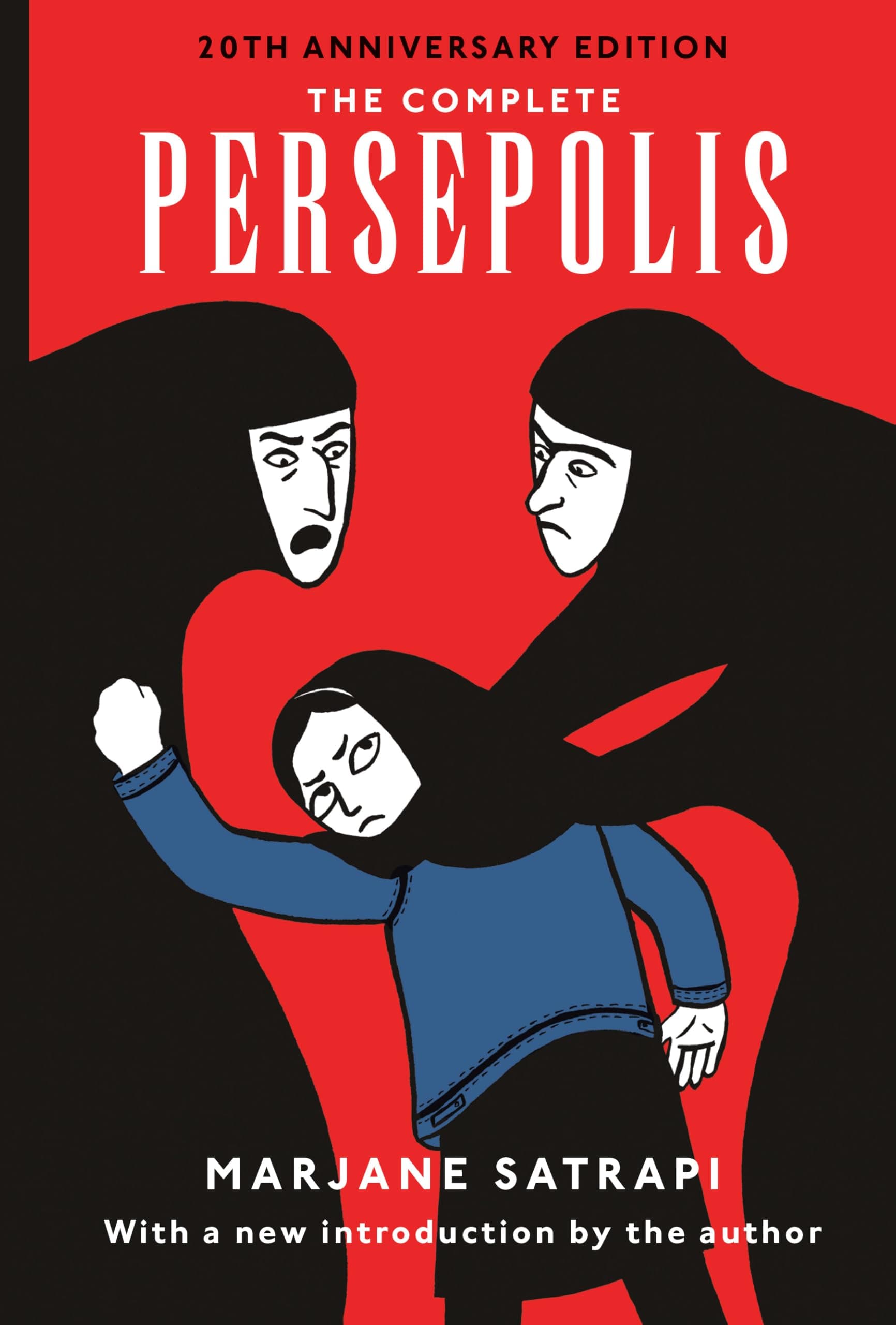
The Complete Persepolis [Satrapi, Marjane, Singh, Anjali] on desertcart.com. *FREE* shipping on qualifying offers. The Complete Persepolis Review: Historical Non-Fiction for the Win! - Book Review Satrapi, M. (2007) The complete Persepolis. New York, NY: Pantheon Books. After reading Marjane Satrapi’s graphic memoir, Persepolis, I believe it is in the best interests of our students to add the book to our available reading list. Persepolis is Satrapi’s account of growing up during the Iran-Iraq War (1980-88) that almost immediately followed the Iranian Revolution (1979). Satrapi is an Iranian woman who left Iran to attend high school in Vienna, later returned to Iran to marry, and eventually moved to France where she wrote Persepolis. The memoir serves as a bildungsroman for Satrapi, covering her life as she leaves primary school and enters high school; we see Satrapi grappling with the woman she wants to become in light of where she comes from. Persepolis also serves as a piece of literary historical non-fiction because the backdrop of Satrapi’s coming of age is amidst a pivotal point in Iranian (and Iraqi) history, and this history is central to the plot line of Satrapi’s memoir. Persepolis has also won a fair share of awards. It was a New York Times notable book, Times Magazine’s “Best Comix of the Year” (2004), and a best-seller across the country. The book, originally written in French, was adapted into film, and the film version won the Cannes Jury Prize, the César award for best writing, the César award for the best first feature film, and the Sutherland trophy. The film adaptation was also nominated for an Academy Award for best animated feature film. Despite the accolades both the film and graphic memoir received, Persepolis is in the top 10 of the American Library Association’s 2014 “Frequently Challenged Books” list. The ALA informs us that the rationales that have been provided for banning the book include gambling, offensive language, and its political viewpoint. The ALA also says that Persepolis has been called “politically, racially, and socially offensive” and that it has “graphic depictions.” There is truth to these claims. Persepolis takes place as Satrapi grows up amidst the Iran-Iraq war. War, by its very nature, brings about political viewpoints that some students and their parents may disagree with. The book also contains offensive language, and portrays the ramifications of war and includes “graphic depictions” as a result. The National Council of Teachers of English (NCTE) in its guidelines on “The Students’ Right to Read” (2012), argues, “Literature about ethnic or racial minorities remain ‘controversial’ or ‘objectionable’ to many adults…. “Though nominally, the criticisms of racial or ethnic literature have usually been directed at ‘bad language, ‘suggestive situations,’ ‘questionable literary merit,’ or ‘ungrammatical English,’ the underlying motive for some attacks has unquestionably been racial.” Using the coded language the NCTE provides, we can see that the reasons given to the ALA as evidence supporting a book ban and/or challenge appear racial. The complaints do not say, “We should ban this book because it is about an Iranian woman,” but the codes found in words like “offensive” point to a racially-based book ban. This kind of censorship is inappropriate and unfair to our students, who deserve to have historical events contextualized in multiple forms (movies, graphic novels, novels, short stories, documentaries, and art to name a few forms) and to have students from multiple cultures represented in texts. English Language Arts programs is, “…not one instructional resource, but many; not one curriculum objective, but several” (Guidelines for selection of materials in English language arts programs, 2014). The use of Satrapi’s text allows for many objectives to be met simultaneously: 1. It is historical non-fiction, which allows it to be taught as an informational text rather than as literature. It is also naturally interdisciplinary, which allows for and encourages complementary teaching across Social Studies and English Language Arts classes. 2. It is beautifully written. Even though it is classified as an informational text, many of the literary devices English Language Arts teachers long to discuss can still be discussed. 3. As a graphic narrative, it can be taught to students who read at a wide range of Lexile levels. Visual learners will also benefit. Its graphic form also allows it to become a “high-interest” text when it probably wouldn’t be in other circumstances 4. As a historical narrative covering the Iran-Iraq War from the perspective of an Iranian woman, it meets the Common Core Standard for “diverse cultures.” 5. As a memoir written by a woman, it allows educators to disrupt the male-centered curriculum so often seen in classrooms across the country 6. Persepolis can easily be included in a text set with other texts. It can be used in a unit on war, the Iran-Iraq War specifically, women in the Middle East, women’s rights, and fights for freedom. Depending on the instructional context used by the instructor, Persepolis can meet many curriculum needs simultaneously, while widening the worldview of American-centric readers. In schools with high populations of immigrants and refugees, Persepolis helps provide a face that is often much more like theirs in a sea of literature dominated by dead white men. As with any highly-challenged book, it is probably always a good idea to send parents a permission slip in advance that provides them with 1) an opportunity for their student to do an alternate assignment instead 2) a rationale for why you believe the text is worthy of study and 3) reasons why the book is challenged. It’s certainly possible that parents will balk at the idea of their children reading a book that some consider “offensive,” but I have faith that with simple explanations and the ability to change their mind, the vast majority of your students will be able to read texts as important as Persepolis. Review: This is a vital, heart-wrenching story that deserves to be read widely - Marjane Satrapi's work provides a powerful and eye-opening glimpse into the lives of Iranians, particularly women, during the tumultuous 70s and 90s under the Islamic Republic. Her unflinching portrayal of war's brutal realities and its impact on individuals is both traumatic and illuminating. Satrapi masterfully captures the spectrum of human behavior, from cruelty to heroism. While I found the book's brief fatphobic comments off-putting, I deeply valued Marjane Satrapi's overall authenticity, which resonated throughout her narrative. The depiction of Marjane's parents is particularly moving. Their dedication to raising their daughter with love, education, and protection amidst war is remarkable. The strong, supportive mother-daughter dynamic, even after a year apart, is beautifully portrayed, highlighting the enduring power of their bond. I also admired the family's quiet acts of resistance, such as continuing to hold parties and find joy despite the oppressive regime. It's disheartening that this book is banned in some regions, as it offers invaluable insights for readers of all ages. It provides a firsthand account of Iranian culture before and after the revolution, as well as a stark comparison of women's rights in Iran and Europe. This is a vital, heart-wrenching story that deserves to be read widely. Brava!


| Best Sellers Rank | #6,343 in Books ( See Top 100 in Books ) #10 in Educational & Nonfiction Graphic Novels #94 in Women's Biographies #277 in Memoirs (Books) |
| Customer Reviews | 4.7 4.7 out of 5 stars (2,978) |
| Dimensions | 6.06 x 0.83 x 8.82 inches |
| Edition | Media tie-in |
| ISBN-10 | 0375714839 |
| ISBN-13 | 978-0375714832 |
| Item Weight | 1.27 pounds |
| Language | English |
| Print length | 341 pages |
| Publication date | October 30, 2007 |
| Publisher | Pantheon |
M**S
Historical Non-Fiction for the Win!
Book Review Satrapi, M. (2007) The complete Persepolis. New York, NY: Pantheon Books. After reading Marjane Satrapi’s graphic memoir, Persepolis, I believe it is in the best interests of our students to add the book to our available reading list. Persepolis is Satrapi’s account of growing up during the Iran-Iraq War (1980-88) that almost immediately followed the Iranian Revolution (1979). Satrapi is an Iranian woman who left Iran to attend high school in Vienna, later returned to Iran to marry, and eventually moved to France where she wrote Persepolis. The memoir serves as a bildungsroman for Satrapi, covering her life as she leaves primary school and enters high school; we see Satrapi grappling with the woman she wants to become in light of where she comes from. Persepolis also serves as a piece of literary historical non-fiction because the backdrop of Satrapi’s coming of age is amidst a pivotal point in Iranian (and Iraqi) history, and this history is central to the plot line of Satrapi’s memoir. Persepolis has also won a fair share of awards. It was a New York Times notable book, Times Magazine’s “Best Comix of the Year” (2004), and a best-seller across the country. The book, originally written in French, was adapted into film, and the film version won the Cannes Jury Prize, the César award for best writing, the César award for the best first feature film, and the Sutherland trophy. The film adaptation was also nominated for an Academy Award for best animated feature film. Despite the accolades both the film and graphic memoir received, Persepolis is in the top 10 of the American Library Association’s 2014 “Frequently Challenged Books” list. The ALA informs us that the rationales that have been provided for banning the book include gambling, offensive language, and its political viewpoint. The ALA also says that Persepolis has been called “politically, racially, and socially offensive” and that it has “graphic depictions.” There is truth to these claims. Persepolis takes place as Satrapi grows up amidst the Iran-Iraq war. War, by its very nature, brings about political viewpoints that some students and their parents may disagree with. The book also contains offensive language, and portrays the ramifications of war and includes “graphic depictions” as a result. The National Council of Teachers of English (NCTE) in its guidelines on “The Students’ Right to Read” (2012), argues, “Literature about ethnic or racial minorities remain ‘controversial’ or ‘objectionable’ to many adults…. “Though nominally, the criticisms of racial or ethnic literature have usually been directed at ‘bad language, ‘suggestive situations,’ ‘questionable literary merit,’ or ‘ungrammatical English,’ the underlying motive for some attacks has unquestionably been racial.” Using the coded language the NCTE provides, we can see that the reasons given to the ALA as evidence supporting a book ban and/or challenge appear racial. The complaints do not say, “We should ban this book because it is about an Iranian woman,” but the codes found in words like “offensive” point to a racially-based book ban. This kind of censorship is inappropriate and unfair to our students, who deserve to have historical events contextualized in multiple forms (movies, graphic novels, novels, short stories, documentaries, and art to name a few forms) and to have students from multiple cultures represented in texts. English Language Arts programs is, “…not one instructional resource, but many; not one curriculum objective, but several” (Guidelines for selection of materials in English language arts programs, 2014). The use of Satrapi’s text allows for many objectives to be met simultaneously: 1. It is historical non-fiction, which allows it to be taught as an informational text rather than as literature. It is also naturally interdisciplinary, which allows for and encourages complementary teaching across Social Studies and English Language Arts classes. 2. It is beautifully written. Even though it is classified as an informational text, many of the literary devices English Language Arts teachers long to discuss can still be discussed. 3. As a graphic narrative, it can be taught to students who read at a wide range of Lexile levels. Visual learners will also benefit. Its graphic form also allows it to become a “high-interest” text when it probably wouldn’t be in other circumstances 4. As a historical narrative covering the Iran-Iraq War from the perspective of an Iranian woman, it meets the Common Core Standard for “diverse cultures.” 5. As a memoir written by a woman, it allows educators to disrupt the male-centered curriculum so often seen in classrooms across the country 6. Persepolis can easily be included in a text set with other texts. It can be used in a unit on war, the Iran-Iraq War specifically, women in the Middle East, women’s rights, and fights for freedom. Depending on the instructional context used by the instructor, Persepolis can meet many curriculum needs simultaneously, while widening the worldview of American-centric readers. In schools with high populations of immigrants and refugees, Persepolis helps provide a face that is often much more like theirs in a sea of literature dominated by dead white men. As with any highly-challenged book, it is probably always a good idea to send parents a permission slip in advance that provides them with 1) an opportunity for their student to do an alternate assignment instead 2) a rationale for why you believe the text is worthy of study and 3) reasons why the book is challenged. It’s certainly possible that parents will balk at the idea of their children reading a book that some consider “offensive,” but I have faith that with simple explanations and the ability to change their mind, the vast majority of your students will be able to read texts as important as Persepolis.
@**S
This is a vital, heart-wrenching story that deserves to be read widely
Marjane Satrapi's work provides a powerful and eye-opening glimpse into the lives of Iranians, particularly women, during the tumultuous 70s and 90s under the Islamic Republic. Her unflinching portrayal of war's brutal realities and its impact on individuals is both traumatic and illuminating. Satrapi masterfully captures the spectrum of human behavior, from cruelty to heroism. While I found the book's brief fatphobic comments off-putting, I deeply valued Marjane Satrapi's overall authenticity, which resonated throughout her narrative. The depiction of Marjane's parents is particularly moving. Their dedication to raising their daughter with love, education, and protection amidst war is remarkable. The strong, supportive mother-daughter dynamic, even after a year apart, is beautifully portrayed, highlighting the enduring power of their bond. I also admired the family's quiet acts of resistance, such as continuing to hold parties and find joy despite the oppressive regime. It's disheartening that this book is banned in some regions, as it offers invaluable insights for readers of all ages. It provides a firsthand account of Iranian culture before and after the revolution, as well as a stark comparison of women's rights in Iran and Europe. This is a vital, heart-wrenching story that deserves to be read widely. Brava!
M**A
Great for all ages tbh
It’s an excellent book and good simple illustration
A**N
MUST READ!!
This is one of the most informative, page turning books I have ever read, and I read a lot. The imagery adds an enormous amount of feeling and depth. I didn’t realize a graphic novel could be so profound, but this book should be on the list of best books of all time.
L**A
Worthwhile
What does Iran's Islamic revolution look like through the eyes of a child? How does a child of war assimilate into western culture? Hard questions which have no clear cut answers are addressed in Marjane Satrapi's graphic memoir, The Complete Persepolis. Originally published as two works, Persepolis: The Story of a Childhood and Persepolis 2: The Story of a Return, The Complete Persepolis gives readers a chance to experience Satrapi's moving, challenging, and at time's disturbing, account in one full memoir detailing her most tumultuous years. The Complete Persepolis displays new cover art that coincides with the major motion picture release of the same name. The Complete Persepolis does not offer a break within the text to show you where the first memoir ends and the second begins. The story easily flows as though it was always published as one work. While the graphic novel format helps to make the horror and brutality of revolutionary and post revolutionary Iran in the 1980's and early 1990's approachable, it does not tone down the emotion or oppression. Satrapi's anger and the constraints of the society are tangible, giving readers an intimate glimpse of what life would be like if one were stripped of many basic rights. Young readers without knowledge of the politics of the time period or the history of Persia (yes, Iran was referred to as Persia up until 1935!) will be confused by frequent name dropping. Names of people (Che Guevara), political factions (Bolsheviks), and even religions (Zoroastrianism) will either serve to lead young readers on a quest to learn more, or deter them from finishing the novel. Older readers with more polarized views on the subject at hand must be prepared to accept Persepolis for what it is: a memoir. A memoir written by a woman who lived through the accounts detailed within. It would be a shame for Satrapi's work to be dismissed due to its disregard for what is and was politically correct. On the contrary, Satrapi's consistent disregard for authority she deems inept and for critics who may find fault in her stance is exactly why this book should be embraced. There is an unabashed authenticity that makes this a refreshing addition to any library's collection of nonfiction work. The Complete Persepolis is not without its faults. The sheer volume of characters and settings in the story is confusing at times. The graphic novel format does not help in this matter, for as characters grow and change, it is often impossible to recognize them if not mentioned by name. It is this rushed, graphic novel pace that at once makes a difficult subject approachable, yet leaves the reader longing for a more complete understanding. Some details seem to be skimmed over in places and then later brought to the forefront, leaving the reader to thumb back through to find context. Some characters and relationships, as well, seem to drastically change without enough reason given for the reader to truly feel they have been let in on Satrapi's complete experience. It would be more beneficial for libraries to purchase Persepolis as it was originally published in the U.S., in two separate volumes, for the content of the two is appropriate for different audiences. Persepolis: A Childhood would be appropriate high school reading, even as part of the curriculum so long as the teacher is well prepared for many questions, explanations, and lengthy discussions (also probable parent protestations). Persepolis 2: A Return should be saved for only the most mature of high school readers, due to its mature themes and often gritty and controversial subject matter. It would be hard to keep young readers of A Childhood from wanting to continue with Marjane on her journey in A Return, but the sexual content and drug use need to be approached in a very sensitive manner. One of the most disconcerting scenes is when Marjane is staying at her friend Julie's house and Julie is sharing stories of her sexual escapades: "I've already slept with eighteen guys....at first we used condoms, but the guy feels less." It is clear that readers need to be mature and well educated on safe sex practices in order to see that what Julie is recounting as common behavior is actually extremely dangerous. Mature readers ready for an original experience and an inside look at a very private existence will devour The Complete Persepolis. Readers drawn into Satrapi's world will be delighted to find she has published two shorter graphic novels, Embroideries (2006) and Chicken with Plums (2009) that will give more insight into the culture of Iran and the workings and emotions of people living within a closed off society.
C**O
Really enjoyed reading this book. It is easy to read (in a cartoon format) but it is also very serious, describing the life during and after the Iranian revolution through the eyes of a rebellious teenager.
J**H
I had read this book a long time ago and it is a pleasure to re-read it now. It is still relevant in today's day and age.
S**P
If you like graphic novels that are relevant to contemporary life and issues, this is for you. Gripping, gritty, sometimes fun, honest and inspiring. Fun drawing style, amazingly frank storytelling. I love these slices of life, and I recommend getting both in one volume like this version.
A**A
Great book!! Absolutely recommend !!
K**5
A must read
Trustpilot
Hace 2 meses
Hace 4 días