We remain fully operational. Our teams are working around the clock to ensure your deliveries continue safely.

Descargar la aplicación


Servicios al cliente
Sobre nosotros
Copyright © 2025 Desertcart Holdings Limited
Descargar la aplicación


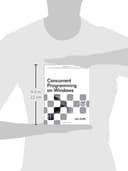
Concurrent Programming on Windows
B**N
Excellent, excellent, excellent!
If you take a brief trip over to Joe's blog at joeduffyblog.com, or find just about any talk that he's given, you'll quickly find that he has a deep knowledge about a broad range of topics, including safe systems programming, compilers, type systems, programming languages (he talks a lot about Haskell, Rust, Go, C#, and others), and many other topics. Of all the books that I've purchased over the years, I believe Joe may be the most qualified for the topic.Joe takes the reader through all sorts of things in this book, from basic synchronization algorithms (and why we need them), formally defining threads, Windows and .NET APIs, synchronization primitives, memory models, and so much more. I haven't quite finished this book yet, but have am on the last chapter (then there are two appendices). Not all of the code samples work if you try to run them, however, the minor typos that exist in the code and the text are easy enough to overcome.I came at this book knowing the basics of programming in C#, but not really knowing a whole lot about concurrency issues. While I don't even pretend to be an expert at this now, I do at least feel comfortable analyzing code and making decisions about what to do for various problems, and also feel that I can at least have an intelligent conversation about the topics covered in this book. This book has also helped me cultivate a much deeper understanding of how a bunch of things in Windows, the CLR, and the .NET Framework work (beyond just concurrency issues).This book is pretty hefty. I'm not even finished and I'm over 800 pages in, and I would say that at least 85% of the topics in this book have helped me in my job. I would recommend this book to just about anyone that's starting out. The only thing I can say is as you start to get comfortable with the things Joe discusses, take a break to go read Appendix A, where he talks about ways that the lay person should and should not apply the knowledge in this book.This book does not deal with the Task Parallel Library very much, as it wasn't released when Joe wrote the book. If you're looking for a book on modern .NET Concurrency, I would recommend Stephen Cleary's Concurrency in C# Cookbook (forwarded by Stephen Toub; Stephen has a website you can read to preview some of his writing). With that said, this book deals with a lot of interesting, low-level details. It's definitely a good read for the curious, or for anyone contributing to a legacy .NET codebase.
K**D
Awesome
If you are looking to write a Hello World, this is not your book. If you are designing, developing, or troubleshooting a concurrent production worthy software then fasten your seat belts as this is your book. I am not a .NET programmer which made this book perfect for me.
D**R
Excellent when errata is applied
This is a book every serious dev should read. I don't know about an alternative.However, why did the publisher not correct the hundreds of errors found in the 2nd printing, now that the 4th printing is out?=> read the errata before studying the book!highly recommended.
S**N
Five Stars
Best book written for multi threaded programing it is the goto reference...period
C**S
The definitive reference
No need for any other book about concurrent programming on .net. This book have everything you need to become a master in multi-thread programming on Microsoft .net framework. A must have!
O**N
One of the best books on the topic
I'll split my review into 3 parts:Know what you get (book's goals): 4/10. The book is a bit "all over the place". It's hard to understand the intent of the book -- it's a bit too theoretical for a "pragmatic concurrent development" that it claims to be which makes the entire book a bit fuzzy and way too long. The problem with this kind of books that you usually can't read all (reading 800+ pages is too much for most people) and you're afraid of missing important parts.Coverage: 9/10. This book is a great "ref" book in my bookshelf, it explains high level architecture to very deep bits&bytes usage in a very readable fashion. I've got a list of pages that I recommended every one of our developers to read, starting from basic things and dive into data structures, interesting pitfalls and solutions and specific tips & tricks that I found very interesting during my reading.Relevance: 10/10. This is a must have book for windows developers (especially for .Net developers). It contains crucial basics with an amazing list of examples and best practices (need to be pulled out carefully, but it's there).I'm still missing a well organized "common concurrent pitfalls & solutions" chapter for the pragmatic developers (assuming that the background exists).All in all, I highly recommend this book! nice work!
J**S
Simply Amazing
I have actually done this type of work on Windows for 22 years. While I understand that there are simpler methods for doing this type of work since the release of .NET 4.0, I have read and reread Joe Duffy's absolutely definitive reference on this topic many times.The book is not for beginner developers, nor frankly for intermediate developers. If, however, you regard yourself as a professional computer scientist writing the most exacting server applications for Windows, this book is so far better than any other that there is no basis for comparison with another.I rewrote the main set of Windows-to-mainframe integration libraries used by thousands of banks using this as a reference and doubled the speed and scalability of the libraries. I also wrote an application that completely replicated the functionality of a popular performance testing software suite with these techniques. Many thanks to Joe Duffy.
M**E
The most in-depth book on Windows you will ever read
There are a couple of things it is worth knowing about this book before you buy it. Firstly although it is in the .Net development series it is of far more use to those working in the unmanaged world, the second is that it is over 1000 pages in length and is not a reference book as much as a technical journey of discovery. You will need to read this cover to cover to get much out of it.Although split into 4 sections you can really think of this as 2 books, sections 1 and 2 are a guide to threading on Windows, sections 3 and 4 cover concurrent programming techniques.Even if you have been programming on Windows for years and consider yourself au-fait with threading you will be amazed at the breadth and depth of information in the guide to threading. There is low level detail on everything from thread local storage to thread pools (both managed and unmanaged) and a lot of coverage of additional kernal level functions available only to unmanaged developers working in Vista or Server 2008.The book covers ways to utilise multiple CPU's, ways to measure utilisation and low level knowledge that one can apply to write perfomant code, having used many of the techniques myself they do work and it is eye opening quite how much faster you can make many sever operations. Maybe the most eye opening element is details on the re-ordering that compilers do, especially on 64bit processors, there is discussion of use of memory barriers to force operation ordering.By now I am sure you get the impression, this is low level stuff, very useful to those working on c++ server code, possibly less applicable to most .Net developers.The real flaw with the guide to threading section is that there is no adequate index or contents section and that each chapter does not contain a summary of what is covered, this makes using the book as a reference unnecessarily time consuming.The concurrent programming techniques, section 3 and 4 and appendices, is a bit hit and miss in my opinion, there is a fine discussion of liveness hazards (deadlocks and livelock etc.) and low lock code, but some of the stuff on data / task parallelism seems a little simplistic for a book at this level. The last section on GUI development basically be summarised as don't do too much work on the GUI thread, which if you have got this far in the book I think you would know.Although the concurrent programming techniques section is more applied than the first half of the book don't expect to lift many code samples from it, it's really not that kind of book.To summarise, if you want to know the low level details of threading / parallelism on windows and you have a lot of time to read one then this is the book for you. If you want a multi-threading cookbook best look elsewhere.
V**L
Great book, Must have for Windows Programmers
This book collects wealth of information about different topics from different sources and provide that to its readers in a very structured manner...
M**A
A very thorough reference
This book is extremely thorough reference detailing minute details of concurrent programming on Windows. Author not only discusses high level .NET mechanisms but also underlying OS/kernel primitives.Frequent references to C/C++ or even assembler may make it difficult to .NET only developers. As it is packed with rather in depth information it is not an easy read, so if you are looking for a quick "how to" guide this book may not be ideal.I highly recommended it if you want to dive deeper than what's available in .NET framework library. If you read it it's going to be probably the last book on the subject that you will ever have to read.
H**N
good book
the information is valuable and the global book's structure is very efficient.However, the written style is not the best as i' ve seen .
Trustpilot
Hace 4 días
Hace 1 mes