We remain fully operational. Our teams are working around the clock to ensure your deliveries continue safely.

Descargar la aplicación


Servicios al cliente
Sobre nosotros
Copyright © 2025 Desertcart Holdings Limited
Descargar la aplicación
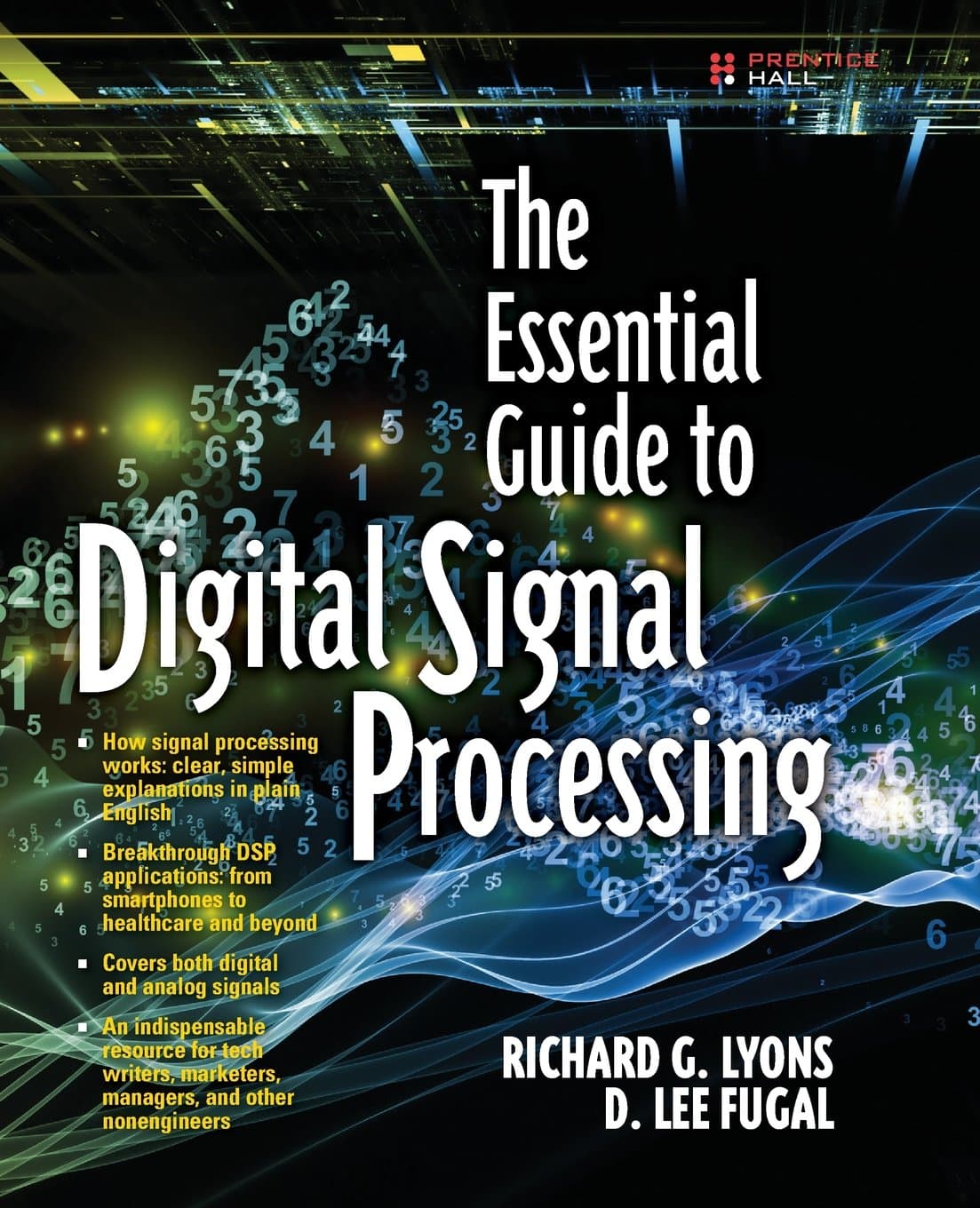
Essential Guide to Digital Signal Processing, The [Lyons, Richard, Fugal, D.] on desertcart.com. *FREE* shipping on qualifying offers. Essential Guide to Digital Signal Processing, The Review: This is just a great book for non-engineers - This is just a great book for non-engineers. (electrical that is.) It explains all the big buzz words in simple language and with great many pictures. The emphasis given the book is written by Lyons is on DSP. But there is a lot to learn here. On nearly every page, you will hear your self saying ah, now I see! I think this would be a great book for any smart high school student headed to engineering school. It covers a large swath of the field and will give very good head-start.On the other hand, I gave a copy of the book to one of my friends who is professor of mechanical engineering locally. He loved it. So the range is large, high school to PhD. But really any one who is working in the tech field and really wants to understand what these terms means, should get this book. - Charan Langton Review: Excellent introductory material - This is excellent work done on covering the gap of signal processing knowledge to anyone that does not come from the field but works on the field. I recommend this to teachers and students of neighbor sectors, such as those from the creative media industries of audio engineering, filmmaking, etc. It covers the very basics of signal theory in a very light manner. I learned how FFT works without even thinking the mathematics. Not for advanced scholars or practitioners of the subject, but highly recommended for the very basics intro. Excellent work!
| ASIN | 0133804429 |
| Best Sellers Rank | #2,602,938 in Books ( See Top 100 in Books ) #244 in Signal Processing #1,388 in Information Management (Books) |
| Customer Reviews | 4.3 4.3 out of 5 stars (59) |
| Dimensions | 7 x 0.46 x 9 inches |
| Edition | 1st |
| ISBN-10 | 9780133804423 |
| ISBN-13 | 978-0133804423 |
| Item Weight | 11.5 ounces |
| Language | English |
| Print length | 208 pages |
| Publication date | May 15, 2014 |
| Publisher | Pearson |
M**E
This is just a great book for non-engineers
This is just a great book for non-engineers. (electrical that is.) It explains all the big buzz words in simple language and with great many pictures. The emphasis given the book is written by Lyons is on DSP. But there is a lot to learn here. On nearly every page, you will hear your self saying ah, now I see! I think this would be a great book for any smart high school student headed to engineering school. It covers a large swath of the field and will give very good head-start.On the other hand, I gave a copy of the book to one of my friends who is professor of mechanical engineering locally. He loved it. So the range is large, high school to PhD. But really any one who is working in the tech field and really wants to understand what these terms means, should get this book. - Charan Langton
P**S
Excellent introductory material
This is excellent work done on covering the gap of signal processing knowledge to anyone that does not come from the field but works on the field. I recommend this to teachers and students of neighbor sectors, such as those from the creative media industries of audio engineering, filmmaking, etc. It covers the very basics of signal theory in a very light manner. I learned how FFT works without even thinking the mathematics. Not for advanced scholars or practitioners of the subject, but highly recommended for the very basics intro. Excellent work!
F**I
Good introduction
This book is a very good introduction on the subject, but if you're looking for a more advanced information about it, try Understanding DSP from the same author. I recommend this book if Dsp is completely new to you.
S**K
Excellent non-mathematical introduction
This is a great introductory book that explains the basic concepts behind signal processing and DSP. Highly recommended. And no math either. Appendix D is full of errors though, but not enough to drop my rating to 4 stars
G**S
Great DSP Starter Book and Refresher.
This is a great book for even experienced DSP engineers. Especially the ones that don't use it every day. Chapter 5 is World Class information, but the entire book is perfect for what they are trying to convey. And it is a great background for what is needed when you use the best book available "Understanding Digital Signal Processing", Rev. 3.
S**G
Perfect for a non-engineer hoping to learn some basics
After I finished the book - I looked at the glossary of terms. Just a few days earlier I had not even heard 90% of them... and at the end of the book I understood what they meant! Could not have asked for a better book to get started with signal processing as a person without any engineering background! Thank you for creating such a valuable resource!
M**.
... was a little more basic than I realized but good to use if you for a refresher
The book was a little more basic than I realized but good to use if you for a refresher. I purchased the book for my Kindle and the digital format was as expected.
M**B
Mediocrity at its best
Mediocre introduction to DSP. I can assume that such an approach will benefit only people who want to learn headlines and glossary of the terminology used in this field. I can't believe that Prentice Hall would publish such a volume. Total waste of money!
O**R
Easy to read and provides and intuitive understanding of the basics of DSP without the math
V**A
This book is a must read for anyone (beginner or not) who wants to understand/refresh the basic fundamentals of Digital Signal Processing. Commendable effort by the author in keeping the material as simple as possible yet rich in information. Just buy it!
M**K
Pitched at just the right level for a beginner. Very well written and illustrated. Highly recommended for anyone new to this field who wants to get started.
E**S
Tres bonne introduction au traitement numérique du signal. Bien écrit, fluide, parle un peu de tout, à affiner avec le livre suivant du même auteur
T**I
Good for those needing a broad and general introduction without getting bogged down in detail or mathematics . In particular key fundamentals such as Nyquist (without too much theory), aliasing and a brief foray into spectral analysis are easily digestible and sufficient to gain a high level understanding.
Trustpilot
Hace 3 semanas
Hace 4 días