We remain fully operational. Our teams are working around the clock to ensure your deliveries continue safely.

Descargar la aplicación


Servicios al cliente
Sobre nosotros
Copyright © 2025 Desertcart Holdings Limited
Descargar la aplicación
Buy anything from 5,000+ international stores. One checkout price. No surprise fees. Join 2M+ shoppers on Desertcart.
Desertcart purchases this item on your behalf and handles shipping, customs, and support to Uruguay.
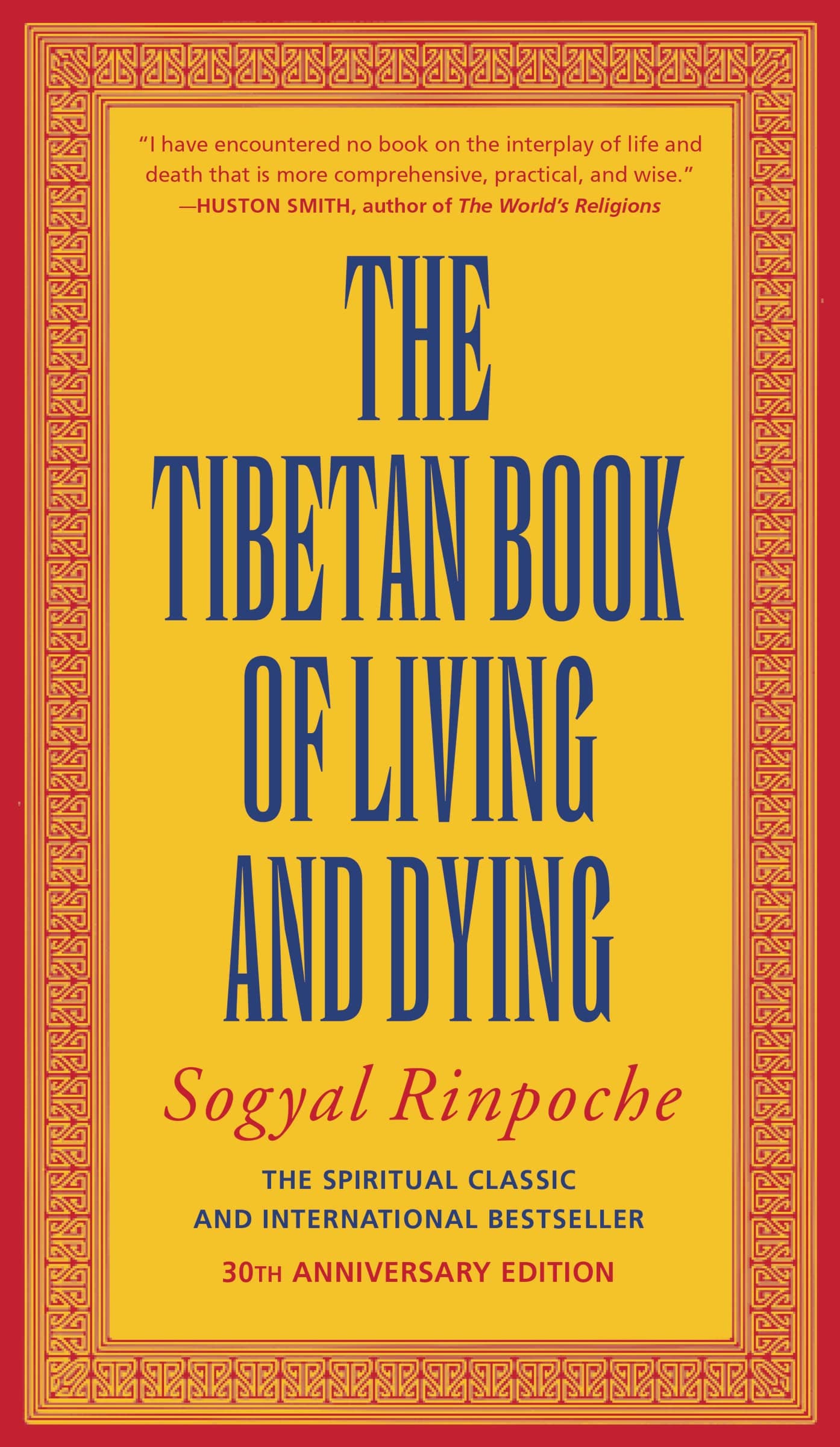
📚 Embrace life fully by mastering the art of dying well
The Tibetan Book of Living and Dying by Sogyal Rinpoche offers a profound, accessible guide to Tibetan teachings on life, death, and dying with peace. Highly rated and widely respected, it blends ancient wisdom with modern compassion, making it essential reading for anyone seeking calm, confidence, and meaning in the face of mortality.
| Best Sellers Rank | #12,723 in Books ( See Top 100 in Books ) #9 in Tibetan Buddhism (Books) #50 in Love & Loss #358 in Personal Transformation Self-Help |
| Customer Reviews | 4.7 out of 5 stars 3,415 Reviews |
M**D
A gentle guide on how to die with grace and peace no matter what religion
Having a stone Buddha in your garden does not make one a Buddhist anymore than wearing orange or refusing to step on spiders does. Having been raised in a mainstream religion, certain aspects of other faiths and belief systems have nonetheless always been fascinating. I was academically introduced to Buddhist philosophy while taking a graduate course on death and dying, and while this book was not assigned, I found it when looking for additional resource material. This book is not to be confused with the more ancient Tibetan Book of the Dead, which I must confess was the book I thought I was buying. I am glad I made the mistake. Besides chanting and displaying compassionate regard for all sentient beings, Buddhists primarily think and spend a lot of time preparing to die. Not in a morbid or neurotic way, mind you, but through meditation and calm preparation, they experience a rehearsal of the dying process and lose their fear of it. Dying becomes an integral part of living - an idea that most people choose to push back into their subconscious. Sogyal Rinpoche offers an accessible narrative and is explicit that his goal is not to convert his readers to Buddhism. Instead his book, written explicitly for western readers, encourages us to consider the wisdom that others - mainly doctors, nurses, palliative and hospice care professionals have adopted and found so valuable inside the pages of this book: how to help people have peaceful deaths. Moreover, it is a life guide to building the confidence for those who feel helpless or scared around a dying person. Individual contact, quiet tenderness and preventing anxiety and panic and promoting laughter and positive thoughts are the greatest gifts we can give a dying person to help them die well. Whatever your belief system is or isn't, Sogyal's advice can be applied alongside any faith system. You don't have to believe in bardo, karma or reincarnation to see the common sense solutions he offers as a way to wipe away the terror of death. His lessons are unthreatening. He speaks to wisdom without borders of territory or tenet. This is a beautiful book in every sense of the word and a thoughtful gift and guide for anyone who is going through a difficult time will personal illness or facing the impending death of a loved one.
P**R
A must read
This book is amazing. This is probably my third copy of it. Paper decent quality. Print is a little small.
X**H
I'm finally beginning to understand...
For the last 20 years or so, I've felt that my spirituality was more along the Buddhist line than that of Christianity. I liked the idea of self-improvement, karma and harmony with the universe rather than worship of a God (especially a jealous and spiteful one as is described in the Old Testament). Well, Rinpoche's book has helped me to see this comparison in a whole new light. He writes about the spirituality of both, and presents many cases where one can follow whatever mysticism that one feels comfortable with rather than making right/wrong contrasts. If one thinks of Christ in terms of what he said and did, he is not that different from Buddha - both enlightened beings teaching us a path to follow toward enlightenment. Where I hadn't been to church in many years, I now find myself looking forward to starting each of my non-work days by reading this book. I could write for hours about the knowledge and understanding that I've gained. I finally understand why others feel the same way about the Bible (although I still don't understand the Old Testament). The amount of wisdom in this book is astounding - from the beginning sections regarding living to the process of dying, to the last chapters that discuss near-death experiences and the evolution of mankind. This book is written in such a clear and loving way that it makes obvious that the author's intent is to improve humanity. In my case, I hope to be able to mature my view of my fellow man toward compassion, and in the process improve both him and myself. If you really take it to heart, this book will help diminish fear of death and motivate to learn and be more prepared for it. After all, death is one thing that we all have in common.
P**A
Important Spiritual Practice
After reading this, I have a great desire to continue my studies. This will become a very important pursuit for me.
A**L
Great book
Great book
J**E
Tibetan book of living an dying
In perfect condition! Right on timeThank you
J**N
Beautiful translation...
This is an amazing translation. I'm teaching a university course on "Impermanence", and I ordered both this translation and one other. The other is much more technical (i.e. the majority of the book is laden with prayers, in both the native language and translated to English. ) Sogyal Rinpoche's translation, however, brings forth the soulful essence of the original teachings in a warm, understandable, 'wise grandfather sitting down to tell you stories about life' fashion. The writing itself is excellent, not just the content. The students love it. I love it. We are all learning so much... Each chapter is broken down into smaller, bite-sized sections (not like a coffee table book, at all-- but in a way that makes the reading feel less dense and more conversational--which I think is important when digesting such important, timeless, meaningful teachings.) Also, this translation really emphasizes Buddhism as a science of the mind and offers so much practical information on how to live life, how to approach meditation, and how to die (or help loved loves die) in peace. I find that students of all religious and non-religious backgrounds are embracing this text whole-heartedly, which does not happen often. Overall, one of the best reads I've had in a long, long time. Blessings, Jaclyn
T**A
Good book
Highly recommend! Knowledge is power
Trustpilot
Hace 1 mes
Hace 4 días