
Descargar la aplicación


Servicios al cliente
Sobre nosotros
Copyright © 2025 Desertcart Holdings Limited
Descargar la aplicación
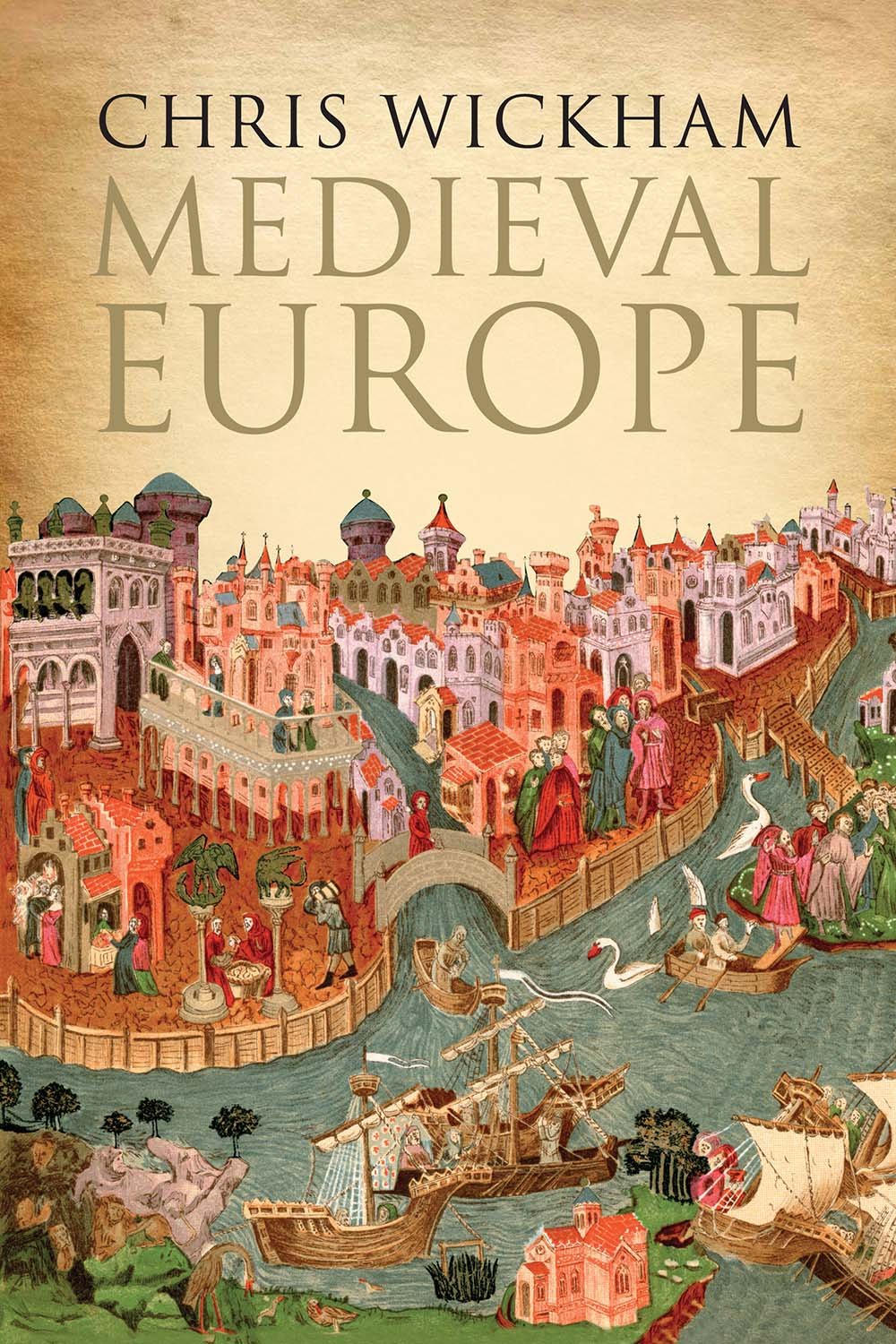
Medieval Europe [Wickham, Chris] on desertcart.com. *FREE* shipping on qualifying offers. Medieval Europe Review: A Magnificent Summary of Developments over a Millennium - This is a truly magnificent summary of what is known about the Middle Ages in Europe, where Europe is broadly conceived: the Byzantine Empire to Andalus, Iceland to Russia, although inevitably, in the current state of research, most attention focuses on developments in Western Europe. Wickham summarizes with great clarity the developing scholarly consensus on how Europe developed during this era; broad trends are visible, almost century by century, but with major differences between particular areas and considerable interaction especially during the later period. Nothing significant is omitted. Political developments take pride of place, but Wickham devotes ample space to the economy as it gradually revived after the collapse of the Western Roman Empire, and also to social and religious conflicts. The culture of the Middle Ages, by contrast, is given relatively short shrift since many other surveys cover it. I read this book in preparation for a trip to see French Gothic cathedrals, and I now feel much better equipped to place them in a proper historical context. Wickham's writing, furthermore, is engrossing, often pointed and always precise. The author intervenes more than occasionally to give his personal views, which, coming from such an accomplished scholar, are more than welcome. The maps and illustrations are excellent. In short, it would be hard to better this volume. Review: Good read. - Very much enjoyed this book. A fairly dense read but a good flow of concepts and drivers of cultural development of polities within the period of 500-1500 AD. One bone to pick, the author rightly notes the substantial increase in population and production during the period beginning with roughly 900 AD and ending with the Plague breakout of the 1340s. What Mr. Wickham failed to mention is the Little Optimum or Medieval Climate Optimum which warmed the earth during 950 AD to 1250 AD, providing for an increase in arable land which substantially contributed to these increases. The subsequent cooling of the earth post-1250 AD compressed much of the northern European population, producing a cauldron of health issues perfectly suited to accelerate the mortality rates associated with the Plague. A big miss there.
| Best Sellers Rank | #1,702,694 in Books ( See Top 100 in Books ) #84 in Historical Study (Books) #92 in European History (Books) |
| Customer Reviews | 4.2 4.2 out of 5 stars (562) |
| Dimensions | 9.3 x 6 x 1.4 inches |
| ISBN-10 | 0300208340 |
| ISBN-13 | 978-0300208344 |
| Item Weight | 1.82 pounds |
| Language | English |
| Print length | 352 pages |
| Publication date | November 29, 2016 |
| Publisher | Yale University Press |
B**R
A Magnificent Summary of Developments over a Millennium
This is a truly magnificent summary of what is known about the Middle Ages in Europe, where Europe is broadly conceived: the Byzantine Empire to Andalus, Iceland to Russia, although inevitably, in the current state of research, most attention focuses on developments in Western Europe. Wickham summarizes with great clarity the developing scholarly consensus on how Europe developed during this era; broad trends are visible, almost century by century, but with major differences between particular areas and considerable interaction especially during the later period. Nothing significant is omitted. Political developments take pride of place, but Wickham devotes ample space to the economy as it gradually revived after the collapse of the Western Roman Empire, and also to social and religious conflicts. The culture of the Middle Ages, by contrast, is given relatively short shrift since many other surveys cover it. I read this book in preparation for a trip to see French Gothic cathedrals, and I now feel much better equipped to place them in a proper historical context. Wickham's writing, furthermore, is engrossing, often pointed and always precise. The author intervenes more than occasionally to give his personal views, which, coming from such an accomplished scholar, are more than welcome. The maps and illustrations are excellent. In short, it would be hard to better this volume.
P**R
Good read.
Very much enjoyed this book. A fairly dense read but a good flow of concepts and drivers of cultural development of polities within the period of 500-1500 AD. One bone to pick, the author rightly notes the substantial increase in population and production during the period beginning with roughly 900 AD and ending with the Plague breakout of the 1340s. What Mr. Wickham failed to mention is the Little Optimum or Medieval Climate Optimum which warmed the earth during 950 AD to 1250 AD, providing for an increase in arable land which substantially contributed to these increases. The subsequent cooling of the earth post-1250 AD compressed much of the northern European population, producing a cauldron of health issues perfectly suited to accelerate the mortality rates associated with the Plague. A big miss there.
A**R
Cogent and Interesting
Great midieval history, stressing continuity with the Roman empire, as is now fashionable. The central argument is that the "feudal revolution" that made power highly devolved starting in the eleventh century made possible a more "engaged" (democratic, though that word is never used) polity when centralized power reemerged after 1350. Centralized power itself was not new, as it existed with the Carolingians, Byzantines, and Romans before then, but the ability of local communities to push back was new. To truly evaluate the argument, you would need to compare to the Muslim and Asian empires, which would be interesting to do but that I haven't seen anyone do. Interesting thought regardless.
P**L
Brilliance amid the weeds
The author is brilliant and has a depth of understanding of the age. Unfortunately, it seems as though he wants to punish the reader. Perhaps, he thinks that he has worked so hard to decipher the age that his readers must pay penance. Otherwise, I don’t see how he could create a maze of a sentence such as: “We do not have the remarkable early notarial registers for Pisa that we have for Genoa, its sister city and rival, from the 1150s onwards, which show the complexity of the contracts which ship-owners made by now, and the density of funding of sea commerce engaged in by traditional élite families, stretching again, very visibly, all over the Mediterranean.” He seems to take perverse pleasure in jamming as many ideas as possible in each sentence. As a result, the reader is left holding a disappearing rope of an idea. By the end of a paragraph, I had to return to the beginning just to remind myself of the original thesis. Wickham has a pure historian’s sense. He refuses to bow to the popular or established interpretation. Sadly, I was only able to glean a third of his brilliance due to his writing.
B**M
The dark ages, not so dark after all
A wonderful book for a lay history buff, thought provoking, introducing new perspective and insights, comprehensive and revealing. Reading this book opened my eyes for how narrow history was taught in schools (during my school days, a while back). News for me were: Rome did not collapse, popes, emperors and kings had to consult, negotiate, make deals, bargain, with a wide array of stakeholders, adversaries and supporters. And - as today - money matters, most notably taxes (I don't recall having heard about their importance in school). The later economic rise of European nations was not an accident either or, as the current mainstream narrative would have it, based mostly on exploitative colonialism or imperialism. While reading this book, I realized that the later European accomplishments in the development of technology, complex economies and military strength were to a large extent the result of a gradual development of a culture of allowing diverse ideas and innovations to flourish and putting then to the test in public discourse or practical application. This process, I learned, started already in the early middle ages and survived all the mayhem caused by wars, climate change and the black death as the driver of economic development from the renaissance, through the enlightenment, the industrial revolution all the way to the collapse of the old world order in 1914. Lastly, much to learn for observers of current day politics, and lessons to be learned that are still valid - if they were applied.
R**S
This is Marxist claptrap those imposes the tiresome theories of Karl Marx on medieval societies. Avoid.
P**G
Realizar una síntesis de Europa medieval es sin duda un gran desafío, pero este libro ha cumplido justo esa función, abarca en tiempo desde el decaimiento del imperio romano de oeste hasta la reforma, abarca todas las regiones de Europa incluyendo las del norte, habla de los califatos, los bizantinos y posteriormente los otomanos. no es una lectura pesada pero si muy completa a manera de síntesis. Idioma: Inglés
P**T
Dans cet ouvrage de synthèse (et de vulgarisation dans le meilleur sens du terme), Wickham aborde le moyen-age proprement dit après "The Inheritance of Rome" Le livre tranche d'un point traité de manière un peu floue dans "The Inheritance" : le début du moyen-age est clairement le V° siècle avec la création de royaumes barbares dans l'espace occidental de l'empire romain. Les "barbares" en cause pouvaient être largement romanisés mais ils ont "cassé" des mécanismes essentiels, à commencer par un Etat central financé par la fiscalité. Wickham ambitionne une présentation historiographique large du Moyen-Age, incluant les "marges", et non focalisée sur les espaces francs, anglais et italiens. Il y réussit sans doute pour les "marges" slaves, beaucoup moins pour l'Ecosse, l'irlande ou la Scandinavie. Deuxième sujet ouvert à discussion : l'unité européenne y est quelque peu "downplayed", la Chrétienté occidentale ayant selon l'auteur une conception très lâche, au mieux, de son unité, au moins avant le XI° siècle. A titre personnel, donc subjectif, j'ai eu parfois une impression de relâchement conceptuel dans ce livre (ou du moins de superficialité rapide), rapporté à l'exceptionnelle précision analytique qui caractérise la plupart des oeuvres de ce grand médiéviste (insuffisamment traduit en français). Exemple, le traitement de la conquête de la Sicile par les Normands : "it is indeed hard to avoid the impression that most of the time they were simply having fun : they had a reputation for oppression and imaginative brutality which they strove to live up to ...and doing it in the sun of southern Italy was also probably more fun than doing it in Hauteville, Normandy..." (page 118). Une écriture historiographique qui fait place à l'humour est certainement plus plaisante à lire qu'un narratif terne et ennuyeux, mais on se sent en droit de demander un peu plus de précision analytique
M**R
A nice , surprisingly terse but pleasant, easily readable book on serious stuff that makes up the period before the usual relatively late European cultural revolution we traditionally have presented. Lots of important -- and particularly -- interesting detail. Good pictures too. And, the price is right!
P**G
Too much for 1 book, not enough place for more details. But very, very interesting. Invites to go further in researching and finding details.
Trustpilot
Hace 1 mes
Hace 1 día