We remain fully operational. Our teams are working around the clock to ensure your deliveries continue safely.

Descargar la aplicación


Servicios al cliente
Sobre nosotros
Copyright © 2025 Desertcart Holdings Limited
Descargar la aplicación
Buy anything from 5,000+ international stores. One checkout price. No surprise fees. Join 2M+ shoppers on Desertcart.
Desertcart purchases this item on your behalf and handles shipping, customs, and support to Uruguay.
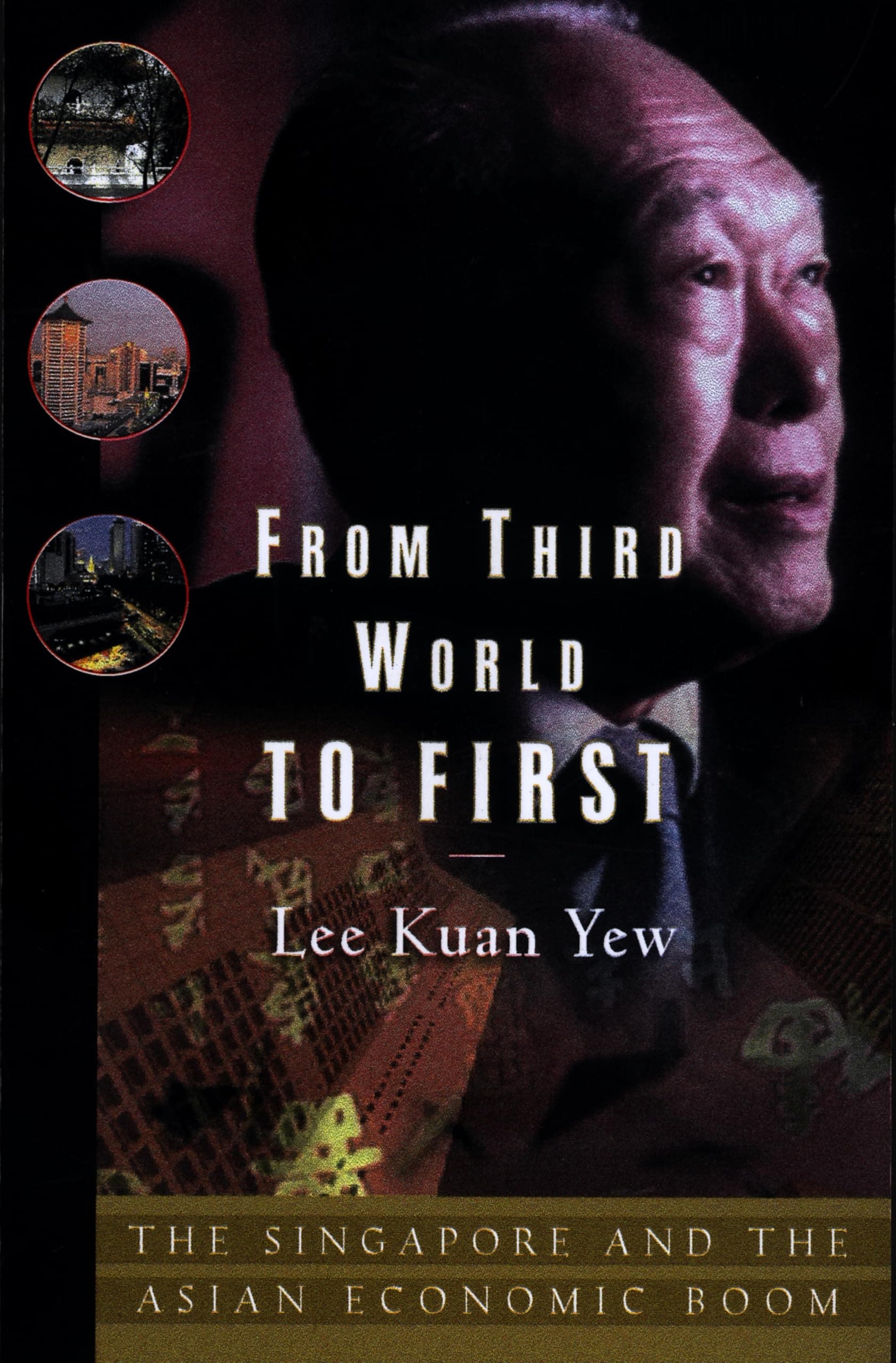
From Third World to First: A Statesman’s Powerful Story of Transformation from Poverty to National Leadership [Yew, Lee Kuan] on desertcart.com. *FREE* shipping on qualifying offers. From Third World to First: A Statesman’s Powerful Story of Transformation from Poverty to National Leadership Review: “There is such a thing as evil, and men are not just evil because they are victims of society.” - “There are books to teach you how to build a house, how to repair engines, how to write a book. But I have not seen a book on how to build a nation out of disparate collection of immigrants from China, British India, and the Dutch East Indies.’’ (3) This unique story, building a nation from scratch, makes Lee’s experience so interesting. Who else? How to crate an economy? Where to find jobs? Well . . . many believed that multinational corporations. . . “. . . were exploiters of cheap land, labor and raw materials. This ‘dependency school’ of economists argued that they continued the colonial pattern of exploitation that left the developing countries selling raw materials and buying consumer goods from the advanced countries. The corporations controlled technology and consumer preferences and formed alliances with their host governments to exploit the people and keep them down.’’ (58) Lee agree? “Third world leaders believed this theory of neocolonialist exploitation, but Keng Swee and I were not impressed.’’ (58) His skepticism proved correct. Singapore now wealthy. Mainly from the boost from multinational corporations. Wow! Chapter 7 - A Fair, Not Welfare, Society “We believed in socialism, in fair shares for all. Later we learned that personal motivation and personal rewards were essential for a productive economy. However, because people are unequal in their ability, if performance and rewards are determined by the marketplace, there will be a few big winners, many medium winners, and a considerable number of losers.’’ (95) What problem? “That would make for social tensions because a society’s sense of fairness is offended.’’ (95) What to do? “My primary preoccupation was to give every citizen a stake in the country and its future. I wanted a home owning society. I had seen the contrast between the blocks of low-cost rental apartments, badly misused and poorly maintained, and those of house proud owners.’’ (95) Another key was adamant, unyielding integrity in government . . . “It is easy to start off with high moral standards, strong convictions, and determination to beat down corruption. But it is difficult to live up to these good intentions unless the leaders are strong enough to deal with all transgressors, and without exceptions.’’ (163) ‘Without exceptions’! Really . . . Lee continued to seek new ideas and expert opinion. However . . . “I found many other fresh ideas and picked the brains of other highly intelligent people who were not always right. They were to politically correct. Harvard was determinedly Liberal. No scholar was prepared to say or admit there was any inherent differences between races or cultures or religion.’’ (460) Well . . . “They held that human beings were equal and a society only needed correct economic policies and institutions of government to succeed. They were so bright I found it difficult to believe that they sincerely held these views they felt compelled to espouse.’’ (461) Yep, he is not ‘politically correct’! Another example . . . “Man needs a moral sense of right and wrong. There is such a thing as evil, and men are not just evil because they are victims of society.” This large work (681 pages) covers wide variety of themes. International politics, economic decisions, financial developments, race riots, communist adversaries, etc., etc.. Considerable space on his visits and views on other countries; including Russia, China, America, Taiwan, etc.. Also, forthright analysis of world leaders, Gorbachev, Gerald Ford, Henry Kissinger, etc.. Fascinating! Easy to read. Reader will need interest on political, economic, social issues. Adds insight to the modern world. Review: TEN Stars !! - A magnificent account of how Singapore was brought from being an invaded, raped, destroyed nation by the Japanese in WW2, to being a superb example of multicultural, successful society. From desertcart's own summary:- "Few gave tiny Singapore much chance of survival when it was granted independence in 1965. How is it, then, that today the former British colonial trading post is a thriving Asian metropolis with not only the world's number one airline, best airport, and busiest port of trade, but also the world's fourth–highest per capita real income? The story of that transformation is told here by Singapore's charismatic, controversial founding father, Lee Kuan Yew. Rising from a legacy of divisive colonialism, the devastation of the Second World War, and general poverty and disorder following the withdrawal of foreign forces, Singapore now is hailed as a city of the future. This miraculous history is dramatically recounted by the man who not only lived through it all but who fearlessly forged ahead and brought about most of these changes. This book recounts the AMAZING change to our much loved Singapore in that short time." The book is written in clear language and gives great deal of personal detail and outlines his struggle, which was so successful in bringing Singapore to the very top of great nations. We have been to Singapore a number of times and it truly is the most peaceful, racially diverse nation.
| Best Sellers Rank | #18,352 in Books ( See Top 100 in Books ) #3 in Southeast Asia History #10 in Asian Politics #70 in Political Leader Biographies |
| Customer Reviews | 4.8 4.8 out of 5 stars (929) |
| Dimensions | 6.12 x 2.16 x 9.25 inches |
| Edition | First Edition |
| ISBN-10 | 0060197765 |
| ISBN-13 | 978-0060197766 |
| Item Weight | 10.4 ounces |
| Language | English |
| Print length | 752 pages |
| Publication date | October 3, 2000 |
| Publisher | Harper |
C**R
“There is such a thing as evil, and men are not just evil because they are victims of society.”
“There are books to teach you how to build a house, how to repair engines, how to write a book. But I have not seen a book on how to build a nation out of disparate collection of immigrants from China, British India, and the Dutch East Indies.’’ (3) This unique story, building a nation from scratch, makes Lee’s experience so interesting. Who else? How to crate an economy? Where to find jobs? Well . . . many believed that multinational corporations. . . “. . . were exploiters of cheap land, labor and raw materials. This ‘dependency school’ of economists argued that they continued the colonial pattern of exploitation that left the developing countries selling raw materials and buying consumer goods from the advanced countries. The corporations controlled technology and consumer preferences and formed alliances with their host governments to exploit the people and keep them down.’’ (58) Lee agree? “Third world leaders believed this theory of neocolonialist exploitation, but Keng Swee and I were not impressed.’’ (58) His skepticism proved correct. Singapore now wealthy. Mainly from the boost from multinational corporations. Wow! Chapter 7 - A Fair, Not Welfare, Society “We believed in socialism, in fair shares for all. Later we learned that personal motivation and personal rewards were essential for a productive economy. However, because people are unequal in their ability, if performance and rewards are determined by the marketplace, there will be a few big winners, many medium winners, and a considerable number of losers.’’ (95) What problem? “That would make for social tensions because a society’s sense of fairness is offended.’’ (95) What to do? “My primary preoccupation was to give every citizen a stake in the country and its future. I wanted a home owning society. I had seen the contrast between the blocks of low-cost rental apartments, badly misused and poorly maintained, and those of house proud owners.’’ (95) Another key was adamant, unyielding integrity in government . . . “It is easy to start off with high moral standards, strong convictions, and determination to beat down corruption. But it is difficult to live up to these good intentions unless the leaders are strong enough to deal with all transgressors, and without exceptions.’’ (163) ‘Without exceptions’! Really . . . Lee continued to seek new ideas and expert opinion. However . . . “I found many other fresh ideas and picked the brains of other highly intelligent people who were not always right. They were to politically correct. Harvard was determinedly Liberal. No scholar was prepared to say or admit there was any inherent differences between races or cultures or religion.’’ (460) Well . . . “They held that human beings were equal and a society only needed correct economic policies and institutions of government to succeed. They were so bright I found it difficult to believe that they sincerely held these views they felt compelled to espouse.’’ (461) Yep, he is not ‘politically correct’! Another example . . . “Man needs a moral sense of right and wrong. There is such a thing as evil, and men are not just evil because they are victims of society.” This large work (681 pages) covers wide variety of themes. International politics, economic decisions, financial developments, race riots, communist adversaries, etc., etc.. Considerable space on his visits and views on other countries; including Russia, China, America, Taiwan, etc.. Also, forthright analysis of world leaders, Gorbachev, Gerald Ford, Henry Kissinger, etc.. Fascinating! Easy to read. Reader will need interest on political, economic, social issues. Adds insight to the modern world.
D**E
TEN Stars !!
A magnificent account of how Singapore was brought from being an invaded, raped, destroyed nation by the Japanese in WW2, to being a superb example of multicultural, successful society. From Amazon's own summary:- "Few gave tiny Singapore much chance of survival when it was granted independence in 1965. How is it, then, that today the former British colonial trading post is a thriving Asian metropolis with not only the world's number one airline, best airport, and busiest port of trade, but also the world's fourth–highest per capita real income? The story of that transformation is told here by Singapore's charismatic, controversial founding father, Lee Kuan Yew. Rising from a legacy of divisive colonialism, the devastation of the Second World War, and general poverty and disorder following the withdrawal of foreign forces, Singapore now is hailed as a city of the future. This miraculous history is dramatically recounted by the man who not only lived through it all but who fearlessly forged ahead and brought about most of these changes. This book recounts the AMAZING change to our much loved Singapore in that short time." The book is written in clear language and gives great deal of personal detail and outlines his struggle, which was so successful in bringing Singapore to the very top of great nations. We have been to Singapore a number of times and it truly is the most peaceful, racially diverse nation.
J**N
GREAT!
Inspite of loud criticism from Western journalists in particular and Liberal minded Americans in general, Lee Kuan Yew, the former Prime Minister and "father" of Singapore, has done a phenomenal job of bringing several races, language and religious groups into a coherent thriving successful and rich country. My congratulations to Mr. Yew (I guess that would be his last name? Lee Kuan Yew)! He started with a hodge podge of nothing in 1965 and within 35 years had one of the richest and successful countries on earth! Mr. Yew's great strength is his ability to appreciate and know the nuances of cultures of Singapore and how to respond to the positive as well as the negative parts of each. We in America would do well to take advice from him about relations and the aspirations of our various ethnic and racial groups. The most outstanding of Mr. Yew's accomplishments is how he and his cadre of competent ministers have blended Western (in particular British) commercial laws with Confucist tenants to form a multi-cultral rich society that puts the rule of law as an absolute. Mr. Yew, who is of Chinese decent, readily admits the shortcomings and strengths of Chinese culture. In particular, he refers to corruption, nepotism, among others as negative aspects, somehow though he has managed to create a society that comes down very hard on the corrupt, making a level playing field for all in the Singaporan society. He has provided home ownership for the citizens of Singapore, solid medical and retirement benefits as well as educational opportunities for all of its citizens. Having done some business in Japan and having many Asian including Chinese clients, I am struck by Mr. Yew's ability to adhere to the Rule of Law in Singapore rather than the rule by individual which is very prevelent in many Asian (Chinese in particular) societies. Mr. Yew's assessment is right on regarding the Australians and the Japanese. The book is interesting reading, most of the spelling is British way of spelling so for some who are accustomed to the American spelling it is discomforting to read some words "mispelled." If you want to know a success story when multiple races, languages, religions, cultral and ethnic differences are present look to Singapore. It has done it all and in a short time. I don't know how he did it, but the world is a better place for it. We could all learn a lesson or two from Mr. Yew! Joe Seckelman
A**S
good read
good read
S**I
Super light weight
A**R
Written in his short, precise and highly astute style. A great book for anyone interested in learning about the development of Singapore, from the very man who built this modern marvel.
G**B
The best book on nation building. This is a true gem that should be translated to many languages.
V**S
I am absolutely spell bound by the intuition and the will power of Lee Kuan Yew in making Singapore what it is today. The book is divided into various chapters some of which looks into various sectors of the country and some which relates to his country's relations with other countries. Each chapter is separate from the other. So chronological order does not exist between chapters and is present only in the chapters. He beautifully explains the past, the changes made to reach the present state and his hopes for the future. Comparisons with India are spread out throughout the book. India and Singapore had the same economic and social conditions at the time of independence. But the decisions of the political leaders changed the course of our nation which could have become a geopolitical superpower in the Asian, which it failed to achieve in spite of being blessed with all the necessary resources, whereas Singapore achieved it with nothing. One point which hit me hard was where he mentioned that he had requested the Indian governments help to build the Singapore city right after it's independence. But the then prime minister did not even acknowledge his request. Now the irony. Some 50 years later, we are using Singaporean help in building the capital of a newly formed state.
B**I
A truly inspiring leader. Definitely worth a read. So many life lessons and transferable bits of information to all aspects of life.
Trustpilot
Hace 2 meses
Hace 1 mes