We remain fully operational. Our teams are working around the clock to ensure your deliveries continue safely.

Descargar la aplicación


Servicios al cliente
Sobre nosotros
Copyright © 2025 Desertcart Holdings Limited
Descargar la aplicación


🦾 Print Strong, Print Smart — Elevate Your 3D Game with Carbon Fiber Power!
eSUN's Carbon Fiber Filled Nylon filament blends 20% carbon fiber with 80% nylon to deliver superior strength, rigidity, and wear resistance. Designed for demanding industrial, medical, and complex 3D printing applications, it offers excellent thermal stability up to 120°C, flame retardance, and minimal warping for precision prints. The filament’s consistent diameter and tangle-free spool ensure smooth feeding and high success rates, while recommended use of hardened nozzles and dry storage maximizes print quality and equipment longevity.


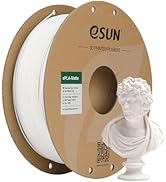
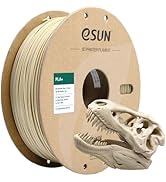
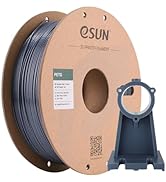


| ASIN | B07DVY9BLN |
| Best Sellers Rank | 27,385 in Business, Industry & Science ( See Top 100 in Business, Industry & Science ) 414 in Filament 3D Printing Materials |
| Brand Name | eSUN |
| Colour | B-Natural |
| Country Of Origin | China |
| Customer Reviews | 4.0 4.0 out of 5 stars (775) |
| Item Diameter | 1.75 Millimetres |
| Item Weight | 1 Kilograms |
| Manufacturer | eSUN |
| Manufacturer Part Number | ePA-CF175N1KG |
| Material Type | Carbon Fibre, Nylon |
| Model Number | ePA-CF175N1KG |
| Number of Items | 1 |
| Special Features | Material Engineering: High Strength, Rigidity, Heat Resistance, Good Cushioning, Dimensionally Stable |
| UPC | 781520912485 |
| Unit Count | 1000 gram |
T**X
Nylon is a huge learning curve to print with!!
I recently tried the eSUN Nylon Filament for my 3D printing projects, and I have to say, I’m pretty impressed. First off, the quality of the filament is solid. It has a nice, consistent diameter of 1.75mm, which made it easy to load into my printer without any issues. One of the standout features for me has been the strength and flexibility of the prints. I've used this filament to create functional parts, and they’ve held up really well under stress. It’s great to see that the prints can withstand some bending without breaking. Another aspect worth mentioning is the layer adhesion. The prints come out looking smooth, and the layers bond nicely, which is a huge plus for durability. I did have to tweak my settings a bit to get the best results, especially with the print temperature, but nothing too complicated. However, I found that it can be somewhat challenging to print with in terms of warping, so I would recommend using a heated bed if possible. Also, make sure to keep the filament dry; nylon tends to absorb moisture, which can affect the print quality. Overall, I think the eSUN Nylon Filament is a great option if you need strong, reliable prints. Just keep an eye on your printer settings and environment, and you should be good to go!
M**.
pro finish prints
this is my second reel I have only just mastered it. so I used up 1st reel and had relatively successful prints thought id change nozzle when I started on 2nd. my prints were awful. it was only 4 or 5 hours into printing multiple parts messing with settings that I noticed the nozzle I took out was 0.6 but was printing with 0.4 settings. I came across a web page that recommends printing a flow calculator box which I did and to my amazement it suggested I reduce flow to 70%. so I thought id try it and guess what prints are perfect again so using a 0.6 nozzle by mistake was just a fluke and inadvertently did the same as reducing flow. so i would recommend the following. 1.dry your filament as soon as you take it out of the packaging. 2. if possible print it from and enclosed spool or box 3. hardened nozzle 4. bed set at 65 5. nozzle set between 270-280 for fantastic layer adhesion 6. no cooling fan 7. run the flow calculator test and apply settings. google 3dmakerengineering flow rate 8. use a glue stick
I**N
Clear Nylon - very difficult filament, Black CF-Nylon - Fantastic!
I have big problems with this Nylon) Endless fight) Yes I understand that Nylon in general is very difficult material to print, but maaaan))) I tried ~20 prints and only one resulted in almost success. Works with lower flow rates about 70-80% out of your printer regular settings, keep this in mind guys who has same experience. Requires precise temperature, for me worked bed temp 110 a d nozzle at 255, at 260 it start frying at 250 it gets clogged) Don't even think about buying this fillament if you don't have an enclosure for you printer. Only one adhesive from Primafix helped to keep the model sticked to the build plate. Just bought a black carbon fiber filled Nylon from Esun, will cehck how it does in next days, I've seen a lot of good reviews and results with black Nylon. I don't know how else to describe it))) one thing for sure, prints are very strong, really strong. Happy 3D printing to everyone. Second review for second product, can't separate them since both filaments are under same page. So next reply is about Carbon Fiber Nylon Approved! This filament is fantastic in comparison to the clear Nylon. Print speed 50mm/s, extrussion rate 83%, adhesive Primafix, glass bed temp 110, nozzle temp 255, fan at 0(zero). I am super happy with results of black CF-Nylon, I can really recomend this filament, printing is much easier than Clear Nylon. I have a lot of ideas what to print with it, really strong prints! In my opinion you have to exclude printing kitchen stuff with it since it's filled with carbon micro fibres, you can slightly feel them when holding the printed objects. Will change the rating to 4 stars only because of bad experience with Clear Nylon.
R**A
Great quality for a good price
After drying the filament in the oven for ~3 hours at 75-80 °C and printing using the SUNLU drying box I am getting very good results. First I tried printing using only the drying box but then some horizontal holes were appearing. I solved that with the oven. The pieces are really strong. I took the pictures without cleaning or post-processing the pieces. Printer: Ender 3pro Hotend: Dragon HF Phaetus Nozzle: Nozzle X E3D Fan: Hero me gen5 dual fan 5015 Fan speed: 20-30 % (65 % for bridges) Hotend temperature: 258 °C Bed temperature: 85 °C Bed adhesion: Glue stick Enclosure: No Support: No Layer height: 0.15 mm Print speed: 40-50 mm/s Retraction: 6 mm at 40 mm/s
M**E
Voldoet aan de verwachtingen
B**K
Eğer modelde çarpılma oluyorsa , kenarlardan kalkıyorsa cam tabla ve yapıştırıcı kullanın pei tabla olmuyor bilginize Sağlamlığı çok iyi , filament 1 günde bile hemen nemleniyor kurutucı şart, açık kasa yazıcımın etrafını kapatarak baskı alabiliyorum pa-cf filamente göre ayrıntılar çok daha iyi
E**H
Die Liferung erfolgte schnell, entspricht der Beschreibung.
Ł**Z
Filament bardzo słabej jakości. Po mimo suszenia 12,24 i więcej godzin ciągle się odklejał od stołu. Specjalne kleje do PA nie pomogły. Nawet płyta dedykowana do PA od Prusy nie pomogła .. szkoda kasy
A**E
Vorab möchte ich anmerken, dass ich kein Freund von eSUN Filament bin. In der Vergangenheit hatte ich mehrfach das Problem, dass eSUN ABS+ im Einsatz versagt hat. Ich habe das PA-CF Filament jedoch schon lange im Schrank stehen und habe es aufgrund der aufwendigen Trocknungsprozedur selten verwendet. Dies hat sich aufgrund eines Projektes jedoch rapide geändert, weshalb ich die letzten Wochen gut 500g verbraucht habe. Wie im Titel plakativ erläutert müssen Polyamide vor der Verarbeitung getrocknet werden, da Polyamide hydroskopisch sind. Ich habe einen Filamenttrockner verwendet, der maximal mit 70°C trocknen kann. Das Filament wurde von mir bei einer relativen Luftfeuchtigkeit von etwa 13% aus dem Filamenttrockner entfernt und in eine Luftdichte Trockenbox mit Silicagel und Hygrometer eingelagert. Dort pedelte sich die relative Luftfeuchtigkeit auf 14% ein. Das Filament wurde dann direkt aus der Trockenbox gedruckt. Sofort aus der Verpackung in die Trockenbox ergab sich eine relative Luftfeuchtigkeit von über 30% , es ist also zwingend notwendig das Filament vor dem Gebrauch zu trocknen. Wer keine Trocknungsmöglichkeit hat oder keinen geschlossenen Drucker, dem kann ich das Filament nicht empfehlen! Die Druckqualität ist sehr gut. Aufgrund der höheren Schwindung und der Anisotropie durch die Fasern sollte Druckprofil und Filamentprofil auf den Drucker angepasst werden. Ich verwendete den Bambulab P1S mit Generic PA-CF profil und lediglich angepasster Schwindung und XY-Kompensation/Lochkompensation im Druckprofil. Entsprechende Testdrucke findet man überall im Internet. Das Filament sollte übrigens nicht in das AMS geladen werden. Ein geschlossener Bauraum ist notwendig! Ich habe gute Ergebnisse auf texturierten PEI mit Klebestift, sowie glattem HighTemp-PEI mit Bambulabs Liquid Glue und noch bessere Ergebnisse auf der Engeneering Plate mit dem Klebestift erzielt. Zu beginn hatte ich auch drucke mit nicht getrocknetem oder nur teils getrocknetem (rel. 25% im Trockner) Filament durchgeführt. Das Ergebnis lässt sich aus Bilder aus anderen Rezensionen hier auf Amazon ansehen. Ungetrocknet bekommt das Bauteil eine unschöne Oberfläche, da das Wasser beim austritt des Filaments aus der Nozzle verdampft. Die Festigkeit wird empfindlich gemindert und Bauteile wirken stark biegsam und porös. Im schlimmsten fall lassen sich kleine Bauteile mit der Hand zerbröseln. Generell ist Polyamid ein recht flexibler Werkstoff (Anwendung z.B. Kabelbinder) durch den Kohlefaseranteil erreicht man jedoch eine deutlich höhere Formstabilität. Es handelt sich um einen Hochleistungskunststoff, auch wenn das Filament aufgrund vermutlich kürzerer Kohlefasern gegenüber einem Spritzgussbauteil das nachsehen hätte, schlägt es handelsübliche Filamente wie PETG, ABS, ASA deutlich, sofern es trocken ist. Bitte keine Rezensionen einstellen, wenn man das Filament nicht vorbehandelt hat, ich kann die Frustration verstehen, wenn etwa nicht sofort funktioniert und PA-CF Filament ist generell recht teuer und anspruchsvoll. Das man es trocknen muss ist generell bei allen Polyamiden der Fall nicht nur spezifisch bei diesem Produkt!
Trustpilot
Hace 1 mes
Hace 2 días