We remain fully operational. Our teams are working around the clock to ensure your deliveries continue safely.

Descargar la aplicación


Servicios al cliente
Sobre nosotros
Copyright © 2025 Desertcart Holdings Limited
Descargar la aplicación
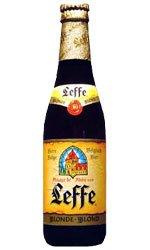
Leffe Blonde is a classic Abbey beer with smooth and well balanced fruity, warming flavours. The beer has hints of quince, gooseberry, bitter cherry and apple flavours together with hints of cloves, nutmeg and allspice.Originally brewed by monks near Dinant, Belgium, Leffe Blonde continues to be brewed to the traditional recipe created in 1240 in the monastery. Due to a licensing agreement dating back to the early 1950's Leffe brewing activities moved to the small Belgium university town of Leuven and the Abbey still receives royalties on sales. Leffe Blonde with its distinct heritage and appealing taste is without doubt the number one among Belgian Abbey beers.Gold Medal, 1998 Chicago Beer awards. Silver Medal, 1995 World Beer Championship.Bronze Medal, 1999 Australia International Beer awards. Review: The unfortunate circumstances surrounding a once great Belgian ale... - During the late 1990's and early 2000's, this was one of my favorites. Back then, (in my region of the U.S.), the 750ml bottle was the only option; I would purchase it to share with friends, trying to introduce them to something new in the beer world. Strangely, the beer then left the Minnesota markets for a couple of years. Needless to say I was quite displeased with this. Despite my efforts, there was just no way that I could logistically get my hands on this now precious and coveted ale. Then a few years ago, Leffe resurfaced again - this time exclusively in 6 pack form. Moreover, it was now in virtually every liquor store that carried at least a minimal selection of imported beers. Although I was pleased that Leffe had returned, it just didn't feel quite right; it was now too ubiquitous, and I missed the old 750 ml corked bottles. Now, in the past year or so, the 750ml bottles have returned. Additionally, the sticker price is surprisingly much cheaper (approximately $4 - $6) than its Belgian competitors. Once again, I was glad to see the return of the quintessentially Belgian corked bottle for Leffe. However, the significantly reduced cost of the ale made me a bit suspicious. Regardless, like reacquainting with an old friend, I decided to pick up a bottle to see if Leffe was still one of Belgium's finest. While there is no doubt that Leffe is still a quality Belgian ale, there seems to be something slightly different with this product, some subtilities that seem to be lacking. I noticed it mainly in the finish of the beer; there seemed to be a vaguely noticeable "thinness" that I've sometimes associated with cheaper quality American brews. I started to "smell a rat," so I decided to dig a little bit deeper into recent information about Leffe; what I uncovered made my heart sink a little bit... It seems that one major step in the wrong direction for Leffe occurred in 2004. It was during this time that Interbrew, the company that owned the rights to Leffe, merged with the Brazilian brewing company AmBev. Changing the company name to InBev following the merger, the conglomerate earned itself a very negative reputation as a ruthless predator in the beer manufacturing world. It is also noteworthy to point out that this was roughly the same time period in which Leffe became conspicuously absent from the shelves of Minneapolis liquor stores. Coincidence? Maybe, but I'm willing to bet that it wasn't. In November 2008, InBev purchased Budweiser giant Anheuser-Busch for $52 billion. Changing the name to "Anheuser-Busch InBev" (or "AB InBev" for short), the newly formed conglomerate was now the world's #1 beer manufacturer. Moreover, multiple resources that I read cited the fact that AB InBev was now using corn and other cost-effective measures in their brewing process for Leffe -- something that was not being done previously. In one fell swoop, this explains the recent widespread distribution, the suspiciously low cost, and the noticeably different taste of a once great Belgian ale. As I write this, I keep shaking my head; I feel a bit duped and betrayed (unfortunately, Leffe is just the tip of the iceberg - other quality beers such as Franziskaner, Bass, Goose Island, and Hoegaarden are also owned by AB InBev). By most accounts that I've read, AB InBev seems to have garnered a reputation for buying up smaller beer companies and either callously altering their brewing processes (in the name of cost-effective measures) or working toward closing the products lines down altogether. There's lots of negative information out there in regard to this company... I may need to reconsider how often ( if at all) I should purchase products that support such a dubious organization.
| ASIN | B004EAMJGU |
| Alcohol Content | 6.6 Percent by Volume |
| Alcohol content | 6.6 Percent by Volume |
| Body description | golden_-_blonde |
| Brand | Leffe |
| Brand Name | Leffe |
| Customer Reviews | 3.0 out of 5 stars 1 Review |
| Global Trade Identification Number | 05014379036794 |
| Item Weight | 0.4 Kilograms |
| Item weight | 0.4 Kilograms |
| Liquid Volume | 330 Millilitres |
| Liquid volume | 330 Millilitres |
| Manufacturer | Leffe |
| Number of items | 1 |
| Unit Count | 330.00 ml |
| body-description | golden_-_blonde |
| number-of-items | 1 |
R**A
The unfortunate circumstances surrounding a once great Belgian ale...
During the late 1990's and early 2000's, this was one of my favorites. Back then, (in my region of the U.S.), the 750ml bottle was the only option; I would purchase it to share with friends, trying to introduce them to something new in the beer world. Strangely, the beer then left the Minnesota markets for a couple of years. Needless to say I was quite displeased with this. Despite my efforts, there was just no way that I could logistically get my hands on this now precious and coveted ale. Then a few years ago, Leffe resurfaced again - this time exclusively in 6 pack form. Moreover, it was now in virtually every liquor store that carried at least a minimal selection of imported beers. Although I was pleased that Leffe had returned, it just didn't feel quite right; it was now too ubiquitous, and I missed the old 750 ml corked bottles. Now, in the past year or so, the 750ml bottles have returned. Additionally, the sticker price is surprisingly much cheaper (approximately $4 - $6) than its Belgian competitors. Once again, I was glad to see the return of the quintessentially Belgian corked bottle for Leffe. However, the significantly reduced cost of the ale made me a bit suspicious. Regardless, like reacquainting with an old friend, I decided to pick up a bottle to see if Leffe was still one of Belgium's finest. While there is no doubt that Leffe is still a quality Belgian ale, there seems to be something slightly different with this product, some subtilities that seem to be lacking. I noticed it mainly in the finish of the beer; there seemed to be a vaguely noticeable "thinness" that I've sometimes associated with cheaper quality American brews. I started to "smell a rat," so I decided to dig a little bit deeper into recent information about Leffe; what I uncovered made my heart sink a little bit... It seems that one major step in the wrong direction for Leffe occurred in 2004. It was during this time that Interbrew, the company that owned the rights to Leffe, merged with the Brazilian brewing company AmBev. Changing the company name to InBev following the merger, the conglomerate earned itself a very negative reputation as a ruthless predator in the beer manufacturing world. It is also noteworthy to point out that this was roughly the same time period in which Leffe became conspicuously absent from the shelves of Minneapolis liquor stores. Coincidence? Maybe, but I'm willing to bet that it wasn't. In November 2008, InBev purchased Budweiser giant Anheuser-Busch for $52 billion. Changing the name to "Anheuser-Busch InBev" (or "AB InBev" for short), the newly formed conglomerate was now the world's #1 beer manufacturer. Moreover, multiple resources that I read cited the fact that AB InBev was now using corn and other cost-effective measures in their brewing process for Leffe -- something that was not being done previously. In one fell swoop, this explains the recent widespread distribution, the suspiciously low cost, and the noticeably different taste of a once great Belgian ale. As I write this, I keep shaking my head; I feel a bit duped and betrayed (unfortunately, Leffe is just the tip of the iceberg - other quality beers such as Franziskaner, Bass, Goose Island, and Hoegaarden are also owned by AB InBev). By most accounts that I've read, AB InBev seems to have garnered a reputation for buying up smaller beer companies and either callously altering their brewing processes (in the name of cost-effective measures) or working toward closing the products lines down altogether. There's lots of negative information out there in regard to this company... I may need to reconsider how often ( if at all) I should purchase products that support such a dubious organization.
Trustpilot
Hace 1 mes
Hace 1 mes