
Desertcart purchases this item on your behalf and handles shipping, customs, and support to Uruguay.
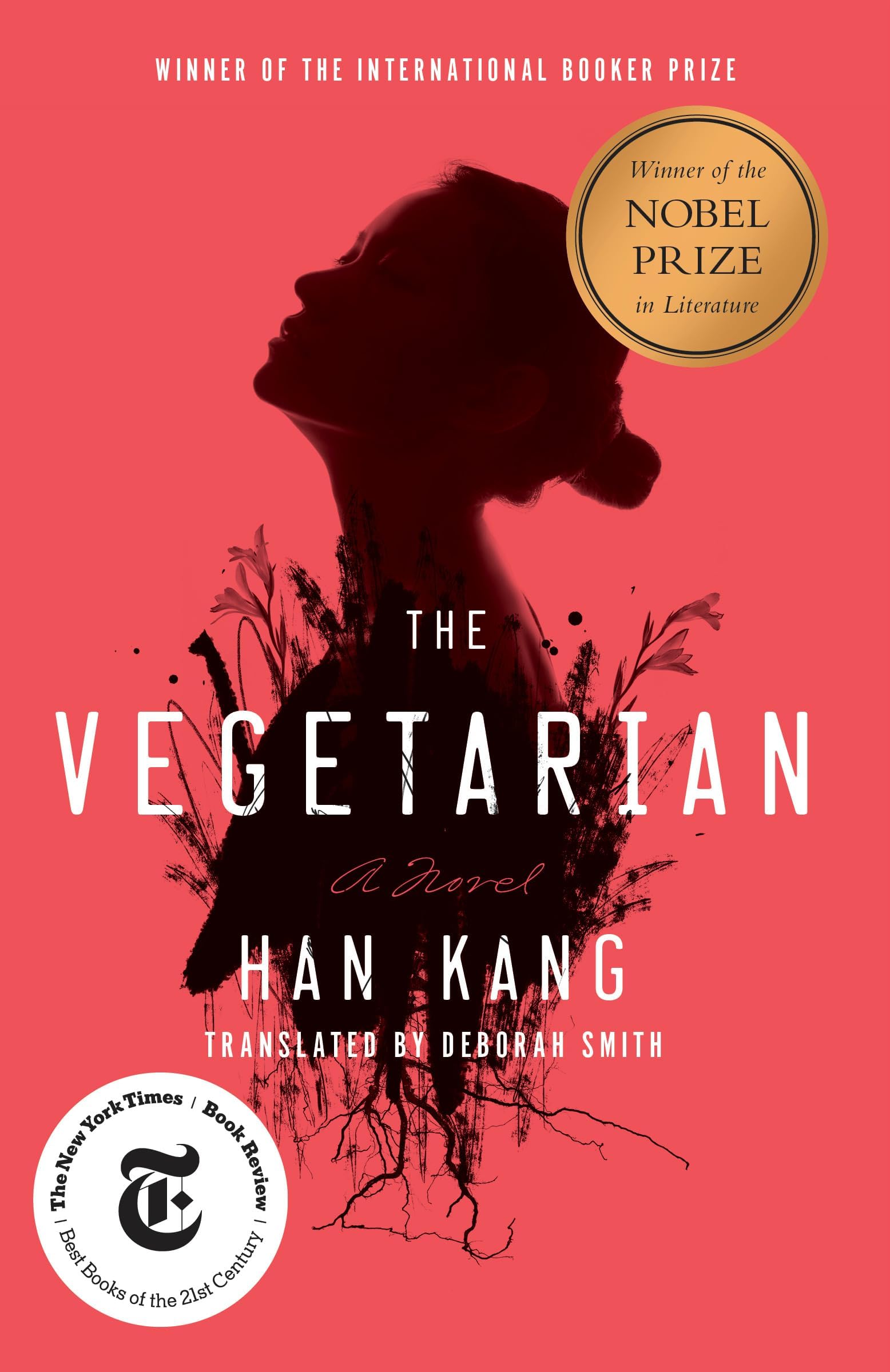
FROM HAN KANG, WINNER OF THE 2024 NOBEL PRIZE IN LITERATURE “[Han Kang’s] intense poetic prose . . . exposes the fragility of human life.”—The Nobel Committee for Literature, in the citation for the Nobel Prize A NEW YORK TIMES BESTSELLER WINNER OF THE INTERNATIONAL BOOKER PRIZE ONE OF THE NEW YORK TIMES’S 100 BEST BOOKS OF THE 21ST CENTURY ONE OF THE GUARDIAN’ S 100 BEST NOVELS OF ALL TIME A KIRKUS REVIEWS BEST FICTION BOOK OF THE CENTURY “Ferocious.”— The New York Times Book Review (Ten Best Books of the Year) “Both terrifying and terrific.”—Lauren Groff “Provocative [and] shocking.”— The Washington Post Before the nightmares began, Yeong-hye and her husband lived an ordinary, controlled life. But the dreams—invasive images of blood and brutality—torture her, driving Yeong-hye to purge her mind and renounce eating meat altogether. It’s a small act of independence, but it interrupts her marriage and sets into motion an increasingly grotesque chain of events at home. As her husband, her brother-in-law and sister each fight to reassert their control, Yeong-hye obsessively defends the choice that’s become sacred to her. Soon their attempts turn desperate, subjecting first her mind, and then her body, to ever more intrusive and perverse violations, sending Yeong-hye spiraling into a dangerous, bizarre estrangement, not only from those closest to her, but also from herself. Celebrated by critics around the world, The Vegetarian is a darkly allegorical, Kafka-esque tale of power, obsession, and one woman’s struggle to break free from the violence both without and within her. A Best Book of the Year: BuzzFeed, Entertainment Weekly, Wall Street Journal, Time, Elle, The Economist, HuffPost, Slate, Bustle, The St. Louis Dispatch, Electric Literature, Publishers Weekly Review: It gets under your skin - The Vegetarian is a tree-part novella, each narrated by a different character. The main character is Yeon-hye, a young married woman who suffers a mental crisis and becomes a vegan in a country and family where veganism is not well-seen. Her crisis will affect all members of her family in unexpected ways, opening a box of Pandora that will varnish with emotional crisis everyone it touches. The other two major characters are her sister In-hye, and the unnamed artist In-hye's husband. The three parts are: 1/The Vegetarian = We are told the story of Yeon-hye'd through the eyes of her husband Mr Cheong, 2/Mongolian Marks = We are told the story of Yeon-hye's artist brother-in-law. 3/Flaming Trees = We are told the story of Yeon-hye through the eyes of her sister In-hye. The Vegetarian is Yeon-hye's vanishing act in three chapters as each shows a progressive deterioration of Yeon-hye's body and state of mind. The Vegetarian is also an three-way immolation: self-destruction, self-obliteration, and self-denial (Yeon, In, and the artist respectively). **************** The Vegetarian is not an easy book to read, sad, tragic and depressing but also artistic, erotic, lyric an poetic. The book has layer upon layer of meaning, and touches many different subjects that are organically intertwined, and that the reader will discover as they read along. # Some of these subjects and themes are immediately obvious: ~ The social and family structure in South Korea. ~ The objectification of women. ~ The nature of desire. ~ The nature of artistic creation. ~ The effect of trauma and the suppression of emotions on the psyche. ~ The many facets of violence in our daily dealings. From feeding somebody against their will, to emotionally using somebody disregarding their emotional needs, having intercourse with a person who is not in his right mind, or enduring life without living it fully. ~ Social and personal boundaries. # However, I see four major themes in the novel: ~ One is the seek for the real self, because that true self is what we really are, the voice in our inner speech. The closer you are to your true self and your true inner voice the healthier your state of mind. This novel shows this masterfully. . ~ The second is that reality is perception, which is tarnished by our psychological projections.What is more, reality is part o our dreams and dreams are always real no matter how fantastic and mysterious they look like. All the characters say, at certain point in the novel, that the other person is a stranger to them, or that they don't really know them, even though they are family. We can only know other people to a certain extent, even when we think we know them well. We are projecting all the time. ~ The third is mental illness. Which are the repercussions on the social network of the sick person? Where and what is the line that separates sanity from insanity? Who is most insane, the insane person whose mind exteriorises the trauma, or the sane person who cannot deal with the trauma within their own sanity? ~ The fourth is Human Nature vs. Nature. In the book, the former is equalled to violence, suffering, lack of peace, and being stuck, while the latter is equalled to peace, fluidity, happiness, movement, truthfulness, to life as in zen. In fact, the three characters develop a special relationship with Nature, Yeon-hye wants to be a tree, the artist wants to self-obliterate himself into nature through flowers, while In-hye sees trees and forest as holders of the mysteries and answers she is still to get. This links well with Korean culture and Korean connection with the forest, trees and mountains and with some ancestral animist believes that still permeate Korean culture. **************** There is a heavy presence of strong oneiric elements and moments in the novel that affect all the main characters in the book, Yeon-hye, In-hye, her husband and her son. The oneiric element works perfectly in the novel because dreams are the messengers of the psyche, they are the bed where the soul rests, the mirror of the true self, that part of the human being that is honest and says to you how you feel. Dreams are also a space where reality and non-reality mix in organic but mysterious ways. The dream is the seed of our hidden truths, of our moments of elation and those of despair and anguish. The dream is always emotional. And this is the case in the novel. We see our characters' frigid emotionality in their awaken life, but very emotional in their oneiric life. We see their dreams speaking their inner truth. However, the dream is not only an literary element here. There is a strong dream culture in South Korea, still alive nowadays. **************** Regarding influences, we Westerners have a western-centric view of the world that we project all the time, especially with successful Asian artists. We tend to see the influence of any major Western artist on any successful Asian artist who becomes popular in the West, and also a tendency to put in the same bag all those Asian artists who become popular in the West. In a way is understandable. Those are the cultural anchors we have because, when it comes to South Korea, we don't have enough knowledge of the language and culture of the country to do differently. Besides, we are reading a translation and, no matter how good the translator is, this is never the same as reading a work in its original language. What can we say about the use of language, play of words, choice of words, sentence structure and on any other linguistic characteristic that is intrinsically linked to the literary value of any literary work? Some critics with too much space to talk nonsense have made connections between Han Kang's writing and Murakami, and found all sort of Western literary influences on this book. Well, I don't see the connection with Murakami at all, mind you. The connection with The Metamorphosis could be made, albeit quite vaguely. I also have my own projections, of course. Here my mental association. The second chapter and the erotic flower theme resonated with me and brought to mind a video who I saw many-many years ago, the scene of the copulating flowers in Pink Floyd's The Wall (you can still find the clip on YouTube) because, somewhat, I found there was a similar energy, the madness, and darkness even. Han Kang has personally said in some interviews, that her work is indebted to Korean literature, that some of darkness and themes in her works are directly linked and indebted to her experience of the massacre in Gwanjiu in 1980, and that she writes from an Universal standpoint even though she is Korean. She is the daughter of a writer, grew up surrounded by books and artists, she says, but she doesn't really mention any major Western author as her major literary impromptu even when asked about this. So that should suffice to stop speculating about Western influences. **************** There are images powerfully lyric and visually artistic and cinematic in this book. One of my favourites is in the fist part, when Yeong-hye in the courtyard in the hospital with a bird in his hand.Almost like a modern painting. Or the image of In-hye reflected in the mirror with a bleeding eye. Others, on the contrary are very dramatic, shocking and horrific, like the dream with the dog. Those images will stay with you for a long time, printed in your retina long after you close the book. **************** The translation by Deborah Smith is good. Most of the book flows and that is the sort of experience we want as translators and readers to have when translating literary works. Having said that, I thought that the first part needed of a few more commas, cutting on some unnecessary wordiness and another choice of words (this being a very personal thing, of course). TWO NOTES || The Vegetarian was originally published in 2007, compiling three novelettes previously published separately. However, the story, according to Hang herself, developed organically, but turned dark, from a short story of hers "Fruits of my Woman" written in the year 2000. || The book was taken to the screen in 2009 under the direction of Woo-Seong Lim. The movie was also called The Vegetarian. TYPOS > I couldn’t get my head round it. (Locations 48-49). > natural it was to not wear clothes. (Location 1220). A WARNING This word contains explicit violence, human and animal, and explicit sex scenes. A QUERY Why was the book called Vegetarian in English is the character becomes a vegan? Was the title in Korean the same? Review: A Creative Premise... - "The Vegetarian" is, in a word, INTENSE... Yeong-hye and her husband lead an everyday life together until she begins to have invasive, haunting dreams, and decides to stop eating meat. It's a personal decision she remains firm about, even as it begins to impact her marriage. Her family steps in, first with worry and concern, then with control. Her choice causes a ripple effect as the family's control morphs into desperation... "The Vegetarian" is not a story about a vegetarian. It focuses on Yeong-hye, her brave decision, and her internal and external struggle not to conform as her resistance and family pressure intensify. It's an allegory primarily concerning women's freedom of choice, social and gender expectations, physical and mental coercion, and more. Written in three parts, my thoughts at the end of Part 1 were: "Oh, the utter strangeness." At the end of Part 2, which I found dark and disturbing, I took a break, switching to a light, uplifting read that enabled me to finish Part 3. The book is less than 200 pages, and the 5H 13M audiobook narrators, Janet Song and Stephen Park, did a fine job alternating between the male and female characters. "The Vegetarian" is simple lyrical writing and brilliant storytelling. It's deep, dark, and lingering with its subtle messages and metaphors. I'm happy with my first read by Han Kang, and plan to read "We Do Not Part" in the near future! 4.5⭐


| Best Sellers Rank | #848 in Kindle Store ( See Top 100 in Kindle Store ) #4 in Cultural Heritage Fiction #12 in Psychological Literary Fiction #16 in Romance Literary Fiction |
M**.
It gets under your skin
The Vegetarian is a tree-part novella, each narrated by a different character. The main character is Yeon-hye, a young married woman who suffers a mental crisis and becomes a vegan in a country and family where veganism is not well-seen. Her crisis will affect all members of her family in unexpected ways, opening a box of Pandora that will varnish with emotional crisis everyone it touches. The other two major characters are her sister In-hye, and the unnamed artist In-hye's husband. The three parts are: 1/The Vegetarian = We are told the story of Yeon-hye'd through the eyes of her husband Mr Cheong, 2/Mongolian Marks = We are told the story of Yeon-hye's artist brother-in-law. 3/Flaming Trees = We are told the story of Yeon-hye through the eyes of her sister In-hye. The Vegetarian is Yeon-hye's vanishing act in three chapters as each shows a progressive deterioration of Yeon-hye's body and state of mind. The Vegetarian is also an three-way immolation: self-destruction, self-obliteration, and self-denial (Yeon, In, and the artist respectively). **************** The Vegetarian is not an easy book to read, sad, tragic and depressing but also artistic, erotic, lyric an poetic. The book has layer upon layer of meaning, and touches many different subjects that are organically intertwined, and that the reader will discover as they read along. # Some of these subjects and themes are immediately obvious: ~ The social and family structure in South Korea. ~ The objectification of women. ~ The nature of desire. ~ The nature of artistic creation. ~ The effect of trauma and the suppression of emotions on the psyche. ~ The many facets of violence in our daily dealings. From feeding somebody against their will, to emotionally using somebody disregarding their emotional needs, having intercourse with a person who is not in his right mind, or enduring life without living it fully. ~ Social and personal boundaries. # However, I see four major themes in the novel: ~ One is the seek for the real self, because that true self is what we really are, the voice in our inner speech. The closer you are to your true self and your true inner voice the healthier your state of mind. This novel shows this masterfully. . ~ The second is that reality is perception, which is tarnished by our psychological projections.What is more, reality is part o our dreams and dreams are always real no matter how fantastic and mysterious they look like. All the characters say, at certain point in the novel, that the other person is a stranger to them, or that they don't really know them, even though they are family. We can only know other people to a certain extent, even when we think we know them well. We are projecting all the time. ~ The third is mental illness. Which are the repercussions on the social network of the sick person? Where and what is the line that separates sanity from insanity? Who is most insane, the insane person whose mind exteriorises the trauma, or the sane person who cannot deal with the trauma within their own sanity? ~ The fourth is Human Nature vs. Nature. In the book, the former is equalled to violence, suffering, lack of peace, and being stuck, while the latter is equalled to peace, fluidity, happiness, movement, truthfulness, to life as in zen. In fact, the three characters develop a special relationship with Nature, Yeon-hye wants to be a tree, the artist wants to self-obliterate himself into nature through flowers, while In-hye sees trees and forest as holders of the mysteries and answers she is still to get. This links well with Korean culture and Korean connection with the forest, trees and mountains and with some ancestral animist believes that still permeate Korean culture. **************** There is a heavy presence of strong oneiric elements and moments in the novel that affect all the main characters in the book, Yeon-hye, In-hye, her husband and her son. The oneiric element works perfectly in the novel because dreams are the messengers of the psyche, they are the bed where the soul rests, the mirror of the true self, that part of the human being that is honest and says to you how you feel. Dreams are also a space where reality and non-reality mix in organic but mysterious ways. The dream is the seed of our hidden truths, of our moments of elation and those of despair and anguish. The dream is always emotional. And this is the case in the novel. We see our characters' frigid emotionality in their awaken life, but very emotional in their oneiric life. We see their dreams speaking their inner truth. However, the dream is not only an literary element here. There is a strong dream culture in South Korea, still alive nowadays. **************** Regarding influences, we Westerners have a western-centric view of the world that we project all the time, especially with successful Asian artists. We tend to see the influence of any major Western artist on any successful Asian artist who becomes popular in the West, and also a tendency to put in the same bag all those Asian artists who become popular in the West. In a way is understandable. Those are the cultural anchors we have because, when it comes to South Korea, we don't have enough knowledge of the language and culture of the country to do differently. Besides, we are reading a translation and, no matter how good the translator is, this is never the same as reading a work in its original language. What can we say about the use of language, play of words, choice of words, sentence structure and on any other linguistic characteristic that is intrinsically linked to the literary value of any literary work? Some critics with too much space to talk nonsense have made connections between Han Kang's writing and Murakami, and found all sort of Western literary influences on this book. Well, I don't see the connection with Murakami at all, mind you. The connection with The Metamorphosis could be made, albeit quite vaguely. I also have my own projections, of course. Here my mental association. The second chapter and the erotic flower theme resonated with me and brought to mind a video who I saw many-many years ago, the scene of the copulating flowers in Pink Floyd's The Wall (you can still find the clip on YouTube) because, somewhat, I found there was a similar energy, the madness, and darkness even. Han Kang has personally said in some interviews, that her work is indebted to Korean literature, that some of darkness and themes in her works are directly linked and indebted to her experience of the massacre in Gwanjiu in 1980, and that she writes from an Universal standpoint even though she is Korean. She is the daughter of a writer, grew up surrounded by books and artists, she says, but she doesn't really mention any major Western author as her major literary impromptu even when asked about this. So that should suffice to stop speculating about Western influences. **************** There are images powerfully lyric and visually artistic and cinematic in this book. One of my favourites is in the fist part, when Yeong-hye in the courtyard in the hospital with a bird in his hand.Almost like a modern painting. Or the image of In-hye reflected in the mirror with a bleeding eye. Others, on the contrary are very dramatic, shocking and horrific, like the dream with the dog. Those images will stay with you for a long time, printed in your retina long after you close the book. **************** The translation by Deborah Smith is good. Most of the book flows and that is the sort of experience we want as translators and readers to have when translating literary works. Having said that, I thought that the first part needed of a few more commas, cutting on some unnecessary wordiness and another choice of words (this being a very personal thing, of course). TWO NOTES || The Vegetarian was originally published in 2007, compiling three novelettes previously published separately. However, the story, according to Hang herself, developed organically, but turned dark, from a short story of hers "Fruits of my Woman" written in the year 2000. || The book was taken to the screen in 2009 under the direction of Woo-Seong Lim. The movie was also called The Vegetarian. TYPOS > I couldn’t get my head round it. (Locations 48-49). > natural it was to not wear clothes. (Location 1220). A WARNING This word contains explicit violence, human and animal, and explicit sex scenes. A QUERY Why was the book called Vegetarian in English is the character becomes a vegan? Was the title in Korean the same?
T**N
A Creative Premise...
"The Vegetarian" is, in a word, INTENSE... Yeong-hye and her husband lead an everyday life together until she begins to have invasive, haunting dreams, and decides to stop eating meat. It's a personal decision she remains firm about, even as it begins to impact her marriage. Her family steps in, first with worry and concern, then with control. Her choice causes a ripple effect as the family's control morphs into desperation... "The Vegetarian" is not a story about a vegetarian. It focuses on Yeong-hye, her brave decision, and her internal and external struggle not to conform as her resistance and family pressure intensify. It's an allegory primarily concerning women's freedom of choice, social and gender expectations, physical and mental coercion, and more. Written in three parts, my thoughts at the end of Part 1 were: "Oh, the utter strangeness." At the end of Part 2, which I found dark and disturbing, I took a break, switching to a light, uplifting read that enabled me to finish Part 3. The book is less than 200 pages, and the 5H 13M audiobook narrators, Janet Song and Stephen Park, did a fine job alternating between the male and female characters. "The Vegetarian" is simple lyrical writing and brilliant storytelling. It's deep, dark, and lingering with its subtle messages and metaphors. I'm happy with my first read by Han Kang, and plan to read "We Do Not Part" in the near future! 4.5⭐
L**L
Disturbing and unusual images from this genius author
I had a difficult time processing my thoughts after reading The Vegetarian. In a 2016 interview in LitHub, Han Kang states that she sees the world as "mingled violence and beauty." She also says that she is "questioning human violence and the (im)possibility of innocence; defining sanity and madness; the (im)possibility of understanding others..." The interview helped me understand why Han Kang won the Nobel Prize for Literature, and this book's incomprehensible elements. Han divided the novel into three parts, perhaps a triptych, which allows us to explore the main character, Yeong-hye, from three perspectives: Mr. Cheong, her husband; her brother-in-law, who is nameless; and Yeong-hye's sister, In-hye, the brother-in-law's wife. In the first part, Yeong-hye declares to her husband that because of a dream, she no longer wants to eat meat and is becoming a vegetarian. She violently disposes of all the meat in their home and changes her eating habits and thus, her lifestyle. Mr. Cheong is not only incredulous but downright angry. He not only solicits her family to rebuke her, but he determines that his marital right is to abuse her, rape her and further destroy her dignity since she is making choices that defy her upbringing and her husband's expectations. The second section is from the perspective of Yeong-hye's brother-in-law. The brother-in-law does not contribute financially to his household since he is a video artist developing his artistic talents. He capitalizes on Yeong-hye's vegetarianism and isolation from her husband and family to create videos that are unsettling to read, yet develop one of the central themes related to Yeong-hye's individualism or mental illness, depending on how one interprets her actions. Readers can consider some timeless themes while reading the brother-in-law's point of view. Is being a nonconformist amoral? Does every human being have a right to use their body as they see fit, even if actions are unusual? How much do societal expectations matter? In the third part, from Yeong-hye's sister, In-hye's point of view, we finally get a female perspective. In-hye begins her story segment with a traditional view of marriage and rearing children, and attempts to remediate her sister. Then, as she reflects on Yeong-hye's interactions with both her husband and In-hye's, she challenges some of her assumptions and begins to relate to Yeong-hye and the establishment with fresher perspectives. Although Yeon-hye's wishes are apparent throughout the novel, they are suppressed and devalued by the men in her life and society. As the plot develops, she takes drastic measures to control her body and not yield to others' wishes. It concerns much more than a decision not to eat meat. The reader can decide whether she is being persecuted or her bizarre behaviors require treatment.
K**U
This was a riveting read!
I found this to be a page turner as well as a book whose perspective was very bizarre and interesting. I have my own interpretations regarding the material and to clarify them, I think j I would like to revisit this at some point. Not for the queasy-hearted !
A**R
Okay on the Outside
“Reality is wrong Dreams are for real”.-Tupac Shakur The Vegetarian a Korean novel written by Han Kang, is a story that shows the main character’s, Yong-hye, journey after deciding to become vegetarian. Though it is her story, the book only contains the points of view of the people around her. Separated into three parts, it starts with the moment she makes her decision. Told by her husband, Mr. Cheong. He describes what he thought of his wife in detail, before and after the life-changing events. Part 2, Yong-hye’s brother-in-law's point of view shows his obsession with wanting to film a certain side of Yong-hye, and now his obsession starts to affect his family. The ending of part two sets up the thoughts and feelings of the last point of view, Yong-hye’s sister In-hye. In-hye is left to care for her sister after she is abandoned by everyone around her and placed into a mental hospital. Yong-hye’s true thoughts are never shown, besides the dream she explain to her husband that started her change. Her words and actions show only a glimpse of what is going on in her head, which is hidden from the reader just like it is hidden from her family. Han Kang probably wanted to write this story to show the inner workings of a Korean family when dealing with a mental illness. In Korea, like in many other places mental illness is not easily accepted; it is even refused to be accepted by the ones affected by it. Causing a problem big or small in a relationship it's frowned upon disregarding what your parents elders and partner stays is utterly disrespectful in Korean culture if there is no love that the relationship should be treated as a business you have to play your part wanted to show how this is all destroyed by the mere action of not eating meat I enjoyed reading this sort of story after randomly coming across the short and simple plot was enough to get me started. I soon realized that it was more than what I expected to be this novel to be more than just getting to see how this affects a Korean family it shows how the people who seem the most composed on the outside are lost and a mess on the inside, whether it be from themselves or others, they can't seem to find a solution. Being referred to as insane, is just a measurement of how well you fooled others to think you were okay, because even you know you are not okay. One character who shared his confusion the most is Mr.Cheong. He was the first one that noticed the change in his wife. Knowing her as just an ordinary women who, goes along with what he says, and seeing her make a decision disregarding his opinion was a lot to handle. He wasn’t afraid to tell her that she had gone insane. His reaction to this is understandable because he knew her one way for a longtime. “If the hints of hysteria, delusion, weak nerves and so on, that I thought I could detect in what she said, ended up leading to something more?” This showed how much Mr.Cheong feared the woman he called his wife. By this point, she was a completely different person to him. The other character completely lost with the situation is In-hye, the older sister. She has known Yong-hye far longer than most, so she feels she knows who Yong-hye is. Seeing the events that happened after the family dinner just proved her wrong. Yong-hye has put on a strong face since she was little, and In-hye didn’t see through it. “Dreams...and I could let myself dissolve into them, let them take me over...but surely the dream isn’t all there is?” In-hye does not want Yong-hye to continue what she is doing. She wants to make herself believe that it is all a dream. A part of her understands Yong-hye, but the recent events can’t let her share that. The only thing she wants is for Yong-hye to go back to ‘the way she was.’ The book overall did a good job in telling the story jumping from points of views, but still getting the information the reader wants and needs. The only thing that I did not like about the book was the fact that we never got to see the point of view of Yong-hye. The only parts that we get close to hearing her thoughts is when she is describing her dreams, but that is still the husband's point of view. I wanted to know more about what she was thinking and how her mind got to this point. I feel just like the other characters, trying to find out why Yong-hye is like this, without being able to talk to her. It is amazing to think that the characters lives could all have been much different if the dream never came to Yong-hye, but I still think it would all have come to this. They don’t understand Yong-hye because they don’t know her, they only claim to. Yong-hye’s wish of being a tree shows how she dislikes being a human, and the ones around her are part of that reason. If you don’t mind the images that Yong-hye paints in the readers head, much like the images her brother-in-law draws, you can try and understand the pain Yong-he feels in her chest and how she wants to break free.
G**M
Very Symbolic Narrative
Yeong-hye Kim is a completely ordinary-seeming young woman in South Korea. She’s been married to a salaryman for several years, she does freelance graphic design projects, and the couple seems likely to begin following the path of her sister, In-hye, and brother-in-law and have a child soon. But one night her husband awakes in the middle of the night to find her going through their refrigerator and throwing out every bit of meat inside it. When he asks her what’s going on, she tells him she had a dream. She refuses from that point forward to cook or eat meat, causing tension within both her household and her larger family as she stops eating much in the way of other food either (she goes fully vegan very quickly). She wastes away physically and in many ways withdraws from the world, but no matter what anyone tries she will neither engage in debate about her choice or change it. This inspires a range of reactions and counter-reactions with ramifications more dramatic than anyone might have ever imagined. There’s more plot, but the point of this book really isn’t about the plot. The story is narrated by three people: her husband, her brother-in-law, and her sister…notably none of which are Yeong-hye herself. It’s a book much less about her than about the way the people around her react to her decision. Her husband, whose narration makes it clear that he sees her as not a person as much as a body to fit into the role of “my wife” (in fact, I don’t think the portion of the book that deals with him has him once refer to her by name), is dismayed not at what she is doing to herself but how it impacts and reflects upon him. Her brother-in-law, an artist, sees in her a body that could serve his artistic purposes. Her sister does see her as a person, but also resents her in a way, for finding an escape hatch from the pressure of performing the role of “successful woman” that she herself feels trapped by. It should not be surprising that in a book that centers men thinking of women as something less than fully realized people, that there are some very upsetting things that happen to Yeong-hye. I do not personally tend to find these sorts of highly symbolic narratives compelling. I’m perfectly happy to have my nonfiction be about ideas, but I prefer fiction to be about people, and this is only vaguely that. This is a book full of triggers: disordered eating, sexual assault, physical assault, self-harm, and while I get why they’re there for what it seems Han Kang is trying to do here, I mostly found it unpleasant and upsetting for very little purpose, in the end. I did not enjoy the experience of reading this book and I cannot recommend it.
C**D
boring
I read things that people do and was impressed and so I got this one and was unimpressed seemed to go on and on I was glad when it was over
P**N
The Vegetarian by Han Kang: A review
What a strange little book. I tried to think of something in my reading experience with which to compare it and the only thing that came to mind was Kafka's The Metamorphosis, but instead of waking up to find herself transformed into a giant insect, Yeong-hye awoke one morning from a troubled dream of blood and gore and cruelty and decides to give up the eating of all flesh; to become a vegetarian. For her avidly meat-eating family, a metamorphosis into a giant cockroach might have been preferable. They are appalled and outraged. At a family gathering some time after she makes her decision, they try to force her to eat meat. Her brutal father slaps her twice and forces a piece of meat between her lips, but Yeong-hye manages to spit it out and then grabs a knife and slits her wrist. As her blood spurts out, the only one who comes to her aid is her brother-in-law, while her parents, her husband, sister, brother, and sister-in-law look on. What is wrong with these people? Well, a lot, apparently. We learn about it all from three different sources: the odious husband, the brother-in-law, and, finally, the sister. The husband's tale starts with his description of his impressions on meeting the woman who was to become his wife. To say his was underwhelmed would be an understatement. To be fair, his description of himself is just as unflattering. I laughed out loud at the husband's sardonic depictions of the two of them, but it was the only time in the book that I felt any inclination toward jocularity. As his wife of five years makes her decision to become a vegetarian, all the husband can think about is how this affects him and what his employer and their acquaintances will think. He is totally self-absorbed. The brother-in-law becomes obsessed with Yeong-hye after the incident at the family gathering. He is an artist. His medium is videos and he becomes consumed by the idea of featuring his sister-in-law's naked body in his videos. He wants to paint flowers on her body and film her. She agrees to this. His fixation then moves on to filming her having sex. He persuades a fellow artist to allow him to paint flowers on his body and to be Yeong-hye's partner, but when it comes to the point of actually engaging in sex, the partner backs out. The brother-in-law then takes over - which is what he wanted to do all along - and videotapes himself having sex with her. The sister discovers them together. The last section of the book is the sister's tale and there we learn some of Yeong-hye's back story. We learn, for example, that she was an abused child. She was the middle child with her older sister and younger brother, and her father took out his rage on her. Her sister feels guilty that she did not do more to protect her or support her. Through the sister's eyes, we see Yeong-hye descending from a healthy vegetarianism into anorexia. She goes from refusing to eat meat to, finally, refusing to eat, period. She is diagnosed with a mental illness and hospitalized. Her husband divorces her. Her parents and brother abandon her. The only one who stands by her in the end is her sister. Yeong-hye is slowly starving herself to death, even as her sister tries to pull her back and persuade her to eat. She dreams of transforming herself into a tree. Finally, she asks her sister who is trying to persuade her to live, "Why, is it such a bad thing to die?" In Korean society, where societal mores are expected to be strictly obeyed, her decision to become a vegetarian and live a more plant-based life is seen as an act of subversion. This disturbing novel should evidently be read as an allegory about modern life in Korea, and about obsession and the choices we make, as well as our stumbling attempts to try to understand each other. This is an impressive bit of story-telling by a very talented writer. Just a note also about the translator: I read this book in English and it was a thoroughly lithe and graceful translation. The translator was Deborah Smith and she, too, is an artist.
K**R
Horrific and petrifying.
SOMETIMES it's very really hard to write a 'review' for few books, there's a cogent desire inside my heart to talk about 'Vegetarian' by Han Kang, but if you ask me to review this book, I would shrug my shoulders and stare at the wall. I'm not going to sham my intelligence here, I am not going to talk about the profound imagery in the book because it's too intense and disturbing for me to imbibe, Little did I know that this book would haunt me forever when I picked this up, yet I'm searching for an another visceral prose like this. The storyline of Vegetarian by Han Kang is contradictory to the title. No! it's nothing to do with vegetarianism. It has nothing to do with 'Vegetarian'. You read about 'The fragile humans' and their floundering desires in the intensely crafted words, every page contrive the idea of transforming into the cosmos of the earth, intertwined with the nature, merging the humans and their shame. The desires of the characters are horrifying, beautiful, ugly, repellent and profound. The novella is divided into three parts and it's narrated from three different perspectives of Yeong Hye's story, Yeong Hye and her decision to stop eating meat after a haunting dream. The internal struggles and past fears of the Yeong Hye is reflected in the repugnant dream. The first part of Yeong Hye's story is narrated from the perspective of Mr. Cheong, Yeong Hye's husband. A woman resisting the social norms is highly unacceptable and disturbing from the perspective of her husband. The second part is told from the perspective of Yeong Hye's brother in law, this part has deeply haunted and disturbed me. The complexity of her brother in law's sexual desire is intense and viewing 'Vegetarian' as psychological realism, the agonizing desires of this character is brilliant and at the same time frightening.The third part elaborates the thought process of In Hye, Yeong Hye's sister. 'I need to water my body. I don't need this kind of food sister, I need water' The screams of Yeong Hye makes her sister visualize their plaintive past and the physical abuse of their father. The characters are yearning for mutation, a perpetual mutation. The abnormalities of the characters will leave an indelible impact in the minds of the readers, the major conflicts in the novel are between the mind and body of a human & the society and an individual. The stoicism of Yeong Hye towards her stern father destructs her identity and makes her feel that she's an amalgamation of the trees, the nature. The intensity of sexuality and intimidating carnal desires are vividly narrated by Han Kang. Though Vegetarian is a disturbing read for me, in the end, it totally absorbed and engulfed me. I've never been so satisfied after reading a book. It seems like Vegetarian narrated a story that I heard and forgotten long ago.
I**T
Wow
The first reading I had from this author. Fabulous and deep. It is about the choice. It is also about the human nature. The choice that goes beyond the extreme. After this, I bought other books from the same author. Warmly recommended.
C**A
Inquietante, incómodo y absolutamente brillante
No es un libro fácil; he ido leyéndolo un poco despacio, pero creo que por eso es tan bueno. La historia parte de una decisión aparentemente simple (dejar de comer carne) y la convierte en algo mucho más profundo, oscuro y perturbador. Es una historia incómoda, incluso "violenta" por momentos, pero escrita con una sensibilidad y una belleza muy poco comunes. La estructura en tres partes, contada desde distintos puntos de vista, hace que la protagonista resulte casi inalcanzable, lo que refuerza esa sensación de extrañeza constante. Más que una novela “sobre vegetarianismo”, es una reflexión sobre el cuerpo, el control, la identidad y la incapacidad de entender a los demás. No es para todo el mundo, pero si conectas con ella, es una muy buena lectura.
K**Y
Good!
For a used book, this was totally fine for me. There are a few small creases from previous use and a slight stain, but nothing major. It’s still readable and original, I’m happy with it.
A**R
Not a good print quality
This review is only for the quality of the print..the paperback is of very poor quality. The cover is not even cut to size! For 17sgd its not atall worth the money
Trustpilot
2 months ago
3 weeks ago