
Buy anything from 5,000+ international stores. One checkout price. No surprise fees. Join 2M+ shoppers on Desertcart.
Desertcart purchases this item on your behalf and handles shipping, customs, and support to Uruguay.
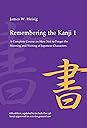
Updated to include the 196 new kanji approved by the Japanese government in 2010 as “general-use” kanji, the sixth edition of this popular text aims to provide students with a simple method for correlating the writing and the meaning of Japanese characters in such a way as to make them both easy to remember. It is intended not only for the beginner, but also for the more advanced student looking for some relief from the constant frustration of forgetting how to write the kanji, or for a way to systematize what he or she already knows. The author begins with writing the kanji because―contrary to first impressions―it is in fact simpler than learning how to the pronounce them. By ordering the kanji according to their component parts or “primitive elements,” and then assigning each of these parts a distinct meaning with its own distinct image, the student is led to harness the powers of “imaginative memory” to learn the various combinations that make up the kanji. In addition, each kanji is given its own key word to represent the meaning, or one of the principal meanings, of that character. These key words provide the setting for a particular kanji’s “story,” whose protagonists are the primitive elements. In this way, one is able to complete in a few short months a task that would otherwise take years. Armed with the same skills as Chinese or Korean students, who know the meaning and writing of the kanji but not their Japanese pronunciations, one is then in a much better position to learn the readings (which are treated in a separate volume). Remembering the Kanji has helped tens of thousands of students advance towards literacy at their own pace, and to acquire a facility that traditional methods have long since given up on as all but impossible for those not raised with the kanji from childhood. Review: A very logical approach to learning kanji - This book is awesome. It presents kanji in a logical manner, allowing you to learn the kanji that make up other kanji first, which makes it much easier to learn and remember more complex kanji. It focuses on using what Heisig calls "imaginative memory" by coming up with simple stories to go with each kanji based on the primitives that make it up. For instance, the kanji for jealous is made up of the kanji for woman and stone, and Heisig suggests that you remember it based on the idea that a woman is jealous of the ring with a large stone on another woman's finger. Another example would be the kanji for bribe, which is made up of the kanji for money and possess, which you can then remember based on the idea that someone who has been bribed has been possessed by money or that you've possessed them using money. I think that my favorite is the one for elder brother, which is made up of the kanji for mouth and human feet (and used in other kanji to represent teenager); a mouth with feet is very obviously connected with a teenager or elder brother who's a teenager. The keywords that he uses for each kanji are often an oversimplification, I think, but it works well for learning them. This approach works better for some kanji than others (e.g. petition is made up of the kanji for meadow and head, and Heisig comes up with some story about you petitioning the Wizard of Oz's head in a meadow, which is downright weird, but it's not like it's symbol combination that has an obvious connection with the meaning of the resulting kanji). So, it's by no means perfect, but it's _way_ better than learning each of the kanji individually based on the frequency that they're used without taking into account which kanji are used to build other kanji. You get a very organized approach to constructing each of the kanji and making them easy to remember (or at least easier to remember) rather than trying to learn how to draw each of them without taking each of the others into account. Now, that being said, I think that Heisig puts too much store in imaginative memory and thinks that you shouldn't be practicing drawing each kanji over and over to help remember it. I have to argue that using multiple memory mechanisms is going to improve your chances of remembering something, and writing stuff down definitely helps. So, I think that practicing each character several times rather than just memorizing which kanji make it up and writing it maybe once (as Heisig seems to think you should do) is a worse approach. But the tools that he's giving you by organizing the kanji based on which other kanji make them up as well as giving you ways to remember them based on those pieces rather than simply what the kanji looks like as a whole are an _enormous_ help and makes learning more complex kanji far easier. So, while I don't agree with everything that he says, I think that his overall approach is very good. And since I'm an engineer, how logical and organized his system is is _very_ appealing to me. Now, a serious downside to all of this is that you're learning the kanji in a very different order than anything else is going to use. So, you're not going to get much help from elsewhere (and Heisig actually says that he thinks that learning the kanji using his method combines very badly with more traditional methods such that you shouldn't use this book if you're taking classes or using other textbooks at the same time). It also only covers the kanji themselves and not pronunciation or grammar or anything like that - which I don't think is a bad thing (Heisig points out that it makes it so that when you do learn those things, you're in a position closer to that which a Chinese person would be in, since they'd be familiar with the kanji and their rough meanings but not how they related to Japanese), but the other volumes are supposed to go into that stuff (I haven't gotten to them yet, so I can't comment on them in detail). But even if you were to switch to other textbooks after having learn the kanji covered in volume 1 of this series, you'd be able to go through them that much faster, because you'd recognize the characters and know how to write them, which is obviously a _huge_ barrier to learning Japanese. On a last note, I'd highly recommend that you pick up the mobile app that goes with this (at the moment, it's under $2). In addition to listing all of the characters in the order that they're in the book, giving you a handy referencee, it shows you how to draw them with an animation (the book shows you which order to draw each stroke but not the direction of the stroke), and it can be used for flash cards, which is fantastic (even allowing you to pick which kanji are in a study list rather than just having a preset set of flashcards). It does seem to be somewhat buggy at the moment, but it works well enough to be well worth it IMHO. Review: Great book, even better with supplemental tools! - Before you buy this book, it's important to realize what it will and will not do for you. This book will not teach you how to speak or even read Japanese or Kanji. It will not teach you how different combinations of kanji make up words. What it will do, is teach you how to write all of the ~2100 "regular use" and associate them with a single English "keyword" that reflects one of their (possibly more than one) meanings. And for this purpose, it is magnificent. As proof, I have only had this book for 66 days, and I already know 1075 kanji. Now you may wonder if there's any benefit in going through this book if it's not going to actually teach you to how to read/pronounce Kanji, but I really think there is. This book removes the "intimidation" factor from learning how to write/read Kanji, and it makes Kanji feel more like a familiar alphabet than a bunch of meaningless scribbles. For example, if you're trying to learn how to write "phone" in Japanese, without this book you would have to memorize "電話" but after going through this book, you'd just have to remember "electricity tale" easier, no? I also think that the methodology used in this book to teach kanji is much better than the "traditional" method used in classrooms. I took a single semester of Chinese in college, and they would teach us a (commonly used) word and then they would teach us the character to go with it. And we would learn the character through rote memorization, ie writing it over and over. And this is such a shame because the Chinese writing system, has a beautiful logic to it where all the characters are made up of smaller elements, and some characters are even made up of other characters. This book however, fully exploits the interrelatedness of kanji by presenting them in an order that is the most conducive to memorization. You will learn the character for "person" and then you will learn a whole bunch of other characters that use "person" in them. And this concept extends to complex kanji that are composed of other kanji, which are composed of simpler kanji etc. So in effect, you wind up often practicing multiple characters when you study a single complex character. For example, the character for "tenderness" contains the primitive elements "person" and "melancholy." And "melancholy" contains the primitive elements "head, crown, heart, and walking legs." So by studying the single character for tenderness you are reinforcing SIX other characters in your memory. The book also provides (or asks you to create) "stories" that act as mnemonic devices for each character and these can be really helpful, as well as fun to create or read. So instead of just having to memorize “wheat” and “saber” for the kanji “profit.” You will remember something like “A farmer’s profit is gained by harvesting wheat with his saber.” So all in all, I think this is an amazing book that accomplishes the goal it sets out to do very well. Just be sure that you understand what the goal is and is not before you buy it! Final note…if you decide to embark on learning kanji with this book, I wanted to pass on a few tips from my experience that may help: 1. Try to learn at a reasonable, steady pace. I have chosen to learn 10-20 kanji a day, and it’s worked pretty well for me. If you try to cram to fast, you risk not retaining a lot of what you learn. 2. USE ANKI!!! I love Anki, it’s helped me so much with learning kanji. Anki is software designed to help you memorize things through “spaced repetition.” Basically, it allows you to create (or download!) custom flash cards. It then quizzes you on the flashcards, and based on how you perform on each individual flashcard it decides how often you need to be shown it. Essentially, it manages your studying FOR YOU. So you don’t have to worry about what kanji you need to study, it will take care of that. It’s also on mobile devices, I use it almost exclusively on my iPhone and it’s great, I can draw the kanji with my thumb and I don’t ever even need paper! If you get Anki, I highly recommend downloading the shared deck for Heisig’s Remembering the Kanji. Then just suspend all the cards (using Anki on your computer), and unsuspend only the ones that you have learned. One caveat though, the shared deck for Heisig’s is for an older edition, so you will have to manually hunt down some cards that are in the newer edition, but not in the older. 3. The website kanji.koohii.com offers shared stories that can be really useful if you can’t think of a story for a given kanji. It also has a flashcard system but I prefer Anki personally. 4. There is an app for Heisig’s RTK that you can get for iPhone etc. It’s great because it lets you write a story for each kanji and store it in the app. I use that app to learn the kanji, then I use Anki to practice. Best of luck to you if you decide to embark on this journey!
| Best Sellers Rank | #8,462 in Books ( See Top 100 in Books ) #4 in Alphabet Reference #7 in Study & Teaching Reference (Books) #11 in Linguistics Reference |
| Customer Reviews | 4.6 out of 5 stars 2,157 Reviews |
J**S
A very logical approach to learning kanji
This book is awesome. It presents kanji in a logical manner, allowing you to learn the kanji that make up other kanji first, which makes it much easier to learn and remember more complex kanji. It focuses on using what Heisig calls "imaginative memory" by coming up with simple stories to go with each kanji based on the primitives that make it up. For instance, the kanji for jealous is made up of the kanji for woman and stone, and Heisig suggests that you remember it based on the idea that a woman is jealous of the ring with a large stone on another woman's finger. Another example would be the kanji for bribe, which is made up of the kanji for money and possess, which you can then remember based on the idea that someone who has been bribed has been possessed by money or that you've possessed them using money. I think that my favorite is the one for elder brother, which is made up of the kanji for mouth and human feet (and used in other kanji to represent teenager); a mouth with feet is very obviously connected with a teenager or elder brother who's a teenager. The keywords that he uses for each kanji are often an oversimplification, I think, but it works well for learning them. This approach works better for some kanji than others (e.g. petition is made up of the kanji for meadow and head, and Heisig comes up with some story about you petitioning the Wizard of Oz's head in a meadow, which is downright weird, but it's not like it's symbol combination that has an obvious connection with the meaning of the resulting kanji). So, it's by no means perfect, but it's _way_ better than learning each of the kanji individually based on the frequency that they're used without taking into account which kanji are used to build other kanji. You get a very organized approach to constructing each of the kanji and making them easy to remember (or at least easier to remember) rather than trying to learn how to draw each of them without taking each of the others into account. Now, that being said, I think that Heisig puts too much store in imaginative memory and thinks that you shouldn't be practicing drawing each kanji over and over to help remember it. I have to argue that using multiple memory mechanisms is going to improve your chances of remembering something, and writing stuff down definitely helps. So, I think that practicing each character several times rather than just memorizing which kanji make it up and writing it maybe once (as Heisig seems to think you should do) is a worse approach. But the tools that he's giving you by organizing the kanji based on which other kanji make them up as well as giving you ways to remember them based on those pieces rather than simply what the kanji looks like as a whole are an _enormous_ help and makes learning more complex kanji far easier. So, while I don't agree with everything that he says, I think that his overall approach is very good. And since I'm an engineer, how logical and organized his system is is _very_ appealing to me. Now, a serious downside to all of this is that you're learning the kanji in a very different order than anything else is going to use. So, you're not going to get much help from elsewhere (and Heisig actually says that he thinks that learning the kanji using his method combines very badly with more traditional methods such that you shouldn't use this book if you're taking classes or using other textbooks at the same time). It also only covers the kanji themselves and not pronunciation or grammar or anything like that - which I don't think is a bad thing (Heisig points out that it makes it so that when you do learn those things, you're in a position closer to that which a Chinese person would be in, since they'd be familiar with the kanji and their rough meanings but not how they related to Japanese), but the other volumes are supposed to go into that stuff (I haven't gotten to them yet, so I can't comment on them in detail). But even if you were to switch to other textbooks after having learn the kanji covered in volume 1 of this series, you'd be able to go through them that much faster, because you'd recognize the characters and know how to write them, which is obviously a _huge_ barrier to learning Japanese. On a last note, I'd highly recommend that you pick up the mobile app that goes with this (at the moment, it's under $2). In addition to listing all of the characters in the order that they're in the book, giving you a handy referencee, it shows you how to draw them with an animation (the book shows you which order to draw each stroke but not the direction of the stroke), and it can be used for flash cards, which is fantastic (even allowing you to pick which kanji are in a study list rather than just having a preset set of flashcards). It does seem to be somewhat buggy at the moment, but it works well enough to be well worth it IMHO.
J**N
Great book, even better with supplemental tools!
Before you buy this book, it's important to realize what it will and will not do for you. This book will not teach you how to speak or even read Japanese or Kanji. It will not teach you how different combinations of kanji make up words. What it will do, is teach you how to write all of the ~2100 "regular use" and associate them with a single English "keyword" that reflects one of their (possibly more than one) meanings. And for this purpose, it is magnificent. As proof, I have only had this book for 66 days, and I already know 1075 kanji. Now you may wonder if there's any benefit in going through this book if it's not going to actually teach you to how to read/pronounce Kanji, but I really think there is. This book removes the "intimidation" factor from learning how to write/read Kanji, and it makes Kanji feel more like a familiar alphabet than a bunch of meaningless scribbles. For example, if you're trying to learn how to write "phone" in Japanese, without this book you would have to memorize "電話" but after going through this book, you'd just have to remember "electricity tale" easier, no? I also think that the methodology used in this book to teach kanji is much better than the "traditional" method used in classrooms. I took a single semester of Chinese in college, and they would teach us a (commonly used) word and then they would teach us the character to go with it. And we would learn the character through rote memorization, ie writing it over and over. And this is such a shame because the Chinese writing system, has a beautiful logic to it where all the characters are made up of smaller elements, and some characters are even made up of other characters. This book however, fully exploits the interrelatedness of kanji by presenting them in an order that is the most conducive to memorization. You will learn the character for "person" and then you will learn a whole bunch of other characters that use "person" in them. And this concept extends to complex kanji that are composed of other kanji, which are composed of simpler kanji etc. So in effect, you wind up often practicing multiple characters when you study a single complex character. For example, the character for "tenderness" contains the primitive elements "person" and "melancholy." And "melancholy" contains the primitive elements "head, crown, heart, and walking legs." So by studying the single character for tenderness you are reinforcing SIX other characters in your memory. The book also provides (or asks you to create) "stories" that act as mnemonic devices for each character and these can be really helpful, as well as fun to create or read. So instead of just having to memorize “wheat” and “saber” for the kanji “profit.” You will remember something like “A farmer’s profit is gained by harvesting wheat with his saber.” So all in all, I think this is an amazing book that accomplishes the goal it sets out to do very well. Just be sure that you understand what the goal is and is not before you buy it! Final note…if you decide to embark on learning kanji with this book, I wanted to pass on a few tips from my experience that may help: 1. Try to learn at a reasonable, steady pace. I have chosen to learn 10-20 kanji a day, and it’s worked pretty well for me. If you try to cram to fast, you risk not retaining a lot of what you learn. 2. USE ANKI!!! I love Anki, it’s helped me so much with learning kanji. Anki is software designed to help you memorize things through “spaced repetition.” Basically, it allows you to create (or download!) custom flash cards. It then quizzes you on the flashcards, and based on how you perform on each individual flashcard it decides how often you need to be shown it. Essentially, it manages your studying FOR YOU. So you don’t have to worry about what kanji you need to study, it will take care of that. It’s also on mobile devices, I use it almost exclusively on my iPhone and it’s great, I can draw the kanji with my thumb and I don’t ever even need paper! If you get Anki, I highly recommend downloading the shared deck for Heisig’s Remembering the Kanji. Then just suspend all the cards (using Anki on your computer), and unsuspend only the ones that you have learned. One caveat though, the shared deck for Heisig’s is for an older edition, so you will have to manually hunt down some cards that are in the newer edition, but not in the older. 3. The website kanji.koohii.com offers shared stories that can be really useful if you can’t think of a story for a given kanji. It also has a flashcard system but I prefer Anki personally. 4. There is an app for Heisig’s RTK that you can get for iPhone etc. It’s great because it lets you write a story for each kanji and store it in the app. I use that app to learn the kanji, then I use Anki to practice. Best of luck to you if you decide to embark on this journey!
B**S
BEST WAY TO LEARN THE CHARACTERS!
I truly love this book I think it's absolutely amazing and I love the way that it teaches the Chinese characters in Japanese I have mind 275 Japanese characters remembering the kanji. I understand that that number is not a lot but considering the fact that I used this e-book before back in May 2018 and I only learned 180 Japanese characters it is a big improvement for me that I have learned 275 after failing to learn them prior to purchasing this book. I am using the lazy kanji method and the traditional heisig or I call traditional rtk method. The style which is to learn the English keyword on the front of anki or another flash card program, then Japanese character and your story on the back of the card. And then the other I style lazy kanji which is to learn the Japanese character on the front of the card and then the English keyword on the back of the card. I use both of these methods and it works very well for me I've seen others use one or the other and they work fairly well. So I decided to use both and it is so cool to be and to right the characters easily. Sometimes without even thinking about it. Heisig's method is really easy to learn and incorporate in your daily Japanese studies or learning style. I don't really think learning the readings out of context with the second book is a good idea when using this method because it can get confusing and you may burn out easily. However, I do believe learning the readings is better in context when immersing in Japanese. I love the book its a beautiful layout and the actual book is beautiful as well I like the purple color a little better then the former blue color. I would suggest finding like the 2200 Japanese characters in this book and make a PDF of them I know that there is a list of them on Reddit I would paste those characters in a word document and print out that document and then put it on a wall and every time you learn a character or a set of characters highlight or cross out the characters off of the poster that you've learned and I think that is a great way to see your progress but it is also a great way to keep you motivated to see how many you have left to do and as well as how many you already learned. But there's also an actual poster for the characters on White Rabbit site where you can buy the poster I haven't bought it but I've done what I just suggested which is to print the document and highlight the characters I know. I found that pretty helpful as well. I remember thinking that the Japanese characters are so difficult and hard to learn however now I find it it's not hard to learn even if you just learn the right radicals or primitives of the Japanese character it will make it a lot easier to learn characters even if you're not using remembering the kanji! I also appreciate the advice that James gives in his book like if I get stuck on a kanii or a hurdle like a keyword he has been advise I can follow to help me get over it within each lesson. It is pretty helpful to read through as well as go back to if I find myself still stuck on something that I cannot figure out. Overall I would definitely recommend this book and for anyone that thinks that thinks thrh may not want the book physically because there are other versions like the older versions of the book. I would still suggest buy the 6th edition because it is updated and everything that you need it in this book. I think also though it is just helpful if you feel the pages on your hands and actually see the captives with your eyes on the paper. Furthermore there are flashcards out there that use the sixth edition of the book and it would be pretty cool to have to go to use along side of the book without having to worry about inconsistencies of characters introduced of the earlier editions of the book.
C**M
Great learning method, flawed execution
This book has been immensely valuable for my Japanese studies. This book teaches you how to write the Kanji, and that's valuable in the same way that learning how to write the alphabet is valuable for learning English. Theoretically, one could learn to read English without ever learning the English alphabet. You just memorize exactly how each word looks instead of memorizing its characters. For example instead of learning the word "on" as being spelled with the letter O and the letter N, you could learn it as a circle with a arch shape to its right. Learning to read English that way would be crazy. But that's how a lot of people learn Japanese. And it's excruciating. The value of this book is that finishing it allows you to learn Japanese words more like how you would learn a new English word. It teaches you the Japanese alphabet. This book seems to be controversial in Japanese learning circles. However I have never heard someone who has finished the book question its value. The criticism is usually levied by those who have never tried this method of learning. For example if you Google "Tae Kim Remembering the Kanji" you can find a critical review by Japanese learning guru Tae Kim (author of the excellent Tae Kim's Grammar Guide). You will notice that he doesn't mention the "learning the alphabet angle" that I did. I must say that he completely missed the point of why this book is valuable. If someone criticizes this approach to you, ask them if they've finished at least a quarter of the book. If they answer in the negative then don't take them seriously. I keep very meticulous records of how I study Japanese and they show that it took me a little over 150 hours to finish this book. This number is still climbing (but slowly) because I review the book sometimes. While I was actively studying, I fastidiously used Anki flashcards to review the material (Anki is a free and open-source flashcard program). This was very good (and necessary) for my retention, however it demanded a ton of time and could seem very tedious. When you're using Anki on very big flashcard decks (like the decks for this book) you must do your flashcard reviews every day, you never get a day off. If you do take a day off, you must do twice as many reviews the next day. If you take a week off, well, good luck ever catching back up. Now, the negative. Heisig sure knows how to learn the Kanji, but there are some holes in how he's going to teach you how to learn the Kanji. 1. Ambiguous or unusual keywords. Each Kanji in the book is linked to an English keyword that you need to learn to associate that kanji with. Unfortunately some English words have more than one meaning and you're not sure which Heisig intended. There are also some words that you're just not likely to know. For example one keyword is "godown". What's that, you ask? Well according to Google results it's "In India and East Asia, a warehouse, especially one at a dockside." Who woulda thunk it! This makes the Kanji harder to remember even after you go and look up the keyword, because it's not a word that's natural to you. All English keywords in the book should be defined. Heisig does define some that he thinks might be ambiguous, however I found that for the most part, he disambiguated words that I wouldn't have had trouble with anyway, but didn't disambiguate the words that I did have trouble with. He should also strive to keep exotic keywords like "godown" out. Note that this only really becomes a problem about half way through the book when it stops giving you stories for every Kanji. 2. Lack of cross-referencing for primitives. Each kanji in the book (except for the most "primitive" ones) is a combination of other kanji (or even non-kanji) that you have already learned (called primitives). And the primitives that make up each kanji is listed in its entry. However, there are no page numbers for you to be able to refer back to the primitives. As you continue through the book this becomes a bigger and bigger hole. 3. Puzzling errors. I noticed a number of them that made the book seem sloppy. For example a certain Kanji is listed as number 2 billion and something, even though there are *only* 2200 kanji in the book (thank god). These errors aren't a huge deal it's just not what I would expect in a carefully prepared book.
D**4
A good book that gives you what you're looking for.
I bought this book out of curiosity. I've already been studying Japanese for three years when I bought this book. I remember hearing about it in an Abroad in Japan video on YouTube, where Chris mentioned it as one of the books that helped him with remembering kanji. I found this to be an interesting book with some great information for thos learning kanji. I'm of the the old school of practicing each kanji by writing it out numerous times on one page in my KOKUYO Campus Notebooks. Besides that, this is a very good book for thos just starting to learn kanji and I would suggest it as a good read for you trip through learning Japanese.
K**O
Learned writing 172 kanji in 7 days with this
So, I bought this on a hunch, and picked it up in earnest after learning Hiragana mostly by repetition and some visual cues. I couldn't imagine that way lasting me into learning the Kanji as well, so I was glad I had an alternative way of doing so! The premise of the book is that writing the Kanji and reading them (while sounding out Japanese) can be learned separately, and so far I wholeheartedly agree. This volume teaches only the first part - writing them. The book reorders the Chinese/Japanese pictograms in an order that allows building more complex ones from simpler ones that you learn first. Each kanji is assigned an English keyword related to the meaning of the Kanji. Then the book creates a little story for each kanji as to how it can be produced from other Kanji or "primitives" - patterns that often reappear in many different Kanji but may not be Kanji in their own right. Or helpful keywords a simple Kanji can serve as in other Kanji. Example: 月 is the Kanji for "month," but you can also remember it as "moon" (moon and month are related after all, like in the lunar calendar), or as "flesh" or "body part" when using it as building block. 月月 then forms "companion", and the sentence used to memorize it is something like "flesh of own flesh", like Eve was given as companion to Adam. (Don't worry, religion doesn't play a big role here - whatever makes for convenient recall is used.) The moon Kanji then reappears in kanji like "morning", "tide", but also in various parts of the body like "gland", "elbow", "stomach", or "gall bladder." The stories presented for helping remember the Kanji have been constructed by the author so far, and he has a real hunch for making stories that are memorable because they either work really well or alternatively because the mind balks at them, making them all the more memorable. You don't have to be a visual learner to benefit - I'm definitely not one. I remember the stories and their parts, and that works just as fine. It's more about imagination than visual memory. For study revision I use the free Anki software on Windows and its companion app AnkiDroid that presents you with "cards" for revision. You can download free decks for study inspired by this book that have kept the author's advice for making revision cards: They show you the keyword and you write out the Kanji, then you can "flip" them and compare your anwer and rate it. For convenience I keep two "decks" - the original from which I take cards and "move" them to a "study deck", so that my study deck is always up-to-date with my progress in the book. And both decks and your study progress within a deck can by synced between desktop and phone. The more I have revised them, the more immediate I become at producing Kanji from keywords. The brain might still make a short reference to the story, but this you barely notice as you make progress. Once you have learned to produce the kanji by keywords, sounding them out is taught in a separate volume, following a similar method. Ironically, when having finished this book (volume 1), you should be able to read the basic meaning of many Japanese writings without speaking Japanese, closing the gap a bit on the advantage Chinese and Korean students enjoy when taking on the Japanese language. You still need to learn the syllabic Hiragana and Katakana writing systems as well, as the Japanese use these to write down the grammar part of a sentence and Japanese-only words (Hiragana) or foreign loan words and transliterations (Katakana). Learning to read Japanese language is a daunting task, but this book is a great help for getting one of the trickiest part down with more ease than in most language courses. To me, it has been fun so far!
G**R
A really efficient way to learn kanji
EDIT: I have now finished the book. It took me about five months. My review below still stands. It's a great way to learn the meaning of kanji. I strongly recommend using Anki or a similar app to assist with your learning. Anki has decks created specifically for this book. There are also webpages where users contribute their own stories and I'd highly recommend using those to find stories that stick, since the author's stories can be kind of obscure and not easy to remember. ORIGINAL REVIEW: I really like this book. A few disclaimers before I actually review it: 1. I'm only currently about 300 kanji into the book, so this is kind of an "early" review. 2. The book teaches you the MEANING of the kanji, not the pronunciation. This is a great way to learn them, in my opinion, but just be aware of that if you're considering purchasing this book. 3. The order that you learn the kanji is different to the order that Japanese children learn them. Ok, review time. I really like this book. I feel like it's a really efficient way to learn kanji. Yes, the order is different to what a Japanese child would follow. So far, the book has introduced certain characters and then shown other kanji that "build" off those characters. So there are surely a lot of common characters that I don't know yet, and some pretty obscure ones that I do, but the order makes sense as you follow it, in my opinion. I think that this book works really well if you want to learn to read Japanese first, and learn to speak later (which, in my opinion, is a great way to learn). I've already found myself being able to read some kanji characters when watching anime. I can't pronounce them, but I know what they mean, which is cool. The author provides little stories to help you remember each character, and to be honest, not all of them work for me. Some of them are really weird and I find myself coming up with much more intuitive/commonsense ways to remember them. But each person's brain makes connections in its own way, and of course the author isn't going to nail it every time. So as long as you're able to remember them in a way that works for you, then I think you'll be fine. If you do decide to purchase this book, I'd highly recommend using a flashcard app like Anki to help you to remember the characters. I have been doing a lesson (almost) every day, and then using Anki to review. Because this book is quite popular, there are also Anki decks available to help you study. TL;DR: If you are happy to learn kanji by meaning alone, in a way that's different to how Japanese kids learn, and you're willing to put in the effort to study, then this book is a great resource for you.
D**S
Kanji Conquest with *Remembering the Kanji*
*Remembering the Kanji* by James W. Heisig is the ultimate brain-tickling tome for mastering Japanese characters! This isn’t just a book—it’s a *ninja-level memory dojo* that turns kanji chaos into a wild, mnemonic-fueled adventure. It delivers: - Stories so quirky, you’ll recall 2,000+ kanji like they’re your besties’ nicknames. - A method so slick, it’s like sneaking veggies into a smoothie—learning feels *fun*. - Confidence to flex your kanji skills at sushi joints or anime marathons. Perfect for language nerds, Japanophiles, or anyone who wants to decode kanji without losing their mind, this book’s a game-changer. Gift it, and watch them scribble characters like a calligraphy rockstar—while secretly plotting to name their cat “Radical 42”!
T**R
If you want to learn kanji fast, this is it.
Absolutely brilliant book. I usually don’t write reviews and I read most of that brick in a library but I had to own it because it is the only intelligent and efficient alternative to rote learning I found. And believe me I looked. Apps, complete methods, websites, YouTube videos, every book on the shelf, you name it... this works. One thing though. This is not for the slackers out here. Actually the more committed you are to this method, the faster and more durably you learn. Everything adds up and if you just kind of remember that kanji number 200 from three months ago when you are learning kanji 1954, this won’t work. If you really - I mean really - want to learn kanji, look no further, stop procrastinating and go for a hundred kanji a week. I bought this book having read it already, that’s how much I’m grateful for it.
D**P
as described
Great Seller, A+++++ Thank you.
S**R
Melhor método autodidático!!!
Esse livro possui a chave para o aprendizado de kanji. O método utilizado pelo autor de memória imaginativa realmente funciona, comigo esta indo muito bem e continuo lendo incansávelmente. Ao invés de memorizar uma definição escrita para cada kanji você deve imaginar os cenários dado no livro e associá-lo com a definição do kanji, tal cenário ficará gravado em sua memória, e junto do cenário, o kanji. Esse método é a melhor definição da frase "Uma imagem vale mais que mil palavras". Recomendo não só esse livro, mas a série toda com os volumes 2 e 3 de "Remembering the kanji" e o livro "Remembering the kana" do mesmo autor que se faz INDISPENSÁVEL, pois você precisa ler tal livro antes de seguir com o aprendizado do volume 2 de "Remembering the kanji". Para que possa usar de 100% do potencial desse método é altamente aconselhável o uso do aplicativo de flashcards do mesmo nome do livro que serve para vc rever os caracteres já aprendidos a qualquer hora para evitar que caiam no esquecimento. Boa sorte a todos que queiram aprender o alfabeto Japonês com esse método, é o melhor!!!
T**R
Kanji drawing and meaning
The mnemonics are a little cringeworthy at times (lol), but they're good starter ideas if you can think of a better one. The book itself is well written and well paced. This will show you a logical list of the 2000+ kanji: both how to draw them in their correct sequential stroke order and what they actually mean as a pictograph. What it doesn't mention, and I have paired this up nicely with this: (https://www.amazon.co.uk/dp/4805311703), is the on/kunyomi pronunciations and some example words/phrases that you might see each kanji in. For example, this book will show you how to draw the kanji for 'moon'/'flesh'/'body part' but it won't then tell you that it can be pronounced "GATSU"/"GETSU"/"tsuki" nor that you might see it written in ICHIGATSU (meaning January = One + moon). Conversely, the second book doesn't include what this book shows. Together, the two books cover everything you'd want unless hunting for kanji outside the standard list, though the kanji are not listed in the same order of course, so there's a bit of page flicking. I would advise sticking with this book's order, as it has been specially written to facilitate ease of learning stroke order patterns rather than purely by level of difficulty of concept/stroke complexity. If you can find the kanji you're looking for in this book by how to draw it, or use this book to work out how it's drawn indirectly, it's then incredibly easy to count up the number of total brush strokes (and the general direction it's drawn in) and then look it up in a kanji dictionary or in the index. It's going to take a LOOOOOONG time to learn these, but every journey starts with a single step, right?
K**N
Pinch of Salt
For readers who learnt chinese langauage, the book doesnt really make sense. But probably good for western readers who are learning oriental characters for the first time.
Trustpilot
2 weeks ago
1 week ago