We remain fully operational. Our teams are working around the clock to ensure your deliveries continue safely.

DOWNLOAD THE APP


Copyright © 2025 Desertcart Holdings Limited
DOWNLOAD THE APP


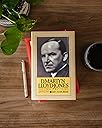



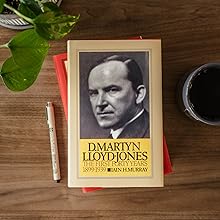
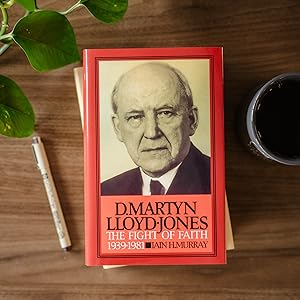
David Martyn Lloyd-Jones the First Forty Years 1899-1939 [Murray, Iain H] on desertcart.com. *FREE* shipping on qualifying offers. David Martyn Lloyd-Jones the First Forty Years 1899-1939 Review: The Highest Honour - Martyn Lloyd-Jones was one of the key figures in the course of Evangelical history in the twentieth century, particularly in Great Britain but also worldwide. His legacy is primarily the restoration of Calvinistic preaching in a nation that had largely forgotten it since the voice of C.H. Spurgeon had been stilled late in the nineteenth century. His impact cannot really be overstated, and elsewhere historian Michael Haykin has stated that "if there was one man who, under God, spearheaded the renewal of an evangelical, Biblical Calvinisim in the last fifty years, it is this man." Though his influence was international, he is largely forgotten by many today, so that this book, the first of a two-volume biography by Iain Murray, does the church a service with his detailed, moving account. I see two ways in which it could be said of Martyn Lloyd-Jones that he was instrumental in the tearing down of strongholds, the destroying of arguments and every lofty opinion raised against the knowledge of God (2 Corinthians 10:4-5). The first emerged from the unique perspective of his early career that allowed him to see things far differently from the prevailing thought of his day. As a young man, he distinguished himself as a brilliant rising star in the world of medicine and actually became the chief assistant to Lord Horder, who was the Royal Physician at St. Bartholomew's in London. But he was soon to become increasingly dissatisfied with his chosen profession. One of the things that struck him was the spiritual sickness of many of the aristocratic patients who came to see Horder. ML-J was raised on the tepid faith of a liberal Christianity that focussed on the betterment of society through social policies. The conventional wisdom was that the problems in society, particularly among the so-called "lower classes", could be solved by education and politics. But as he began to look at those who were considered to be the cream of English society, he was shocked to discover that their problems were identical to those in the "lower classes." He began to realize that the problem of many of these people was that they were sinners. As he began to realize this, he began to have the spotlight turned back on to his own heart, and he came to see his own deep-rooted sin. "I am a Christian," he could later say, "solely and entirely because of the grace of God, not because of anything I have thought, or said, or done. He brought me to know I was dead, 'dead in trespasses and sins,' a slave to the world, and the flesh, and the Devil, that in me 'dwelleth no good thing,' that I was under the wrath of God, heading for eternal punishment. He brought me to see that the real cause of all my troubles and ills, and that of all men, was an evil, fallen nature which hated God and loved sin. My trouble was not only that I did things that were wrong, I myself was wrong at the very center of my being" (p.64). So his realization and argumentation that the problems of society were not, at root, intellectual but moral, and further that the moral problem was not merely dealing with "sins" but was the problem of sin itself, challenged one modern myth that had been uncritically accepted for some time. The second instance where he turned on its head the accepted beliefs of his time would be his putting the lie to what was "virtually an axiom of modern thought, that no one could be a scientist and a believer in an authoritative Bible at one and the same time." Science was supposed to have rendered impossible the claim of Scripture to be the Word of God. This was what the liberal seminaries were teaching, and they were producing whole generations of preachers who preached without power because they did not have any confidence in the Scriptures and thus did not preach the gospel. "But here was a man coming from Barts, the citadel of science, and from the consulting rooms of Thomas Horder - one of the most brilliant rationalists of the age" - preaching with confidence and power the old traditional doctrines, including the authority of the Bible. To be sure, liberalism remained widespread, but ML-J gave intellectual respectibility to Biblical, Calvinistic Christianity. After his conversion, he felt a powerful call to preach the gospel, a call with which he struggled mightily, as all of his close Christian friends told him not to give up medicine because of the influence he could have in his current position. But the call to preach the gospel was something he could not refuse, so he gave up medicine. He went back to his native Wales with his new wife Bethan, to a very small town called Aberavon, where he began preaching in a place called the Bethlehem Forward Movement Mission, a Presbyterian church in a very poor, lower class area. He was there from 1927-1939. In those twelve years he saw God move in the hearts of people who had been hardened to the gospel. Most of the conversions were in people who were in their forties and older, which is very unusual. Though he never used the word "revival", his time there certainly had those features. As his reputation spread around Great Britain, he began to receive offers to go elsewhere. One of them was the one that led him out of Wales, to go to Westminster Chapel in London in 1939. His ministry from that point on is chronicled in the second volume. The opinion was common that ML-J made a great sacrifice by giving up medicine to enter into the ministry. His response was this: "I gave up nothing; I received everything. I count it the highest honour that God can confer on any man, to call him to be a herald of the Gospel" (p.150). Review: A challenging biography wtih lots to teach us today - I've known about Martyn Lloyd-Jones for years. I knew he was a medical doctor who gave up a promising career to become a pastor. I knew he was stern and a gifted preacher who could take years to work through a book of the Bible. I remember being captivated listening to a cassette tape of him preaching on two words: "But God..." But when I kept hearing Tim Keller mention the influence of Lloyd-Jones on his own ministry, I had to learn more. I'm glad I did. The first thing that struck me as I read this volume is how little things have changed. Sometimes I make the mistake of thinking that we are the first to encounter some of the trends and fads that everyone writes about. The landscape of this book seemed familiar to me: churches in decline, a massive rethinking of theology, an emphasis on pragmatism, a loss of confidence in preaching, a desire to be relevant, and an old version of the attractional-incarnational debate. Anyone who is familiar with books and blogs on church life today will recognize many of the same issues in this book, even though Lloyd-Jones lived a century ago. Lloyd-Jones became an oddity within this context. He believed that the solution to the decline of the church was nothing less than a rediscovery of the Gospel, and a reawakening to the identity of the church. In other words, Lloyd-Jones pressed for a return to first things. He seemed radically out of step with his times, but the result was a greater relevance and impact than if he had tried to be relevant. Here's an example of the problem as Lloyd-Jones saw it: "We are not declaring the Gospel with power to a dispirited and disillusioned age; we are not living in the discipline of Gospel fellowship; only in a very imperfect degree are our churches God's resting place and holy habitation. The depressing and alarming thing about our churches is not their tiny congregations, their shabby buildings, their social insignificance, their political impotence. If our churches are in peril it is not because they are less crowded than cinemas, less powerful than the promoters of dog-racing, less correct than Sunday golf, less fashionable even than Romanism or Christian Science. If our churches are in peril, it is because they have forgotten what they are." Surprisingly, Lloyd-Jones didn't believe in evangelism programs. He believed that when the church understood the Gospel and who she was, and lived in light of that reality, that would have more of a missional impact than any Gospel program. This reminds me of what Dallas Willard said about not making outreach a primary goal. Even though Lloyd-Jones violated everything that his contemporaries said about effective ministry, his impact was enormous and is still being felt today. Besides this book's message for today, there is lots to appreciate about the story of his life. I was surprised to read that Lloyd-Jones almost moved to Winnipeg as a boy. As a resident of Toronto, I loved reading of his visits to this city, and how we confronted T.T. Shields, the polemical pastor of Jarvis Street Baptist Church, and told him to stop being so negative. While staying at 74 St. George Street in Toronto, Lloyd-Jones discovered a series of books across the road at Knox College that significantly shaped his life. And we read that he never tired of visiting Niagara Falls. A good biography is humbling. This one helped me realize that our problems and the proposed solutions aren't so new, that God uses individuals who are somewhat out of step with the times, and that the solution involves, more than anything else, the Gospel. I'm looking forward to reading Volume 2.





| Best Sellers Rank | #1,376,935 in Books ( See Top 100 in Books ) #2,466 in Religious Leader Biographies #5,470 in Christian Personal Growth #15,681 in Christian Evangelism (Books) |
| Customer Reviews | 4.9 4.9 out of 5 stars (93) |
| Dimensions | 5.67 x 1.38 x 8.94 inches |
| Edition | Reprint |
| ISBN-10 | 0851513530 |
| ISBN-13 | 978-0851513539 |
| Item Weight | 1.67 pounds |
| Language | English |
| Print length | 408 pages |
| Publication date | June 1, 1983 |
| Publisher | Banner of Truth |
R**T
The Highest Honour
Martyn Lloyd-Jones was one of the key figures in the course of Evangelical history in the twentieth century, particularly in Great Britain but also worldwide. His legacy is primarily the restoration of Calvinistic preaching in a nation that had largely forgotten it since the voice of C.H. Spurgeon had been stilled late in the nineteenth century. His impact cannot really be overstated, and elsewhere historian Michael Haykin has stated that "if there was one man who, under God, spearheaded the renewal of an evangelical, Biblical Calvinisim in the last fifty years, it is this man." Though his influence was international, he is largely forgotten by many today, so that this book, the first of a two-volume biography by Iain Murray, does the church a service with his detailed, moving account. I see two ways in which it could be said of Martyn Lloyd-Jones that he was instrumental in the tearing down of strongholds, the destroying of arguments and every lofty opinion raised against the knowledge of God (2 Corinthians 10:4-5). The first emerged from the unique perspective of his early career that allowed him to see things far differently from the prevailing thought of his day. As a young man, he distinguished himself as a brilliant rising star in the world of medicine and actually became the chief assistant to Lord Horder, who was the Royal Physician at St. Bartholomew's in London. But he was soon to become increasingly dissatisfied with his chosen profession. One of the things that struck him was the spiritual sickness of many of the aristocratic patients who came to see Horder. ML-J was raised on the tepid faith of a liberal Christianity that focussed on the betterment of society through social policies. The conventional wisdom was that the problems in society, particularly among the so-called "lower classes", could be solved by education and politics. But as he began to look at those who were considered to be the cream of English society, he was shocked to discover that their problems were identical to those in the "lower classes." He began to realize that the problem of many of these people was that they were sinners. As he began to realize this, he began to have the spotlight turned back on to his own heart, and he came to see his own deep-rooted sin. "I am a Christian," he could later say, "solely and entirely because of the grace of God, not because of anything I have thought, or said, or done. He brought me to know I was dead, 'dead in trespasses and sins,' a slave to the world, and the flesh, and the Devil, that in me 'dwelleth no good thing,' that I was under the wrath of God, heading for eternal punishment. He brought me to see that the real cause of all my troubles and ills, and that of all men, was an evil, fallen nature which hated God and loved sin. My trouble was not only that I did things that were wrong, I myself was wrong at the very center of my being" (p.64). So his realization and argumentation that the problems of society were not, at root, intellectual but moral, and further that the moral problem was not merely dealing with "sins" but was the problem of sin itself, challenged one modern myth that had been uncritically accepted for some time. The second instance where he turned on its head the accepted beliefs of his time would be his putting the lie to what was "virtually an axiom of modern thought, that no one could be a scientist and a believer in an authoritative Bible at one and the same time." Science was supposed to have rendered impossible the claim of Scripture to be the Word of God. This was what the liberal seminaries were teaching, and they were producing whole generations of preachers who preached without power because they did not have any confidence in the Scriptures and thus did not preach the gospel. "But here was a man coming from Barts, the citadel of science, and from the consulting rooms of Thomas Horder - one of the most brilliant rationalists of the age" - preaching with confidence and power the old traditional doctrines, including the authority of the Bible. To be sure, liberalism remained widespread, but ML-J gave intellectual respectibility to Biblical, Calvinistic Christianity. After his conversion, he felt a powerful call to preach the gospel, a call with which he struggled mightily, as all of his close Christian friends told him not to give up medicine because of the influence he could have in his current position. But the call to preach the gospel was something he could not refuse, so he gave up medicine. He went back to his native Wales with his new wife Bethan, to a very small town called Aberavon, where he began preaching in a place called the Bethlehem Forward Movement Mission, a Presbyterian church in a very poor, lower class area. He was there from 1927-1939. In those twelve years he saw God move in the hearts of people who had been hardened to the gospel. Most of the conversions were in people who were in their forties and older, which is very unusual. Though he never used the word "revival", his time there certainly had those features. As his reputation spread around Great Britain, he began to receive offers to go elsewhere. One of them was the one that led him out of Wales, to go to Westminster Chapel in London in 1939. His ministry from that point on is chronicled in the second volume. The opinion was common that ML-J made a great sacrifice by giving up medicine to enter into the ministry. His response was this: "I gave up nothing; I received everything. I count it the highest honour that God can confer on any man, to call him to be a herald of the Gospel" (p.150).
D**H
A challenging biography wtih lots to teach us today
I've known about Martyn Lloyd-Jones for years. I knew he was a medical doctor who gave up a promising career to become a pastor. I knew he was stern and a gifted preacher who could take years to work through a book of the Bible. I remember being captivated listening to a cassette tape of him preaching on two words: "But God..." But when I kept hearing Tim Keller mention the influence of Lloyd-Jones on his own ministry, I had to learn more. I'm glad I did. The first thing that struck me as I read this volume is how little things have changed. Sometimes I make the mistake of thinking that we are the first to encounter some of the trends and fads that everyone writes about. The landscape of this book seemed familiar to me: churches in decline, a massive rethinking of theology, an emphasis on pragmatism, a loss of confidence in preaching, a desire to be relevant, and an old version of the attractional-incarnational debate. Anyone who is familiar with books and blogs on church life today will recognize many of the same issues in this book, even though Lloyd-Jones lived a century ago. Lloyd-Jones became an oddity within this context. He believed that the solution to the decline of the church was nothing less than a rediscovery of the Gospel, and a reawakening to the identity of the church. In other words, Lloyd-Jones pressed for a return to first things. He seemed radically out of step with his times, but the result was a greater relevance and impact than if he had tried to be relevant. Here's an example of the problem as Lloyd-Jones saw it: "We are not declaring the Gospel with power to a dispirited and disillusioned age; we are not living in the discipline of Gospel fellowship; only in a very imperfect degree are our churches God's resting place and holy habitation. The depressing and alarming thing about our churches is not their tiny congregations, their shabby buildings, their social insignificance, their political impotence. If our churches are in peril it is not because they are less crowded than cinemas, less powerful than the promoters of dog-racing, less correct than Sunday golf, less fashionable even than Romanism or Christian Science. If our churches are in peril, it is because they have forgotten what they are." Surprisingly, Lloyd-Jones didn't believe in evangelism programs. He believed that when the church understood the Gospel and who she was, and lived in light of that reality, that would have more of a missional impact than any Gospel program. This reminds me of what Dallas Willard said about not making outreach a primary goal. Even though Lloyd-Jones violated everything that his contemporaries said about effective ministry, his impact was enormous and is still being felt today. Besides this book's message for today, there is lots to appreciate about the story of his life. I was surprised to read that Lloyd-Jones almost moved to Winnipeg as a boy. As a resident of Toronto, I loved reading of his visits to this city, and how we confronted T.T. Shields, the polemical pastor of Jarvis Street Baptist Church, and told him to stop being so negative. While staying at 74 St. George Street in Toronto, Lloyd-Jones discovered a series of books across the road at Knox College that significantly shaped his life. And we read that he never tired of visiting Niagara Falls. A good biography is humbling. This one helped me realize that our problems and the proposed solutions aren't so new, that God uses individuals who are somewhat out of step with the times, and that the solution involves, more than anything else, the Gospel. I'm looking forward to reading Volume 2.
L**N
Good and Solid Biography of a Man to Whom God showed Grace.
Good Christian biographies are always great encouragements. They help us to see the struggles of those we most look up to, and God's grace amid those trials. This biography was written by a friend of Dr.Martyn Lloyd Jones, and seems to deal well not only with the man's outward life, but also with his deepening doctrine. It is always wonderful to read of those who saw their insufficiency and God's ultimate sufficiency in Christ. The centrality of the gospel in M.L-J's ministry --above and beyond social work-- was lovely to see. The struggle between Liberalism and Christianity is a highlight, as well as the cautious humility of an earnest preacher.This book is a good one to think about. Human nature does not change, and Jesus is the same yesterday, today, and forever!
C**R
One of the most compelling biography's I have ever read!
This is a must read for anyone who is in full time ministry or thinking about go into the ministry. A powerful story of what God does through those who are called by Him. The Scottish names and phrases require the agility of a language gymnast, but a educational read. Lloyd-Jones's life clearly demonstrates how God's power can cut through any social and cultural limitations. In the story of Lloyd-Jones we see the successes that come from obedience versus conventional wisdom.
J**L
A Great Work of History
Iain Murray is an excellent historian. I have read most of his books. This two volume series might be his best. I have heard many say this is one of their favorite all-time bios. Dr. Lloyd-Jones was a twentieth century prophet. He was a trend setter, and a major gift to the church. For this reason alone this book is an important read. Following the trajectory of his life is a tour d'force of the 20th century Evangelical scene.
A**R
Excellent book and very relevant for today.
A**N
I only wish I had these books 50 years ago. Wonderful insights on preaching and ministry.They ought to be required reading in every Christian College and Seminary.
A**R
Great book. Highly recommended. Iain Murray is always good.
J**E
Delightful, informative book. Would definitely recommend.
A**.
Excellent read. A wonderful account giving insight into the man himself and the spiritual condition of the Christian church in Wales in the early 1900's.
Trustpilot
4 days ago
3 days ago