

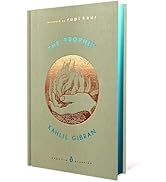
Arabian Sands (Penguin Classics)
Product ID: 1718455
🌍Insight into Middle East history
📚Classic Arabian exploration
🏜️Epic Empty Quarter journey
Desertcart purchases this item on your behalf and handles shipping, customs, and support to Uruguay.
🏜️ Unlock the secrets of Arabia’s vast Empty Quarter — the ultimate desert adventure awaits!
Arabian Sands by Wilfred Thesiger is a critically acclaimed classic travelogue documenting his daring crossings of Arabia’s Empty Quarter. Combining firsthand cultural immersion with vivid historical context, this Penguin Classics edition offers a rare glimpse into a vanished world of Bedouin life and desert survival, making it essential reading for anyone fascinated by Middle Eastern history and exploration.













| Best Sellers Rank | #182,133 in Books ( See Top 100 in Books ) #16 in General Middle East Travel Guides #84 in Historical Middle East Biographies #100 in General Asia Travel Books |
| Customer Reviews | 4.6 out of 5 stars 629 Reviews |
A**R
Fantastic Read
Incredible book about one of the most interesting men to ever live
N**O
A Classic
I'm only about a quarter through this book, and I'm enthralled. Takes you back to another world, before oil riches flowed, to a time when conditions were unrelentingly harsh and unforgiving, where the people were hard and austere, accustomed to a life of great demands and hardships, yet also capable of great courtesy and hospitality. The author explains why he was drawn into the desert and living with the Bedu and describes how the time he spent there was the happiest of his life. Thesiger served as a foreign service officer in Sudan for a number of years as a young man before setting off on his 2 crossings of the empty quarter in southern Arabia. He notes the great abundance of wildlife in Sudan: herds of thousands of elephants, an abundance of lions (he shot 70 himself on hunting trips while stationed there). It's such a sad shame that it's almost all gone now after years of poaching, over-hunting, and civil war. Though apparently there has been some return of these animals on a much smaller scale with some degree of peace in South Sudan. It's hard to imagine that a description of desert life--traveling with camels and how important they were to survival, the daily hardships and rituals of endurance that were just routine, the constant danger--would be fascinating, but it is. Even though Thesiger's travels happened only about 60 years ago, they seem taken from a different era, a much different and wild time. It is, for example, jolting to read that slavery still very much exists in Arabia at this time. And the religious fundamentalism is striking too: for example, a Beduoin is taken aback when Thesiger tells him that in England they have weathermen who can tell you when it is going to rain; the Bedu think that is something only God knows and that it is blasphemy to say otherwise.
Z**A
Outstanding Chronicle of Exploring the Empty Quarter
After you read this, you'll never think the same of the "Empty Quarter" which encompasses much of the south of the Arabian Peninsula. First of all, you'll find it's not so empty, with the nomadic Bedu plying the dunes and oases of the region as they have for centuries. In fact, this story is primarily about the Bedu who are incredibly tough but also incredibly principled. Their moral code could teach us a lot. Their love for their camels, who literally enable them to live in their hostile geography, and for their fellow man is humbling. The author, an intrepid explorer of these desert sands, does an outstanding job of bringing the Bedu culture to us. If you want to more fully understand the nomadic Arab mind, you could do much worse than to read this outstanding book.
P**N
A Gift
This is one of my favorite books. There's something so grand about the scale and ambition of Thesiger's journey to the Arabian desert. His whole life was building up to this point. Born to an English family in Ethiopia, he took an interest in other cultures from an early age. Thesiger set out exploring places not yet known well to the Western world. He wasn't only interested in other cultures, he often admired them. An early exploration of his was to the Danakil in Africa. Along the way he took many great photographs that show people and ways of life before the onset of modernity. Thesiger also served with the British military in Africa during World War II. By the time he set off for the Empty Quarter of Arabia, he was already well acquainted with travelling in places with difficult terrain and alien cultures. In Arabian Sands he dives in to the Empty Quarter for a long period of time. He lives and dines with the nomadic Bedouin inhabitants. He learns about the tribes and their sometimes chaotic way of life. He is throughout this journey still a wealthy Englishman who never joins the tribe. Thesiger remains always an outsider looking in and chronicling a way of life he knows will soon be disappearing. He is often admiring of the Bedouin culture and fascinated by their mores. Even though I read this book many years ago, I remember when he writes about the Bedouin feeling sad when an animal (I can't remember which one) died. He relates how their outpouring of grief in that moment contrasted with their usual stoicism. There are so many fascinating people and scenes in Arabian Sands. It is really a gift to all of us from Thesiger. Whether you agree with Thesiger's opinions or not, his Arabian journey is a window to a place and time that existed in some shape or form for thousands of years but will probably never exist again.
D**B
One of my idols
I read this book when I was much younger and no one knew about this man nor much about Arabia. I was invited to be part of a team that would start an airline for the United Arab Emirates, a rather new country (formally the Trucial Coast- tribes that warred against each other and were Bedu and pearl divers). The airline was called Hamarein Air in about 1976 and was started by one little Bedu named Saif Hamarein. He owned small mini marts all over the Emirates, but especially in Ras al Khaima and Sharjah. he raised money from those to buy a 747! I read this book as I started departing from LAX and since the flight was over 27 hours with a stop in Paris and an over night, I finished it. This man, Sir Wilfred Thesiger was remarkable and although only 29 years old, struck off into uncharted lands even the Bedu did not dare cross. He traveled and lived among the tribes of all the areas he charted and learned amazing things from the nations. Because of him today, we learned much about a peoples unknown to the western world. I often wondered what happened to him and since we did not have computers, there was little way to actually look for him. He seemed to have vanished. But on my second time living among the Emirates in the 1990's, they found him in a mud hut in Africa being cared for by an Ethiopian woman and he had satchels of film never processed from his trips in the 1940's! I own 2 of these unpublished photos of his journeys and had the amazing pleasure of meeting my idol at 90+ years old! I cherish my photo with him. He was a remarkable man who did much to bring us the very news about corners of the earth he was later to regret as it brought westernization to the quiet countries and people he adored.
J**T
Thesiger's Arabian Sands
I had heard this was the definitive work on the desert country but never had gotten around to reading it. I now have and it is terrific - every thing it's cracked up to be. I had read Michael Asher's biography; I had been in Ethiopia, Oman and Yemen; I traveled in the Hadhramaut -- all of this over fifty years later but still there is the flavor of Thesiger's days. His writing of crossing the Empty Quarter was a precursor of Asher's more recent writings about desert travels. He writes well and keeps the reader completely caught up with his trek. There is a sadness, on Thesiger's part (and mine), that as progress has affected the Bedu life, the stability of the old days is no more. But for a loving report on life as it used to be with the Bedu tribes, I whole heartedly recommend Arabian Sands. (I should not Rory Stewart's introduction was worth the price of the book)
S**S
Fascinating tale!
Having watched a very cursory programme on TV about Wilfred Thesiger & his travels through the 'Empty Quarter' I was keen to learn more. I was not disappointed. what drove me nuts was the spelling mistakes almost one on each page from memory. I found it most distracting. Even if the author could not spell correctly, surely the editor/proof readers should have picked up oon the mistakes. It distracted me throughout the story. A terrific tale of exploration in a set in a time that we'll never see again.
S**D
Going the way of the Amrican Indian
I just spent 3 months travling in 5 Saudi cities and their surrounding deserts and read the book after having it recommended by a Pakistani Engineer supervising a project I was involved with. After I made a comment about feeling that the Arab people had become lost in some way, they being extraordinarily kind and hospitable in many ways yet totally insane in others, automobile diving skills for example, I felt sad over a since of a dyeing greatness. The gentleman said, "You need to read a book titled "Arabian Sands" to better understand these people. So I did. The author bore witness to what I only felt had occurred. It is a very good read for anyone interested in knowing about the Arab people just prior to the arrival of the oil companies. Arabian Sands is an Anglo-Christian window into a world that is all but gone.
J**H
the survival .
it is very good.
A**A
Ottimo libro
uno splendido libro, scritto egregiamente e in maniera forse involontariamente accattivante che non attende che di essere tradotto in Italiano.
L**E
Romantic
I like that the book was written by the author when he was a bit older. He was able to retain his romantic view, but the a more wisened perspective. There were really interesting cultural tidbits.
E**U
More of a diary than a novel
Detailed descriptions of the Bedouin culture, but it's not a page turning novel. Definitely a great read before visiting the UAE.
S**.
fascinating
A glimpse of a culture and hardships beautifully described and looking back from the modern world it’s hard to imagine it’s not even 100years ago.
Trustpilot
1 month ago
1 month ago