We remain fully operational. Our teams are working around the clock to ensure your deliveries continue safely.

DOWNLOAD THE APP


Customer Services
Copyright © 2025 Desertcart Holdings Limited
DOWNLOAD THE APP
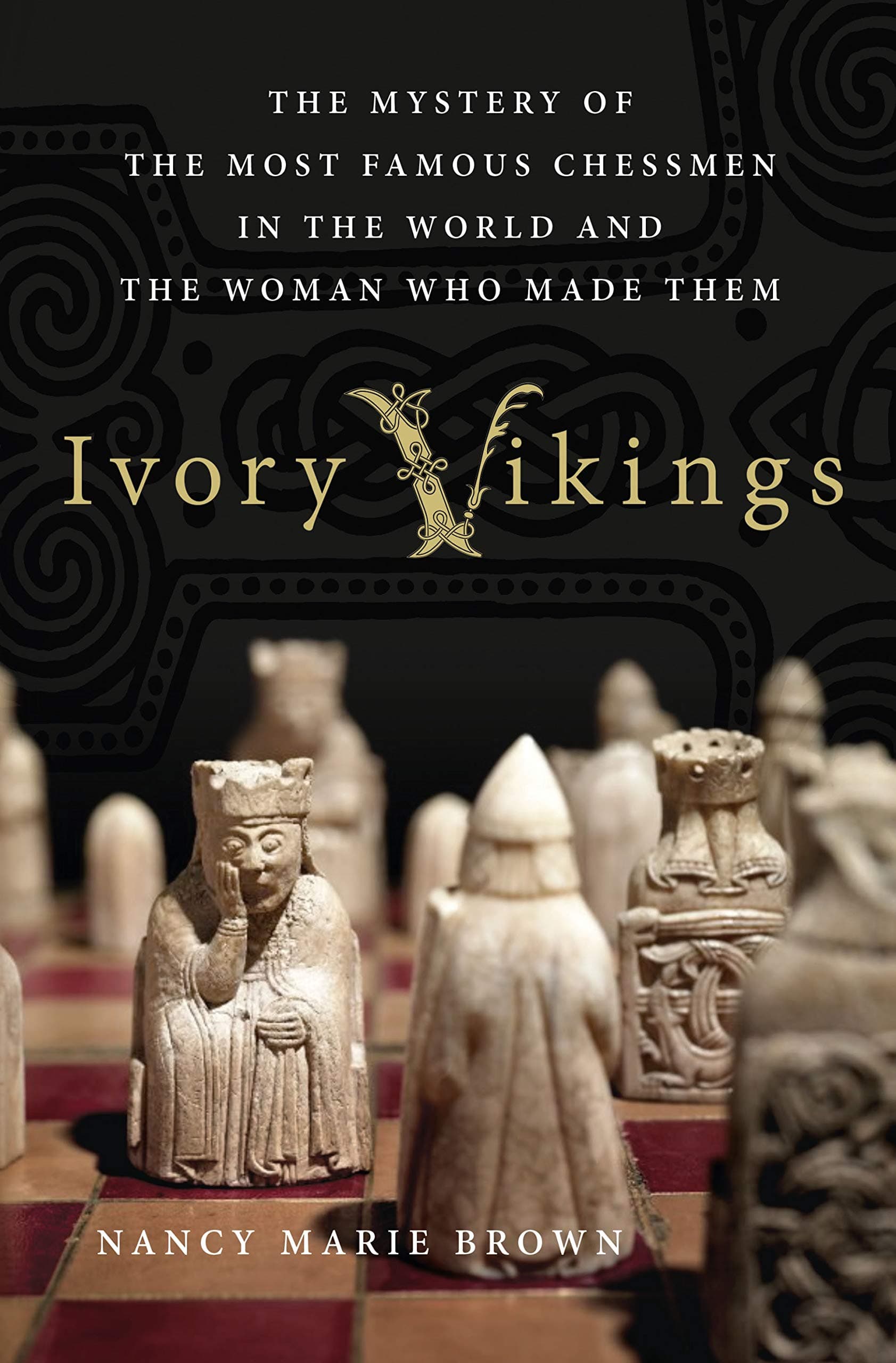
Ivory Vikings: The Mystery of the Most Famous Chessmen in the World and the Woman Who Made Them: The Mystery of the Most Famous Chessmen in the World and the Woman Who Made Them [Brown, Nancy Marie] on desertcart.com. *FREE* shipping on qualifying offers. Ivory Vikings: The Mystery of the Most Famous Chessmen in the World and the Woman Who Made Them: The Mystery of the Most Famous Chessmen in the World and the Woman Who Made Them Review: A Window On A Vanished Society - Back in 1831 a collection of 92 chessmen was discovered on the Isle of Lewis in the Hebrides. Carved from ivory taken from walrus tusks, each piece was individual and idiosyncratic, with differing faces, expressions, clothing, and weaponry. Debate over the Lewis chessmen's creator(s) and place(s) of origin began shortly after their discovery and has carried on without end. In this well written and fascinating volume Nancy Marie Brown tells us what is known or surmised about the chessmen, and in so doing she has revealed the complex civilization centered around the North Atlantic Ocean from which they came. In the 10th and 11th centuries the North Atlantic bustled with an active sea-going society. The Northmen or Vikings carried on trade between Scandinavia, Russia, Ireland, Britain, Iceland, and Greenland. Gifted craftsmen created beautiful art work out of stone, wood, and ivory, which was obtained from the large walrus herds to be found in Iceland and Greenland. Kings jostled for power while missionaries carried Christianity throughout the region, leading to the erection of beautifully constructed and decorated churches and cathedrals. It was in this setting that the Lewis chessmen were most likely carved. Debate is ongoing over their place of origin, with strong arguments being made for Norway, but the weight of the evidence seems to point towards Iceland, where there were many talented ivory carvers, including a remarkable artist called Margret the Adroit. The surviving art known to have been produced by her bears strong resemblances to the Lewis chessmen,and it is to her that Brown looks for the most likely creator of the pieces. Brown structured her book by focussing on the principle chess pieces. Chapter One, titled The Rooks, looks to the origins of the game of chess and to the development of the trade in and art of walrus tusk ivory. The second chapter is on The Bishops and covers the spread of Christianity to Iceland and Greenland. In those early days bishops often held temporal powers as rulers in place of kings, maintaining law and order over a society dominated by warring chieftains. Eventually religious and political power separated, but the bishops still held sway over much of the territory throught their great wealth. Chapter Three is on The Queens, and it is here that we learn as much of the story of Margret the Adroit as can be pieced together. Norse women had to be strong, resolute, and determined to survive in their harsh environment, and Brown tells us their stories too, including Queen Gunnhild the Grim,who may well have been the model for the Lewis chess queens. Chapter Four deals with The Kings and gives more details on the combative monarchs who strove for power and encouraged exploration and trade. The Knights in the fifth chapter were not the warriors in shining armor the term invokes for us today. These knights rode small horses or ponies and wore a variety of gear and weaponry. The Lewis knights display a wide range of helmets, some with nose and ear guards and others without, while some seem to wear precursors of the modern bowler. It is in this chapter that Brown relates the many stories of how the Lewis chessmen came to be discovered, for as with so much else to do with them, there are disputes as to who found them and where. The Pawns are the least elaborately carved of the chessmen and thus they are relegated to the Acknowledgements. This is a rich and fascinating history which focusses on an often overlooked or neglected region and reveals its complex and wonderful history. We may never know whether Margret the Adroit was indeed the chessmen's carver, but we now know much more about her and about the society from which she sprang. Review: An enjoyable journey to medieval Scandinavia - Nancy Marie Brown takes the Lewis chessman as a starting point into the manners and society of early Scandinavia. The discussion ranges through the authority of kings and clerics, to clothing styles, the size of horses, the economics of walrus and wool, and more. She builds an appreciation of the sophistication of society during the twelfth and thirteenth centuries in Norway, Iceland and the northern British Isles (including Lewis where the chessman were found). Her case for Margret the Adroit as the artist that made them is weak at best, but is also a minor piece of this wide-ranging exploration of viking culture. Very enjoyable reading, and highly recommended. Why then only four stars? The book suffers from a lack of photographs to complement the vivid descriptions of the pieces and places. To overcome this, have a copy of The Lewis Chessmen Unmasked (Caldwll, Hall, and Wilkinson -- also available from desertcart) handy to which to refer. That book, while very short and offering a contrary argument as to the origins of the pieces, has a photograph of every piece of the Lewis chessmen! If you are interested in Norse society, Nancy Marie's Brown's Ivory Vikings is well worth reading!
| ASIN | 1137279370 |
| Best Sellers Rank | #594,350 in Books ( See Top 100 in Books ) #71 in Chess (Books) #265 in Art Movements (Books) #974 in Art History (Books) |
| Customer Reviews | 4.4 4.4 out of 5 stars (287) |
| Dimensions | 6 x 0.81 x 9 inches |
| Edition | 3rd Edition |
| ISBN-10 | 9781137279378 |
| ISBN-13 | 978-1137279378 |
| Item Weight | 1 pounds |
| Language | English |
| Print length | 288 pages |
| Publication date | September 1, 2015 |
| Publisher | St. Martin's Press |
J**D
A Window On A Vanished Society
Back in 1831 a collection of 92 chessmen was discovered on the Isle of Lewis in the Hebrides. Carved from ivory taken from walrus tusks, each piece was individual and idiosyncratic, with differing faces, expressions, clothing, and weaponry. Debate over the Lewis chessmen's creator(s) and place(s) of origin began shortly after their discovery and has carried on without end. In this well written and fascinating volume Nancy Marie Brown tells us what is known or surmised about the chessmen, and in so doing she has revealed the complex civilization centered around the North Atlantic Ocean from which they came. In the 10th and 11th centuries the North Atlantic bustled with an active sea-going society. The Northmen or Vikings carried on trade between Scandinavia, Russia, Ireland, Britain, Iceland, and Greenland. Gifted craftsmen created beautiful art work out of stone, wood, and ivory, which was obtained from the large walrus herds to be found in Iceland and Greenland. Kings jostled for power while missionaries carried Christianity throughout the region, leading to the erection of beautifully constructed and decorated churches and cathedrals. It was in this setting that the Lewis chessmen were most likely carved. Debate is ongoing over their place of origin, with strong arguments being made for Norway, but the weight of the evidence seems to point towards Iceland, where there were many talented ivory carvers, including a remarkable artist called Margret the Adroit. The surviving art known to have been produced by her bears strong resemblances to the Lewis chessmen,and it is to her that Brown looks for the most likely creator of the pieces. Brown structured her book by focussing on the principle chess pieces. Chapter One, titled The Rooks, looks to the origins of the game of chess and to the development of the trade in and art of walrus tusk ivory. The second chapter is on The Bishops and covers the spread of Christianity to Iceland and Greenland. In those early days bishops often held temporal powers as rulers in place of kings, maintaining law and order over a society dominated by warring chieftains. Eventually religious and political power separated, but the bishops still held sway over much of the territory throught their great wealth. Chapter Three is on The Queens, and it is here that we learn as much of the story of Margret the Adroit as can be pieced together. Norse women had to be strong, resolute, and determined to survive in their harsh environment, and Brown tells us their stories too, including Queen Gunnhild the Grim,who may well have been the model for the Lewis chess queens. Chapter Four deals with The Kings and gives more details on the combative monarchs who strove for power and encouraged exploration and trade. The Knights in the fifth chapter were not the warriors in shining armor the term invokes for us today. These knights rode small horses or ponies and wore a variety of gear and weaponry. The Lewis knights display a wide range of helmets, some with nose and ear guards and others without, while some seem to wear precursors of the modern bowler. It is in this chapter that Brown relates the many stories of how the Lewis chessmen came to be discovered, for as with so much else to do with them, there are disputes as to who found them and where. The Pawns are the least elaborately carved of the chessmen and thus they are relegated to the Acknowledgements. This is a rich and fascinating history which focusses on an often overlooked or neglected region and reveals its complex and wonderful history. We may never know whether Margret the Adroit was indeed the chessmen's carver, but we now know much more about her and about the society from which she sprang.
J**N
An enjoyable journey to medieval Scandinavia
Nancy Marie Brown takes the Lewis chessman as a starting point into the manners and society of early Scandinavia. The discussion ranges through the authority of kings and clerics, to clothing styles, the size of horses, the economics of walrus and wool, and more. She builds an appreciation of the sophistication of society during the twelfth and thirteenth centuries in Norway, Iceland and the northern British Isles (including Lewis where the chessman were found). Her case for Margret the Adroit as the artist that made them is weak at best, but is also a minor piece of this wide-ranging exploration of viking culture. Very enjoyable reading, and highly recommended. Why then only four stars? The book suffers from a lack of photographs to complement the vivid descriptions of the pieces and places. To overcome this, have a copy of The Lewis Chessmen Unmasked (Caldwll, Hall, and Wilkinson -- also available from Amazon) handy to which to refer. That book, while very short and offering a contrary argument as to the origins of the pieces, has a photograph of every piece of the Lewis chessmen! If you are interested in Norse society, Nancy Marie's Brown's Ivory Vikings is well worth reading!
J**T
A must read for fans of the early medieval period--and fun.
Her last book, Song of the Vikings, was a (London) Times Literary Supplement Book of the Year 2012, so you know she can write well. Nancy Marie Brown's new book is a scholarly but highly entertaining investigation of the provenance of the famous chess pieces known as the Lewis Chessmen found at Uist, the Isle of Lewis, Hebrides, Scotland. They are probably the most famous chess pieces in the world, having been used as the models for various chess interpretations, such as in the Harry Potter movies, and they are listed as number 61 in BBC Radio 4’s History of the World in 100 Objects (also excellent). Brown’s wonderfully conversational style hides the fact that she is giving us a detailed history of these remarkable pieces of carved walrus ivory. Along the way, we are introduced to most of the players in the later Viking period (1000 AD-1300), some with great names like King Eirik Blood-Axe, the original Valdemar King of Denmark, King Magnus Bare-legs (who like the Scots he conquered so much he decided to wear kilts), and Earl Erling Skew-neck. She shows us how Greenland, Iceland, the Hebrides, the Orkneys, Norway, Sweden and Denmark had vibrant trade routes, in many ways an advanced culture. She limns the progress of Christianity as it replaces the ancient Norse bedrock. And she brings to life Margaret the Adroit of Iceland, master ivory craftswoman working for Bishop Pall. Nearly every page has something interesting or surprising on it (for example, the fact those famous war steeds of the knights were pony size until the late 1200’s, calling into question Scott’s depiction of Ivanhoe on a charger). While the Viking chieftains and kings and bishops can be dizzying, they never overwhelm. Brown tells us early that “more medieval literature exists in Icelandic than in any other European language except Latin—and many of the Sagas have not been translated." Brown, however, reads Icelandic, so her sources for all the Nordic world, including its incursions in France and England, are extensive. And she draws from architecture, art, tapestries, papal documents—a whole world of emerges, a real world of real people. For me this is a five star book—for those with no interest in such things, take off a half star.
R**E
Één zeer gedetailleerd boek over de schaakstukken van de Lewis Chessmen , ge-vonden op het Lewiseiland. Gemaakt uit uitstekende tanden van de walrus door de Vikings.
K**Y
Loved the story. A very unique and special chess set made a very long time ago. If you are a chess fan at all you will adore this story!
T**S
En cuanto vi el libro, supe que quería tenerlo pues trataba un tema que ya conocía anteriormente al haber tenido la oportunidad de ver esas piezas de las cuales quede enamorado desde el primer instante. El libro, escrito de forma brillante nos muestra las hipótesis sobre el origen de las misteriosas piezas de marfil minuciosamente talladas. Mejor leerlo, no adelanto nada más.
G**N
Wonderful illumination of the game, the Lewis pieces and, particularly, Viking history.
A**T
Nancy Brown's work is thorough and fascinating. She is clearly knowledgeable but also enthusiastic about her topic. Some photos of the existing Lewis chessmen, even in black and white, would have really supported her readers' interests and acted as good reference points for them.
Trustpilot
2 weeks ago
1 week ago