
Buy anything from 5,000+ international stores. One checkout price. No surprise fees. Join 2M+ shoppers on Desertcart.
Desertcart purchases this item on your behalf and handles shipping, customs, and support to Uruguay.
๐ฅ Unlock your inner power: Master willpower, master your life!
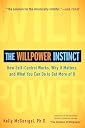
The Willpower Instinct by Kelly McGonigal, PhD, is a bestselling, science-based guide that reveals why self-control is a battle within multiple selves. Rooted in Stanford University research, it offers a 10-week practical course with exercises to strengthen willpower through mindful self-awareness. Combining humor with psychology, this book empowers professionals to overcome impulsive behaviors, improve focus, and achieve meaningful personal and career goals.


| Best Sellers Rank | #50,066 in Books ( See Top 100 in Books ) #363 in Happiness Self-Help #941 in Personal Transformation Self-Help #973 in Motivational Self-Help (Books) |
| Customer Reviews | 4.6 out of 5 stars 3,375 Reviews |
M**0
The bible of willpower
If you need more willpower (don't we all?), then this book is for you. The author leaves no stone unturned as she cites study after study to explain why we lack willpower and how we can get more of it. An important theme throughout the book is awareness-- once we understand the circumstances under which we fail to exercise willpower, then we can began to make changes. And as the author points out at the close of the book, the mere act of becoming more self-aware is sufficient enough to create change in some people's lives. However, do not mistake this to mean that this is simply a book full of academic theory about willpower; rather, each chapter is replete with "experiments" that provide clear-cut guidance as to how you can put the theory into practice in your own life. Here's a brief breakdown of each chapter: 1) The author defines willpower, distinguishes between "I will" (I will begin exercising each day) and "I won't" (I won't eat fatty foods) challenges, and discusses how we have essentially two warring sides to our personality (the side that wants instant gratification, and the side that wants to achieve our long-term goals). She suggests tracking your willpower choices to increase your awareness and meditation as a means of building willpower (willpower is like a muscle and can be trained to become stronger over time). 2) The author discusses the evolution of willpower and why a lack of willpower may have served an evolutionary purpose (our ancestors would have been wise to consume large amounts of fatty food if given the opportunity, since there was more uncertainty back then about when their next meal might arise), as well as the ways in which stress reduces our willpower (you are sad after a relationship ended and decide to eat a piece of cake as comfort food). As a means of increasing willpower, the author suggests engaging in focused breathing, outdoor walks or activity (just five minutes is sufficient to have an impact), getting adequate sleep, and lying down to relax. 3) The more frequently we exercise willpower, the easier it becomes. Willpower can become drained, and it ebbs and flows throughout the day. Sometimes we think our willpower is exhausted but this is just our brain trying to trick us into conserving energy-- this explains how long-distance runners are able to push on. The author suggests eating a better diet and engaging in certain activities intended to increase willpower. 4) This is easily one of the best chapters-- the author discusses "moral licensing" and how we can use our good behavior (not eating chocolate cake) to justify being bad (eating chocolate cake). The author's solution is to remind yourself why you were being good in the first place. This section also discusses how we discount the future and assume that tomorrow will be different than today. We tell ourselves we'll have more willpower tomorrow, but the fact is we will face the same challenges tomorrow that we face today. 5) The author discusses the function of dopamine and how it can prompt us to behave like rats pulling a lever to get an electric shock. Many of our willpower failures (e.g., checking email excessively) are simply us pointlessly trying to get a reward because of a rush of dopamine (that occurs when we hear a trigger, like "You've got mail!"). Fortunately, by understanding how dopamine works we can turn it to our advantage by linking rewards to tasks that we've been procrastinating. 6) This chapter was counterintuitive and thus incredibly helpful. It turns out that beating yourself up over willpower failures (e.g., I shouldn't have eaten that Twinkie!) actually makes us more likely to fail again because we're making ourselves sad (and what do we turn to when we're sad? More Twinkies, of course!). The author recommends self-acceptance and positivity instead of guilt and self-criticism-- fantasize about how good you'll feel when you eat healthier foods instead of guilt-tripping yourself about that chocolate bar you ate at lunch. 7) Many of us see the future far different than we see the present-- we naively assume that we'll be more responsible or have more willpower in the future, so we put off onerous tasks for our "future self" to deal with. Unfortunately, our future self is the same person as our present self, and we're only tricking ourselves if we think otherwise. An additional problem is that some of us deeply discount the value of future rewards and place far too much emphasis on present rewards (taking $10 today instead of $50 one year from now). The author suggests thinking more about your future self (e.g., using FutureMe.org to write a letter to your future self) to become accustomed to the notion that you and your future self are one and the same. Also, you can "pre-commit" to your future self by doing things like purchasing an expensive gym membership to exercise, but this struck me as a little superficial as someone who is struggling with willpower can simply ignore the commitments they made. On a side note, the author suggests waiting 10 minutes before engaging in any behavior that the present self is screaming for (I NEED to buy that book now!) that I have found incredibly useful. 8) Willpower is contagious-- if you hang out with a bunch of people who are unmotivated, you will be tempted to "mirror" their behaviors and emotions. "Social proof" even suggests that we engage in foolish behavior due to a herd mentality (everybody else is doing it, so I should do it too). The author recommends finding a willpower idol we can look up to (someone we believe exerts exemplary willpower), spend some time reviewing our goals at the beginning of each day, and publicly commit to our willpower challenges so the pressure of not disappointing our friends and family can motivate us to exercise self-control. I can personally attest to the power of publicly committing to a challenge, as I thru-hiked the Appalachian Trail in 2012 and saw many hikers continue onward simply because they didn't want to tell everyone they didn't have what it takes to go on. Of course, this strategy isn't fool proof-- otherwise hundreds of people wouldn't quit the trail each year. But knowing that other people are watching is certainly an incentive to exercise willpower. The author also mentions getting a willpower buddy and holding each other accountable, which works for the same reasons that making a public commitment does. 9) This chapter seemed a little out of place. The book had been discussing willpower and then all of a sudden it takes a U-turn and starts discussing how unpleasant thoughts can intrude in our minds. However, I soon saw the value in what the author was saying as well as how it fits into the overall willpower picture. The main idea is that we cannot control whether we have unhelpful or even disturbing thoughts, and suppressing such thoughts only causes us to focus on them more. Instead, we need to accept these thoughts, but also acknowledge that we are not compelled to act on them. The author cites an entertaining study about a group of people who were asked not to think of white bears but subsequently could think of nothing else. The trick is to allow yourself to permit the thought (or urge, say to smoke a cigarette) rather than fighting it. We can't control our thoughts, but we can control whether we choose to act on them, and trying to suppress our thoughts only increases the probability we will act on them. Again, it's counterintuitive, but it's supported by an ample amount of research which the author weaves into the narrative of the book. 10) A good conclusion, albeit a little brief. This book is an excellent addition to the positive psychology genre, and I can easily see how this became such a popular class at Stanford (where the author is a professor). If you want to know why you don't have the willpower you wish you had and how you can take action to change this, then stop procrastinating and exercise the willpower to buy this book :)
J**R
A Guide to Improving Your Life
We generally think of ourselves as one body and one mind ... a single unit working together. But according to Kelly McGonigal, the author, "...we've seen again and again that we are not one self, but multiple selves. Our human nature includes both the self that wants immediate gratification, and the self with a higher purpose." This is what makes self-control or willpower so difficult, we are actually fighting against ourselves. The benefits of self-control are significant. "People who have better control of their attention, emotions, and actions are better off almost any way you look at it. They are happier and healthier. Their relationships are more satisfying and last longer. They make more money and go further in their careers." The Willpower Instinct is a guide for improving your self-control. It is based on the award winning class which Ms. McGonigal teaches at Sanford University. Her writing style is very conversational and entertaining. She has a keen sense of humor which shows up throughout the book. While she is a college professor, the book was written for the general public in easy to understand language. Many of the concepts in the book are counterintuitive. We think the warning on cigarette packages should work to deter smoking. They actually have the opposite effect. "Frightening cigarette warnings can make smokers crave a cigarette, economic crises can make a person shop, and the nightly news can make you fat." The book is filled with examples of how and why we have willpower failures and ways we can work around these failures. "Self-control is a matter of understanding these different parts of ourselves, not fundamentally changing who we are. In the quest for self-control, the usual weapons we wield against ourselves - guilt, stress and shame - don't work." What does work is self-awareness. Paying attention to what is going on inside and realizing that there is a difference between thinking about something and acting on those thoughts. This book will give you a lot of insights into why we do the things we do, where our willpower fails us and why. You will also find many exercises which will help you strengthen your willpower. There is a lot of information in this book. I doubt that you will be able to absorb all of it in one reading. But it is very entertaining and should be studied and referred to often to help you build and strengthen your willpower. It will have a significant impact on your life. Excellent resource for improving your willpower and your life.
H**K
Sensible strategies for making small steps to improvement
The Willpower Instinct is based on a course the author gives at a prestigious american university. She covers a number of ways to handle your willpower but ultimately, it becomes about mindfulness about our cravings, urges and decisions. There were a number of good lessons: the white bear exercise, you and you 2.0 and surfing the urge. A study asked participants to not think about a white bear. It was pretty much impossible. The only way to escape an undesired thought is very counter intuitive: allow it to enter your consciousness. Simply allowing it to enter and observing it will not hurt us is quite powerful. If you've ever been anxious or woken up at night praying you'll fall asleep you'll know when the white bear applies. You and you 2.0 observes when we procrastinate we think you in the future (you 2.0) is more energetic, happier, smarter, stronger and less stressed than you. When you can accept that the future you won't be Superman but the same old you, you might just get things done straight away. The last strategy I'll discuss involves the intense observation of addictive urges - some might think this applies to alcoholics only, but anyone who looks at their cell phone more than they like or drinks coffee as a habit is an addict in my mind. In this excercise, smokers were told to spend an hour and a half going through the steps of lighting a cigarette, without touching the flame to the cigarette and surfing but not satisfying the urge. Taking these steps, smokers were able to resist their urges much more easily a week later. The tough part of the book is reading it slowly, maximum one chapter every three/four days (ideally one per week) and using the strategies. Isn't it ironic reading the book properly requires above average willpower? Just like any self help book, for the book to work the reader needs to participate to make it a success. Aren't they going to write the book that the reader only has to read and all changes will be complete ;-)? Good luck and enjoy - don't expect miracles, expect some sensible, well-researched advice and strategies that if employed might help make the change you want.
W**E
Invaluable for developing willpower; pursuing goals
This book is based on a course in willpower the author (Kelly McGonigal, PhD) teaches for Stanford University. McGonigal is a good writer with a very good sense of humor and her book relies on solid scientific research related to the psychology of willpower. In the beginning, she encourages the reader to come up with a "willpower challenge" or behavioral change to work on during a ten week "home course" related to the book's ten chapters (studying one chapter per week). (And, of course, one could read the book all the way through first, if they prefer.) Most of the chapters focus on particular psychological challenges (one per chapter) related to willpower and one's efforts to create a new habit, or change an old habit. In these chapters, she explains the psychological mechanisms at play (often related to how we sabotage ourselves) and shows how they could be overcome. Numerous tips and exercises are offered to help the reader. This forms the heart of the book and the insights offered are priceless for anyone who wants to develop more willpower and be more successful at pursuing their goals. To me, this material is worth "5 stars." Thanks to this book, after reading it straight through, I have resumed a daily meditation practice and resumed doing yoga. And I look forward to other positive changes as I work with it more methodically. One weakness of the book relates to the "willpower challenge" the reader is instructed to come up with in the beginning. For one thing, people who need help in creating a goal and designing a plan for achieving it (with short term goals, etc), are not given such assistance. A brief description of such things could have been put in an appendix, since this assignment was to serve as a background for the "course". Furthermore, throughout the book, there should be more references to this challenge, with the reader being encouraged to reflect on his/her overall progress with it (perhaps in a "willpower journal" or "willpower challenge journal"). The challenge, and how the reader progressed with it, are not even addressed in the summary questions on the last page. (For an excellent book that has everything one needs to know for creating and achieving goals, read Succeed by social psychologist Heidi Grant Halvorson.) One thing I have difficulty with is the author's idea of looking at your "self" that is motivated toward positive future goals as the "real you" vs the impulsive part of you which would therefore not be the "real you." (page 104) In my opinion, this is bad psychological advice. While certainly one wants to emphasize the part of oneself that is oriented toward positive future goals, the sort of "judgmental split" that the reader is encouraged to create could result in denying or suppressing one's "undesirable" impulsive nature, which could make it less conscious and therefore more powerful ("what you resist persists"). Paradoxically, only when one is able to open up to, and fully accept, their impulsive nature (or any other part of themselves they have resistance to), without trying to make it go away, is it likely to transform or diminish. (In another part of the book, Chapter 9, the author does encourage accepting unwanted thoughts and feelings, which is the "right" psychological approach for things you don't like about yourself.) I would also have liked for McGonigal to have included a bibliography (ideally an annotated one). In addition to this book, I read two other books related to willpower. The Power of Habit by Charles Duhigg gives a simple but valuable presentation of the basic mechanism behind habits. (cue that triggers a habit or routine > the routine > the reward which one learns to crave) He then shows how to use this "habit loop" to create a new habit or overcome a "bad" habit. He also gives some helpful information on willpower based on research studies. Willpower: Rediscovering the Greatest Human Strength is co-authored by Roy Baumeister, one of the foremost researchers on willpower, and John Tierney. This book has numerous insights on willpower and how to develop it, as well as insights and tips related to setting goals and changing habits. The authors of this book have a good sense of humor.
T**D
Great usable advice.
A lot of books on this topic tell you what your brain does when it's going through a situation that requires willpower, but offer little in the way of practical ways around the problem. This book offers both enjoyable storytelling to illustrate what the problems are AND practical how-tos to get around them. A quick example: in the first chapter, McGonigal explains how your brain tends to default to short-term benefits over long-term ones, which is why you often eat the cookie in front of you even though your long-term goal is to lose weight. She thoroughly explains why we've evolved to impulsively choose the short-term benefit, but then she gives both reflective exercises ("which is the harder option? Why is it harder? How do you feel when you think about going the hard route?") and practical strategies for how to stop giving in to the short term benefit when the long-term one is really what you want. In this case, it's keeping a log of when you're tempted (developing self-awareness) and practicing meditation for a few minutes a day (which gets your brain in the habit of pulling focus back to a single goal). The other ten chapters similarly lay out a single willpower challenge, a few reflective exercises to help you identify where your personal challenges lie, and a few practical how-to tools to change your behavior. I think it's the combination of reflective exercises and practical ones that makes the difference for me in this book - a lot of books offer one or the other, which means you either spend a lot of time thinking about how great it would be if you could just magically make your brain better (if it's all reflection) or you get overwhelmed with a giant to-do list that doesn't seem immediately applicable to your situation (if it's all how-to tips). McGonical lays out why the problem occurs, encourages you to apply that understanding to your own personal willpower challenge, and gives usable actions to overcome that challenge. It's a great structure for a book of this type, and I've found (as her students did) that when you actually sit down with pen and paper and put her exercises to use, it's made a notable difference in my ability to get through the impulse to procrastinate online (the personal willpower challenge I chose for my first foray into this book) and instead focus on long-term projects over time. One caveat: I read the book through the first time without putting anything into practice, and while it was interesting, I definitely got MUCH more out of it when I did the exercises. I found there were sections I'd dismissed as not that important that turned out to be much more influential when I actually used them. I also recommend taking McGonigal's advice in the introductory chapter: don't try to put every chapter to use all at once. It was much more enjoyable to take a chapter per week (or so) and add to those habits over time - less stressful than trying to make all the changes at once, and a minor enough impact on my usual routine that I hardly noticed the effort. The results, however - very noticeable. Highly recommended. It's a light read and would be a perfectly enjoyable book to read just to learn about the brain science, but the true benefit is in the exercises. I will say that occasionally her writing style gets a little cutesy for my taste, but I didn't buy it for literary style, I bought it for practical use, and it absolutely delivered on that front.
O**C
The willpower instinct.
This is a powerful book. Its like cool water on a hot day! I am more confident having the willpower to lose weight. Thank you!
J**M
Very good but not quite great; Must read between the lines.
The book starts off terrific. After the first 2 chapters, I felt I was about to read one of the greatest and life-altering books I have ever read (and I read a LOT). The rest of the book, unfortunately, are not nearly as good or useful. The author is a PhD in Psychology and teaches at Stanford (she received her PhD from Stanford as well). As an academic, she doesn't venture far from the empirical psychology but provides plenty of insinuations on how we can improve our willpower. As I was reading this book, I must have seen at least a dozen PhD dissertation worthy topics being explored but not quite made concrete mainly due to lack of empirical evidence. The book, however, does provide two concrete and empirical based suggestions on how we can often substantially improve our willpower: regular exercise and meditation. I felt these two suggestions alone were worth the price of the book. After reading this book and trying its precepts for couple of days, I already feel my daily willpower getting stronger (I exercise regularly but I also added meditation to my regimen). If you read between-the-lines, you will also gather many subtle Psychological methods into gaining higher degree of control over your behavior and emotions. I recommend this book.
A**E
Fascinating and Helpful
This was a fascinating book. It was brimming with psychology experiments that were both interesting and very revealing. For instance, did you know that if someone offers you a hundred dollars later, or fifty dollars now, you'll be more likely to wait for the future reward then if they offer you fifty dollars now, or a hundred dollars later? You're likely to choose the first option offered to you. Or did you know that a person is more likely to splurge on unhealthy food if they're asked how much progress they've made towards their weight loss goal then if you ask them how committed they are to their goal? I think my favorite experiment discussed in this book is the white bear experiment. The essence of the study is that as soon as you tell people to not think about white bears, that's exactly what they'll think about. It was a fascinating study on the effects denial has on your brain and your willpower. Smokers who acknowledge their cravings and acknowledge the associated feelings are more successful at quitting than those who try to ignore them. People who deny themselves certain food are more likely to think about the food constantly and ultimately binge on that food, resulting in a fascinating statistic that in the long-term, people who diet end up heavier than those who don't. However, there were a few contradictions that I think detracted from the book. At one point, the author suggested turning your "I will" power challenge into an "I won't" power challenge, at another point she suggests doing the opposite. At one point she talks about how if you exhibit superb self-control, you should work on giving in to your willpower occasionally. And while I understand that different people may need different "treatment" methods, I don't think the difference was explained as clearly as it could have been, other than "If this doesn't work, try this." I also think there were a few places where the author did a better job of explaining human psychology then actually suggesting a fix for the behavior, such as where she said that the more you think about future you as a different person than current you, the less you will prepare for your future. While the book wasn't perfect, it was an engaging and informative read with practical techniques the reader can employ. I recommend it.
R**I
If I could, I would give this book seven stars!
As a health psychologist and educator at the Stanford School of Medicine's Health Improvement Program, Kelly McGonigal's job is to help people manage stress and make healthy choices. Her great expertise comes from her own research as well as her years of dealing with her patience. Each chapter of the book dispels a common misconception about self-control and gives the reader a new way to think about their willpower challenges. Filled with lots of scientific researches and case studies, the book covers a wide range of willpower challenges of our everyday life, especially our struggle with addiction, whether that be chocolate, drugs, alcohol, procrastination, or Facebook, etc. Compared with the equally great book 'Willpower: Rediscovering our Greatest Strength' by Roy F. Baumeister, John Tierney, which was published in 2011, this book by Kelly McGonigal, published only one year later goes much further and covers the topic in much more detail. What I specially like is the authors pragmatical approach, giving us not only the newest scientific research about why we do what we do, but also great advise on how to strengthen our willpower to get more control about our behaviour. This book has been a wonderful discovery for me - would it have been written 20 years ago - I would might have saved years of psychotherapy. It is a book to value greatly and reread again and again. Highly recommendable to anyone, but especially to all people struggling with constant "wrong" decisions, compulsive behaviours and addictions.
T**R
Great book! Reads very easily with little technical jargon ...
Great book ! Reads very easily with little technical jargon and with lots of anecdotes and light humour to raise your spirits even though you're reading about all your guilty urges and impulses. Has very practical and easy to apply advice into everyday life. Would recommend to anyone.
G**S
One of the best reads I had
A good read to get awarenes of yourself, why things happens to you and our society, and learn some tools that will give you willpower to get you closer to your goals.
M**L
Friendly and inclusive approach to changing our life
A renowned Nobel laureate, Daniel Kahneman's 'Thinking, Fast and Slow', made me further interested in neuroscience and behavioral economics. Therefore, I couldn't help reading this 'The WILLPOWER INSTINCT' which is being a bestseller now in Japan. I was surely curious about how Stanford's teacher describes my interesting study. On arrival of this book, the moment opening it, I was so surprised and shocked to see the inside cover photo of her because she looked very young like a university student and was so beautiful. So I began to doubt whether this book would be worth reading or good value for money, written by such a teacher. However, soon after I began to read this book, I found my concern started to disappear. Although I don't think that this book does not prove new findings about neuroscience or behavioral economics, her way of explaining brain activities and how self-control works is very interesting and friendly. It is value of this book that is easy to read and not too scientific as well as has full of practical evidences and examples. 'I Will, I Won't, I Want, Powers' are the three principles to need to manage our behavior and habits. Effectively controlling these powers makes a big difference to our daily life and future. Too strong self-awareness, consciousness and obsession often lead us to a vicious cycle when stopping our bad behaviors and habits, as a result, we continue having trouble and can't overcome the difficulties. What I learned from the book is that take a natural attitude and just be yourself when improving ourselves and that accept our negative feelings but don't be overwhelmed by them, don't lose ourselves and keep on focusing on our goals, which is the critical path to what you really want to be and achieve. In the last chapter, the author says. 'We have to understand that we are not one self, but multiple selves and that we are born to be tempted, and born to resist. It is just as human to feel stressed, scared, and out of control as it is to find the strength to be calm and in charge of our choices. Self-control is a matter of understanding these different parts of ourselves, not fundamentally changing who we are. In the quest for self-control, the usual weapons we wield against ourselves - guilt, stress, and shame - don't work. People who have the greatest self-control aren't waging self-war. They have learned to accept and integrate these competing selves. If there is a secret for greater self-control, the science points to one thing: the power of paying attention (to yourself). Self-awareness is the oneโself" you can always count on to help you do what is difficult, and what matters most. And that is the best definition of willpower I can think of. This her thought-provoking idea is quite impressive and understanding to human nature. it is that without paying attention to our inner self The WILLPOWER doesn't work. The author is a person with a sense of humor, and her instructions are very convincing. In addition, I'm certain that her wit, and friendly character have been the reason for this book's popularity. Reading the book will help you better understand neuroscience tended to think of it as an abstruse study. I am sure that readers will be positive to the seemingly enigmatic science thanks to the author's friendliness. I believe the goal of the book is to change us by using The WILL POWER in us in the most effective way and to lead us to start a better life, which sounds a little bit typical but her profound lecture never stop there, instead can bring new perspective to those who try to optimize quality of life. Hope this helps.
K**R
A must read to train yourself to control yourself
I enjoyed the structure of the book alot especially the section with the will-power challenge experiments and the summary sections with the main points. There's so much intriguing information that it really helped to have these summary sections to remind you of the most important points. The many scientific studies described in the book were really the icing on the cake for me. It helped me believe that the strategies proposed by the author were not just opinions. It was a good read and I am adopting a few strategies especially self-awareness and surfing the urge! Thank you Dr. Kelly
Trustpilot
2 weeks ago
4 days ago