We remain fully operational. Our teams are working around the clock to ensure your deliveries continue safely.
DOWNLOAD THE APP


Copyright © 2025 Desertcart Holdings Limited
DOWNLOAD THE APP
Buy anything from 5,000+ international stores. One checkout price. No surprise fees. Join 2M+ shoppers on Desertcart.
Desertcart purchases this item on your behalf and handles shipping, customs, and support to Uruguay.
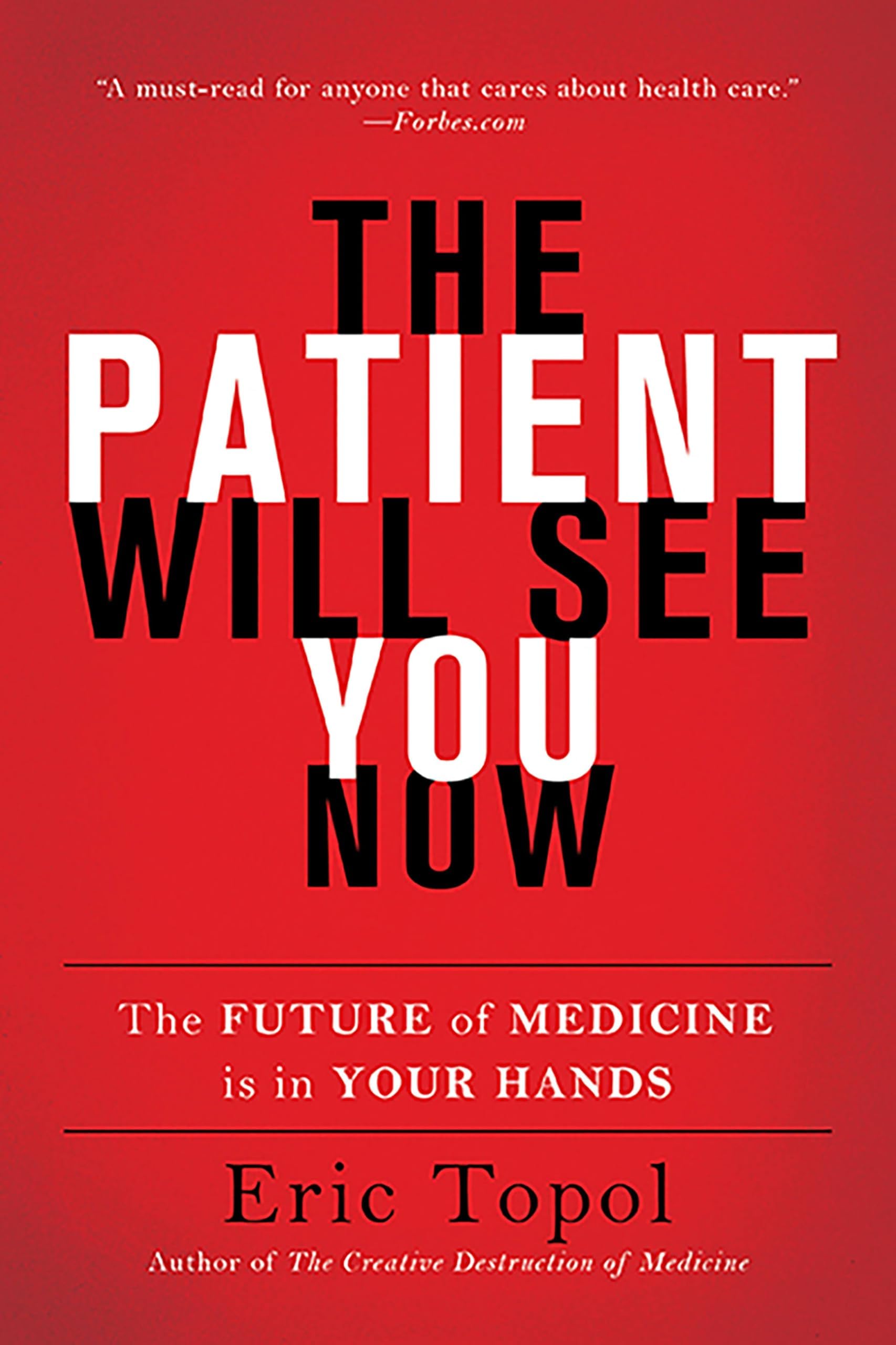
Buy The Patient Will See You Now: The Future of Medicine Is in Your Hands by Topol M.D., Eric online on desertcart.ae at best prices. ✓ Fast and free shipping ✓ free returns ✓ cash on delivery available on eligible purchase. Review: Topol's earlier book - The Creative Destruction of Medicine: How the Digital Revolution Will Create Better Health Care discussed quantified-self, and aspects of the app-centric health data logging and analyses and concluded that mHealth will form the basis of healthcare disruption. In this book, Topol provides a very interesting thought framework to deduce "what's next?" The first section expands his assertion that paternalistic healthcare systems (personified by FDA, AMA, and traditionalists) is really behind the times and the notion "nothing about me without me" is increasingly becoming not only feasible but also demanded by the patients. Providing a detour explaining the evolution of interpretations of the Hippocrates oath, Topol uses that opportunity to take issue (yet again) with the AMA and the entire practice around guidelines. While arguing for increased access for patient-related information to the patients, Topol clearly acknowledges the difference in information and knowledge gaps and points out that mere access is not sufficient, but it is a critical step in rethinking patient engagement and direct participation. To further expand on these themes, Topol borrows Eisentien's characterization of printing press as a change agent and draws significant parallels with that transformation and smartphones, calling this the "Gutenberg moment". While a healthy skepticism is warranted in the claims of everything from holy wars to Renaissance to modern science and founding of american republic is attributed directly to the printing press, one cannot easily dismiss the "combinatorial intellectual activity" printing facilitated. Topol argues (successfully) further that the technology already exists to enable this remarkable period of creativity in healthcare. Using relatively recent episodes such as FDA v/s 23andme and Angelina Jolie's aggressive preventive measures, Topol provides a very informative and engaging view of how the healthcare system is clearly at an inflection point. In the second section, Topol focuses primarily on the key enabling technologies that will make his vision of a democratized and personalized healthcare a reality. Moving beyond traditional logging devices, Topol paints a realistic vision of the technologies and the opportunities they are already creating such as from lab-on-a-chip to lab-in-body. Along the way, his insights on the failures of EMR systems (using OpenNotes as a contrast), potential of "pre-womb to tomb" predictive/diagnostic models is well worth the read. In fact, the chapter on the various -omics and their potential role (adapted from his famous paper in Cell) and examples on pre-diabetic and airway diseases in itself is worthy of investing in this book. A reader will also gain significant insights about some trailblazing companies like Theranos, QuantuMDx, etc. The discussion around how 3 of the 5 imaging technologies have already been miniaturized to hand-held devices is a clear indication of the realism embedded in Topol's assertions. In the third section, Topol objectively analyses the import of these changes (cultural and technological) on how healthcare will be delivered and consumed. These discussions go beyond "disintermediation of doctors" and is a must-read for anyone interested in developing new service models. A few years ago, The Innovator's Prescription: A Disruptive Solution for Health Care , provided a radically new way to rethink service models - Topol's book does the same from the viewpoint of patient and the role of technology. At times, Topol perhaps extends the patient advocacy too aggressively. For example, on a discussion crucifying Myriad and value of patents, he seem to dismiss the risk taken by private enterprises to generate these insights. While he fully acknowledges that information and knowledge gaps are critical, he uses a few hand-picked examples of how highly motivated individuals were able to be remarkably active with the diagnosis and treatment of their conditions (it is hard to say how generalizable these episodes are). Criticisms on AMA may also not be entirely fair and while there will always be "eminence-based medicine" as Topol characterizes it, there is no doubt that some of it needs to be modulated better with patient-centric approaches. With the clarity of discussion aided by well-chosen examples and analogies bereft of needless cheer-leading, over 50 pages of notes/references, excellent diagrams accompanying some of the key concepts, Topol's book is well-poised to define the next big discussion on healthcare. With the aggressive growth of wearables and smartphones showing no signs of slowing down, wider acknowledgement of patient participation as key for healthcare outcomes, changing delivery models such as ACOs in the US, some of Topol's vision may become reality sooner than even he seem to hope for. Nevertheless, Topol has succeeded in providing a clear thought framework to assess and harness the role of mobile technology in reshaping healthcare ecosystems. Review: アメリカの医療経済は崩壊寸前であり、その解決策としてAI(人工知能)の開発が急がれることが極めて詳細に書かれている。AIの開発の結果、病気の診断や治療が簡易化され、医療が患者自身のものとなり、医師の介在の必要性が乏しくなり、近い将来医師の業務に大きな変革が起きることを予測させる素晴らしい内容の書である。
| Best Sellers Rank | #39,701 in Books ( See Top 100 in Books ) #1 in Medical Home Care #4 in Health Policy #9 in Medical Examination & Diagnosis |
| Customer reviews | 4.4 4.4 out of 5 stars (208) |
| Dimensions | 14.29 x 3.18 x 21.27 cm |
| Edition | Illustrated |
| ISBN-10 | 0465040020 |
| ISBN-13 | 978-0465040025 |
| Item weight | 386 g |
| Language | English |
| Print length | 400 pages |
| Publication date | 29 April 2022 |
| Publisher | Basic Books |
J**R
Topol's earlier book - The Creative Destruction of Medicine: How the Digital Revolution Will Create Better Health Care discussed quantified-self, and aspects of the app-centric health data logging and analyses and concluded that mHealth will form the basis of healthcare disruption. In this book, Topol provides a very interesting thought framework to deduce "what's next?" The first section expands his assertion that paternalistic healthcare systems (personified by FDA, AMA, and traditionalists) is really behind the times and the notion "nothing about me without me" is increasingly becoming not only feasible but also demanded by the patients. Providing a detour explaining the evolution of interpretations of the Hippocrates oath, Topol uses that opportunity to take issue (yet again) with the AMA and the entire practice around guidelines. While arguing for increased access for patient-related information to the patients, Topol clearly acknowledges the difference in information and knowledge gaps and points out that mere access is not sufficient, but it is a critical step in rethinking patient engagement and direct participation. To further expand on these themes, Topol borrows Eisentien's characterization of printing press as a change agent and draws significant parallels with that transformation and smartphones, calling this the "Gutenberg moment". While a healthy skepticism is warranted in the claims of everything from holy wars to Renaissance to modern science and founding of american republic is attributed directly to the printing press, one cannot easily dismiss the "combinatorial intellectual activity" printing facilitated. Topol argues (successfully) further that the technology already exists to enable this remarkable period of creativity in healthcare. Using relatively recent episodes such as FDA v/s 23andme and Angelina Jolie's aggressive preventive measures, Topol provides a very informative and engaging view of how the healthcare system is clearly at an inflection point. In the second section, Topol focuses primarily on the key enabling technologies that will make his vision of a democratized and personalized healthcare a reality. Moving beyond traditional logging devices, Topol paints a realistic vision of the technologies and the opportunities they are already creating such as from lab-on-a-chip to lab-in-body. Along the way, his insights on the failures of EMR systems (using OpenNotes as a contrast), potential of "pre-womb to tomb" predictive/diagnostic models is well worth the read. In fact, the chapter on the various -omics and their potential role (adapted from his famous paper in Cell) and examples on pre-diabetic and airway diseases in itself is worthy of investing in this book. A reader will also gain significant insights about some trailblazing companies like Theranos, QuantuMDx, etc. The discussion around how 3 of the 5 imaging technologies have already been miniaturized to hand-held devices is a clear indication of the realism embedded in Topol's assertions. In the third section, Topol objectively analyses the import of these changes (cultural and technological) on how healthcare will be delivered and consumed. These discussions go beyond "disintermediation of doctors" and is a must-read for anyone interested in developing new service models. A few years ago, The Innovator's Prescription: A Disruptive Solution for Health Care , provided a radically new way to rethink service models - Topol's book does the same from the viewpoint of patient and the role of technology. At times, Topol perhaps extends the patient advocacy too aggressively. For example, on a discussion crucifying Myriad and value of patents, he seem to dismiss the risk taken by private enterprises to generate these insights. While he fully acknowledges that information and knowledge gaps are critical, he uses a few hand-picked examples of how highly motivated individuals were able to be remarkably active with the diagnosis and treatment of their conditions (it is hard to say how generalizable these episodes are). Criticisms on AMA may also not be entirely fair and while there will always be "eminence-based medicine" as Topol characterizes it, there is no doubt that some of it needs to be modulated better with patient-centric approaches. With the clarity of discussion aided by well-chosen examples and analogies bereft of needless cheer-leading, over 50 pages of notes/references, excellent diagrams accompanying some of the key concepts, Topol's book is well-poised to define the next big discussion on healthcare. With the aggressive growth of wearables and smartphones showing no signs of slowing down, wider acknowledgement of patient participation as key for healthcare outcomes, changing delivery models such as ACOs in the US, some of Topol's vision may become reality sooner than even he seem to hope for. Nevertheless, Topol has succeeded in providing a clear thought framework to assess and harness the role of mobile technology in reshaping healthcare ecosystems.
夏**外
アメリカの医療経済は崩壊寸前であり、その解決策としてAI(人工知能)の開発が急がれることが極めて詳細に書かれている。AIの開発の結果、病気の診断や治療が簡易化され、医療が患者自身のものとなり、医師の介在の必要性が乏しくなり、近い将来医師の業務に大きな変革が起きることを予測させる素晴らしい内容の書である。
P**T
Very nice book form Eric Topol. Must Read for practicing doctor
G**N
Una visione del futuro nell’era dell’intelligenza artificiale
B**Z
excellent condition
Trustpilot
2 months ago
3 weeks ago