
Desertcart purchases this item on your behalf and handles shipping, customs, and support to Uruguay.
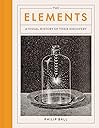
From water, air, and fire to tennessine and oganesson, celebrated science writer Philip Ball leads us through the full sweep of the field of chemistry in this exquisitely illustrated history of the elements. The Elements is a stunning visual journey through the discovery of the chemical building blocks of our universe. By piecing together the history of the periodic table, Ball explores not only how we have come to understand what everything is made of, but also how chemistry developed into a modern science. Ball groups the elements into chronological eras of discovery, covering seven millennia from the first known to the last named. As he moves from prehistory and classical antiquity to the age of atomic bombs and particle accelerators, Ball highlights images and stories from around the world and sheds needed light on those who struggled for their ideas to gain inclusion. By also featuring some elements that aren’t true elements but were long thought to be—from the foundational prote hyle and heavenly aether of the ancient Greeks to more recent false elements like phlogiston and caloric— The Elements boldly tells the full history of the central science of chemistry. Review: Goid - Giid Review: This should be everyone's first course in high school chemistry. - I have a background in biological research and am familiar with some of the discovery process in biology. This is my first book of the history of chemistry and it does a great job tying in metallurgy and alchemy. It is completely accessible to casual learners and provides enough information to be a jumping off point for further study. I am reading it cover-to-cover. It beautifully describes the discovery process of the elements, dating back to the iron age. I was particularly taken by the contributions of Antoine Lavoisier, whose work I studied in high school and college, but whose experiments and deductions I never appreciated. I am now a tutor and am recommending it to all my interested students regardless of age (middle school to adult).


| Best Sellers Rank | #1,158,621 in Books ( See Top 100 in Books ) #137 in Inorganic Chemistry (Books) #1,065 in Geology (Books) #1,115 in General Chemistry |
| Customer Reviews | 4.3 out of 5 stars 29 Reviews |
A**S
Goid
Giid
B**F
This should be everyone's first course in high school chemistry.
I have a background in biological research and am familiar with some of the discovery process in biology. This is my first book of the history of chemistry and it does a great job tying in metallurgy and alchemy. It is completely accessible to casual learners and provides enough information to be a jumping off point for further study. I am reading it cover-to-cover. It beautifully describes the discovery process of the elements, dating back to the iron age. I was particularly taken by the contributions of Antoine Lavoisier, whose work I studied in high school and college, but whose experiments and deductions I never appreciated. I am now a tutor and am recommending it to all my interested students regardless of age (middle school to adult).
P**S
Some of the ones of which the news has come to Harvard
A hefty book with a "coffee table" feel: lots of pictures, especially old woodcuts, stock photos, etc. The emphasis is more on "sizzle" than "steak," but it does have a good deal of information on the history of the elements. Not much scientific content: as the title indicates, it's about the history of their discovery. I was a bit disappointed to find that it's nowhere near complete. More than half the elements are mentioned, but a lot of them aren't. For example: nickel has a history that's just as interesting as cobalt, but it's not mentioned at all. And we don't hear about how the final cisuranic gaps in the table were at last filled in (by astatine and promethium): so recently that when I was in school, they were still blank! Another disappointment was that it doesn't do a very good job with the history of the periodic table. We go directly from Mendeleev's original table (laid out quite a bit differently from the one we're used to) to the current version, with no steps in between. Every science classroom has one of those posters at the front of the room (for perusing during a dull class), and it would have been nice to see how it changed, decade by decade. And the table in the book makes no attempt to explain what a "transition metal" is (what's it transitional between?). And what's "post" about a post-transition metal? Even if you prefer Kindle to paper books, this one still worth getting on paper, since you would miss most of the visibility of the pictures in an electronic format. Don't expect much in the way of chemistry, but it's more interesting than most books that you can put on your coffee table.
M**U
You don't expect different from excellent if Philip Ball signs it!
Again, with a careful edition and research, Ball presents a beautifully crafted book with reproductions of original texts, illustrations, and quotes. His texts describe the quest of discovering, using, and organizing the stuff that makes the world and the universe—a beautiful book in many ways.
G**8
Lowbrow account
Patchy account of the “Elements.” Pitch at senior school -level readers.The accounts seemed abbreviated. Much of the interesting stuff about individual elements was missing , such as stability, radio-disintegration, and other properties.
M**I
Elementlerin keşfi ve özellikleri
Bu kitap, resimleri, keyifli ve detaylı anlatımıyla molelüler evrende bilge bir rehber... Theodore Gray ve Tom Jackson ile birlikte favori yazarlarımdan Philip Ball'ın muhteşem eserlerinden bir diğeri... Bilim hayranlarının kütüphanesinde mutlaka bulunması gereken; şık, büyük boy, ciltli ve dopdolu bir şaheser...
Trustpilot
2 weeks ago
3 days ago