Desertcart purchases this item on your behalf and handles shipping, customs, and support to Uruguay.
🔆 Charge smarter, live greener — never miss a watt!
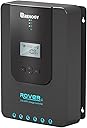
The Renogy Rover 20A MPPT Solar Charge Controller is a high-efficiency, versatile device designed for 12V and 24V solar systems. It supports up to 520W solar input, features advanced 4-stage charging with lithium battery recovery, and offers robust protections including lightning and reverse polarity safeguards. With an adjustable LCD display and optional Bluetooth monitoring, it’s perfect for RVs, off-grid homes, and marine setups seeking reliable, smart solar power management.


| ASIN | B01MRWTAB5 |
| Best Sellers Rank | #13,291 in Patio, Lawn & Garden ( See Top 100 in Patio, Lawn & Garden ) #8 in Renewable Energy Controllers |
| Brand | Renogy |
| Brand Name | Renogy |
| Color | Black |
| Customer Reviews | 4.4 out of 5 stars 3,919 Reviews |
| Display Type | LCD |
| Global Trade Identification Number | 00816360024644 |
| Included Components | led indicator |
| Item Dimensions L x W x H | 8.27"L x 5.94"W x 2.34"H |
| Item Type Name | 20A MPPT Charge Controller 12V/24V Auto DC Input Solar Charge Controller, Parameter Adjustable, LCD Display Solar Panel Regulator, fit for Gel Sealed Flooded and Lithium Battery, Rover 20A |
| Item Weight | 680 g |
| Manufacturer | Renogy |
| Material | Plastic |
| Material Type | Plastic |
| Model | 20A |
| Number of Items | 1 |
| Part Number | RNG-CTRL-RVR20 |
| Product Dimensions | 8.27"L x 5.94"W x 2.34"H |
| UPC | 816360024644 |
| Unit Count | 1 Count |
| Voltage | 24 volts |
| Warranty Description | 3-year material and workmanship warranty |
G**H
Well priced Controller - a definite must for small-scale/camping solar applications
Great replacement for the PWM controller that came with our Renogy Solar kit. Initially we had the Renogy PWM 30 AMP controller and it was an entry level controller in all respects. The previous controller was limited to a 12 volt battery source had 2 lead pairs, one for solar panel connection and the other for the battery side connection. Any load connected to the battery array had to be connected directly to the batteries and was not governed by the controller. Also you had to rely on LED indicator lights To determine when the controller was in charge mode versus float mode. Adequate for an entry level controller but not great. Now lets talk about this controller. First, this controller is capable of 12 or 24 volt wiring installations. 24 volt DC is superior to 12 volt DC because it cuts the Amperage draw in half on the DC end. A 1.2 Amp TV running on AC/120 volts will require 12 Amps on the 12v-DC end to meet the same 140 Watt requirement. A 24 volt DC setup will reduce the amperage requirement down to 6 amps on DC, which means your DC wiring gauge doesn’t have to be as robust when supporting a 24 volt application. Secondly, the LCD display is great and is a must for a solar charge controller. It’s not enough to know that the solar cells are charging the battery, you may also want to know how “fast” they are charging the battery and whether or not the panels should be angled to reach optimized charge rate. The LCD screen also provides a percentage estimate of battery remaining in addition to the amps that are being supplied by the panels, along with a running amp-hour accumulation of charge provided the panels over a period of time and current battery voltage. Third, it has a pair of positive/negative load leads that permit connecting appliance loads up to 20 Amps DC. It’s not necessary to use the load leads for connecting the devices that run off the battery, but the added advantage of using them is that your battery array is protected from over-consumption, as the leads shut off usage on the battery once it reaches a certain level of discharge in order to protect the battery array. I’ve only used the new controller once, but the instructions were easy to follow and I made a laminated copy of the LED and Menu options as a quick reference guide that will go along with the kit on camping trips. Currently the array powers my 400 Watt (4x100W) kit and 2 VMAX 125ah batteries wired in parallel, but I am seriously thinking of doubling the panel array and adding 2 more batteries in a series/parallel configuration to take advantage of the 24 volt capabilities of this controller. Quick Note on the 100 Watt Renogy panels: When I measured the charge current of the 4 x 100 watt panels connected in Parallel I noted an 18.5 amp charge rate on the new controller or ~4.6 amps per panel. That seemed low to me given that 400 watts/12v is around 33.3 amps, or 8.33 amps per panel. In discussions with Renogy support I found out that the 100 Watts is calculated at 17.9 volts * 5.7 amps, where they use the maximum charge voltage by each of the panels as basis for the calculation. Just something to be aware of when you are reading sub-5 amps per panel charge rate on your controller. This new controller works as advertised, was relatively inexpensive for what it does, and I may update the review again in 12 months after running it a few more times for a consistency check.
S**Y
Great product
Renogy products are super awesome and easy to setup and use. Renogy also has stellar customer service, I highly recommend!!!
G**.
Excellent MPPT Upgrade, Easy Setup, and Better Low-Light Performance
I bought this Renogy 60A MPPT charge controller on April 4, 2025, and after 11 months of use I’m very happy with it. It was a great upgrade from my old Tristar 45 PWM controller and has been noticeably more efficient. My old PWM controller struggled early in the morning, near sunset, and during cloudy weather. This Renogy starts charging much sooner and handles lower-light conditions far better. It keeps my battery voltage right where it should be. I bought the 60A model even though it was more than I needed at the time because I wanted room to expand my solar setup later. No regrets there. Right now I’m using it with a 140Ah 12V LiFePO4 battery and a 350W solar panel. Installation and setup were very easy, and the menus are clear and simple to use. I haven’t used every feature yet, like data logging, but based on my experience so far, this has been an excellent purchase.
D**W
This 100A controller is not a toy!
I've only had it up and running for a little over an hour now under intermittent sun and clouds, but so far so good. I bought a 100A controller from another brand and it died in less than an hour which surprised me because their smaller controllers work great. In a panic to get something quickly I decided to try the Renogy 100A because I knew of the brand and it seemed to fit the bill. (my system is a 4500w system with Voc around 132v) PROS: -VERY beefy unit. This thing has some mass! The heatsink on the back spans the entire unit and then some, and seems ready to handle the 100A that can be thrown at it. -Good power connection points. I use 2 awg wire with a few strands cut off to fit into the battery terminal connections and it works fine. The connectors are well insulated and the strain relief for the big battery wires you might use are well done IMO. They actually designed it for wire that can handle 100 amps. -Quiet operation. I wasn't pushing 80A into the battery for very long, but no cooling fans came on or anything. It just did it's thing. -Data display. Lots of real time data about what's happening in your system. CONS/NITPICKS: -The Lithium battery setting defaults to Lithium Ion, NOT LiFEPO4 batteries. If you have this style of lithium in a 16s configuration, you need to use the "USER" battery type and program things by hand. -The battery parameters regardless of battery type are based on a 12v system. If you have a 24, 36, or 48v system you need to take your voltage parameters and divide them by 2, 3, or 4, respectively, when you program the unit. -There is no way to disable the equalization option in the menu even if you are using lithium batteries (i have my own balancer). I did a workaround by putting the time in equalization to 0 and set it to do it every 60 days as a just in case. -The manual has some what I'll call "ESL translation" issues (e.g. telling you to hit the "ok" button when there are only arrow buttons- they meant the "right arrow" button for the "ok" button). Some of these translation issues can leave you scratching your head until you read it a few times to get into their mindset. Overall, the beefy construction, quiet operation, and the plethora of real time data make up for the cons/nitpicks of this unit. I'm glad I gave this a try and for initial quality/performance I am very impressed. As I use it more I'll continue to update with how it works.
K**R
Definitely high end equipment:-)
Upgraded to a larger one when I realized I wanted a bigger system. Have a smaller off grid project I will use this one on. As far as I’m concerned Renogy takes no prisoners.
T**M
Unreliable Controller. Don't do it.
Unreliable with no warning. I have had this since March and it's just stopped working, at least 4 times, with no warning. You have to unplug everything to reset it and then it will work...for a while. I don't like the way the buttons work (not intuitive) so I have to dig out the manual every time...well not anymore, I got so used to it having to be checked and restarted. I say it just quit charging and let my battery run down 4 times but I'd really guess it's twice that because I caught it several other times and reset it before it just allowed the battery to go to a near unchargeable situation. I have it hooked to a Ghost Controls Gate with a 100Ah LiFePO4 battery and a Renogy 100W panel. I upgraded the panel twice thinking that might be the issue. It's not. It's this controller. DO NOT trust it. Ever. I've moved to a Victron SmartSolar 75/15 MPPT. Just hooking it up so we'll see how it does.
B**8
Excellent Solar Controller
This is a great solar controller! I haven't completed my DIY solar setup just yet, but this controller works great for charging my (3) 12v AGM batteries in parralel. I'm using two 32v 250watt solar panels wired in series so the controller is getting maxed out at charging the batteries at 20 amps! I was not expecting my solar panels to max out the controller but it is limiting itself properly and keeping the batteries charged and ready to go! Even on a grey cloudy afternoon, it will trickle charge the batteries around 2 amps. Do not believe the other cheap charge controllers showing 50 or even 100amps of capacity because they do not use the proper internal circuits to actually handle that amount of power. PLEASE NOTE: the power output terminals on the controller are NOT for high load applications. If you plan to use them for an inverter or high amperage load, it must be wired to a contactor or relay to avoid frying the controller. The instructions provided have more information on how to properly use the output. The setup instructions provided are easy to follow and the online support, and manufacturers website are very helpful. They make great products all around. Again, this is a great controller and you won't be dissappointed!
D**E
Quality Products
Bought this unit to go with my Renogy 100w Solar Suitcase. Renogy's products appear to be quality, although the instructions on their products are a mite skimpy on information. I mounted my controller in a DeWalt case to protect it. See photos- Some things I learned: When installing the mc4 connectors with Renogy's 10awg tray cable, strip the end to install the metal connector but ALSO strip about 3/8" more of only the outer portion of the two part insulation. This will allow you, after you've crimped on the metal connector, to slide the back cap on and then slide the plastic connector (male or female) down far enough so that the two metal pieces will connect properly. Secondly... some complained about the connection at the bottom of the controller. One previous reviewer noted that if you crimp on a spade or male butt connector it makes for a more secure connection. I tried that and it works great... really appreciated the advice. Be sure to slide the spade in toward the top or face side of the hole and then gently snug the securing screw down. If (with the unit facing upwards) the wire or spade slides in towards the back, or lower side of the hole it will be below the securing piece and when you tighten screw it will not hold the wire (loosen the screw and look inside the hole). I believe that those who commented that the wire wouldn't secure in place did not have the wire on the correct side. Don't over tighten. These aren't the lugs on your pickup. I cranked my unit up today and it was working flawlessly! Thanks Renogy for a really solid quality product.... and thanks for your tech support! I will update as I get a few hours on this unit. Update 9/16/17 : Set up at 1:30 pm - clear afternoon started out at 5.9 amps but in a bit leveled out at 5.4-5.6 amps coming from the panel. Voltage leveled out at 13.4 v on the charge side... with17.8 v from the 100w Renogy Solar Suitcase We changed out all the lights in the rv to LED bulbs After having four - two bulb lights on for approx 1.5 hours last night the solar brought my battery back to 100% in about 15 minutes. Must admit that solar is a bit of a new experience... I have to say I'm impressed with this solar setup from Renogy.
R**Y
Gran producto y de gran calidad
Gran producto, lo recomiendo!
B**G
Extremely Satisfied!
Awesome product! Works great, well made..happy camper!
V**S
Great charge controller
This is the second unit I’ve bought. They are a great unit. And easy to run in parallel. They were handling 2500w easily. (With room for expansion)
S**M
Ottimo prodotto
Robusto ben fatto, completo di tutte le funzioni indispensabili per un mppt stand alone. Il dissipatore di calore è ben dimensionato e non necessita di ventole visti i rendimenti dichiarati dalla casa che credo siano corretti anche sulla base dei test che ho fatto. Inoltre il modello 20A gestisce potenze tutto sommato modeste ( 480w con batterie da 24v). Il display è a cristalli liquidi senza retroilluminazione con tutti i problemi dei cristalli liquidi. Di giorno e con vista frontale sono nitidi e chiari, con vista disallineato non si riescono a leggere. Non è che uno sta sempre lì a guardare il display, una volta impostato si controlla ogni tanto. Con l'app questi problemi non ci dovrebbero essere, però occorre comprare un ammennicolo wifi da aggiungere. La morsettiere fa il suo lavoro ma forse si poteva fare meglio. La programmazione è un po' macchinosa visto che si deve entrare nei vari menù, scorrerli fino al parametro di interesse, modificarlo e salvarlo. Vero che si fa una volta sola, ma è un po' noioso. Sul display di possono vedere tensioni e correnti gestire dall'apparecchio ma mancano statistiche più accurate, credo che sempre con app e ammennicolo il problema si risolva Cosi come la programmazione. Per me l'apparecchio va bene visto anche il costo di acquisto scontato ed è certamente completo per l'uso stand alone. Al prezzo di vendita pieno , senza sconti, si trovano apparecchi più completi con wifi app incluse.
J**J
So far so good, very competitive price
I bought this unit as a somewhat temporary backup for my main charge controller. The CC was easy to set up, the connection terminals have nice long tunnels to help remove stress on the exposed wire ends. So far the unit seems to be working well, and I appreciate the information available on the built in screen - such as daily kWh charge to batteries, as well as daily average charge information. Two concerns/gripes: 1) I'm not sure if this was a mistake, but my charge controller arrived with ZERO paperwork. Nothing at all, note even a card pointing you to their website. As this product is likely being installed in some locations where reliable internet access isn't a given, and that it is a device that controls so much power (therefore danger), I am very surprised that there is no literature included. By contrast my products from other established solar energy manufacturers comes with ample written support. 2) the device comes with a password set to ON by default, and you cannot change any parameters (even as fundamental as battery type) without this password. What is that password? Who knows... internet searches brought up nothing --- the password is 000000. I finally figured this out... I hope this saves somebody the same hassle I went through.
Trustpilot
1 week ago
3 weeks ago