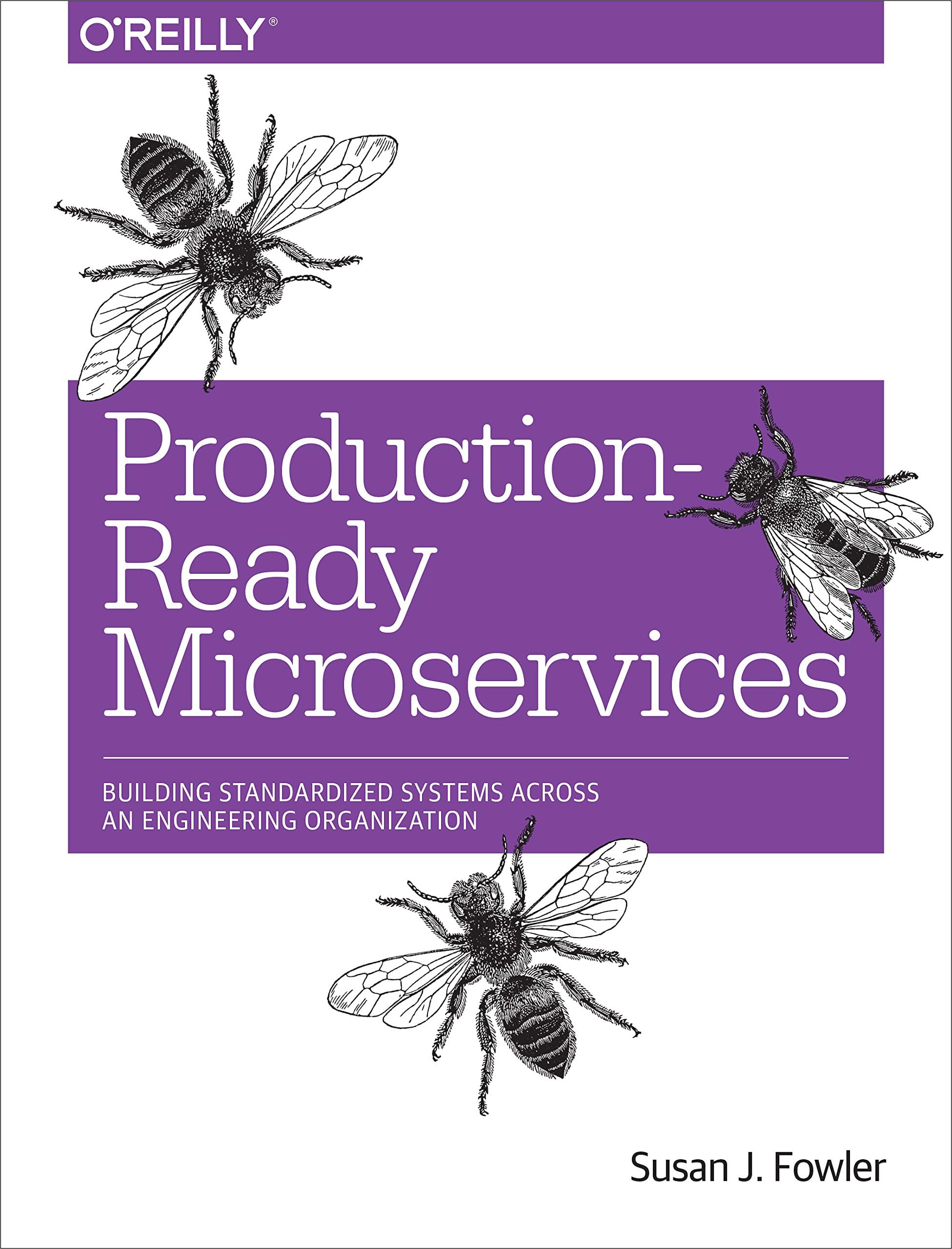
Production-Ready Microservices
Product ID: 40346375
Buy anything from 5,000+ international stores. One checkout price. No surprise fees. Join 2M+ shoppers on Desertcart.
Desertcart purchases this item on your behalf and handles shipping, customs, and support to Uruguay.
One of the biggest challenges for organizations that have adopted microservice architecture is the lack of architectural, operational, and organizational standardization. After splitting a monolithic application or building a microservice ecosystem from scratch, many engineers are left wondering what’s next. In this practical book, author Susan Fowler presents a set of microservice standards in depth, drawing from her experience standardizing over a thousand microservices at Uber. You’ll learn how to design microservices that are stable, reliable, scalable, fault tolerant, performant, monitored, documented, and prepared for any catastrophe. Explore production-readiness standards, including: Stability and Reliability: develop, deploy, introduce, and deprecate microservices; protect against dependency failures Scalability and Performance: learn essential components for achieving greater microservice efficiency Fault Tolerance and Catastrophe Preparedness: ensure availability by actively pushing microservices to fail in real time Monitoring: learn how to monitor, log, and display key metrics; establish alerting and on-call procedures Documentation and Understanding: mitigate tradeoffs that come with microservice adoption, including organizational sprawl and technical debt Review: Very good reference and guidance - I required to understand (from management position) how to get a major system utilizing microservices to production. Granted, I have tech background, but this book covered it from A to Z for me. Recommended reading both for tech leads and technical managers. Review: Great for junior developers ramping up though - If you have worked on a service team, you probably know everything in this book already. Great for junior developers ramping up though. The continuous theme of the book is written prioritizing availability. This could also be a good handbook or reference for a manager, PM, or intern. Pros: The book is well written and easy to read. It addresses the organizational impact of microservice architecture. I'm working on a service team, but it's not yet large enough to adopt a microservice architecture. I like that the book addresses the evolution of from monolith to microservice, and how starting from scratch as a microservice isn't exactly a cost efficient plan either. Thinking about a dependency graph for a product running on microservice architecture is also interesting. I like her introduction of the qualitative and quantitative scale factors. Cons: This book is a little bit basic. I was hoping it would be more about software design patterns for microservices.











| Best Sellers Rank | #2,115,697 in Books ( See Top 100 in Books ) #709 in Software Testing #900 in Software Design & Engineering #2,131 in Software Development (Books) |
| Customer Reviews | 4.1 out of 5 stars 182 Reviews |
A**E
Very good reference and guidance
I required to understand (from management position) how to get a major system utilizing microservices to production. Granted, I have tech background, but this book covered it from A to Z for me. Recommended reading both for tech leads and technical managers.
M**M
Great for junior developers ramping up though
If you have worked on a service team, you probably know everything in this book already. Great for junior developers ramping up though. The continuous theme of the book is written prioritizing availability. This could also be a good handbook or reference for a manager, PM, or intern. Pros: The book is well written and easy to read. It addresses the organizational impact of microservice architecture. I'm working on a service team, but it's not yet large enough to adopt a microservice architecture. I like that the book addresses the evolution of from monolith to microservice, and how starting from scratch as a microservice isn't exactly a cost efficient plan either. Thinking about a dependency graph for a product running on microservice architecture is also interesting. I like her introduction of the qualitative and quantitative scale factors. Cons: This book is a little bit basic. I was hoping it would be more about software design patterns for microservices.
B**S
This is an excellent book on Microservices
Very interesting. I've worked in the computer field for 40 plus years and have seen a lot of changes during that time. I must say that IoT and it's applications are extremely exciting. This is an excellent book on Microservices.
L**S
Good checklists - lacks depth
Good overview of micro-services ecosystem, challenges and ways to make it more stable. Would love to see more in depth and concrete examples and a little less repetition.
N**R
A worthwhile read
The book is really a description of what I would call a quality assurance framework for a microservices environment. Compared to its modest length, it contains quite a number of useful ideas from someone in the trenches.
F**G
Excellent Read
I've been working in organizations trying to adopt Microservice architecure for a few years and each has faced many issues and have had different degrees of success. One of the largest issues is standardization and putting in place processes that ensure Microservices are truly ready for production. This book addresses many of those issues and does it using actual use cases. It covers what it means for Microservices to be ready for production. It offers practical advice that organizations can adopt, or at least think about. I definitely recommend this to anyone working in an environment where Microservices are being used (either from splitting a monolithic application or building services from the start).
J**E
Perfect for Software Management/Leadership Roles
This book is perfect for people in software management roles. It's a short read at about 130 pages but covers all the important high-level topics at just enough detail for someone like myself. The larger book, Building Microservices, seems perfect for those in an individual contributor role.
R**S
Good book
Great read with great tips to help get you put in the right direction if you're thinking about moving towards microservices.
A**A
Otímo livro
Os microserviços estão se tornando cada vez mais populares entre as empresas que buscam aumentar a agilidade e a escalabilidade de seus sistemas. No entanto, para que os microserviços sejam realmente úteis, eles precisam ser produção-prontos. A construção de sistemas padronizados é uma parte importante do processo de tornar os microserviços prontos para produção. Isso envolve definir padrões para a arquitetura, o código, os testes e o monitoramento. Esses padrões permitem que os desenvolvedores criem microserviços consistentes e confiáveis que podem ser implantados com segurança em ambientes de produção. Além disso, a padronização dos sistemas também pode ajudar a reduzir o tempo de desenvolvimento e manutenção dos microserviços. Ao definir padrões para o código, os desenvolvedores podem reutilizar componentes existentes e evitar a necessidade de recriar o mesmo código para cada novo microserviço. Isso significa que os microserviços podem ser criados mais rapidamente e com menos esforço. Portanto, a construção de sistemas padronizados é uma parte essencial do processo de tornar os microserviços prontos para produção. Ao definir padrões para a arquitetura, o código, os testes e o monitoramento, as empresas podem garantir que seus microserviços sejam consistentes, confiáveis e prontos para produção.
M**X
Excellent overview, useful for all teams in your company
The author states that this is not a reference book, nor a tutorial on how to build production-ready microservices. What it is is an excellent manual on what topics need to be discussed, what corporate structures may need to be built and what technical architecture might need to be designed when you are considering, or implementing your own microservices, and at that it excels. I work in a company that started laying the groundwork for microservices two years ago by implementing an infrastructure - based on mesos - that puts the deployment pipeline under the control of the development teams. This book has been an invaluable insight into illuminating some possible reasons things are how they are and what decisions need to be taken when building our service. The book is structured with overview introductory chapters laying out the areas each of which are expanded on later in the book in separate chapters. This structure makes the book useful for developers/devops - who should read the whole book - and business/management people who should at least read the overview chapters. All in all a very useful book that should be read by all members of the development and business team in your company if you are considering using microservices extensively. It is important that everyone understands the challenge and has a good mental model of what is required. This book provides that.
S**S
Useful. Written in experience-sharing format
So far I like it. Like experience sharing. As if you talk to a person and she'd would be sharing her experience with you. This kind of format. Sure it maybe not that useful for the expert. But there are not that many experts in this area. So it's useful for beginners and intermidate guys. I would say for 95% ppl would think he may be interested in it.
A**R
Buy it for the checklist
Really great book. Practical view of what it takes to run microservices in production. Only flaws are no mention of security, and no real discussion on how to implement this checklist process in a continuous delivery model. Checklist is great, but when you are incrementally building/shipping your service from scratch, when/how often should you audit?
C**R
Genuinely practical advice on running a reliable large scale microservice system
I've read a few books on microservices, and most of them promote the concept, but don't offer much help beyond that. This is the first one that gives me really practical advice on running a reliable large scale deployment, and I would recommend it to anyone who is responsible for keeping a microservice-based system up and running.
Trustpilot
1 day ago
3 weeks ago