We remain fully operational. Our teams are working around the clock to ensure your deliveries continue safely.

DOWNLOAD THE APP


Customer Services
Copyright © 2025 Desertcart Holdings Limited
DOWNLOAD THE APP
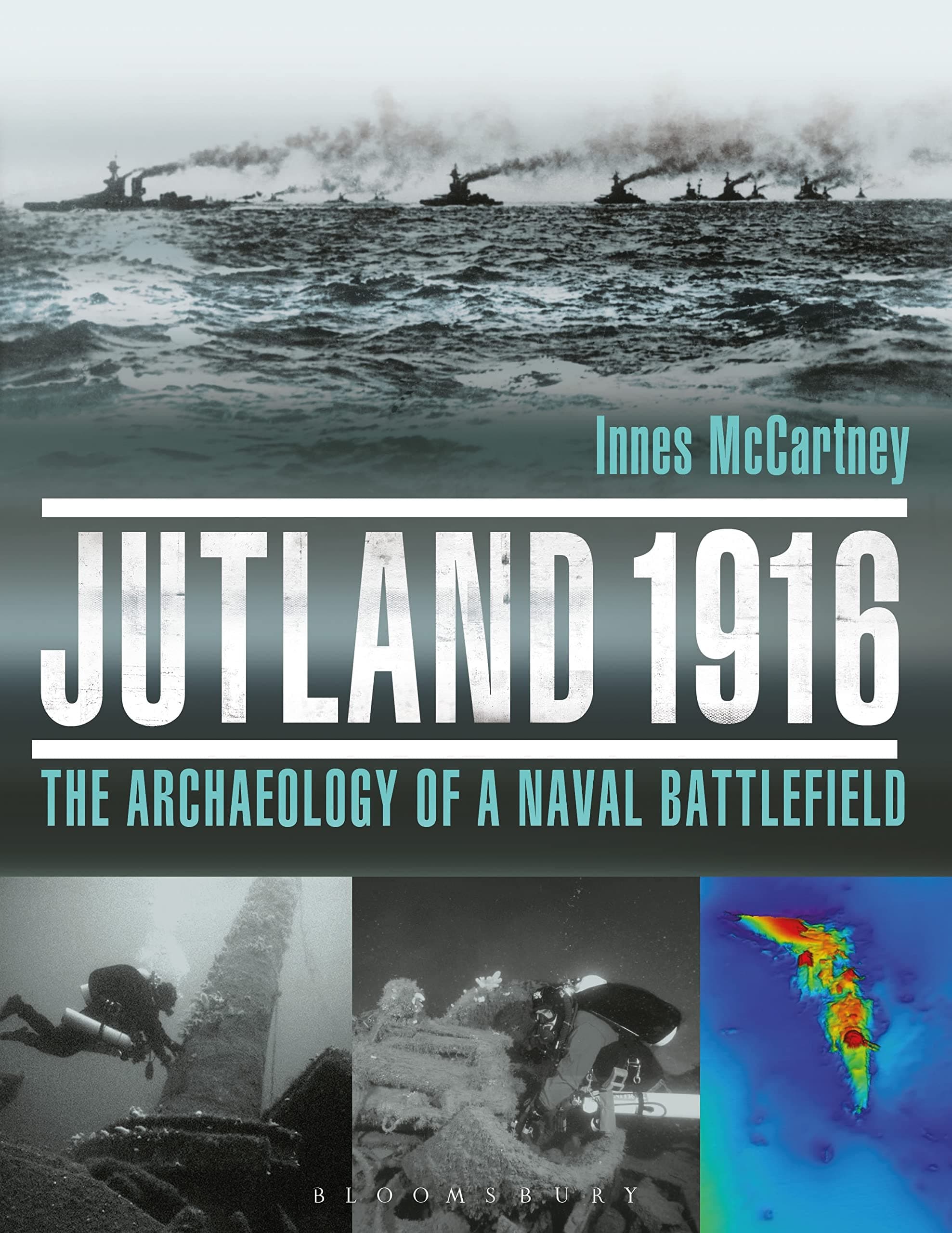
Jutland 1916: The Archaeology of a Naval Battlefield [McCartney, Innes] on desertcart.com. *FREE* shipping on qualifying offers. Jutland 1916: The Archaeology of a Naval Battlefield Review: A Great Edition To Any Historical Library - This is a great read for anyone interested in either the Battle of Jutland, dreadnoughts, or shipwrecks in general. The author does a great job explaining the ships, their actions, their loss, and their condition at the time of the book. The pictures are helpful and informative. One can easily be swept along on this journey through history and sense the author’s wonder at these mighty ships. Review: Jutland 1916 - Well written and well researched. An after the battle book that answers many questions.
| Best Sellers Rank | #4,131,617 in Books ( See Top 100 in Books ) #4,223 in Naval Military History |
| Customer Reviews | 4.6 out of 5 stars 121 Reviews |
P**7
A Great Edition To Any Historical Library
This is a great read for anyone interested in either the Battle of Jutland, dreadnoughts, or shipwrecks in general. The author does a great job explaining the ships, their actions, their loss, and their condition at the time of the book. The pictures are helpful and informative. One can easily be swept along on this journey through history and sense the author’s wonder at these mighty ships.
J**E
Jutland 1916
Well written and well researched. An after the battle book that answers many questions.
D**R
A new understanding of Jutland
Although a library of books seems to have been written on Jutland, this appears to be the first serious one to focus mainly on the condition and exploration of the wrecks. The author is a marine archaeologist who's spent the last 15 years locating and studying the wrecks of 23 of the 25* ships sunk during the battle. Although "Jutland 1916" won't force people to totally reconsider their preconceived notions about the battle in the same way that "Shattered Sword" did with Midway, it nonetheless adds some interesting new wrinkles to the Jutland story. The book is divided into three sections, covering the battlecruiser, fleet, and night actions. Each of the major (light cruiser and larger) ships receives a chapter of its own. Each describes the general history of the ship and the role it played in the battle, eyewitness and photographic records of its loss, and a study of the condition of the wreck. The destroyers are covered in a separate chapter at the end of each section, which are similar in format to the major warship chapters, but obviously not quite as detailed. The highlight of this book are the sections focusing on the condition of the wrecks themselves. Along with many ROV and free-dive photographs, there are multibeam sonar scans of each wreck site, showing details as small as one meter across. Considering the horrible underwater visibility in the North Sea, these images frequently provide revelatory details. We finally get a good idea of the devastation wrought by a magazine explosion (almost nothing of "Queen Mary" exists forward of Q turret), the effect of 100 years on the bottom upon lightly-built destroyer hulls, and the extent of the illegal salvage carried out on many of the wrecks. Unfortunately, this book suffers from occasional moments of stylistic excess. Some of the pages have maps or photographs splashed across the background, which can be distracting. The pages featuring ROV images are printed on glossy black paper, which *looks* nice, but is an absolute fingerprint magnet. Considering Dr. McCartney's maritime historian credentials, I'm kind of surprised at how much landlubber terminology snuck into here. Barbettes become "armoured turret sleeves," a boiler's water drum becomes a "water trough," a scupper becomes a "drain," and so on. No doubt only us hardcore naval history geeks will notice (or care) about this, but they stuck out to me. Although it does have some minor issues, "Jutland 1916" is a pretty enjoyable work on the whole. The author assumes the reader has a better than average understanding of the battle going in, and I'd recommend studying a good set of maps first. Based on the evidence here, it would seem that a "do or die" point is approaching for the Jutland wrecks. Should they be protected as war graves, and what can be done to prevent illegal salvaging? What artifacts should be preserved before they completely disappear? Innes McCartney doesn't provide easy answers to these questions, but he does do an excellent job raising them. *The wrecks of the Sparrowhawk and V4 had not been located when this book was published in the UK in May 2016.
A**R
Very good underwater archeology book!
Exactly what I hoped it would be, and delivered rather quickly.
W**E
if you're interested in Jutland, this book is essential
This is not for the person who is casually interested in the events of Jutland. But, if you are highly interested in what happened, you will get a lot out of this book. it is well written, but McCartney does assume his audience knows the basics of the battle. Clearly this is someone who knows their topic, and readers will learn a lot. There are pictures of the wrecks, including full hull sonar scans. McCartney reviews how each ship sunk and the likely reasons why. He spends little time debating the strategic choices of the commanders, but that is not the story he's telling. However, McCartney does tell the basic story of the battle, and as well as I have seen it done. 5 stars for sure.
B**.
Fascinating! Great color multi-beam sonar images, analyses of causes of sinking, maps of wrecks.
This is a fascinating book! It describes the submerged wrecks of 11 major sunken British and German warships (battlecruisers, light cruisers, armored cruisers, and one pre-dreadnought battleship) and also seven destroyers. The color multi-beam sonar images are intriguing even to an amateur like me. There are many underwater color photos taken by the mini-submersible Remotely Operated Vehicle (ROV). The location of each wreck is also identified on a map of the battle area. The text discusses the significance of the wrecks’ components such as boilers, turbines, shafts and propellers, gun turrets, and pieces of armor plate. Analyses of the likely causes of the ships’ sinking are discussed based on the archeological evidence. The book also reproduces the maps and charts from the 1919 “Harper Record” commissioned by the Royal Navy after the war. These charts show the locations of the major wrecks as they were thought to be back in 1919. The true location of only one wreck, that of the British battlecruiser “Invincible,” was known at the time because divers had found it. The locations of the other sunken ships was based on a review of nearby surviving ships’ logs. The navigational accuracy of those logs was based on calculated positions; there were no satellite navigation and radar systems back then. The true locations of the wrecks, based on the dives described in this book, are superimposed on the charts. The “Harper Record” locations are in error by an average of 3.5. nautical miles (almost 6 kilometers). This, in turn, likely means that all the maps of the locations of the Jutland actions and the associated ship tracks depicted in books on the Battle of Jutland are slightly wrong. My only criticism is that the reproductions of the 1919 “Harper” charts are very difficult to read. They typically make up 1/3 to 1/2 of a page. The lettering is very tiny and the ships’ tracks are hard to identify. It would have been much better if they had been expanded to a full page.
C**R
An Excellent Book
This is an excellent book covering a subject that to my knowledge, no one has ever covered before. If you already have a book on the Battle Of Jutland, then this is the perfect companion to it.
M**K
A good book but somewhat marred by the illustrations.
Book is interesting but is marred by the underwater photographs. They are small and hard to see what the captions say are they are showing. Many are almost impossible for me to discern what the objects in the photos are. The photos are also mostly greenish and seriously lacking in contrast, a condition of the sea when they were taken and unfortunately they are were printed as they looked when taken. Modern digital editing of the pictures could possibly have enhanced their clarity, and I assume many of the more recent photos were taken with digital equipment. The captions of the illustrations are printed in a not very dark black ink in boxes with a too dark blue-gray background and are hard to read. The maps of the tracks of the ships during the course of the combat show the tracks of a great many ships and the ones of interest are hard to follow. Otherwise a very interesting book as it provides a lot of information about the fate of the ships that contradicts previous accounts.
Trustpilot
2 days ago
1 month ago