
Desertcart purchases this item on your behalf and handles shipping, customs, and support to Uruguay.
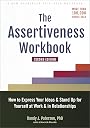
Stand up and be heard! With more than 100,000 copies sold, this fully revised and updated self-help classic by psychologist Randy J. Paterson—author of How to Be Miserable —will help you get started today. Do you feel uncomfortable in situations where you disagree with others? Do you struggle to express your opinions or assert your boundaries? If you’ve ever felt paralyzed by confrontation, or have bitten your tongue rather than offer an opposing point of view, you know that a lack of assertiveness can leave you feeling marginalized and powerless. Assertiveness is a critical skill that not only influences your professional success, but also your personal happiness! So, how can you make sure your voice is heard? The Assertiveness Workbook contains powerfully effective skills grounded in cognitive behavioral therapy (CBT) to help you communicate more effectively, improve social interactions, and express yourself with confidence and clarity. You’ll learn how to set and maintain personal boundaries while staying connected, and discover ways to be more genuine and open in your relationships. Finally, you’ll learn to defend yourself calmly if you’re unfairly criticized or asked to submit to unreasonable requests. Fully revised and updated—this new edition includes information on the impact of social media, mini-dialogs to help you navigate tricky social interactions, and skills to shift your behaviors to be more assertive—so you can improve your communication skills, and your life! Review: Readable, workable, and fun - It is my experience that few people have strong communication skills -- are capable of gracefully disagreeing, giving opinions, asserting boundaries, confronting people. Most of us either go along with others, try to pacify, avoid confrontation and never say "No," (the passive style) or we boss others around, intimidate them, and force them to give in to "our way" (the aggressive style). There is also the passive-aggressive style which attacks indirectly in order not to take responsibility -- by forgetting, having "accidents," being late, or being slow in responding to a request agreed to. AND sometimes, hopefully more and more, we use the assertive style. The essence of assertiveness is assuming responsibility for your own behavior and acknowledging your thoughts and preferences honestly while also respecting the feelings and opinions of others. Paterson notes that each of these styles is used by all of us at one time or another; and we each have a style we use most. The book is an excellent handbook which will increase your awareness of yourself and others in all interactions. Further, the author guides you step by step into increasing your flexibility of responses. First, Paterson has assessments for determining which of these four styles you use most. He also explores how we learn these behaviors and when it is appropriate to use each. Beginning with the easiest situations in your own life, you start practicing the assertive style. One of my favorite exercises was called: A Walk in Town. The idea is to practice overcoming passivity by the way you walk. You use a favorite actor or dancer as a model of confidence. The best guide for me was: let your chest enter the room first, not your nose. Although the subtitle of the book emphasizes overcoming passivity, this book is also for those who are overly aggressive. Aggressive persons might be less likely to perceive a problem, but overuse of the aggressive style usually indicates a fear of being out of control and tends to keep us distant from others. This book is a fine resource for personal relationships, for work situations, or conflict management. It is readable, workable, and fun. Review: The Assertiveness Workbook Review - The Assertiveness Workbook arrived on time and undamaged. The book is written in an assertive way and teaches with thoughtful exercises, interesting and uncomplicated descriptions, and positive examples, how to bring some peace to your life by learning the skill of assertiveness. In fact, you may be surprised to find how assertive you already are. The Assertiveness Workbook shows why what you may be experiencing in your current relationships may not be working for you. It provides tools to decode daily dialog and helps you to choose options that will benefit everyone. By using examples, the book explains how to change unequal and possibly damaging relationships without causing conflict, and in a gradual way. It easily overcomes resistance by presenting information which you will find simple to use in daily life. Wish I had found this book years ago.


| Best Sellers Rank | #29,788 in Books ( See Top 100 in Books ) #96 in Conflict Management #100 in Family Conflict Resolution #168 in Communication & Social Skills (Books) |
| Customer Reviews | 4.6 out of 5 stars 860 Reviews |
J**E
Readable, workable, and fun
It is my experience that few people have strong communication skills -- are capable of gracefully disagreeing, giving opinions, asserting boundaries, confronting people. Most of us either go along with others, try to pacify, avoid confrontation and never say "No," (the passive style) or we boss others around, intimidate them, and force them to give in to "our way" (the aggressive style). There is also the passive-aggressive style which attacks indirectly in order not to take responsibility -- by forgetting, having "accidents," being late, or being slow in responding to a request agreed to. AND sometimes, hopefully more and more, we use the assertive style. The essence of assertiveness is assuming responsibility for your own behavior and acknowledging your thoughts and preferences honestly while also respecting the feelings and opinions of others. Paterson notes that each of these styles is used by all of us at one time or another; and we each have a style we use most. The book is an excellent handbook which will increase your awareness of yourself and others in all interactions. Further, the author guides you step by step into increasing your flexibility of responses. First, Paterson has assessments for determining which of these four styles you use most. He also explores how we learn these behaviors and when it is appropriate to use each. Beginning with the easiest situations in your own life, you start practicing the assertive style. One of my favorite exercises was called: A Walk in Town. The idea is to practice overcoming passivity by the way you walk. You use a favorite actor or dancer as a model of confidence. The best guide for me was: let your chest enter the room first, not your nose. Although the subtitle of the book emphasizes overcoming passivity, this book is also for those who are overly aggressive. Aggressive persons might be less likely to perceive a problem, but overuse of the aggressive style usually indicates a fear of being out of control and tends to keep us distant from others. This book is a fine resource for personal relationships, for work situations, or conflict management. It is readable, workable, and fun.
M**E
The Assertiveness Workbook Review
The Assertiveness Workbook arrived on time and undamaged. The book is written in an assertive way and teaches with thoughtful exercises, interesting and uncomplicated descriptions, and positive examples, how to bring some peace to your life by learning the skill of assertiveness. In fact, you may be surprised to find how assertive you already are. The Assertiveness Workbook shows why what you may be experiencing in your current relationships may not be working for you. It provides tools to decode daily dialog and helps you to choose options that will benefit everyone. By using examples, the book explains how to change unequal and possibly damaging relationships without causing conflict, and in a gradual way. It easily overcomes resistance by presenting information which you will find simple to use in daily life. Wish I had found this book years ago.
J**J
You get what you put in
This book provides a lot of examples with what it is trying to show you. I think it’s fantastic way to see how you respond to people and get an outside view on your own behaviors. If you put the time to do the activities you will learn a lot from the book.
E**D
Assertiveness - An Effective and Beneficial Communication Approach
Three means of communication are passive, assertive, and aggressive. Assertive is the middle ground and an approach that helps communication be more effective and beneficial for everyone involved. This workbook provides psychoeducation as well as situations for clients to evaluate. This workbook is an excellent resource for helping people learn how to communicate assertively.
A**R
great book
Highly recommended. The content is very professional. Every advice in this book was really helpful for me. I want to thanks Mr. Randy for his work.
J**H
Once I got around to reading it...
If only you knew how long ago I purchased this! Just getting around to a review. As far as assertiveness, okay, maybe, but as far as ending some procrastination - maybe just what you need. Pages held the ink well and the ink adhered to the paper. Literate individuals will recognize this as a device to transfer information from one source to another. It's a book. It performed like one.
A**R
Very practical
This book has a lot of practical information that you can use with your clients if you are a therapist, or for yourself if you are buying it for personal growth. I give it a thumbs up.
H**N
Do You Want to Become More Assertive in Your Life? Here's How
The Assertiveness Workbook by Randy Paterson, Ph.D., has been an excellent tutor for my therapy clients. Holly Hooton, LMFT
M**T
An insightful and practical book for anyone who wants to learn to be more assertive
The Assertive Mindset: you are in charge of your behaviour; others are in charge of their behaviour. From this simple maxim flows all of the insights and practical steps one can take for thinking about and modifying how you relate in your relationships. Where the book excels is covering territory naively not associated with assertiveness, but as a full picture of being and relating with others. It covers whatI expected: confrontation, body language, saying no. It also covers simply giving your opinion, and how to give and receive positive and negative feedback. Being able to take a compliment is being assertive as well! It is directly written (no surprise), at times humorous, and full of insights, examples and exercises which really get you to think. - It takes on average three compliments per one negative piece of feedback. - The secret to a happy relationship is for both partners to give 60 percent, not 50 percent. Because we all tend to be a bit self-serving, we tend to give ourselves the benefit of the doubt.
T**R
Assertiveness workbook
Paterson's workbook is a solid program that weeds out fears fixations and falsehoods regarding assertiveness. There's a path to better behavior. I use this workbook as part of my spirited recovery coaching practice. Behavior fits into one bucket of betterment, and it's an important social - environmental bucket item to learn. Effective behavior practices accelerate recovery. I think Paterson did a good job putting together this manual on behavior types. His work makes my work much easier -- thanks RJP
F**O
Muy bueno
Si tu problema es la falta de asertividad en tus relaciones personales y/o profesionales, este es tu libro. En el libro aparecen un sin fin de situaciones cotidianas, en las que la falta de asertividad, por miedo o temor a lo que piensen los demás o uno mismo, desemboca en un conflicto aún mayor. Se repasa poco a poco el proceso para atreverse a decir lo que uno piensa, desea o necesita, sin imponer y sin mandar. Incluye ejercicios prácticos. Muy bien redactado.
J**S
Priced perfectly
Book is as described
G**!
I don‘t recommend
I don‘t recommend this workbook. It‘s too shallow and exercises are meant for people who have zero introspection or who haven‘t done any psychological work.
Trustpilot
2 weeks ago
1 month ago