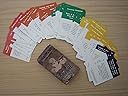

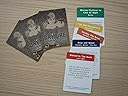

Tactical And Preparedness Solutions by David Morris Dry Fire Training Cards
Product ID: 4304031
🃏50+ drills
📏3.7x2.6x0.7 in
⚖️0.02 lbs
🔥 Elevate Your Training Game with Every Card!
The Dry Fire Training Cards offer a comprehensive training solution with over 50 drills, including specialized low light scenarios, designed for both solo and partner practice. Compact and lightweight, these cards are perfect for on-the-go training, allowing shooters to refine their skills efficiently and effectively.
| ASIN | B00EPPWK7M |
| Age Range Description | Kid |
| Best Sellers Rank | #654,344 in Sports & Outdoors ( See Top 100 in Sports & Outdoors ) #2,396 in Hunting Targets & Accessories |
| Brand Name | Dry Fire Training Cards |
| Customer Reviews | 4.5 out of 5 stars 584 Reviews |
| Educational Objective | Shooting |
| Is Assembly Required | No |
| Item Dimensions | 3.7 x 2.6 x 0.7 inches |
| Item Weight | 0.01 Kilograms |
| Manufacturer | Dry Fire Training Cards |
| Manufacturer Minimum Age (MONTHS) | 144.00 |
| Manufacturer Part Number | FBA_DFTC |
| Material Type | Cardboard |
| Model Number | FBA_DFTC |
| Number of Players | 1 |
| Operation Mode | Manual |
| Power Source | battery powered |
| Theme | Shooting Training |
| Unit Count | 1.00 Count |
B**L
A real winner
Since dry-fire cards should be used only after one has a good amount of firearms training and familiarity, I give a cursory background here before evaluating the cards themselves. If you already know this stuff, then, hey, the cards are great! Range shooting: It's great to shoot at the range, trying out different firearms, getting valuable practice in aiming, staying steady, using different grip positions and body stances, and firing while overcoming recoil so that you are both accurate and ready for the next shot. This gives an excellent feel for how your equipment works or doesn't work, how you need to interact with it, and hopefully the respect and caution that this focused power deserves. Of course, though, range shooting has some cost and inconvenience that keep you away from it at times. You travel to a range, pay an entry fee, purchase fresh targets and ammunition, and sometimes lose a small deposit by breaking the target frame. At a public range, you are pretty much limited to staying in your slot behind the firing line and keeping all activity facing downrange. Stand, sit, or possibly lie prone while handling a weapon, maybe use snap caps (plastic dummy rounds) to practice clearing misfires, try out right, left, and double hand grip of your weapon, practice speed shooting and aim recovery, and even shoot at multiple targets if you have space for that, but don't get too creative, or the rangemaster will rightly chastise you. Dry fire practice: I think this deserves far more attention than most shooters give it. You can practice in your arena at any time, with no travel and virtually no expense except maybe batteries for lasers. Even the targets are reusable. You can practice everything that you do at the range and more, although you hope without the important details of bang, recoil, and aim recovery. Dry firing is great for indoor and outdoor practice of all imaginable situations and tactical movements against threats single or multiple, coming from any direction, from behind cover or not, near or far, with you running, turning, rolling, lying on your back after a fall, shooting behind you, hanging by your knees from a tree branch, and anything else. For added safety, one can use a dummy gun, such as the blue or red types readily available for purchase, but it makes sense to do most of your practice with the guns that you rely on. Dry firing is a much safer way to practice speed drawing (against targets), rapid aim, and properly identifying and "firing" at targets placed in different directions, or which appear suddenly by pop-up or rotation. The skills that you can build with dry firing practice are almost limitless, merely excluding the bang, we all hope. Safety: No real gun is "safe". This important concept is naturally undermined when people "know" that a gun is unloaded, which of course needs to be the case in dry firing practice. The guy who shoots himself while cleaning his gun, and the guy who practices "quick draws" and shoots his friend, are good examples among all too many of people who were sure that everything was safe, but they were wrong. Many experienced shooters have their personal tales of close calls or actual unintended discharges, but it is better just to believe the rumors, however unlikely they might seem, and follow the famous four safety rules: 1) The gun is ALWAYS loaded. 2) Don't point it at anything that you are not willing to destroy. 3) Keep your finger away from the trigger until you are ready to shoot. 4) Always identify your target and what is behind it or near the bullet path before you fire. "Knowing" even subconsciously that the gun is empty, and then doing anything based on that mindset, is the perfect storm for an accident. It has been said that there are no accidental discharges, only negligent ones. Enough said on that, I hope. Setting up your arena: Today, you are alert and thinking everything through. Tomorrow, you might be a little tired, or your visiting friend may want to try out your arena with his hunting rifle, and people start to assume that all is fine. That is dangerous. The way you set up your arena could make a vital difference in whether things go well or otherwise. The term "range" is not best for dry firing practice because your arena can be as complex as you wish, with lots of props, hiding places, movement on your part, and many directions in which you may need to shoot for realistic defense practice, if that is your goal. Because of such variety, your arena should be set up almost as if it were intended for live fire. Then, on that very unexpected day when something goes "bang," you will have the satisfaction of merely needing to patch and paint a small hole in the wall, and nothing worse than that. If you are outdoors in a small, uninhabited valley, or surrounded by tall sand piles, or inside surrounded by brick walls, you might just choose such an enclosed area for your training. Otherwise, you may want to buy or create bulletproof panels of kevlar or fiberglass and place them appropriately, or set up even shelves of unimportant books or other barriers that will stop bullets. It is best, of course, to create your barriers from shock-absorbent materials that do not cause ricochets. But because of the "rumor" that, sometime in your life, you will fire a live round from an "empty" gun, set up your range as if you were going to do just that. It is nice if, when the worst happens, you only need to patch and paint a small hole in the wall. Dry fire of certain firearms: Beyond safety in general, be aware that a few firearms are not designed to be triggered without ammunition in the chamber. Dry firing can damage these products unless you put in plastic snap caps or take other suitable measures. For most guns, dry firing is not a problem, and for the rest, snap caps are one way to avoid trouble. Using your arena: Before you begin your practice, make sure your gun is empty in both chamber and magazine. Remove all live ammunition from the area, so that no one can inadvertently load it into a gun. Even then, have the engaged mindset that ammunition is everywhere around, and the gun is loaded -- things are not simply safe. Next, point the gun in a safe direction, anticipate the possibility of a "bang," double check that the gun is empty, and only then pull the trigger (with a snap cap in the chamber if needed). If nothing exciting happens, then you should be ready to do your dry fire practice. As you practice, imagine that every pull of the trigger is a real shot, in order to confirm that there is no direction of shooting that is unsafe. Cards and training exercises: When shooters begin dry fire practice, they usually come from a range shooting background, and their first exercises will be standing, aiming, holding steady, carefully pressing the trigger, and all of those meticulous considerations used at the range. Of course, when one is hunting or long distance shooting, this is very useful practice, but if one is in a self defense situation, there is rarely any chance to enjoy such a controlled situation. Sometimes a gun needs to be used at very close range, or even in the midst of a fist fight or an attack with a knife. Such chaos might occur on a beach, in a puddle of water, on slippery gravel, in snow, or on other unstable surfaces. You may have already been punched or wounded, or you are tired from running or struggling, or something else. The variations in situations where you might need to defend yourself are endless, but the habituated range shooter often does not think to practice so many variables. Many shooting organizations and defense trainers offer exercises for defensive situations, which I have collected over years, but then along comes someone with a deck of cards, lots of interesting exercises color coded for the general kinds of situations that might arise. What a treasure that is! Now, I have over 50 interesting exercises to try out, without having to scrape up a few here and there and think up others. Of course, adding more exercises is a good idea, but with this dek of cards there is no question of what to do in my dry-fire arena. Bottom line: If you are a reasonably experienced shooter and are willing to follow gun safety rules with great care, you will do well to get these cards and work your way through them in a regimen of dry fire training. You may never need some of the skills that these exercises develop, but it is good to have all the skill that you can acquire, and if you like shooting, this will greatly add to your pleasure.
J**F
A darn good and simple solution to building firearm confidence
My opinion: I recently introduced my wife to firearms at her request, for home defense. I have been looking for a reasonably priced training program to build her and my confidence in handling our firearms. The shooting range we use doesn't allow the type of training required to face home defense situations, Local advanced firearm classes, while I am sure are worth the expense, still don't provide for sustained regimented practice after the training. . The Dry Fire Training Cards along with the (surprise) extra benefits delivered after purchase, fits the bill of a sustained program for practice and training. While it is impossible to cover every scenario that can be encountered in a home defense situation, these cards come close to covering most of the situations one is likely to occur. A darn good and simple solution to building firearm confidence, safety and handling for beginners and advanced alike. The DFTC's are NOT substitutes for good live training, but are excellent long-term homework helpers for what you might learn in live training classes We purchased snap caps for our firearms so we can practice (very carefully) for a 1/2 hour or so several times a week. The DFTCs are helping to build handling and confidence skills. We purchased an Airsoft pistol to be able to work on accuracy ( immediate feedback - still important to go the range as often as possible, though) along with handling skills. The DFTCs are a fun, thorough and logical way to train in a sustained manner, no to mention low-cost. The ROI on DFTCs is very high in my opinion. I will be purchasing additional sets for my daughter's family (as stocking-stuffers for Christmas) who all shoot and have firearms in the home.
C**H
A very practical dry fire training tool.
I really find dry fire practice helpful, and own several laser targets. Practicing dry before hitting the range, curing problems after a bad day at the range, at home if you simply can't get to the range, saving money on ammo, or just polishing basic skills, is one of the best tools around. So far I've found these cards to make tactical dry fire training even more useful. There are so many ways to sharpen practical skills besides hitting targets dry. They also have pushed me to review basics. For example, the low light cards made me review flashlight techniques. They kind of get you out of a rut and shake up the routine. True, its a little pricey for a deck of cards, but they are a good investment. Be safe and keep any live ammo away from the dry fire area.
N**R
Fantastic option for training at home.
Disclaimer: I was provided a discount code for this product, although I did purchase it with my own money. When I was in the Army, we did dry fire practice all day for several days to get up to speed with our rifles. They were very boring, but very, very helpful in learning how to handle the rifle properly. As a civilian, and concealed carrier, I have tried to find a way to do dry fire drills without getting bored, but haven't had a lot of luck. These cards have helped immeasurably with that. Each of the different colors is a different type (skill level or scenario) of practice, and include everything from helping to train on front sight focus to practicing in the dark. The tasks are comprehensive, well described on the cards, and not the least bit boring. I use them as follows: First, ensure your weapon is unloaded. Because I practice with my son, he physically verifies my weapon is cleared, and then walks the loaded magazines into a different room, then brings me empty magazines that we both touch and say "clear." I then put the empty mag in my pistol, and he draws a random card from the deck. I have very small (two inch) circular shoot and see targets on three walls of my living room (they hide behind curtains, and I tie the curtains to the side for practice). He reads me the card, and then calls out a number or direction, and I perform the task on the card. It's a lot of fun, and you definitely can build your skill this way if you are honest with yourself about how well you did with each drill. In short, after using this deck for about a week, I've sent the link to many of my friends. I couldn't be more pleased with them.
R**E
Great idea, price too high.
Great idea and anyone who practices dry firing (which should be everyone who carries) can use these drills. However, I just can't recommend someone paying $17 for this pack of cards. With 10-15 minutes on google you can put together your own set of dry fire drill cards and save your money. I know the creator of this product is just trying to make a buck, but $17 is high, especially when you can get 12 decks of playing cards for $7 on here.
J**E
A MUST for every serious shooter!
Dry fire IS THE MOST IMPORTANT training you should do if you consider yourself being a dedicated and serious shooter. These cards are a true must in your dry fire training. Yes, live fire practice is important, specially when is done in a productive way and in a manner to confirm if what you do in dry fire is working. The cards provide clever and interesting drills to be performed during dry fire. I.E. one of the cards commands to perform emergency reloads in the dark. Can you perform emergency reloads in total darkness? If so, the more practice the better. Another good drill in the cards call to acquire a good sight picture and maintain it as you change elevation. The cards have dry fire drills to all skill levels. This is an excellent training tool. if you are into defensive shooting and/or competition shooting these cards are a must!
J**T
I liked your cards so much that I bought some for ...
David, I liked your cards so much that I bought some for a friend. My brother took my set, so I’m unfortunately without my own at the moment. I appreciate that the cards emphasize physical fitness, which I find leads to better general gun-handling skills as the shooter is forced to navigate more positions than most everyday people could think of. All of the motion involved in simply changing from standing to prone tests a shooter’s grip on his pistol, and the the variety of movements included in your cards are sure to make people more aware of their physical limits and capabilities. The cards also combine normal working out with firearms training, so it’s a two-for-one deal. As constructive input, I would like to see more cards that emphasize drawing from concealment from different positions. I can work that into any card exercise, of course, but it would be a good suggestion for new shooters who might not think of how difficult it is to draw when your shirt and undershirt aren’t cooperating. Kind Regards, Jack
A**R
Buy Them and Use Them
Dry Fire practice is essential if you want to seriously be a gun fighter and not just a range guy. The cards put you in different situations and force you to learn to shoot with your support hand. My buddy went out with me for some shooting in the woods and said "Who are you?" after I shot for the first time since using these cards. I was surprised as well. Trigger discipline was improved 100% as was moving the handgun to address multiple targets. You can't use these cards once and expect huge results. I use them twice a week and have seen great results. Dry fire with these cards and it will put you a few notches above the guy who goes to the range, stands in proper position, and fires a few magazines admiring his tight grouping. Buy these cards, and then USE them weekly. If you carry concealed often, you need to dry fire to keep sharp.
Trustpilot
2 months ago
1 month ago