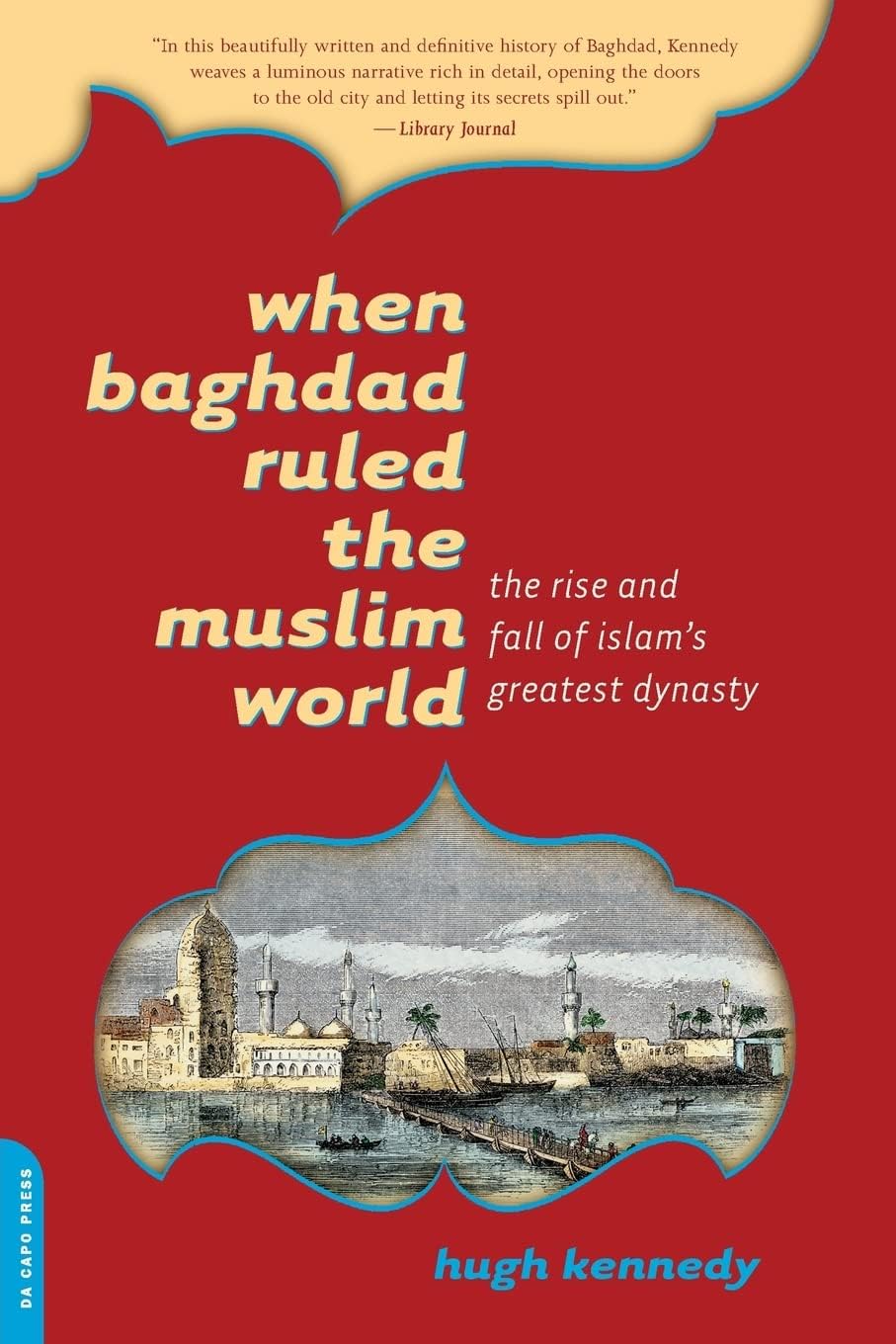
When Baghdad Ruled the Muslim World: The Rise and Fall of Islam's Greatest Dynasty
Product ID: 4351199
Buy anything from 5,000+ international stores. One checkout price. No surprise fees. Join 2M+ shoppers on Desertcart.
Desertcart purchases this item on your behalf and handles shipping, customs, and support to Uruguay.
When Baghdad Ruled the Muslim World: The Rise and Fall of Islam's Greatest Dynasty [Kennedy, Hugh] on desertcart.com. *FREE* shipping on qualifying offers. When Baghdad Ruled the Muslim World: The Rise and Fall of Islam's Greatest Dynasty Review: Not "difficult" or "dull" - This is a popular history written by an academic who is determined not to write yet another history book that is "difficult, problematic, and yes, rather dull" (as Kennedy explains in his forward, p. xx). He succeeds, while making the account as accurate as he can, considering the sources, frequently warning when an account (or accounts) are debatable or dubious. He notes that even the dubious accounts generally have a lot to reveal about what people of the time thought, or how they thought. Most of Kennedy's work covers the Abbasids from the beginning of the Abbasid Revolution in 747 until the killing of Caliph Muhtahdi by his own Turkish soldiers in 869. Other chapters cover consistent or changing themes (e.g. Chapter V "Poetry and Power" or Chapter VII "The Harem"). There are maps of the Abbasid Empire, Baghdad, and Samarra, a chart of the Caliphs from 749-1031, and numerous photographs and illustrations. I read this while taking a class on early Islamic civilization. The other students found it to be an easy, pleasant read. Quibble: My 5-star rating is for adults. Kennedy doesn't avoid the scatological, the salacious, or the bloody e.g. lesbians caught in the moment of passion and decapitated (pp. 177-178). James D. Glick Austin Peay State University Clarksville, TN Review: too anecdotal - The Abbysid dynasty witnessed Islam's "golden age" as the Islamic world grew and flowered both economically and socially. Prof. Kennedy has written a great anecdotal history of the region that shows the Abbysid caliphate in all its glory. For me, however, Kennedy's use of anecdotes was a little much. To be fair, Kennedy is well aware of his use of anecdotes, stating that the majority of primary sources from this era *are* anecdotal, and in the spirit of the age they are used to illustrate larger themes. (The generosity - or frugality or meanness - of a particular caliph for example.) I struggled with this even as I understood why Kennedy chose to do this. The organization of the book was another point with which I struggled. The first third of the book details the political history of the Abbysids from its founding in 750 to the regin of Mu'tadid in 892; his discussion of the civil war between Ma'mun and Amin was excellent. From there, Kennedy topically discusses the Abbysid Near East - the building of the city of Baghdad, court life, the role and importance of poetry, economics. The utility of a topical orgnization like this makes sense, but for me it made some frustrating reading, as I found myself having to reference back and forth to gain a better chronological perspective of what was going on. I give _When Baghdad Ruled the Muslim World_ four stars primarily for Kennedy's writing - clearly he intended this book for the lay-person, and he succeeded brilliantly in outlining the importance and relevance of the 150 year reign of the Abbysids politically, socially and economically. In brief, the Abbysids standardized Islam, encouraged the development of the four major legal interpretations of shari'a, and made Islam (politically and intellectually) an inheiritor of classical Greek, Latin and Persian knowledge. Recommended for those with a specific interest in the region or the time.
| Best Sellers Rank | #1,209,941 in Books ( See Top 100 in Books ) #270 in Iraq History (Books) |
| Customer Reviews | 4.2 4.2 out of 5 stars (64) |
| Dimensions | 6 x 0.95 x 9 inches |
| Edition | Edition Unstated |
| ISBN-10 | 0306814803 |
| ISBN-13 | 978-0306814808 |
| Item Weight | 1.1 pounds |
| Language | English |
| Print length | 376 pages |
| Publication date | March 14, 2006 |
| Publisher | Grand Central Publishing |
J**K
Not "difficult" or "dull"
This is a popular history written by an academic who is determined not to write yet another history book that is "difficult, problematic, and yes, rather dull" (as Kennedy explains in his forward, p. xx). He succeeds, while making the account as accurate as he can, considering the sources, frequently warning when an account (or accounts) are debatable or dubious. He notes that even the dubious accounts generally have a lot to reveal about what people of the time thought, or how they thought. Most of Kennedy's work covers the Abbasids from the beginning of the Abbasid Revolution in 747 until the killing of Caliph Muhtahdi by his own Turkish soldiers in 869. Other chapters cover consistent or changing themes (e.g. Chapter V "Poetry and Power" or Chapter VII "The Harem"). There are maps of the Abbasid Empire, Baghdad, and Samarra, a chart of the Caliphs from 749-1031, and numerous photographs and illustrations. I read this while taking a class on early Islamic civilization. The other students found it to be an easy, pleasant read. Quibble: My 5-star rating is for adults. Kennedy doesn't avoid the scatological, the salacious, or the bloody e.g. lesbians caught in the moment of passion and decapitated (pp. 177-178). James D. Glick Austin Peay State University Clarksville, TN
D**N
too anecdotal
The Abbysid dynasty witnessed Islam's "golden age" as the Islamic world grew and flowered both economically and socially. Prof. Kennedy has written a great anecdotal history of the region that shows the Abbysid caliphate in all its glory. For me, however, Kennedy's use of anecdotes was a little much. To be fair, Kennedy is well aware of his use of anecdotes, stating that the majority of primary sources from this era *are* anecdotal, and in the spirit of the age they are used to illustrate larger themes. (The generosity - or frugality or meanness - of a particular caliph for example.) I struggled with this even as I understood why Kennedy chose to do this. The organization of the book was another point with which I struggled. The first third of the book details the political history of the Abbysids from its founding in 750 to the regin of Mu'tadid in 892; his discussion of the civil war between Ma'mun and Amin was excellent. From there, Kennedy topically discusses the Abbysid Near East - the building of the city of Baghdad, court life, the role and importance of poetry, economics. The utility of a topical orgnization like this makes sense, but for me it made some frustrating reading, as I found myself having to reference back and forth to gain a better chronological perspective of what was going on. I give _When Baghdad Ruled the Muslim World_ four stars primarily for Kennedy's writing - clearly he intended this book for the lay-person, and he succeeded brilliantly in outlining the importance and relevance of the 150 year reign of the Abbysids politically, socially and economically. In brief, the Abbysids standardized Islam, encouraged the development of the four major legal interpretations of shari'a, and made Islam (politically and intellectually) an inheiritor of classical Greek, Latin and Persian knowledge. Recommended for those with a specific interest in the region or the time.
B**X
Informative, entertaining history
This book was a good blend of accurate history and interesting writing. As a professor of History I found this a good overview of the court life of the Umayyad and Abbasid Caliphates, while holding the readers interest. It is not the most uniquely original in it's analysis, but it is much easier to access and understand than most historians who seem to write for each other-not the public. If you are looking for such a blend, this is a good book for court life of that era. Be sure to read the introduction, where the author explains his strengths and weaknesses, so that you can accept the work for what it is, and not what you might wish it to be.
J**S
GREAT BOOK ON ONE THE MOST IMPORTANT MUSLIM EMPIRES IN HISTORY
Very interesting book. Easy to read. It explains in detail how the Abassid courts funcioned. It has great chapters about the palaces, the Harem and Arab poetry, The only issue missing is the Abassid rule over North Africa and Spain. The book uses arab sources of the time and tells a lot of amusing stories about the caliphs, the viziers, wives and concubines. It is a great tool to undestand the customs and life in the Abassid period in Irak.
A**T
The book was quick to read. You get to know about the foundation of Baghdad, and the Caliphs who ruled from their. Though the rule of all the caliphs are not mentioned, but those of Harun, Mamun etc are well explained. I would recommend it, if you want to read quickly what happened during the Abbasid era.
N**K
Although the book contained rich information, I found it poorly organised, repetitive, incoherent (at times) and lacked proper historical analysis. I understand the writer wants to reach out to laypersons by narrating "The Abbasid era" in a storytelling format but only manages to make it dull and dry. I felt the writer spent too much time on personal tales, corruption , betrayal and scandals(though some are shocking and interesting at the same time).I expected more on geo-politics and social analysis.It falls a shot by miles in my opinion and I didn't enjoy much except for some personal tales and gruesome politics. This may a good starting book for learning "The Abbasid Era". If you are little or vaguely familiar with this period of history, I recommend you skip this book
J**R
Amazingly detailed account of events taking place more than 1200 years ago. Very colorful and in some places even a page-turner. The author is very good at noting where the sources are conflicting or may not be trusted.
Trustpilot
2 months ago
3 days ago