We remain fully operational. Our teams are working around the clock to ensure your deliveries continue safely.

DOWNLOAD THE APP


Customer Services
Copyright © 2025 Desertcart Holdings Limited
DOWNLOAD THE APP
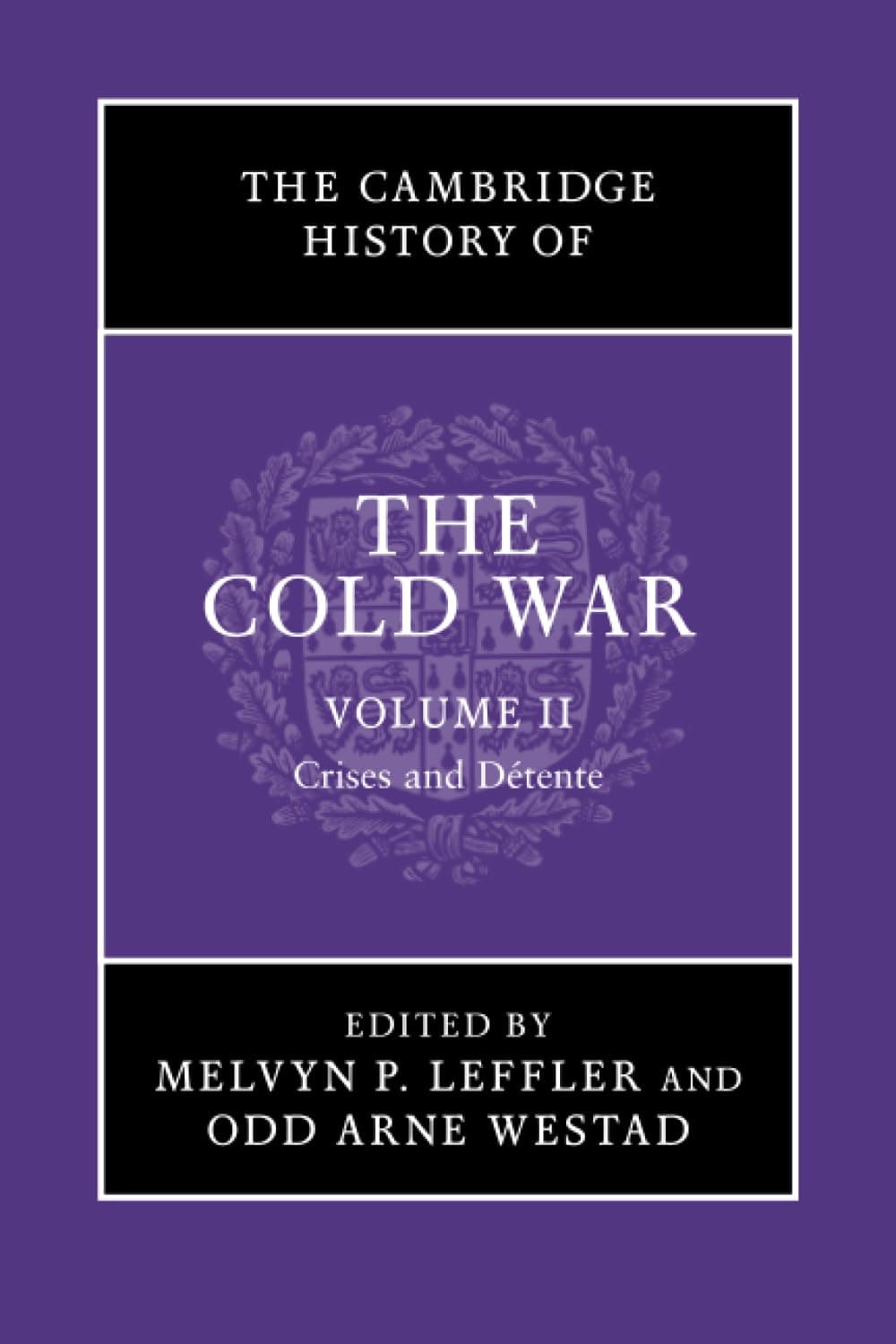


desertcart.com: The Cambridge History of the Cold War (Volume 2): 9781107602304: Leffler, Melvyn P., Westad, Odd Arne: Books Review: "Cold War Action" - Just finished reading volume 2 and will start reading volume 3 soon. Very good read on the subject of the cold war. Very detailed account on every aspect of the Cold War, everything from presidential strategies, defense budgeting to proxy wars in the Third World. Volume 3 review coming soon. Review: Even better than Volume 1 - The entire three-volume series is essentially a compendium of essays, each addressing one factor of the Cold War. The first thing to praise is the delineation of the factors. It must have been a difficult task to decide for each author the boundaries of his/her essay. Next, the essays themselves are of a generally high quality. Obviously, readers will have their own preferences, but from my perspective, the weakest of these was not bad and the best was of an extraordinarily high quality - so much so that I am now browsing for further work from that author. Volume 2 might be inherently more interesting than Volume 1, since it covers the major part of the duration, rather than the birth, of the Cold War. I'm looking forward to Volume 3 with considerable eagerness.
| Best Sellers Rank | #2,155,349 in Books ( See Top 100 in Books ) #1,044 in International Relations (Books) #8,298 in History (Books) #14,316 in International & World Politics (Books) |
| Book 2 of 3 | The Cambridge History of the Cold War |
| Customer Reviews | 4.9 4.9 out of 5 stars (12) |
| Dimensions | 6 x 1.54 x 9 inches |
| ISBN-10 | 1107602300 |
| ISBN-13 | 978-1107602304 |
| Item Weight | 2.3 pounds |
| Language | English |
| Print length | 682 pages |
| Publication date | February 20, 2012 |
| Publisher | Cambridge University Press |
K**B
"Cold War Action"
Just finished reading volume 2 and will start reading volume 3 soon. Very good read on the subject of the cold war. Very detailed account on every aspect of the Cold War, everything from presidential strategies, defense budgeting to proxy wars in the Third World. Volume 3 review coming soon.
D**.
Even better than Volume 1
The entire three-volume series is essentially a compendium of essays, each addressing one factor of the Cold War. The first thing to praise is the delineation of the factors. It must have been a difficult task to decide for each author the boundaries of his/her essay. Next, the essays themselves are of a generally high quality. Obviously, readers will have their own preferences, but from my perspective, the weakest of these was not bad and the best was of an extraordinarily high quality - so much so that I am now browsing for further work from that author. Volume 2 might be inherently more interesting than Volume 1, since it covers the major part of the duration, rather than the birth, of the Cold War. I'm looking forward to Volume 3 with considerable eagerness.
L**A
GREAT
S**R
The information presented in this history is copious and well-organised. The aggregate effect of these essays (50 so far) is to place our recent history and the massive shift to a bi-polar world (1947 - 1990) under a bright light for fresh interpretation. The picture that emerges is necessarily incomplete, but at 1,500 pages the editors have given it the old college try. Even so, there are a couple of areas I feel could have been more fleshed-out: Numerous references are made to ideology, and some explanations are given as to some of each side’s basic principles; but a chapter dedicated to the evolution of ideology in the West and the Soviet Union (what the Bolsheviks’ original aims were, how they went about achieving them, and how they got subverted) would have been helpful in assessing and comparing the relative merits and pitfalls of each side’s approach. Another area that gets too little attention is the role big business played in this conflict. We’ve been warned about the military-industrial complex, but its rise and continued preponderance get barely a mention in any of these essays so far. Especially murky are specific examples of how business and the governments have worked together to further Cold War agendas. Maybe these weren’t deemed adequately significant, but their near-complete absence makes it impossible to know what role direct governmental intervention in markets played: an important question when one side claims markets should be free. In the big scheme these are quibbles. The solid block of facts and analysis here will take time to digest. Maybe when I finish the third volume, I’ll have drawn more conclusions about this one :)
Trustpilot
2 weeks ago
5 days ago