
Buy anything from 5,000+ international stores. One checkout price. No surprise fees. Join 2M+ shoppers on Desertcart.
Desertcart purchases this item on your behalf and handles shipping, customs, and support to Uruguay.
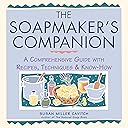
In this comprehensive guide, Susan Miller Cavitch covers everything you need to know to make your own soaps. Learn the basic techniques for crafting oil-, cream-, and vegetable-based soaps, and then start experimenting with your own personalized scents and effects. Cavitch provides tips for making more than 40 different specialty soaps, showing you how to design colorful marbled bars and expertly blend ingredients to create custom fragrances. Youโll soon be making luxurious soaps at a fraction of the cost of boutique products.Important Notice Early printings of this book contain a recipe variation in a sidebar note on page 36. As a result of further testing, author Susan Miller Cavitch and Storey Publishing strongly recommend that you do not try this variation. Adding honey when you are combining the sodium hydroxide and water may result in a stronger reaction with more intense heat. The mixture may bubble up quickly and come out of the pot, posing a potential hazard. Review: The Soapmaker's Companion by Susan Cavitch - I read a lot of reviews before purchasing this book including this book's reviews on US/UK desertcart and all of the negative reviews (which are significantly less that the positive ones.) For a person new to soap making and new to cold process soap making, (and wanting to use vegetable based oils in cold process) this book is really good. It contains one recipe for a single bar of soap and a good selection of recipes for other types of soap. These easily act as a guide for you to create your own recipes or to go ahead and make the recipes straight from the book. It is true that the recipes all contain around 7 teaspoons of essential oils. Keep in mind that these oils sell for ยฃ5 plus for 10 ml. A teaspoon is 5 ml, so you are looking at 35 ml of essential oils per recipe. It ups the price of the finished bars considerably. However on the plus side, the recipes state the essential oils are optional. There are also ideas for combining the oils to achieve different smells. I don't know if the grapefruit seed extract referred to in the recipes - used as a preservative because of the 10% discount - is necessary or not. One could always run the recipe through the lye calculators readily found on the web to use a lower discount. This would do away with the need for the addition of this ingredient altogether. However you do get the impression that the author has a lot of experience in soap making so to make real quality soap, perhaps her way is best. I am not experienced enough to know. There is no reference to costs when it comes to batches of soaps. Using current costs, and using sweet almond oil instead of palm oil, the single bar of soap recipe was ยฃ1. The costs of a 1100 gr batch using a recipe from elsewhere - olive oil, coconut oil, palm oil and almond oil being the main ingredients [totalling 900gr] was 65p/100gr bar, though this is before the bars have been rested for the 4 week period after producing them. (I've added this in because it was something I would have liked her book to address, just to give some idea of the home manufacturing cost from the raw ingredients.) Using her recipes could see the costs rise as her recipes contain more ingredients. Her recipes would cost more to pass by a chemist too if the end result of the soap-making procedure was to sell for profit in the UK. Aside from this, she covers laundry soap, bar shampoos, men's soap, transparent soap, lip balm, a guide to the use of soap making oils, question and answer trouble shooting tips, looking at resins, minerals and clays as additives to soaps, natural colorants and other more chemistry related soap making information, making the whole book a great referencing source. I didn't find the lack of photos or the green ink off-putting. Youtube and the web give a lot of information for soap makers, but it takes time to find what you are looking for. A few Youtube clips on how cold-process works and then carefully following her recipe was easily do-able. For less than ยฃ9.00 this was a very worthwhile purchase though no doubt because it is a paperback it won't last as long as one would like. Review: Brilliant Intermediate Book - As a newbie, I can honestly say not to start with this book. This is the next step for a total beginner. 1. For Absolute beginners start with the Melinda Coss book on Handmade soap, as this has small recipes using lard to practice and make mistakes with. After 5-10 batches, move on to this book. 2. This book is a gem - as once you get started, you'll notice the different temperatures recommended - and this book will explain all that. Even better troubleshooting guide for temperatures 80-90 F, 95 -105 F, 110 - 120 F and 125 - 140 F. 3. You'll want comparision charts of oils for lather, trace times, fluffy lather, stable lather, conditioning. This book is the only book that I've found with such charts. 4. Good troubleshooting guides, for Transparent Soaps such as cloudiness, opacity, softness or slippery feel. This is the "next stage" book, that handles in an easy to read format, all those wonderful things that can wrong or right. If you understand these, then you're ready to really experiment with confidence.
| Best Sellers Rank | 200,182 in Books ( See Top 100 in Books ) 75 in Industrial Chemistry & Manufacturing Technologies 338 in Self-Sufficiency & Green Living 509 in Beauty & Fashion (Books) |
| Customer Reviews | 4.7 out of 5 stars 744 Reviews |
D**E
The Soapmaker's Companion by Susan Cavitch
I read a lot of reviews before purchasing this book including this book's reviews on US/UK Amazon and all of the negative reviews (which are significantly less that the positive ones.) For a person new to soap making and new to cold process soap making, (and wanting to use vegetable based oils in cold process) this book is really good. It contains one recipe for a single bar of soap and a good selection of recipes for other types of soap. These easily act as a guide for you to create your own recipes or to go ahead and make the recipes straight from the book. It is true that the recipes all contain around 7 teaspoons of essential oils. Keep in mind that these oils sell for ยฃ5 plus for 10 ml. A teaspoon is 5 ml, so you are looking at 35 ml of essential oils per recipe. It ups the price of the finished bars considerably. However on the plus side, the recipes state the essential oils are optional. There are also ideas for combining the oils to achieve different smells. I don't know if the grapefruit seed extract referred to in the recipes - used as a preservative because of the 10% discount - is necessary or not. One could always run the recipe through the lye calculators readily found on the web to use a lower discount. This would do away with the need for the addition of this ingredient altogether. However you do get the impression that the author has a lot of experience in soap making so to make real quality soap, perhaps her way is best. I am not experienced enough to know. There is no reference to costs when it comes to batches of soaps. Using current costs, and using sweet almond oil instead of palm oil, the single bar of soap recipe was ยฃ1. The costs of a 1100 gr batch using a recipe from elsewhere - olive oil, coconut oil, palm oil and almond oil being the main ingredients [totalling 900gr] was 65p/100gr bar, though this is before the bars have been rested for the 4 week period after producing them. (I've added this in because it was something I would have liked her book to address, just to give some idea of the home manufacturing cost from the raw ingredients.) Using her recipes could see the costs rise as her recipes contain more ingredients. Her recipes would cost more to pass by a chemist too if the end result of the soap-making procedure was to sell for profit in the UK. Aside from this, she covers laundry soap, bar shampoos, men's soap, transparent soap, lip balm, a guide to the use of soap making oils, question and answer trouble shooting tips, looking at resins, minerals and clays as additives to soaps, natural colorants and other more chemistry related soap making information, making the whole book a great referencing source. I didn't find the lack of photos or the green ink off-putting. Youtube and the web give a lot of information for soap makers, but it takes time to find what you are looking for. A few Youtube clips on how cold-process works and then carefully following her recipe was easily do-able. For less than ยฃ9.00 this was a very worthwhile purchase though no doubt because it is a paperback it won't last as long as one would like.
Y**!
Brilliant Intermediate Book
As a newbie, I can honestly say not to start with this book. This is the next step for a total beginner. 1. For Absolute beginners start with the Melinda Coss book on Handmade soap, as this has small recipes using lard to practice and make mistakes with. After 5-10 batches, move on to this book. 2. This book is a gem - as once you get started, you'll notice the different temperatures recommended - and this book will explain all that. Even better troubleshooting guide for temperatures 80-90 F, 95 -105 F, 110 - 120 F and 125 - 140 F. 3. You'll want comparision charts of oils for lather, trace times, fluffy lather, stable lather, conditioning. This book is the only book that I've found with such charts. 4. Good troubleshooting guides, for Transparent Soaps such as cloudiness, opacity, softness or slippery feel. This is the "next stage" book, that handles in an easy to read format, all those wonderful things that can wrong or right. If you understand these, then you're ready to really experiment with confidence.
J**E
Informative book
I am very pleased with this book which clearly informs the reader what you need to purchase. So far I have made one batch and everyone loves it. I decided to make soap for myself and as gifts as I have a thing about nice soap but have developed sensitivity to highly scented soap and wanted to make some nice soap that was not scented (although I can take some essentials oils) and this book enables me to do that. I have just ordered more oils etc to make another batch as I also gave some bars as gifts and am now all out. The only drawback from the book, being in the UK, is that I have had to convert the measurements.
F**Y
Four Stars
Very happy with this book the item arrived well packaged and on time all in all a good purchase
E**Y
Great piece
I have finally found my buddy
C**B
It's like a bible..
Wanted to start making soap....use to make it with my granny but just forgot how....this book is pack with really great info and recepies ..... But you really have to read it not just flick through it...will worth the money and wouldn't be with out it.... If you like I have just started out there is an app that you can download on bramble berry this app I thought with the book brilliant.... It tells you how much lye you will need for recipie ....
A**R
Easy to follow
Easy to follow instructions for the absolute beginner
R**O
... book so far about soap making that I would recommend. You need this book
this is the only book so far about soap making that I would recommend. You need this book, no matter your experience or whatever, this book is excellent! Is the only one I keep taking from the shelve...
Trustpilot
1 week ago
1 month ago