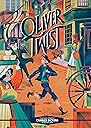
Classic Starts®: Oliver Twist
Product ID: 676766143
Desertcart purchases this item on your behalf and handles shipping, customs, and support to Uruguay.
The beloved tale of the brave orphan Oliver Twist, adapted for young readers. Dickens’s timeless novel transports young readers to a colorful Victorian England filled with mistreated orphans, grim workhouses, and gangs of thieving children. Oliver finds himself in dire circumstances after he dares to beg for more food in the orphanage. Determined to make his way in the world, he escapes to London, where he becomes involved with criminals … and finally finds a real home. The Classic Starts® series has sold more than 8 million copies since it launched in 2004. These abridged, kid-friendly editions are the perfect way to introduce beloved stories to the next generation. Each book includes discussion questions by Arthur Pober, EdD. Review: Love the illustrations - I've always loved the story of Oliver Twist-now I finally have an illustrated copy I'm even happier. This book is an unabridged copy and is searchable-a great feature. The cover has a picture of Oliver, all ragged with his little bundle. The table of contents takes you to Charles Dickens' preface, which is well worth reading, and to any chapter in the book. Alas, it does not take you to any of the illustrations, but they are beautifully rendered and very clear. I have the most basic Kindle and I have no trouble seeing all of the detail in the illustrations. The chapter headings list not only the number of the chapter, but the brief description Dickens wrote for each chapter, so that if you want to find a particular spot-say, when Oliver runs away to London, you can see that Chapter VIII has the summary "Oliver walks to London. He encounters on the road a strange sort of young gentleman." This makes it very easy to go to any part of the book you want to read. Warning: SPOILERS!!!! The story is one of a poor orphan boy, sold to an undertaker and abused until he runs away to London. He falls in with thieves and through a strange twist of fate is rescued by the man who was his father's best friend. It's a long story, filled with reversals of fortune and amazing coincidences, and although it has a happy ending, there is some genuine tragedy. It's a very sad scene when Oliver returns to the orphanage to get his best friend, Dick, who saw him off on his journey to London, only to find that Dick has died of untreated sickness. The prostitute, Nancy, has all the attributes of a character in a Greek tragedy-you desperately want her to leave the streets and her brutal boyfriend, Bill Sikes, and when she refuses to go, you have a sinking feeling that she isn't going to last much longer. When he beats her to death in their little room, it's a gruesome scene, but not a surprising one. The only relief from Fagin's gang comes from Charley, who reforms and leaves London to become a grazier. A word about Fagin-some might find the constant description of him as "the Jew" offensive. It is not meant as a pejorative, but rather as a handy label to define the arch-criminal. While it is true that Fagin is constantly described as a Jew and is one of the most repulsive Jewish characters in literature, it was not Dickens' intent to cast slurs upon Jewish people. He wrote in good faith and was troubled later, after becoming friends with Eliza Davis, the wife of the Jewish banker he sold his London house to, by the way he had portrayed Fagin. Eliza wrote to him in 1863 that she considered the way Dickens had portrayed Fagin a great wrong to the Jewish people. Dickens started to revise Oliver Twist, removing over 180 instances of the word "Jew" from the first edition text. He also ommitted sterotypical caricature from his public readings of Oliver Twist and a contemporary report noted, "There is no nasal intonation; a bent back but no shoulder-shrug: the conventional attributes are omitted." Dickens was finally able to write to Eliza, "There is nothing but good will left between me and a People for whom I have a real regard and to whom I would not willfully have given an offence." Fagin might still give offense to those looking for it, but personally I have always seen him as an example of a bad man, not a Jewish man, and I believe that is how Dickens meant to portray him. Review: Classic fairy tale story of "rags to riches" - I’ve been wanting to get back to rereading this classic for some time, so the summer provided me opportunity, along with this one being chosen as a monthly read in one of my reading groups. It’s interesting that when you read a book for the second time you catch things, nuances that you missed upon reading the first time. Oliver Twist, obviously a well-known title, needs little introduction. But what is striking is how Dickens’ tale is several things at once. It has a fairy tale quality to it, with some dark elements thrown in as well (i.e., there is a pretty brutal murder scene and another bizarre death scene). It is also a “rags to riches” sort of tale (with “rich” not being necessarily in the monetary form). Likewise, It is also a coming-of-age children’s novel with Dickens’ sentimentality. Moreover, the novel also forms a social commentary and criticism about the conditions taking place in Dickens’ time. Upon my second reading, I thought it was a very entertaining and enchanting story, something Dickens seems to always pull off. Dickens captures eloquently the spirit of a young orphan boy who tries to overcome the many setbacks, heartbreaks, harsh elements, and trials that are thrown at him in his young life. Through the story’s narrative, Oliver meets many types of people, friends and foes, virtuous and malevolent, and must navigate his way in the world. Oliver Twist has many of the Dickens’ staples that make a worthy and heartfelt tale and a classic. One of the definitive characters I love about reading a Dickens novel is the cliffhanger type endings in chapters, revealing something interesting at the end of the chapter to pique the reader’s anticipation of what is to come. As per usual with Dickens, there are a bevy of eccentric and interesting characters (some infamously so). It’s not surprising that the popularity of this novel has spawned countless adaptations in various forms, from film, stage plays, musicals, etc. Definitely a novel for Dickens or classic literature aficionados to read.
| Best Sellers Rank | #148,309 in Books ( See Top 100 in Books ) #1,257 in Children's Historical Fiction (Books) #1,933 in Children's Classics #2,306 in Children's Chapter Books (Books) |
| Customer Reviews | 4.4 out of 5 stars 13,792 Reviews |
P**V
Love the illustrations
I've always loved the story of Oliver Twist-now I finally have an illustrated copy I'm even happier. This book is an unabridged copy and is searchable-a great feature. The cover has a picture of Oliver, all ragged with his little bundle. The table of contents takes you to Charles Dickens' preface, which is well worth reading, and to any chapter in the book. Alas, it does not take you to any of the illustrations, but they are beautifully rendered and very clear. I have the most basic Kindle and I have no trouble seeing all of the detail in the illustrations. The chapter headings list not only the number of the chapter, but the brief description Dickens wrote for each chapter, so that if you want to find a particular spot-say, when Oliver runs away to London, you can see that Chapter VIII has the summary "Oliver walks to London. He encounters on the road a strange sort of young gentleman." This makes it very easy to go to any part of the book you want to read. Warning: SPOILERS!!!! The story is one of a poor orphan boy, sold to an undertaker and abused until he runs away to London. He falls in with thieves and through a strange twist of fate is rescued by the man who was his father's best friend. It's a long story, filled with reversals of fortune and amazing coincidences, and although it has a happy ending, there is some genuine tragedy. It's a very sad scene when Oliver returns to the orphanage to get his best friend, Dick, who saw him off on his journey to London, only to find that Dick has died of untreated sickness. The prostitute, Nancy, has all the attributes of a character in a Greek tragedy-you desperately want her to leave the streets and her brutal boyfriend, Bill Sikes, and when she refuses to go, you have a sinking feeling that she isn't going to last much longer. When he beats her to death in their little room, it's a gruesome scene, but not a surprising one. The only relief from Fagin's gang comes from Charley, who reforms and leaves London to become a grazier. A word about Fagin-some might find the constant description of him as "the Jew" offensive. It is not meant as a pejorative, but rather as a handy label to define the arch-criminal. While it is true that Fagin is constantly described as a Jew and is one of the most repulsive Jewish characters in literature, it was not Dickens' intent to cast slurs upon Jewish people. He wrote in good faith and was troubled later, after becoming friends with Eliza Davis, the wife of the Jewish banker he sold his London house to, by the way he had portrayed Fagin. Eliza wrote to him in 1863 that she considered the way Dickens had portrayed Fagin a great wrong to the Jewish people. Dickens started to revise Oliver Twist, removing over 180 instances of the word "Jew" from the first edition text. He also ommitted sterotypical caricature from his public readings of Oliver Twist and a contemporary report noted, "There is no nasal intonation; a bent back but no shoulder-shrug: the conventional attributes are omitted." Dickens was finally able to write to Eliza, "There is nothing but good will left between me and a People for whom I have a real regard and to whom I would not willfully have given an offence." Fagin might still give offense to those looking for it, but personally I have always seen him as an example of a bad man, not a Jewish man, and I believe that is how Dickens meant to portray him.
F**9
Classic fairy tale story of "rags to riches"
I’ve been wanting to get back to rereading this classic for some time, so the summer provided me opportunity, along with this one being chosen as a monthly read in one of my reading groups. It’s interesting that when you read a book for the second time you catch things, nuances that you missed upon reading the first time. Oliver Twist, obviously a well-known title, needs little introduction. But what is striking is how Dickens’ tale is several things at once. It has a fairy tale quality to it, with some dark elements thrown in as well (i.e., there is a pretty brutal murder scene and another bizarre death scene). It is also a “rags to riches” sort of tale (with “rich” not being necessarily in the monetary form). Likewise, It is also a coming-of-age children’s novel with Dickens’ sentimentality. Moreover, the novel also forms a social commentary and criticism about the conditions taking place in Dickens’ time. Upon my second reading, I thought it was a very entertaining and enchanting story, something Dickens seems to always pull off. Dickens captures eloquently the spirit of a young orphan boy who tries to overcome the many setbacks, heartbreaks, harsh elements, and trials that are thrown at him in his young life. Through the story’s narrative, Oliver meets many types of people, friends and foes, virtuous and malevolent, and must navigate his way in the world. Oliver Twist has many of the Dickens’ staples that make a worthy and heartfelt tale and a classic. One of the definitive characters I love about reading a Dickens novel is the cliffhanger type endings in chapters, revealing something interesting at the end of the chapter to pique the reader’s anticipation of what is to come. As per usual with Dickens, there are a bevy of eccentric and interesting characters (some infamously so). It’s not surprising that the popularity of this novel has spawned countless adaptations in various forms, from film, stage plays, musicals, etc. Definitely a novel for Dickens or classic literature aficionados to read.
Y**K
Like a Quentin Tarantino Film....
Or are Quentin Tarantino films all like "Oliver Twist"? I digress. Oliver Twist by Charles Dickens was written/published in 1840, meaning that the work is over 170 years old. Although it is written about then-modern people doing Victorian things, the morals and themes present in this common work of literature are still relevant today. This was literary superstar Charles Dickens first novel ever. And it shows. But regardless of how simplistic or frank the novel gets, what it does correctly, it does better than most modern authors. Oliver Twist is centered around the titular orphan, and the various adventures he has through the slums of and around London during the Victorian Era. In one sense, this is an adventure novel, about a young boy who gets wrapped up in a conspiracy much larger than he is. In another, it is a prime example of a detective novel, with investigations and interviews and searches for evidence to discover the secrets behind said consipiracy. But, in my opinion, it is most like the extreme characters and innapropriate humor most commonly found in movies such as Pulp Fiction or Kill Bill: Volume 1 . Readers with more classic taste than my own may feel the need to scoff or drop their mouths in shock at this point in the review, but let me finish. The aforementioned cinematic masterpieces are both written by Quentin Tarantino, who has a fierce sense of zany and quirky. There has been a lot of literature along this line, but almost always in different genres: Kurt Vonnegut of Sci-Fi fame, for example. But they are all categorized by this extremely campy feel to them. Oliver Twist is a hard book to like if you're expecting airtight writing that gets to the point and tells a dramatic story effectively with good plotting. This is Dickens, not Hemingway. When a character gasps in horror of an event, Dickens would write " So and So gasped in horror, their mouth drooping along angular planes of shock and awe" or something along those lines. Characters are basically either good or bad, and don't tend to change too much (with a few exceptions--we'll get there soon). Bill Sikes, who is introduced as the Homebreaker, is a jerk throughout the whole novel, Oliver Twist is always the shinging bastion of morality. Fagin, for the most part, is always "the evil Jew" and is often characterized as the Devil. The Maylies are sickly sweetening as well. It's all black or white. Similarly, a ton of the plot points are quite contrived and a little too coincidental for modern reader's taste. Early on, Oliver, the Artful Dodger, and another little boy pickpocket a rich man named Mr. Brownlow while in a crowded square on the street. Of ALL the people they COULD have pick-pocketed, how do they choose the ONE man who is so deeply wrapped up in Olver's past? See what I mean? But in spite of all this extremity, sublimating the overwritten humor, and ignoring all the stupid things characters/the narrator say (" Alas! Poor Dick was dead!"-- we make fun of this all the time in my AP Literature class), this novel still manages to shine with a fierce backbone of humanity. Underneath all of the campy and lame emotional antics and plot points is the character of Nancy, who is perhaps the most underrated female character in all of Victorian Literature. What makes Nancy so special? Well, excluding one chapter at the end of the book for Fagin, Nancy is the *only* character in this entire novel who is true-to-life. We're talking living, breathing. Scratch what I said earlier about underrated "female" character. Nancy is one of the best characters to walk through the pages of all literature. Her conflict is real, her dialogue is real, her actions are real. And *her* character's climax is *the* climax of the novel. Without her, this book would be cheap trash. But the question then arises: if Dickens was capable of writing a character as powerful as Nancy is, why do all the other characters seem so cardboard and amateurish? This is Dickens, king of classic literature, we're talking about here. Each and every lame thing in this book is in this book for a reason (or at least, most of them, because I do admit Victorian people had different tastes then ourselves). Each stupid quibble of morality on Oliver's part is inserted into the text on purpose to provide contrast for Nancy's character. Among this crazy world with characters that seem like college freshmen overacting each of their lines, Nancy stands out like a fluorescent colored light house on the rocks. And coming from someone who would go on to write A Tale of Two Cities , the only logical explanation is that it was on purpose. And therein lies the true extent of Dickens' genius. He was intentionally inserting themes and symbolism and making things downright unreadable at times before it was cool to do so ( I wish it had stayed that way... Not a Joyce fan myself). The end product of this book is fantastic, and the ride to get there is just as exciting. So, if you're here because you were assigned to read this for school, be not alarmed. Change your mindset about the whole book, and look at it with Nancy as the main character. I guarantee, you'll love it.
L**Y
A book to read once and reread all your life
If you only read one of Charles Dickens' books, or if you don't know where to start reading his books, I recommend you read Oliver Twist, the unforgettable story of a poor orphan boy, who spent his early years in a work house, before being recruited by a gang of pickpockets. It's not an easy book to read, and is not meant for children or the faint of heart, because it portrays some harsh events, many of which Dickens had experienced himself, or had personally investigated, and that is one of the main attractions of this book; It's real. You may read about child labour and the plight of the many orphaned children in Victorian England, but no history book will describe a workhouse, the inside of a prison, the starving dogs and hungry rats, the life of a pickpocket, a thief, a pimp, or a gang leader, a public hanging, or the cruelty of London slums, the way Dickens does. Read it if you want to know what really happened, what the streets, people and life was like for Victorian Londoners. I never tire of rereading it myself. Dramatic, yes, exaggerated, I doubt it, realistic, shockingly. The plot is a page turner, and the characters come to life in every scene. We see their gestures, smell their ragged clothes and listen to their lies and truths. I love Dickens' use of the English language. It may be wordy by contemporary standards, but it’s smoothly done. A real pleasure to read for anyone who loves the English language and wants to take a short trip to Victorian London. A book to read once and reread all your life. Although I usually read my paperback, this free kindle version makes it even easier to read. A big thank you to the volunteers who made this edition possible. As a writer, I often read a random chapter or passage before I sit down to write. Dickens humbles me, but he also gives me great encouragement by showing me how the English language can convey so much using the right combination of words. ‘Capital!’ As Dickens would say.
T**R
Great literature, but I actually prefer the abridged versions
I had read several abridged "kiddie" versions of Oliver Twist when I was in middle school, and as a teen I was semi-addicted to the 1960's musical adaptation Oliver! so I thought that I knew all there was to know about this famous British literary urchin. Not so. Actually sitting down to read the full version of Oliver Twist has shown me that the original story is much more clever, and much darker, than I had anticipated. Young Oliver is born in a workhouse, and although his single mother dies in childbirth and leaves him with no one to give him true care or attention, Oliver thrives, in a certain sense. He grows up in this workhouse, and the horrors of his childhood can seem all the worse because of the light comic tone of the narration. Charles Dickens is always a wonderful author for pointing out hypocrisy, cruelty, and social injustices, but though it's good to be made aware of the evils of the day, it can still be hard to read about children starving and being beaten. 9-year-old Oliver's situation is so dire, it's a relief when he escapes to London and finds himself trapped in a life of crime! At least when he's with the criminal gang of pickpockets, he gets to eat. Notes on Oliver: I notice that Oliver speaks just a tad on the aristocratic side, when compared with the other boys in the book. He just doesn't have the same penchant for slang and sauciness as his peers. On this read-through, I also perceive for the first time that Oliver himself isn't all that interesting. He's 100% sympathetic--you want to save him and nurture him, but aside from his general goodness, he's a bit of a blank canvas. He's so incorruptibly pure, it's like it doesn't occur to him that anyone could possibly be deceptive or dishonest, which is why he's no good at thievery even after receiving some training. One thing that hasn't changed for me while reading the book: I'm still ridiculously fond of the Artful Dodger. He wears a jauntily tilted hat and a gigantic tail-coat with rolled up sleeves, and he's altogether grubby, which makes him look like the coolest homeless middle-school-aged kid in literature, aside from Huckleberry Finn. He's got this big store of worldly knowledge and Oliver relates to Dodger like he's a bizarre type of grown-up, but as you're reading, you know that Dodger's really just a kid. Things that surprised me: There's an entire main character in Oliver Twist that didn't appear in any adaptation I read or saw until now--Monks, Oliver's half-brother! Wow. I scarcely know what to do with the fact that there's this whole important person in the book itself, and yet he's so ultimately inconsequential to the heart of the story. Monks isn't much of a villain when compared to the murderous, abusive awfulness of Bill Sikes, and just adding more family drama to Oliver's origin story isn't all that interesting. I think the adaptations had the right idea when they removed him. Also, things for the Artful Dodger go rather differently in the book than they do in the films and abridged books. Well, Dickens is never anything but good reading, but I wound up liking the real Oliver Twist a good deal less than I thought I would. Maybe I should stick to re-reading A Christmas Carol instead. Grade: B Favorite quotes: "It's all over, Mrs. Thingummy!' said the surgeon at last." (pg 3) 'A clean shirt,' thought Oliver, 'is a very comfortable thing; and so are two pairs of darned stockings; and so is a penny; but they are small helps to a sixty-five miles' walk in winter time.' (pg 63) Artful Dodger's first line: 'Hullo, my covey! What's the row?' (pg 66) Fagin, to Sikes: "I'm afraid that, if the game was up with us, it might be up with a good many more, and that it would come out rather worse for you than it would for me, my dear.' (pg 110)
K**R
One of my favorite classics!
This is simply a wonderful, timeless story. The characters are relatable, the plot is suspenseful and exciting, and it has a happy ending. Dickens is sublime.
K**S
Original Illustrations Clarify Understanding
I wish the story had more illustrations to highlight more complicated scenes. Still, the illustrative style adds charm to the pages. My favourite illustrations are with the dogs. The expressions show they are quite bewildered by human actions. Personally, I would compare Oliver Twist to stories like Annie or The Little Princess which makes the ending rather expected than the twist to the story originally conceived. However, unlike those stories, we do not just follow the progress of the title character. We follow the progress and decline of several background characters as well: some major and some minor. For example, Sikes appeared so infrequently in the storyline that I forgot he was partnered with Monks and Fagin before his end. I forgot he existed. I do feel this novel contains so much, often related thru differing perspectives, that one can read it several times without grasping all the details. Personally, I needed help from an annotated text and a noted version with several appendices to help me understand the various themes. I read three versions simultaneously and I still do not feel I have digested it fully. This is the type of novel where you feel like watching a few movie versions afterwards. That is one reason I appreciate the illustrations. They bring more clarity to long-winded passages.
S**P
Outwardly Entertaining, Inwardly Thought-Provoking
Though I don't own a Kindle, I do have the app on my iPad and was pleased to find this novel offered. I find most Kindle e-books to be easy to navigate and this one was no exception. The straightforward interface means you can look past the technology and do something so many of us enjoy: get lost in the pages of a good book, whether it's an electronic copy or not. In terms of content, Oliver Twist is one of Dickens' most accessible novels. Hard Times and The Pickwick Papers might be weightier tomes and A Christmas Carol might be a better start for younger readers, but Oliver Twist is simply classic. On the surface engaging story with vivid characters that draws you in to the streets of London, Dickens uses his plucky little hero to paint a lurid portrait of the underbelly of society and the abject misery of living in poverty. By following Oliver through his meager workhouse existence and onward to life as a street urchin and budding criminal, we can see through the author's eyes his take on the cruel truths of child labor and the pitiful lives of the unwanted. If my admittedly dry assessment of the underlying theme depresses you, please do realize that the Dickensian dark humor and wit are very much at play in this novel. He gets his points across with sometimes heavy-handed sarcasm and characters that may seem more like caricatures in their absurdity. Oliver Twist remains an entertaining read, one that lends itself easily to popular culture and a number of film adaptations.
A**R
Book review
Best classic novel by Charles Dickens!!! Amazing plot and good characters
C**A
I WILL EAT MY HEAD !! A manner of words to define a point.
SIX Stars or more, the story draws on genius. The Victorian era! This was a horrible time in English history when the so called Upper-class (and those who thought they were) walked all over the poor. It was in such a time as this that a young feeble woman gave birth to a baby and then died. The child was counted as an orphan and a pauper and therefore a matter for distain and neglect. No one cared what became of him. He received the barest of care, just enough to keep him alive, and for what? To be used and abused by all who should have been his protectors. This child is given his name without love or thought but mealy through an alphabet system devised for such births. He was in the O's for his first name, so received Oliver, and in the T's for his surname, so given the name of Twist. Oliver entered the work house at the age of seven to work long hours with little food and much abuse and ridicule. Cruelty to such children was used for amusement by those in charge of them. Many children died as they had lived, without knowing any love or nurturing. And no one cared. The story takes you on a journey of such hardship that you will be unable to fathom how such evil was allowed. Yet good times do come and when they do, the reader feels that at last there is some justice in the world. This is a classic novel of those times written with very descriptive language. Some of which used by the poor was atrocious. One such manner of speech is the Headline I have used for the review... often said almost as an oath to prove reality.
J**O
Well made
Great edition, hardcover, good binding, nice printing. Well worth the price 💯
O**O
Buona qualità
Come da descrizione
A**E
Everyman’s done it again
I got the Everyman’s Library Hardcover copy of the book. It really is something special. The novel itself is, well what can I say? It’s a classic. If you can get this novel at the sale price, I highly recommend it; the quality is just amazing. Things that were done well: - the font size and style; makes it easy to read and Cohesive - binding of the book is perfect Lives up to the Everyman’s Library standard. Things I like: - the chronology of the author - the introduction; gives great insight into the novel What I don’t like: - the ribbon bookmark; it is not tied at the end, so with frequent use or just normal use, it will start unraveling which is unfortunate. Overall thoughts on this publisher: If you love this story or you want an edition that will last for generations, pick this up. Everyman’s Library just does a wonderful job at making timepieces. Seriously, there was a lot of time and energy into thinking about all the little details that really makes all of the difference - colour coding of the cloth that the book is bound in, - the spine of the books all line up, with or without the jacket on - edges and paper are uniform - good size to hold with one hand for reading and for travelling too
Trustpilot
2 weeks ago
3 days ago