



🎶 Unlock the sound you’ve been missing — because your ears deserve the front row.
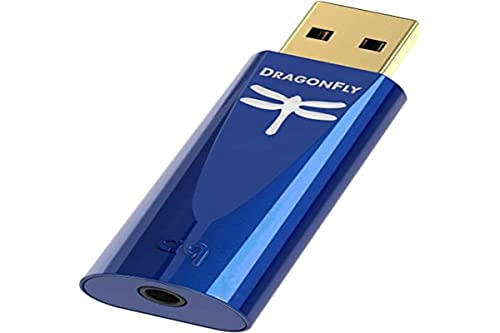
The AudioQuest DragonFly Cobalt is a premium USB DAC, preamp, and headphone amplifier that delivers high-resolution 24-bit/96kHz audio using the ESS ES9038Q2M chip. Its compact, durable design offers portable audiophile-grade sound enhancement compatible with iOS and Android devices via USB Type-A connection. Ideal for professionals and music lovers seeking a natural, immersive listening experience that elevates streaming and hi-res files alike.


| ASIN | B07T3HSD9Z |
| Best Sellers Rank | #61,221 in Industrial & Scientific ( See Top 100 in Industrial & Scientific ) #94 in Signal Converters |
| Brand | AudioQuest |
| Date First Available | June 13, 2019 |
| Global Trade Identification Number | 00092592098398 |
| Interface Type | USB |
| Is Discontinued By Manufacturer | No |
| Item Weight | 4.2 ounces |
| Item model number | DRAGONFLYCOB |
| Manufacturer | AudioQuest |
| Material | default_no_selection_value |
| Mounting Type | Usb |
| Number of Channels | 1 |
| Number of Pins | 4 |
| Product Dimensions | 6"L x 2"W |
| UPC | 092592098398 |
H**C
What’s Old is New Again.
What’s Old is New Again. All the reviews out there in the blogosphere/vlogosphere that tout the Dragonfly Cobalt and its ability to enhance your listening experience are overwhelmingly positive, so you can certainly look up any of those reviews from an expert’s point-of-view. But from an Average Guy’s view (like me), I can definitely hear the difference when using this device. I tend to listen to music in my car more so than any other place. And, for that, I usually stream music via my phone (Amazon Music HD) through the car’s AUX port. I have been doing this by simply taking a high quality 3.5mm audio stereo cable with two male heads and plugging one head into the AUX port and the other into the phone’s headphone jack. I own an LG G8 Thinq (the last flagship phone LG made in 2019 prior to exiting the smartphone segment; and this phone features that rare headphone 3.5mm headphone jack). Back then (and even today in late 2021), that in-phone DAC was generally regarded as the best by quite a margin (the phone’s max sample rate output is 24-bit / 48 KHz). Meanwhile, I own a 2014 BMW 3 Series and I have done lots to improve its musical components. I’ve upgraded my amplifier (Up7BMW) and all speakers/A-Pillar tweeters (FOCAL brand). And, I purchased an Equalizer app on the Google Play Store. Still, wanting higher fidelity, I then purchased the Dragonfly Cobalt DAC. Immediately, even with all of the upgrades that I’ve invested into my car’s sound system, I could hear a musical boost. And when I play my favorite songs, old and new, the enhanced fidelity peels back all of these musical elements that I had never really noticed before (a more pronounced drum beat; the sliding of the fingers along the neck of a guitar; the raw emotion of a singer’s voice; better defined strumming from a generally-hard-to-notice acoustical guitar, etc… - what audiophiles would describe as neutrality). I’ve read various articles stating that listening to your radio does sound muddy, which it does. You can (and I can) hear a difference when playing a CD. But, adding a good DAC takes it up one notch further, and you feel like you’re right there in the front row of a concert or at the recording studio itself. Now, your listening experience may differ because not everyone “hears” the same or perhaps as well. So, if seeing a number helps you to visualize improvement (although “seeing-is-believing” is different than “hearing-is-believing” in this case), here’s what I’m seeing with my LG G8 ThinQ. Without the Cobalt, the phone’s DAC can stream music at up to a sample rate of 24-bit / 48 khz, which is pretty good. I know this because with Amazon Music HD, you can press the music quality “badge” to bring up this kind of info. Now, with the Cobalt plugged in, the output increases to 24-bit / 96 khz. I’ve read that the max output, though, would be 24-bit / 192 khz, so let’s quickly talk about that pinnacle of sound quality for a second. The only way of possibly getting there from my readings (and I’m sure there are other ways that I haven’t discovered yet) is by subscribing to Tidal’s HiFi Plus Tier (which is their top tier) AND also downloading onto your phone an app called USB Audio Player Pro (also known as UAPP). Somehow – and I profess my ignorance on this as I’m not a sound engineer – this app plus the Dragonfly Cobalt plus its ability to play well with Tidal (the technical term sound engineers use is “unfolding”) allows access to that 24-bit / 192 khz musical experience Anyway, as you’ll already know, the Dragonfly has this helpful light that defines the quality of the music you’re hearing. Unfortunately though, unless you’re paying $240 a year for Tidal’s top hi-res tier, that light then also gives you a sense of FOMO. I pay $80 a year for Amazon Music HD (as I am already an Amazon Prime member). Now, for just $80 a year and despite not being able to reach that 24-bit / 192 Khz threshold, I can still attain musical nirvana. So, Amazon Music HD is totally worth it. And the Dragonfly Cobalt, IMHO, is totally worth it too. But, as with all things subjective (like hearing), your mileage may vary. Will this be worth it to you? In this case, there are four things that you’ll want to consider A) Can you hear the difference? Again, some of us have better hearing than others. If you can’t hear much the difference between music over the radio and music on a CD, then you probably won’t hear much of a sonic upgrade here. B) How many hours a day will you use this? That is, why purchase a pricey doodad if you’re only going to use it now and then? It’s kind of the same in-your-head argument when you think about joining a gym or subscribing to Disney+. C) Think about your music source. The idea of a DAC is to allow it to further “unwrap” the audio file to allow for that richer listening music (again, using that term “neutrality”). But, if you’re listening and happy with Spotify Free or any other lossy music tier (usually the free ones with possible ads), those files won’t have much to reveal anyway. The entry point at which to consider whether to invest in a DAC or not is when you are subscribing to a hi-res music service (i.e.: Quboz; Amazon Prime HD; Tidal Hi-Fi; etc…). D) Finally, think about the equipment that will be outputting your sound (e.g. earphones, earbuds, speaker systems). If they are of low quality, then a DAC probably won’t do much. And keep in mind that this DAC would also probably cost MORE than most run-of-the-mill earphones, earbuds, speakers). Oh, I do want to bring up one thing if you subscribe to Amazon Music HD. I saw on their FAQ page that Amazon Music HD is not always reliable in giving max audio quality if it doesn't sense a super-fast internet connection (or maybe if a lot of subscribers are trying to stream hi-res music at the same time – let’s call it ‘congestion’), so I’ve seen the light turn both powder blue (denoting a bitstream of 96 KHz) as well as cobalt blue (denoting a bitstream 48 KHz for the same song during different times of the day, but never below that number if you’ve set songs to play at HD or better quality). In fact, on its FAQ page, it does say, “For streaming, the current source file quality may change due to varying network conditions.” So, if you’re subscribing to Amazon Music HD and see this happening, it’s not the Cobalt malfunctioning. Finally … here’s a question you’ll want to ask yourself and a suggestion. Have you looked at the THX Onyx? It is also a very well-regarded DAC and probably a 2nd place runner-up if you read the various reviews out there about DACs (with the Cobalt being the consensus winner when talking about power/portability). However, at the time of this writing, the Onyx is currently on sale for $150 (down from about $200, and can be found here on Amazon or on Razer.com). Hmmm… $150 for the Onyx vs $330 for the Cobalt? That does make the Cobalt a tougher sell, actually. Again, the only real downer here is the price. $330 seems pricey, even though it’s a svelte yet powerful top-of-the-line product. If you are willing to consider really good dongle DACs with perhaps less of a svelte/compact form factor that cost just half as much, you may also want to check out these very worthy alternatives, also found here on Amazon. - THX Onyx, $150 - Helm Bolt DAC, $150 - Astell & Kern USB-C Dual DAC Cable, $100 In the end, the Dragonfly Cobalt is a 5-star product (although I’m not convinced that it’s $150 better than the THX). I’m very happy with this product. If you tend to listen to music quite a bit to complement your day, then investing in a really good DAC like the Dragonfly Cobalt makes for a solid purchase decision. Good luck on finding what suits you best.
C**N
Great little DAC
I will start this review by saying that I am not an audiophile. I very much enjoy good music and high quality audio, but I think that spending upwards of 1000 on a product that gives you an extra 5% performance is silly. So when I found the Dragonfly DAC in a variety of Audiophile magazines I was intrigued. The Audioquest DrogonFly DAC is a very interesting device. Much smaller and more portable than a standard DAC, but supposedly built with the same high fidelity bits you find on much larger tabletop DACs even including a headphone amp and an analog volume control. In my findings, this DAC performs admirably. The speakers I'm powering are a pair of Paradigm Shift A2s. In terms of build quality this thing is built like a tank. I have a large number of thumb drives (Although no waterproof/tough style drives) and this thing feels far more solid and robust than any of them. The included cap is nice, although like most thumb drive style caps it's quite easy to lose. The packaging that it comes in is very nice and indicates some serious thought was put into the product. It's shipped in wrapped in a velvet-esque carrying case, inside high density foam in a double cardboard box. I'm fairly certain you could drop this thing out of the delivery vehicle on a freeway and run it over a couple of times and it would still be in perfect condition. I've put it through the ringer with a large variety of music from pop streamed at 128kbps from Spotify, to classical 192/24 FLAC files. In all counts the DAC has impressed. I found it nice and neutral, just like a good audio device should be with no particular character other than very clean precise music. Coming from an onboard soundcard (albeit a decent one on a very high end motherboard) there was a world of difference. As cliche as it is, I heard details I'd never heard in a variety of tracks and everything I listened to seemed much more precise. I also enjoyed enhanced soundstage that was helpful in FPS games to more accurately locate the location of enemy footsteps. I have two complaints, both of them fairly minor. First and foremost, The connector worries me. I work as a Custom installer doing audio systems, and one thing I've learned in my work is never trust a mini-jack. The connectors are flaky at best and it's worrisome to see it included on a $200+ piece of equipment, especially one where it's likely to be plugged and unplugged on a regular basis. That being said, the build quality is fantastic, the thing feels like a tank, so although I'm wary of the connector, until I get evidence to the contrary I have no reason to believe it will be damaged. My second complaint is that with my initial unit, there was a fairly serious issue whereby the USB connector seemed to not make contact unless there was a significant amount of pressure on the DAC. I believe this was either an early production issue, or possibly just my sample, however it was extremely annoying. At best, my sound would cutout every time the pressure on the DAC was released, and at worst, it would make horrible popping noises that sounded as though they were desperately trying to blow my speakers. The constant pressure required on the USB ports on my computer worried me with regards to longevity. After some fairly substantial searching I was unable to find many similar complaints online, so I must assume that it was either limited to a very small initial run or people aren't speaking up. Given that this is the internet I'm forced to conclude the former. That all being said, after a couple weeks of searching to see if I could possibly resolve the issue through software, I contacted the company and they informed me it was a defective unit that should be RMA'd. I live in northern California near the Oregon border and after sending it out the new unit arrived within a bit less than a week. Given my difficulty tracking down similar issues with other purchasers, I believe this was a short term problem and I believe any currently selling models are well past having this issue. The replacement unit they sent me works perfectly and I've had 0 issues with it at all. Overall I have been very pleased with this DAC and I would highly recommend it to anyone looking for good, portable, reasonably priced sound.
J**S
Pour brancher mon vieux (2014) MacBook Pro a mes vieux (2012) Sennheiser HD-700 [j'ecoute musique classique pour la plupart, iTunes via Lossless ou France Musique, amazon musique, BBC Radio 3 ... ) - sans coussins, ce qui sonne mieux dans le cas de ces Sennheiser - le son du cobalt, details, separation, sound stage, est nettement mieux que celui du 'red' ce qui est quand meme normalement pas mal. J'utiliserai les deux en espérant que les problèmes dont parlent plusieurs critiques ci-dessous n'arrivera pas. Un petit Dragonfly qui se fissure : question de facture ? J'ai la libellule rouge depuis quelques années, mais il est connecte' presque toujours avec le Dragontail, queue du dragon, pour le protéger. Le cobalt parait assez costaud.... jusqu'a present. Attention : la qualité du son depend, manifestement, de ce qu'on écoute (surtout de la qualité' de l'enregistrement).
M**A
No descubriré nada a los audiofilos con mi comentario. Seguro que habrá Dac USB mejores o que gusten más. Que tengan mejor relación calidad precio seguramente ya no. Para los usuarios normales que como yo dudan de hasta que punto merece la pena la compra de uno de estos: Produce una mejora significativa en la calidad de sonido con respecto a tarjetas de sonido integradas y/o sencillas. Esa diferencia puede ser abismal si lo comparamos con portátiles básicos o tarjetas de sonido usb económicas... y se reduce si comparamos con dispositivos que incorporan chips de sonido de calidad, como pueden ser tarjetas de sonido dedicadas decentes, placas base de gama alta o algunos mac. Por la diferencia de sonido... puede no merecer la pena la compra. Dependerá de las exigencias de cada uno, de con que lo comparemos, a que lo vamos a conectar, tipo de archivos que vamos a escuchar y de nuestro presupuesto. Obviamente, es tontería comprarlo si no es para combinarlo con unos altavoces o auriculares decentes. La mejora en sonido ya se nota si escuchamos archivos mp3, pero se vuelve más interesante para escuchar archivos sin perdida y sonido de alta definición. Yo reconozco que podría vivir sin él pero me lo he quedado. De hecho, compré también un Fiio K1, que cuesta la mitad, pero que sí he devuelto para quedarme con el Dragonfly.
T**R
Ich habe mich nach eingehender Recherche für den Dragonfly RED entschieden und kann den Klangknirps sehr empfehlen. Was wollte ich erreichen? Ich habe mir in den Kopf gesetzt, Audiostreaming in CD- und HighRes-Qualität (in meinem Fall von Qobuz) in meine Anlage zu integrieren, ohne mir gleich eine mittlere Investition á la Linn oder Devialet ins Haus zu holen. Die Übertragung der Daten und das Abspielen können ja vorhandene Geräte übernehmen, Software dafür gibt's genügend. Aber wer schon mal Handy oder Laptop an die Anlage angeklemmt hat weiß: das macht nur begrenzt Spaß. In meinem Fall ist das ein Androide (OnePlus One) und ein Asus-Laptop. Also Ziel: die Lücke zwischen vorhandener Hardware und Anlage schließen, möglichst guter Klang zu möglichst kleinem Preis. Die Idee Ich habe ein bisschen Recherchiert und bin auf externe DACs gestoßen, die sich per USB als "Soundkarte" betreiben lassen. Die Auswahl ist erstaunlich groß, in verschiedenen Baugrößen und -formen mit unterschiedlichsten Anschlüssen, die von CD-Qualität bis DSD256 alles mögliche unterstützen. Nebenbei stellt sich heraus, dass längst nicht alle Geräte an allen Android-Handys funktionieren. Noch ein paar Tage Recherche später kristallisiert sich der Dragonfly RED als wirklich spannendes Produkt heraus: winzig klein, preisgünstig, breite Palette an unterstützen Formaten (bis 96kHz) und ziemlich gute Bewertungen. Die Lösung Also habe ich mir den Dragonfly RED bestellt, mit einem USB-OTG-Kabel für den Androiden dazu (die Variante in Y-Format für zusätzliche Stromversorgung, weil der Dragonfly nach Testberichten ziemlich viel Strom aus dem Handy zieht). Der Anschluss hat dann auch fast reibungslos geklappt. Am Laptop gab's überhaupt keine Probleme, ich habe nur ein paar Windows-Einstellungen nach Anleitung verändert, fertig. Am Handy war die Ausgabe am Anfang sehr leise; für diesen Fall lag aber eine Information bei, dass sich das Problem mit der App "USBPlayer PRO" beheben lässt, die ihre eigenen USB-Treiber mitbringt. Also nochmal 7€ investiert - und siehe da: works like a charm. Erst habe ich einen indirekten Weg genutzt, um die Cobuz-Daten auf den Stick zu bringen: BubbleUpPNP-->USBPlayer PRO (im UPnP Renderer-Modus)-->Dragonfly; und dann entdeckt, dass der USBPlayer PRO ja selber auch Cobuz unterstützt. Alles easy. Auf dem Laptop habe ich mir den Qobuz-Player installiert, der hat den DAC auch brav gefunden; allerdings hat der Player es nicht so gerne, wenn man den Stick zwischendrin mal aus- und wieder einstöpselt (dann will er einen Neustart). Klang Ich habe den Dragonfly mit verschiedenen Daten gefüttert: - 320kbit/s MP3 - 44.1kHz/16Bit FLAC - 2MBit/s DSD64 und ihn an der Anlage (Musical Fidelity Amp + Wilson Benesch Boxen) und mit Kopfhörer (AKG 701) getestet. Wie zu erwarten: MP3 ist keine Option. Dafür ist der Dragonfly zu gut. CD-Qualität stellt der Dragonfly ganz hervorragend dar - allerdings deckt er auch gnadenlos auf, welche Aufnahme was taugt und welche nicht. Ein "Schönspieler" ist er definitiv nicht. Gut so. Friedemanns "Saitensprünge" perlen nur so aus den Boxen. Was der CD-Player aus der zugehörigen Silberscheibe holt, ist da schon fast erbärmlich. Das kann der Dragonfly deutlich besser. So richtig los geht's aber erst, wenn die Libellen-LED von grün (CD-Qualität) auf Orange (88.2 kHz) oder blau (96kHz) umspringt. David Elias (The Vision of Her) sitzt wirklich mitten im Zimmer und zupft die Klampfe. Das geht schon in den Bereich, wo man gute Plattenspieler verorten würde. Normalerweise mag ich den analogen Klang sehr gern, aber mit DSD und dem Dragonfly... überleg ich mir das nochmal. Fazit Natürlich ist der Dragonfly kein Highend-Killer. Wer den Preis für Devialet & Co nicht scheut, bekommt sicher noch einen Tick mehr High-End für sein Geld. Aber audiophile Pragmatiker wie ich finden im Dragonfly einen preiswerten, sehr guten und sehr praktischen kleinen DAC, der fast alle Formate "frisst", überall mit hin geht und selbst für verwöhnte Ohren erstaunlich guten Klang liefert. Ob man danach nochmal eine Stufe "aufrüsten" will? Weiß nicht. Im Moment bin ich sehr zufrieden.
R**Y
Ancienne installation: ampli Rotel/CD Teac/enceinte Castle Trent II.... On remet un coup de jeune aux géniales Trent/Quobuz/Ampster BT II/ Nuc Intel sous Linux Mint et.... cette petite chose de Dragonfly. 600 euros, ramener en franc = 1/4 de mon ancienne installation. 1 Premier test sans le dac Wouha ... les enceintes respirent les aigus sont un peu trop présent mais humm de bonne basse précise et langoureuse. 2 Le Drangofly Plus de voie 😋... magique ... magnifique Tout est la, équilibre, finesse, espace , puissance. Mais le Drangofly reste en 16bit/44000. Pulse audio bloc ma sortie 😖 Avantage de Linux!!! on modifie les paramètres d’échantillonnage....Et le dac s’éclaire direct en violet. COOL 3 Le test ultime Purple Rain en 24bit/192. J’en pleure encore. Prince est ressuscité. 6 minutes de pure hypnose. 🙏 Alors les vieux, jeter votre vieux matos, et kiffer 😉le numérique. Et merci à Audioquest pour cette petite pépite.
C**S
I’m a satisfied owner of the dragonfly red and was a bit hesitant to buy the cobalt and not without a reason. Opinions online seem to be mixed. Some say that they can’t hear any difference. Some have done extensive technical analyses and trust their graphs more than their ears. Some prefer the red and insist that the cobalt brings a different flavour to music but isn’t necessarily an upgrade. Some disregard it without having heard it first simply due to the fact that it’s made by Audioquest – a company that sells cables for exorbitant prices, as well as other products of a questionable value, which may seem characteristic of a company that sells snake oil products. But I wanted to hear it for myself. If the sceptics were right, my plan was to return it. No loss. I kept it. On to the sound. Wow and meh. Okay, it absolutely sounds better and more fleshed-out than the red. They sound nothing alike. It certainly is tuned to sound differently. Whether you will appreciate the change, in my opinion, will not only depend on whether your headphones are resolving enough to reproduce the extra clarity and separation but also on how you listen to music. When listening to music while I’m answering e-mails or reading an online article, my ears don’t pick up much difference because my brain has to process so many other inputs. The story changes when I lay in my bed and enjoy music with my eyes closed. It’s then when this little thing takes me to another world. I pair the cobalt with Sennheiser HD650 and Beyerdynamic DT150. Both require quite a bit of juice to sound their best and the cobalt drives them sufficiently well, with a lot of headroom to spare. I rarely set the volume above 20 out of 100 for critical listening and usually it’s set on 8-12 on the windows volume slider for background listening. The first difference I noticed is the rolled-off treble and more impactful bass on the cobalt. It employs a minimum phase slow roll off digital filter that promises better impulse response and less artefacts that can muddy up the signal but the price to pay for this is a slight slope downwards in the upper treble region of the frequency response. For a casual listener, the red appears to be having more detail and sparkle in the treble region but the treble is a bit grainy upon more critical observation. The cobalt renders it fluidly and naturally. This quality will tame overly bright headphones and I noticed that the sibilance I experienced with the DT150 on some songs is no longer present. The cobalt goes louder without giving listening fatigue. The bass is another major improvement over the red. It is fuller and richer while being very tight (defined). Instruments and percussion instruments in particular carry more body and realism while on the red they were present and detailed but perhaps their identity was a bit lost in a mix. A drum hit now feels more authoritative. Lower registers of instruments can now be felt and feel less like a mere reproduction. The midrange is excellent on both but the cobalt enhances it by having better detail and separation of various elements in a mix. The red sounds a bit fuzzy in comparison as if the sound has been smeared a bit. Now, the difference isn’t big but it sort of puts you in the territory where artists come alive and stop sounding like a reproduction. One thing that stood out is the superior separation and imaging. Each instrument has a pin-sharp location on the soundstage. It was actually a jarring experience to listen to electronic music or tracks that contain many sound effects and elements that were baked in in audio software. Each element popped out vividly and some heavily edited tracks sounded fragmented. On multiple occasions my brain was imagining a cursor that was moving across the little squares that are placed on the timeline in audio software. Build quality. My unit seems to be rock solid and so far I haven’t experienced the issue of the board inside coming loose. I use my cobalt with the dragontail cable that was provided to minimise wear and tear on the USB plug and, by extension, on the board, as by doing so you don’t subject the board to forces when frequently plugging in and unplugging. I love it!
Trustpilot
4 days ago
2 months ago