🔌 Cut the cords, not the style—wireless lighting freedom at your fingertips!
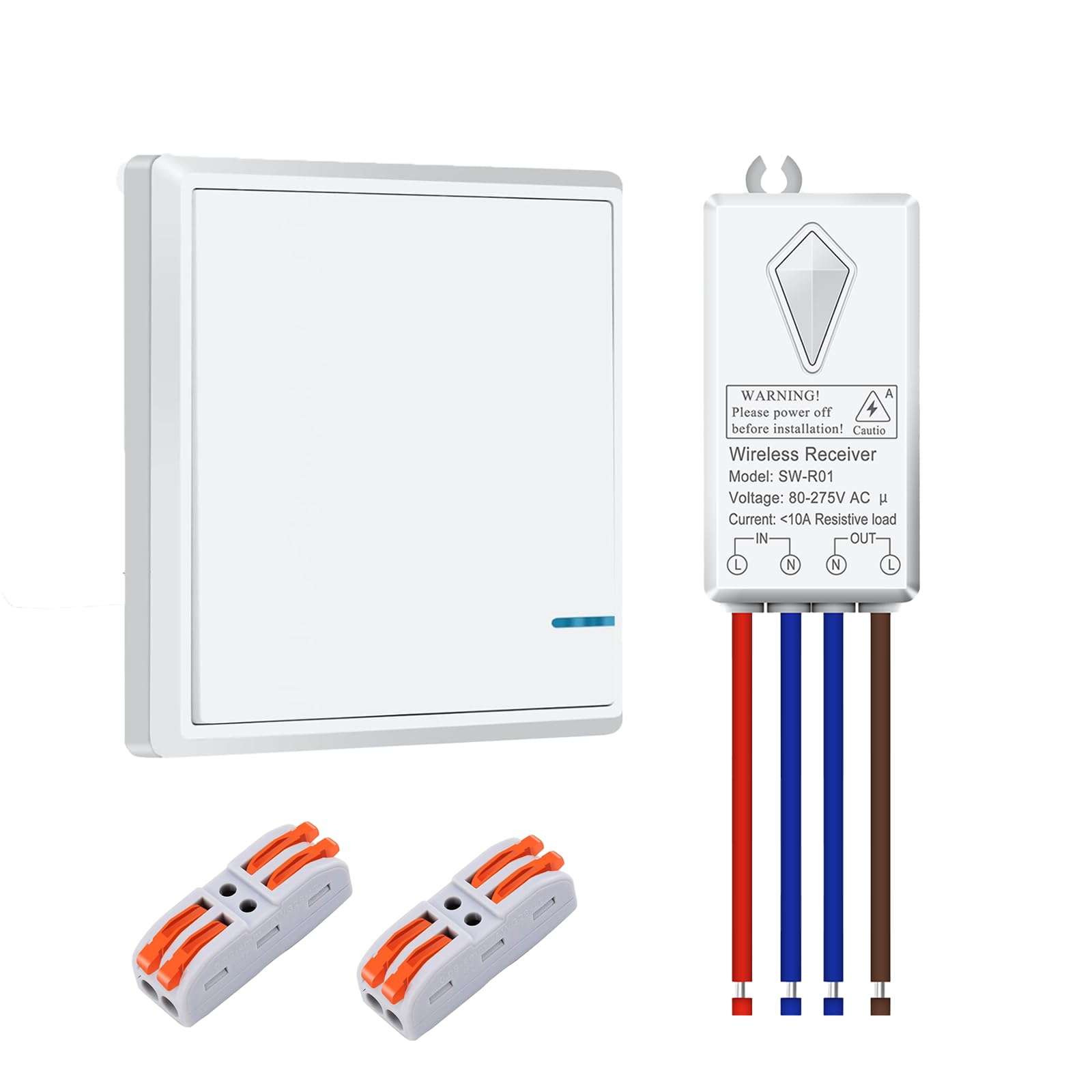
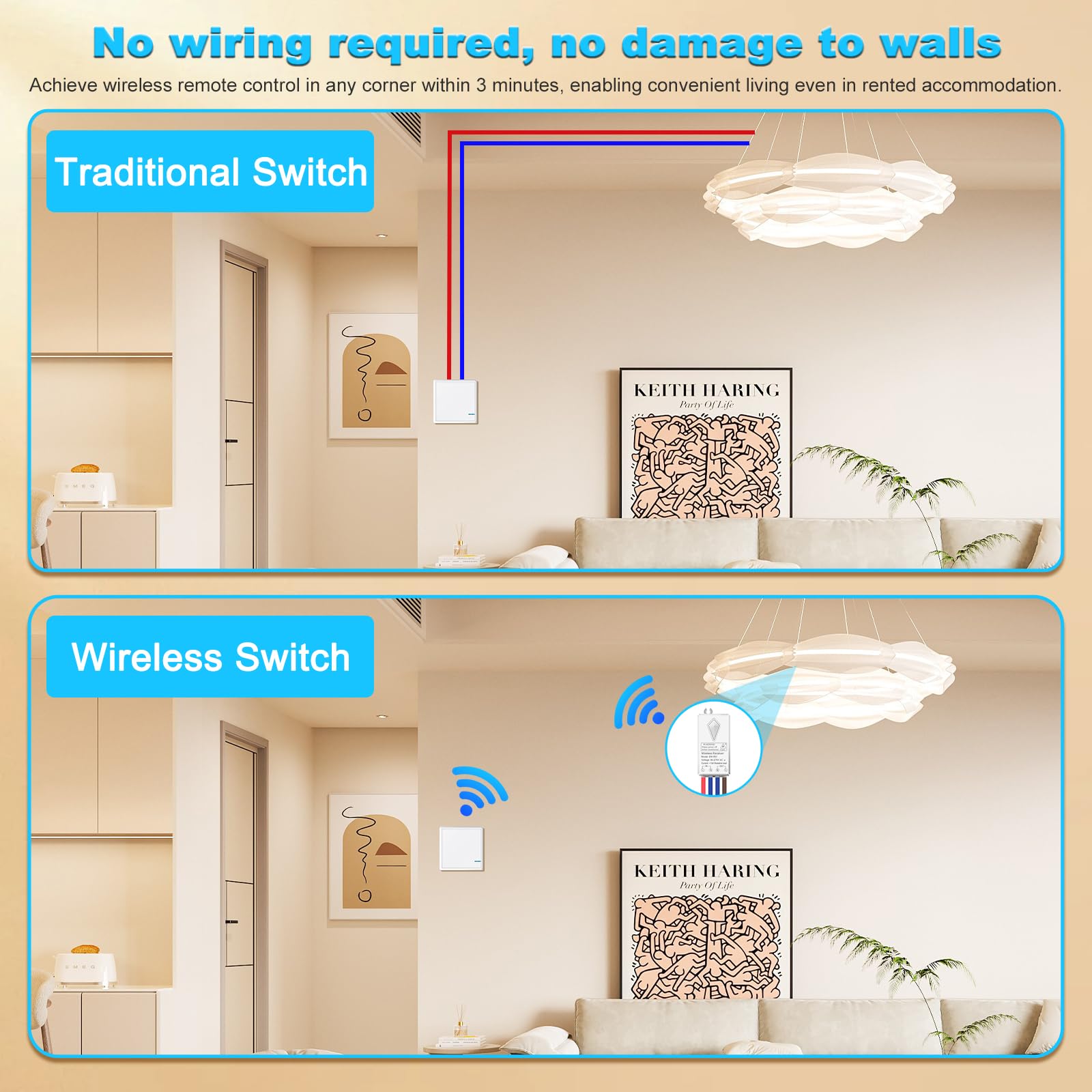
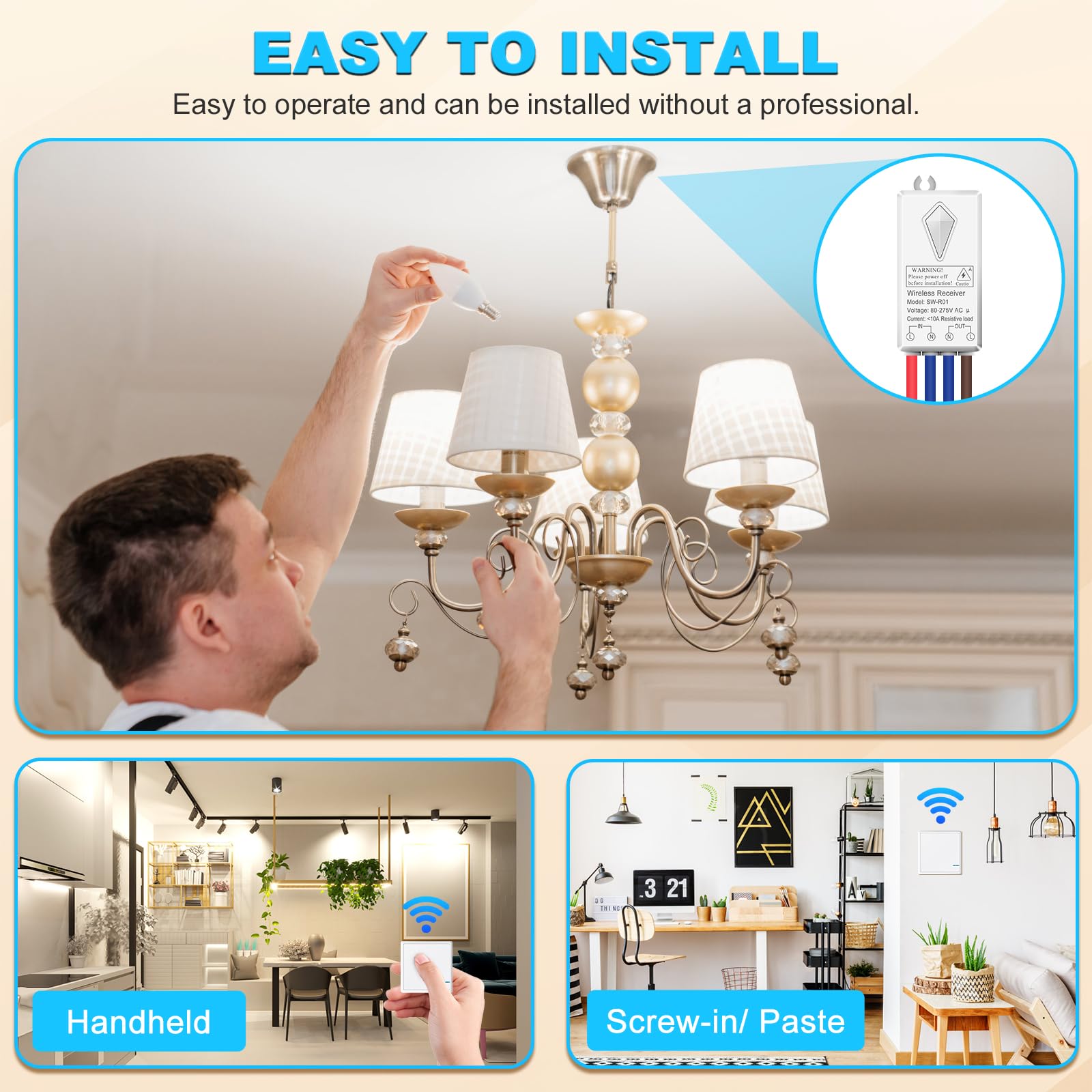
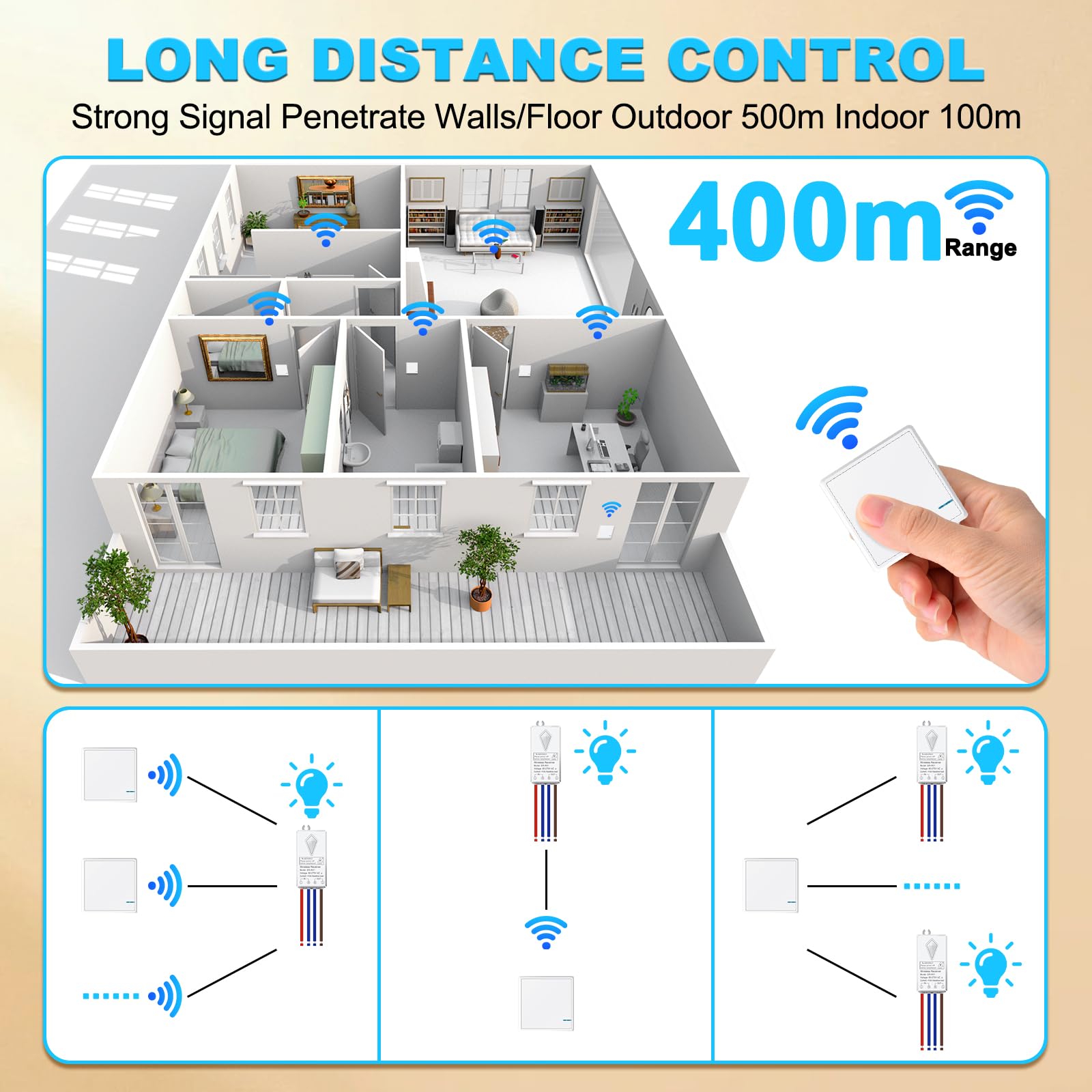
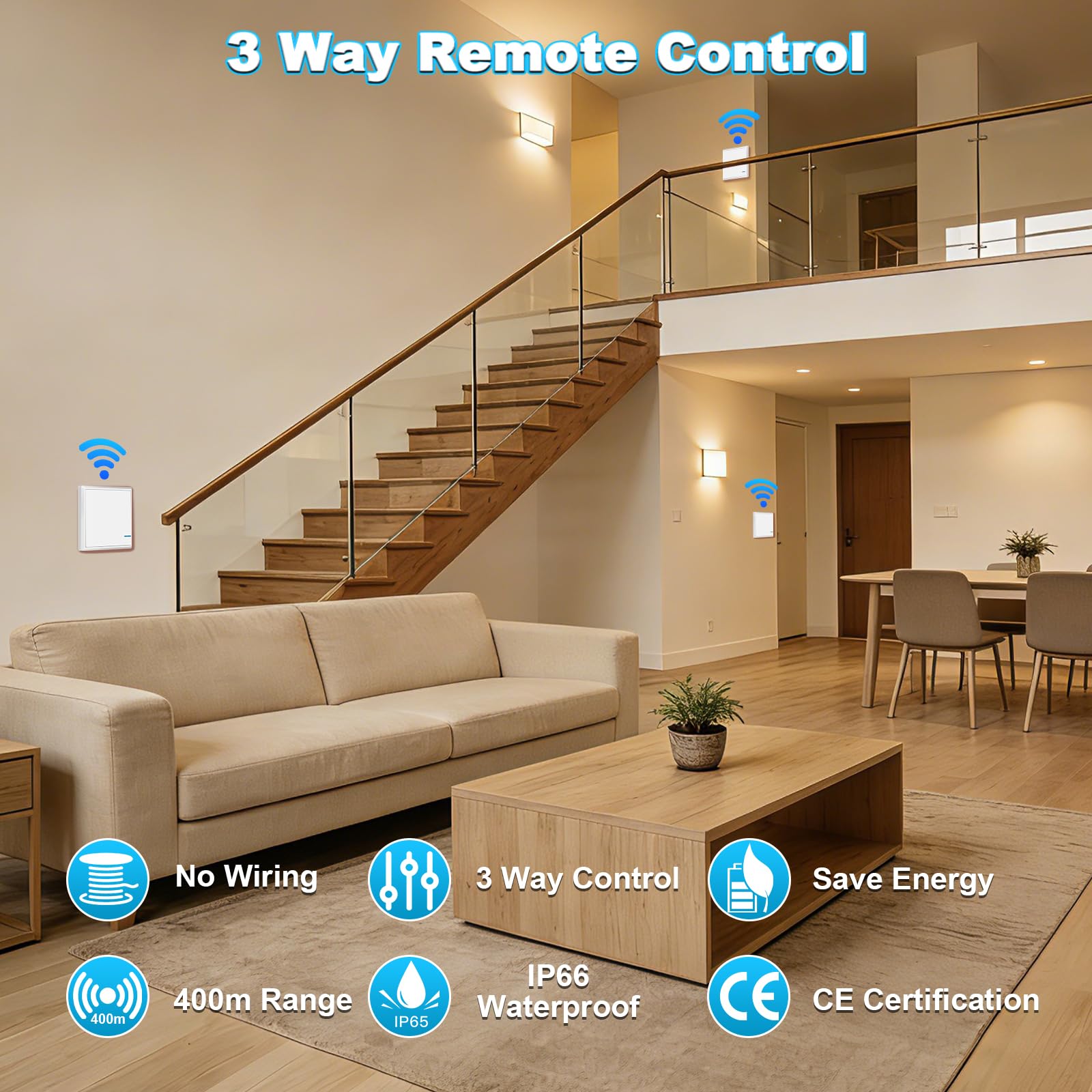
The NineLeaf Wireless Light Switch Kit offers a sleek, programmable remote switch solution compatible with most lighting systems. Featuring a compact receiver with hidden antenna, it supports up to 10A current and operates safely across 80-275V. With IP66 waterproof and V0 fireproof certifications, plus a silent button and LED indicator, it ensures reliable, long-range control (300ft indoor, 1300ft outdoor). Easy to install without drilling or rewiring, it’s perfect for modern homes and professional spaces seeking flexible, safe, and durable lighting control.


| ASIN | B07V5V5K3D |
| Actuator Type | Push Button |
| Best Sellers Rank | 35,412 in DIY & Tools ( See Top 100 in DIY & Tools ) 401 in Switches & Dimmers |
| Brand | NineLeaf |
| Circuit Type | 2-way |
| Connectivity Protocol | RF |
| Connector Type | Screw |
| Connector type | Screw |
| Contact Material | Brass, copper |
| Contact Type | Normally Open |
| Contact type | Normally Open |
| Control Method | Remote |
| Controller Type | Remote Control |
| Country Of Origin | China |
| Current Rating | 10 Amps |
| Current rating | 10 Amps |
| Customer Reviews | 4.4 out of 5 stars 436 Reviews |
| International Protection Rating | IP66 |
| Item Dimensions | 10.5 x 10.7 x 5 centimetres |
| Item height | 5 centimetres |
| Manufacturer | NineLeaf |
| Material | Polycarbonate |
| Model Number | SW-SK1 SW-R01 |
| Mounting Type | Ceiling Mount |
| Number of Items | 1 |
| Number of Positions | 2 |
| Operating Voltage | 220 Volts |
| Operating voltage | 220 Volts |
| Operation Mode | Manual |
| Operation mode | Manual |
| Specification Met | RoHS |
| Switch Type | Remote |
| Terminal | Screw |
| Unit Count | 1.0 count |
| Upper Temperature Rating | 149 Degrees Fahrenheit |
N**E
Easy to connect. Nice slim switch with readily available replacement battery
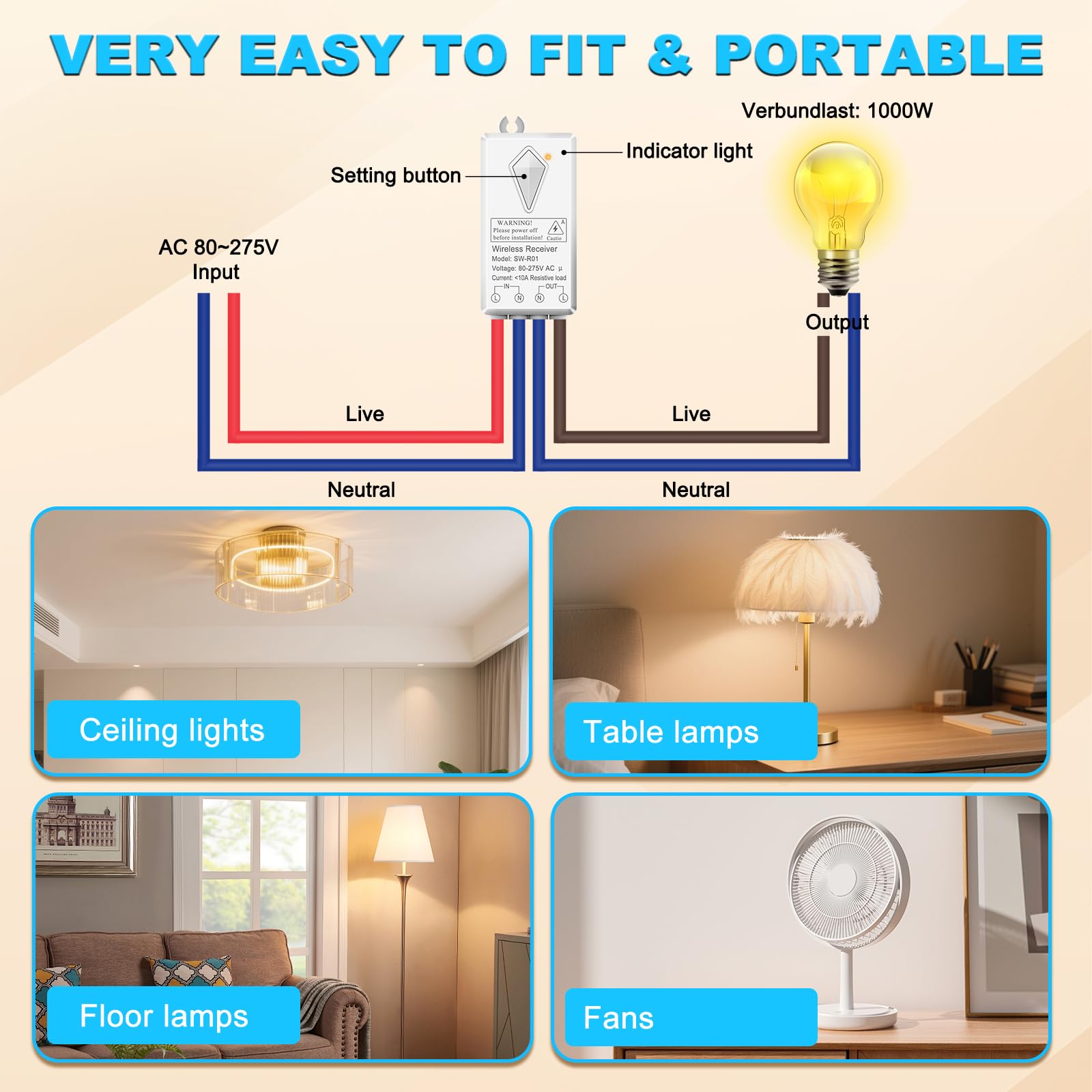
The wireless unit comes pre wired with 4 short wires each about 5cm long One pair for live in and a pair for live out. The neutrals are wired together. All of these wires are just screwed in place and easily removed and replaced There is no earth connection. Clearly labelled so easy to wire up. The unit has a button to press which allows pairing with the switch. You can pair several units with a single switch which is handy if you purchased several of them but only wanted a single switch to activate all the units. The switch itself is very slim (about 5mm) so would not look big/bulky wherever it was installed. The switch pulls off to allow the base to be screwed to a wall and is clipped back on. Didn’t check the battery, but it looked like a CR2025 or similar. So easily obtained from any supermarket shop. You can hear the click of the relay in the unit when operating.
B**S
Work very well
I've installed a couple of sets of these now, and I'm very impressed with them. Ideal for situations where you need a handy light switch, but don't want to be chasing out plaster or drilling holes to run cable to them. The switches themselves will go anywhere that you have a few spare centimetres. Sticky fixing pads are included. The "fitting" part only involves the little receiver unit, which is the size of a couple of sugar cubes. You will need a modicum of electrical knowledge to do this. I'd say that if you understand the concept of "Live" and Neutral" and have the knowledge and ability of how to wire a three-pin plug safely, you should have no problems. But I can't stress enough: IF YOU DON'T HAVE THE KNOWLEDGE, CALL AN ELECTRICIAN. If you're looking to replace or augment an existing light switch in a normal UK domestic setting, then in all likelihood you will NOT be able to simply wire the receiver into the existing switch box at the wall. This is because the receiver requires both an un-switched Live (brown/red) and Neutral (blue) connection (to draw the power it needs to operate). The Neutral wire will not normally present at the switch. AFTER TURNING OFF THE CIRCUIT AT THE CONSUMER BOX, you'll need to expose the ceiling rose, and fit the receiver there. You should familiarise yourself with how the wiring in a typical ceiling rose is configured, and relate that to your own, before diving in. There are clear instructions included with the unit, and a couple of very handy little 'tool-free' junction blocks. Pairing the receiver with the switch(es) is very simple.
B**.
Good product, a little fiddly to install but works great when its up and running.
I used these to control 3 wall lights which each had their own switch on the light itself (not wired into the main light switch). It does say in the manual that its not recommended to have one switch control multiple lights (the expected setup is single switch to single light or multiple switches to a single light). But in my case I've not had any issues controlling all three lights from a single switch. My guess is that if one of the lights doesn't receive the signal it would become out of sync with the other lights. The switches are a single push button (press at bottom of switch) and it toggles the lights on and off, so the on/off signal is likely the same regardless of current state. So I would avoid using it to control lights where the signal might be spotty (distance or wall obstructions). You can probably reset them all by turning off the breakers, but would be hassle if they regularly got out of sync. The receiver modules are small enough to fit inside the base of the wall light (2ish cm deep), but just remember to pair the module to the switch before fitting the light to the wall.
D**F
Useful and effective - hope they prove durable
As a concept these are very effective, you can put light switches wherever you want them without having to channel cables (the time saving probably justifies the cost). Installation was reasonably easy but not without issues. Pairing is done by pressing and holding a button on the receiver. What is not clear is that there is an indicator light under the surface of the receiver (not immediately obvious) that does the required flashing to tell you when it is in pairing mode. The instructions are not that clear. For instance the instructions indicate that pairing a second switch to an already paired switch & receiver can be done by pairing the two switches; in practice I found I had to pair the second switch to the receiver, which fortunately was accessible once I got the ladder out again. (If I had buried the receiver in the ceiling void, that would have been a major pain.) The switches can be stuck with adhesive strips to any flat wall (i.e. not to textured wall coverings). It is more effective to screw them either to the wall with a couple of rawl-plugs or to the electrical box to which the conventional switches had previously been fixed - the fixing holes in the back of the switches are the right distance apart. There are three cautions if screwing the switches to existing electrical boxes. 1) To get at the screw holes you have to remove the surround using a screw driver and tiny slots on the bottom edge, then pop the actual switch pads off their mountings. With two (or three way) switches you worry a bit that you might snap the switch pads 2) Once you have removed the switch pads the actual back - which you secure to the wall is much thinner than the conventional switch being replaced; therefore you have to either shorten the screws or take care not to trap the wires in the wall. 3) Because the switch back is quite thin it is quite possible to warp it if the wall is not absolutely flat or the cables in the wall box are not lying flat. If it is even slightly warped the switch action might not work. However once fitted it all all seems to work well; I have replaced my hall light with a couple of wireless switches and the landing and corridor lights with three switches. There is a possible safety issue for those who may later maintain the system without any awareness. Normally when working on a lighting unit some people just ensure that they are "switched off". With these systems of course you have a permanently live feed into the receiver unit which will in most cases be in the lighting unit or close to the ceiling rose. Before working on them you need to remove the distribution fuse (as you should when installing). My only concerns are how long the switch batteries last and how durable they will prove to be. (Some alternative systems don't require cell batteries as they are powered by the switching action.) Given that these systems are proprietary, I might be sensible to buy some spare units. It would be a pity to have to replace the entire system because I cannot replace a single part should it fail.
R**R
Brilliant little bit of kit
I had a big building job a few years ago (an upstairs added to a bungalow) and to save money I just had the basic electric fit of one ceiling rose per room. Later, having then used those to fit ceiling fans for the increasing hot weather I was left with a dilemma. No access to the downstairs ceiling void for extra lighting, and because off the shape of roof trusses upstairs, virtually no way of fitting a two-way switch in the bedroom by the bedside. These things are great. Downstairs in my lounge I now have a combination of four floor and table lamps plugged into sockets, each with their own receiver unit (which I fitted inline inside some neat little plastic junction boxes from a DIY place) and all turned on/off together from a single Nineleaf radio wall switch. Upstairs in the bedroom I fitted downlighters in the ceiling (receiver in the loft space), controlled by a switch on the wall just outside on the landing for entry, and a 2nd switch by the bed. I was also able to wire into circuit a cabled wall switch just inside the room, with a dimmer. So the dimmer tends to get left on my favourite level, with on/off duties performed by the two Nineleaf switches. All of that lot came in for the same price as just one MK switch and receiver. Kits come ready frequency-matched, and when I added extra receivers for downstairs, they were easy to pair with existing switch. I'm very happy.
S**.
Very intuitive to connect
On the whole very pleased with my purchase. The switches look good and modern. You push them in to send a signal to the receiver. They don't toggle up and down like a normal light switch. The instructions aren't too clear, but it was very simple and intuitive to connect it. I live in the UK and fortunately my electrics were compatible where I needed to wire it in. This would not work in a switch with only a switch live - it needs both a live and neutral into the existing switch and back out. I can confirm you can wall mount these into a standard UK back box and managed to fit the receiver behind. To screw it into an existing back box you need to pop the switch part off the front - I did this by putting my screwdriver in through the screw holes from the back. When putting the face plate back on, it did get stuck in though - other reviews say this can happen if you have fixed the back part too tightly to the backbox. I eventually managed to sort it but was a bit tricky to get the plate off. It would be the same if the battery needed changing too in the light switch.
A**R
Wireless switching
I am using these throughout the property. So far no issues.
A**R
Good
Easy install, quality product
Trustpilot
1 month ago
1 week ago