
DOWNLOAD THE APP


Customer Services
Copyright © 2025 Desertcart Holdings Limited
DOWNLOAD THE APP
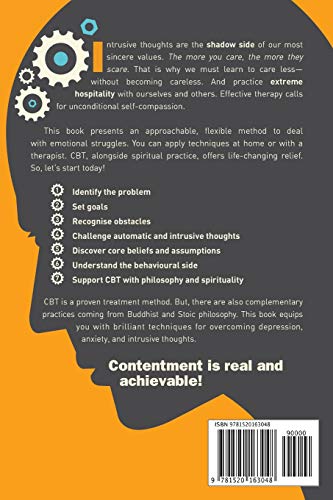
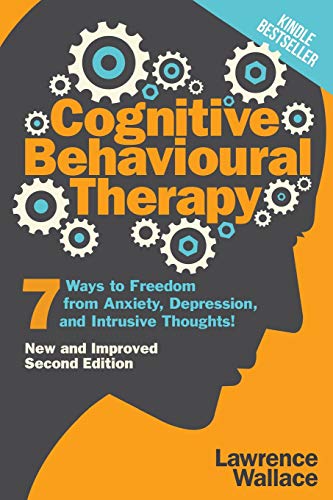


desertcart.com: Cognitive Behavioural Therapy: 7 Ways to Freedom from Anxiety, Depression, and Intrusive Thoughts (Happiness is a trainable, attainable skill!): 9781520163048: Wallace, Lawrence: Books Review: Informative and Well-Written Book About Cognitive Behavioral Therapy - As someone who has struggled with anxiety and depression throughout my life, I found this book to be very well-written and informative. This book gives practical advice and tips that you can implement in your life right away. It covers the basics of cognitive behavioral therapy as a whole while giving tips on different types of thinking patterns and techniques in CBT that are useful for the type of thought pattern you are dealing with. Another aspect I found useful is that the author uses a holistic approach encompassing mind, body, and spirit in approaching CBT and changing your thought patterns. The author incorporates beliefs from several major religions, including Christianity, Islam, Hinduism, Buddhism, and Taoism. He uses wisdom found in all of these religions as it relates to changing your thought patterns and mindset to be more positive and less depressed or anxious. The author gives techniques and exercises that take a holistic approach. For example, for the body, he gives tips like exercising and eating a well-balanced diet. For the mind, he gives mental exercises to do to help you change negative beliefs and thoughts into positive ones and monitor your thought processes through journaling. For the spiritual, he gives techniques for meditating and being part of a spiritual community. Another great feature of the book is that the worksheets and exercises are included in the appendices in the back of the book. You do not have to buy a separate workbook as is the case with some other CBT or self-help books. Everything you need is right there in the book, and at the price of $2.99, it is well worth purchasing. Overall, I gained a lot from this book, and I would recommend it to others who are recovering from anxiety, depression, OCD, or even PTSD. Review: A Clearly Explained Step by Step Process - Cognitive Behavioral Therapy is an introduction to the central premise of cognitive behavior therapy (one of the most widely used approached by mental health care practitioners today) to help those in a therapy program or who are looking for a way to address some of their issues using this approach. It is written in an easy to understand manner and gives a step by step process on how to select a problem to work on and how to improve upon the problem in question. The book is written in a seven step approach to addressing problems dealing with anxiety and depression in particular. Also included in this work are several worksheets to assist in working through the steps that are given in the book. The approach of cognitive behavioral therapy is very clearly explained in this book and was perhaps one of the best and easiest to understand volumes I have read about this therapy approach and how it works. The steps it gives are overall easy to follow and clear, becoming a little harder to follow on your own, at least to me, starting at step four when I personally feel a therapist would be more qualified to assist a person than the book. The author discussed something new to me and that is the use of religion in cognitive behavioral therapy which was interesting to read about. I also enjoyed reading about different ways to enhance mood that the author discussed in one of the last steps of the process. There were a lot of ways discussed in regards to troubleshooting the ability to successfully handle a problem using CBT and to improve mood in general. Although it didn’t distract from the message overall, this book could stand a good editing. There were a lot of places were a word or two were missing that made the understanding hard to get at first. I also felt a little bogged down in steps four and six and had to look at what the step was to understand why the research for the chapter was there and how it could be used to solve the problem that was generated in the first chapter. The worksheets were also a little rough and could be a little better developed. Overall this book was very clear and self explanatory with regards to how to deal with a problem using the CBT approach. The information provided is supported with articles in professional journals and very current. This would be a very helpful book for anyone trying to understand CBT, for a patient in a therapy program, or for someone who is looking for a self help book to deal with a problem. The worksheets are really helpful to guide the reader through the steps provided in the book even if they are a little rough looking. The suggestions and research provided are creative and interesting and will be helpful for the reader trying to improve an area of their life.
| Best Sellers Rank | #1,497,969 in Books ( See Top 100 in Books ) #28 in Medical Occupational & Organizational Psychology #67 in Medical Procedure #140 in Unitarian Universalism (Books) |
| Customer Reviews | 4.4 4.4 out of 5 stars (1,227) |
| Dimensions | 6 x 0.3 x 9 inches |
| ISBN-10 | 1520163045 |
| ISBN-13 | 978-1520163048 |
| Item Weight | 6.6 ounces |
| Language | English |
| Part of series | Happiness is a trainable, attainable skill! |
| Print length | 119 pages |
| Publication date | December 16, 2016 |
| Publisher | Independently published |
M**Y
Informative and Well-Written Book About Cognitive Behavioral Therapy
As someone who has struggled with anxiety and depression throughout my life, I found this book to be very well-written and informative. This book gives practical advice and tips that you can implement in your life right away. It covers the basics of cognitive behavioral therapy as a whole while giving tips on different types of thinking patterns and techniques in CBT that are useful for the type of thought pattern you are dealing with. Another aspect I found useful is that the author uses a holistic approach encompassing mind, body, and spirit in approaching CBT and changing your thought patterns. The author incorporates beliefs from several major religions, including Christianity, Islam, Hinduism, Buddhism, and Taoism. He uses wisdom found in all of these religions as it relates to changing your thought patterns and mindset to be more positive and less depressed or anxious. The author gives techniques and exercises that take a holistic approach. For example, for the body, he gives tips like exercising and eating a well-balanced diet. For the mind, he gives mental exercises to do to help you change negative beliefs and thoughts into positive ones and monitor your thought processes through journaling. For the spiritual, he gives techniques for meditating and being part of a spiritual community. Another great feature of the book is that the worksheets and exercises are included in the appendices in the back of the book. You do not have to buy a separate workbook as is the case with some other CBT or self-help books. Everything you need is right there in the book, and at the price of $2.99, it is well worth purchasing. Overall, I gained a lot from this book, and I would recommend it to others who are recovering from anxiety, depression, OCD, or even PTSD.
A**N
A Clearly Explained Step by Step Process
Cognitive Behavioral Therapy is an introduction to the central premise of cognitive behavior therapy (one of the most widely used approached by mental health care practitioners today) to help those in a therapy program or who are looking for a way to address some of their issues using this approach. It is written in an easy to understand manner and gives a step by step process on how to select a problem to work on and how to improve upon the problem in question. The book is written in a seven step approach to addressing problems dealing with anxiety and depression in particular. Also included in this work are several worksheets to assist in working through the steps that are given in the book. The approach of cognitive behavioral therapy is very clearly explained in this book and was perhaps one of the best and easiest to understand volumes I have read about this therapy approach and how it works. The steps it gives are overall easy to follow and clear, becoming a little harder to follow on your own, at least to me, starting at step four when I personally feel a therapist would be more qualified to assist a person than the book. The author discussed something new to me and that is the use of religion in cognitive behavioral therapy which was interesting to read about. I also enjoyed reading about different ways to enhance mood that the author discussed in one of the last steps of the process. There were a lot of ways discussed in regards to troubleshooting the ability to successfully handle a problem using CBT and to improve mood in general. Although it didn’t distract from the message overall, this book could stand a good editing. There were a lot of places were a word or two were missing that made the understanding hard to get at first. I also felt a little bogged down in steps four and six and had to look at what the step was to understand why the research for the chapter was there and how it could be used to solve the problem that was generated in the first chapter. The worksheets were also a little rough and could be a little better developed. Overall this book was very clear and self explanatory with regards to how to deal with a problem using the CBT approach. The information provided is supported with articles in professional journals and very current. This would be a very helpful book for anyone trying to understand CBT, for a patient in a therapy program, or for someone who is looking for a self help book to deal with a problem. The worksheets are really helpful to guide the reader through the steps provided in the book even if they are a little rough looking. The suggestions and research provided are creative and interesting and will be helpful for the reader trying to improve an area of their life.
L**T
Excellent beginner book for those wanting to learn more about CBT.
This book introduces you to the powerful tool that is cognitive behavioral therapy, and it's a great beginner book for those who are exploring cognitive behavioral therapy as an option for better psychological well-being and help in improving their lives. I myself have never pursued CBT before but have definitely considered it, and this book helped me understand it better and what it can do for me. I loved that it talked about thought journaling, because journaling is something I have done for a long time and I have kept a journal since the second grade. This book takes journaling as a self-development tool a step further. This book is right up my alley, psychology was my favorite class in school and the author of this is very psychology smart! He understands that focusing on the good and the positive goes a long way in life (something that people need to be reminded of sometimes), and he brings a healthy understanding of sin in religion, as well as many other interesting topics about religion and spirituality, and how they correlate to CBT. It goes over many strategies that I think will be very helpful to me. As someone who struggles with things like avoidance and other maladaptive behaviors and coping mechanisms, this has given me so much to think about and to apply in my life to improve on. One of my favorite things talked about in this book is his example of graded exposure - building up to the things you fear or dislike in order to overcome your fears - I have never gone to a therapist before, but I think that this is a common practice among therapists and psychologists. I love books like this that help explain the inner workings of the mind! Not only has it helped me learn new things about our thinking patterns and mental processes that I never knew about previously as well as different therapy techniques you can try, but it's a very simple read while also going in depth and into enough detail about everything it discusses with you. A++!
L**N
Really pleased with this book. It’s been a good few years that I am interested in CBT and I already had some knowledge of it, but I find that this book is very helpful as it is so much better structured and, naturally, clear, than the scattered bits that I have picked up over the years. It certainly helped me to build a more structured understanding of CBT and both premise and philosophy of it. It helps to shake that unfair narrative of CBT being ‘behaviour control’ and helps to understand how and why it actually works. And, most importantly, who’s responsible for it working. Also, very helpful practical tool as the steps of CBT are nicely broken down which allows you to take the steps on your own without, hopefully, having to splash out on a therapist, when you may not have to. The realisation that you can do it yourself (and that you’re totally normal as very many people struggle with similar things, just to different degree) makes you feel somewhat empowered. Rekindled my old passion for CBT 😊
M**A
Very well writen. Short and very complete. Talks Also about the most important philosophycal and religious movements and their messages and benefits. Very inspiring and helpful. definetely worth reading, you Will fortunate that you came across this little and wise book
B**R
Au total pas beaucoup de conseils autres que des grands principes generaux. Je n ai rien contre le stoicisme mais 2-3 citations ca et la ne m ont pas appris grand chose.
D**S
This book is a good start. It shows a few possible ways to start changing your lifestyle. I ended up with stoicism but it’s all up to you.
P**E
This book is thorough and easy to read and understand. It offers simple solutions and an execution plan. Was beneficial
Trustpilot
2 weeks ago
2 weeks ago