
DOWNLOAD THE APP


Customer Services
Copyright © 2025 Desertcart Holdings Limited
DOWNLOAD THE APP
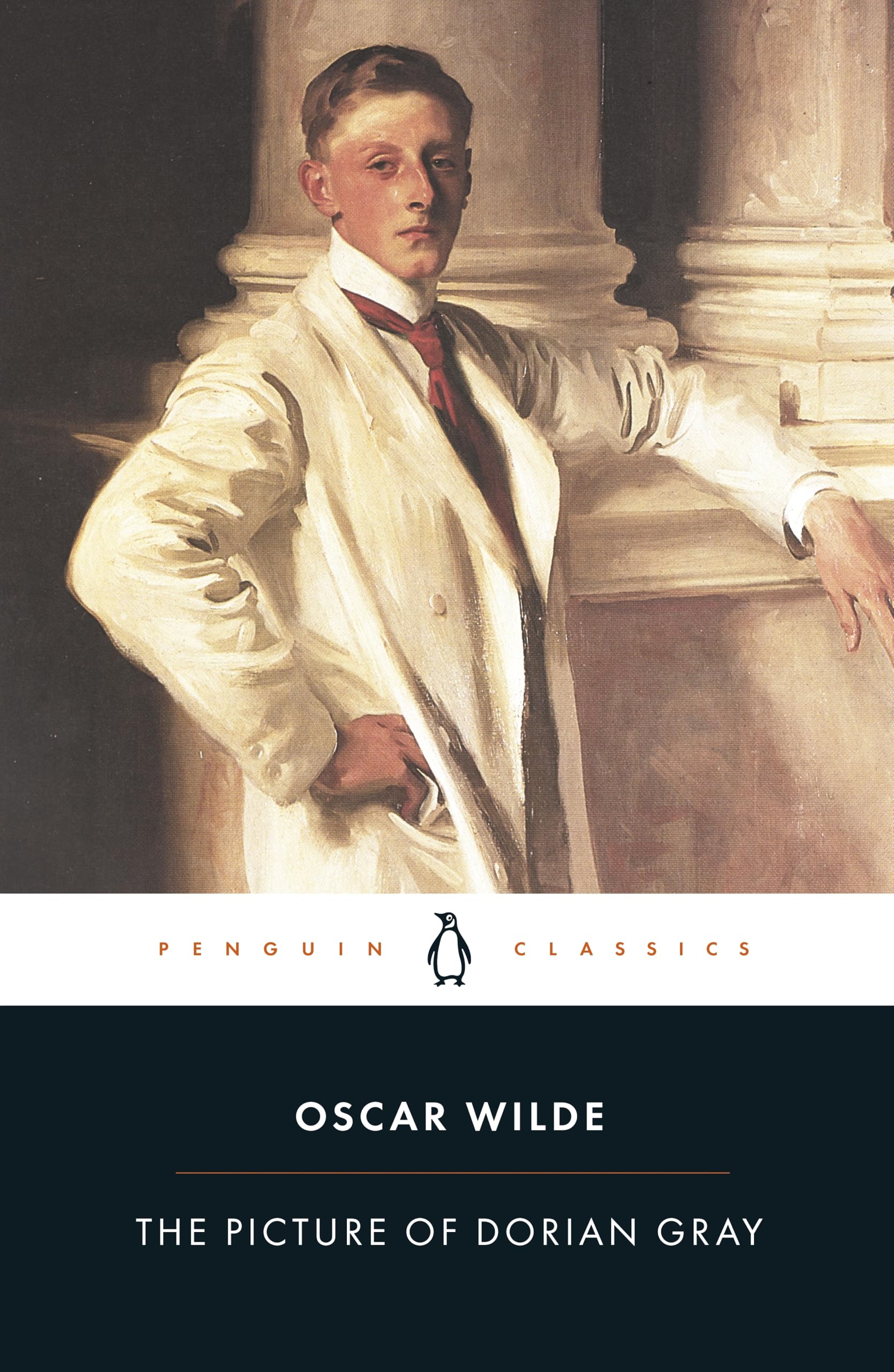
desertcart.com: The Picture of Dorian Gray: 9780141439570: Wilde, Oscar, Mighall, Robert, Mighall, Robert, Mighall, Robert: Books Review: A picture can be two pictures - Amazing story, a true classic, and one of the ongoing (following Jeckell/Hyde) descriptions of the co-existence of purity and perversity within the same individual at the same time. This particular book is attractive and well made. Forced to read it in middle school, had no clue. Now as a senior it makes perfect sense, a short but compelling read. Review: Sensational. - Excellent. As dripping with sensation and as worth reading now as it surely must have been one hundred and thirty years ago. I think the really captivating thing about reading a classic like this one—and reading the writing of someone who has clearly pondered at length the human condition—is just how relevant the ideas end up being to one’s modern mind state. It's sort of a "the more things change the more they stay the same" kind of thing. The same kind of thoughts capture out attention. The same kind of feelings seize our bodies. We seek the beautiful; the tragic; the transcendent. And so you're able to read a book written in 1890 and feel that, at least in part, it was written just for you.


| Best Sellers Rank | #1,553 in Books ( See Top 100 in Books ) #24 in Contemporary Literature & Fiction #106 in Classic Literature & Fiction #285 in Literary Fiction (Books) |
| Customer Reviews | 4.5 4.5 out of 5 stars (3,930) |
| Dimensions | 5.06 x 0.71 x 7.75 inches |
| Edition | Revised |
| ISBN-10 | 0141439572 |
| ISBN-13 | 978-0141439570 |
| Item Weight | 8 ounces |
| Language | English |
| Print length | 304 pages |
| Publication date | February 4, 2003 |
| Publisher | Penguin Classics |
| Reading age | 18 years and up |
A**R
A picture can be two pictures
Amazing story, a true classic, and one of the ongoing (following Jeckell/Hyde) descriptions of the co-existence of purity and perversity within the same individual at the same time. This particular book is attractive and well made. Forced to read it in middle school, had no clue. Now as a senior it makes perfect sense, a short but compelling read.
B**D
Sensational.
Excellent. As dripping with sensation and as worth reading now as it surely must have been one hundred and thirty years ago. I think the really captivating thing about reading a classic like this one—and reading the writing of someone who has clearly pondered at length the human condition—is just how relevant the ideas end up being to one’s modern mind state. It's sort of a "the more things change the more they stay the same" kind of thing. The same kind of thoughts capture out attention. The same kind of feelings seize our bodies. We seek the beautiful; the tragic; the transcendent. And so you're able to read a book written in 1890 and feel that, at least in part, it was written just for you.
D**J
Richer and more complex than I expected
“It is the face of my soul.” (p163) Presumably, Oscar Wilde would object strongly to any attempt to find meaning in this novel. He states firmly in the preface that art is about beauty, not meaning. He repeats this assertion often in the novel itself. The briefest look at his biography confirms that he held this view. To paraphrase another thought he expresses several times in the novel itself, I don’t think he really believes this. I certainly do not. This wasn’t quite the parable of decadence that I anticipated; nor was it simply a sordid celebration of youth, beauty, and pleasure. The story was richer and more complex than any of that. The title character proved more thoughtful and vulnerable than I expected, and one other primary character astonished me. I enjoyed the sharp, cynical, sarcastic dialog poking fun at the ways in which people are often shallow and predictable. The ending was deeply troubling – and that’s a compliment. I relished Wilde’s deep insights into the human condition, even (perhaps especially) where I see the world differently. In short, while nobody will confuse “Dorian Gray” with “Pollyana”, it was for me an immensely satisfying read.
A**R
Picture of Dorian Grey.
Very inytreging story. Read it in college 30 years ago. Rereading it was equally good.
M**O
A lovely book ❤️
A lovely book! Oscar Wilde is a very talented writer and I love his books! In my opinion, his writing style is very understandable and this is one of my favorite books I’ve read. The ending was perfect. I would recommend this book to anyone who wants to read a classic!
B**.
Descriptive prose ad nauseum
I am an English major who had heard of this book but knew little of the story line. I bought the book hoping for a supernatural, Edgar Allan Poe-like tale but instead got a dose of heavily descriptive prose. I am envious of Oscar Wilde's insightfulness into the human consciousness and his wordsmithing, but I found reading the book tedious. I skipped paragraphs and may have missed something. To me the book was a short morality tale wrapped in ad nauseum 1890ish London societal descriptions. This is college-level, not really entertaining, reading.
L**R
brilliant!
Oscar Wilde wasn’t writing just about beauty, or morality, or art. He was writing about consequences. That charm, wit, and elegance mean nothing when they are hollowed out by cruelty and selfishness. That you can lock a portrait in a room, but you cannot lock away your soul. The Picture of Dorian Gray is decadent and brutal. Haunting and oddly tender. It doesn’t preach, but it punishes. And it asks, with every page: What are you really becoming when no one is watching?
C**L
AMAZINF
LORD HENRY IS SO COOL AND HOT
N**A
The book is in perfect condition and the cover is beautiful. Very impressive with it considering how cheap it was, highly recommend the content as well!
A**A
TEMPTATION! From the moment the unfortunate Eve bit into the forbidden apple, to these current days, when we lesser-mortals are lured by the overpriced electronic 'Apples', Temptation has been shadowing us humans. A baneful prelude to our vices, very few amongst us can claim to have overcome temptation. While we are protected by various constraints that help us overcome our temptations - social stigma, fear of gods, fear of law and so on - once in a while even the most saintly amongst us 'blinks' and lets temptation cause mayhem. The corrupt lot never lets any constraints stop them, while the Holiest few never let temptations taint them. It is the ordinary beings in the middle that suffer the most at the hands of Temptation. Pulled by the pleasures on one side, barred from it by principles and penal codes on the other, this middle lot bears the onslaught of temptation grudgingly. How often have we craved to indulge in the vices to which we are lead – sometimes by becoming invisible, some other times by transforming ourselves into someone or something else! We have all wanted to relish the baser pleasures of life, without letting their effects stain our souls. This book then is the expression of such a desire on the part of Oscar Wilde. Yes. This is a book on temptation, manipulation and eventual corruption. Except that here the protagonist - or, is it the antagonist?! - is never tainted by his sins. The corruption of his soul is borne by his portrait instead of its carnal sheath. Dorian Gray is a charming young boy knocking on the doors of adulthood. Lord Henry is a wealthy, hedonistic idler whose only purpose in life is to seek pleasure and pleasurable sensations. Basil Hallward is a simple, righteous persona and a talented painter that 'adores' Dorian. A chance meeting of all these three - on the fateful day Basil puts his heart and soul into painting Dorian – designs the rest of the tale. Lord Henry 'teaches' innocent Dorian to take pride in his own physical beauty, which is temporary and urges him to indulge in the pleasures suited to his age. Manipulated by Henry thus, Dorian becomes aware of the flush of youth in his veins, as truthfully depicted by Basil in the portrait, but is also dejected at the prospect of growing old and haggard someday. In one god-forsaken moment, he loudly wishes that he would even exchange his soul to stay as beautiful as he is and let that wonderful portrait feel the passage of Time. Starting with the simple pleasures of life, Dorian once commits a serious injustice to the girl he falls in love with. Back at home, Dorian finds his portrait slightly changed to show signs of cruelty amidst all that boyish charm. Dorian realizes that his ‘wish’ has come true and all the sins of his soul will leave their stains on the portrait instead of his face or his youth. But just as he repents and tries to make amends for his grave error, Lord Henry, a mentor as vile as there could ever be, sets him again on the wicked ways. Tempted also by a book lent by Henry, and untouched by the effects of his ‘sins’, Dorian falls deep into the pits of life, all the while watching the portrait turn from ugly to ghastly with each ‘sin’ that he commits. Was Dorian able to mend his ways? Did he ever get to redeem his soul? This book is a tale that answers those questions. Oscar Wilde wrote this novel – his only one – while English society was reeling at the height of Victorian morality. Being a homosexual himself, Wilde was condemned, ostracized and left to die in penurious exile. It is quite an irony then that a book which brought its author all the infamy must be one of the best-selling books of our ‘modern’ times. Going through the book, I couldn’t help wondering whether Dorian Gray and Lord Henry were Wilde’s alter-egos. Remember, we writers have a knack of lending a part of our soul to the characters that we lovingly create. The sense of importance lent to the statements of Henry, the weakness with which the other characters contradict him and finally end up agreeing with him, the hold that this hedonistic idler wields on the whole tale are all evidence enough that Henry, more than even Gray, is the alter-ego of Oscar Wilde. Basil, the moral person that he is, sounds feebly like the other part of Wilde that regrets his ‘mistakes’. Not just for the author, but for us the readers too, this book holds a mirror. While stating the moral decadence that Dorian falls into, Wilde does not elaborate on the kind of sins Dorian takes pleasure committing. In that sense this feels akin to Robert Louis Stevenson’s ‘The Strange Case of Dr.Jekyll and Mr.Hyde’. There also, the protagonist leads a double life, being a noble gentleman as Dr.Jekyll while lurking in the darkness as Mr.Hyde sating his gore hungers. But what kind of immoral activities that Mr.Hyde indulges in is never articulated, leaving it to our guess. Here also, Dorian’s one sin is to indulge in narcotics, but the rest of the decadences are left unsaid, like a blank canvas on which we can paint the nature of those sins. Both these books are similar in letting us decide on the level of moral corruption, thus bringing out the inner demons that we have all been hiding inside us too. The literary fluency of Wilde, his ability to portray in words the England of the late 19th century - from flora to the banal - do all make it a pleasure to read this book. But, I couldn’t help noticing his egoistic English self, like most of the British of his days, which made him think of India as the land of snake-charmers – at least in the fleeting reference. A psychological thriller that stemmed from the unreliable ‘art’ of physiognomy, this book is a forbidden apple that we must all bite into!
K**L
Penguin Classics baskılarını gerçekten çok kaliteli ve koleksiyon yapmaya değer buluyorum. İthal kitapları, döviz kurlarının bu kadar yüksek olduğu bir dönemde dijital yerine fiziksel bir kütüphanede derlemek isteyenlerin işi gerçekten çok zorken Amazon Türkiye'nin fırsatlarını yakalamak iyi geliyor. Kitabın kendisine gelecek olursak genel anlamda sıkılmadan iki günde bitirdim. Sürükleyici ve ilgi uyandırıcıydı. İngiliz edebiyatına dair favori kitaplarımdan birisi oldu bile. Teşekkürler Amazon Türkiye!
J**E
Great read in its original publishing
S**D
Lectura imprescindible si te gusta la literatura universal y quieres mejorar tu inglés!
Trustpilot
2 weeks ago
1 month ago