We remain fully operational. Our teams are working around the clock to ensure your deliveries continue safely.

DOWNLOAD THE APP


Customer Services
Copyright © 2025 Desertcart Holdings Limited
DOWNLOAD THE APP
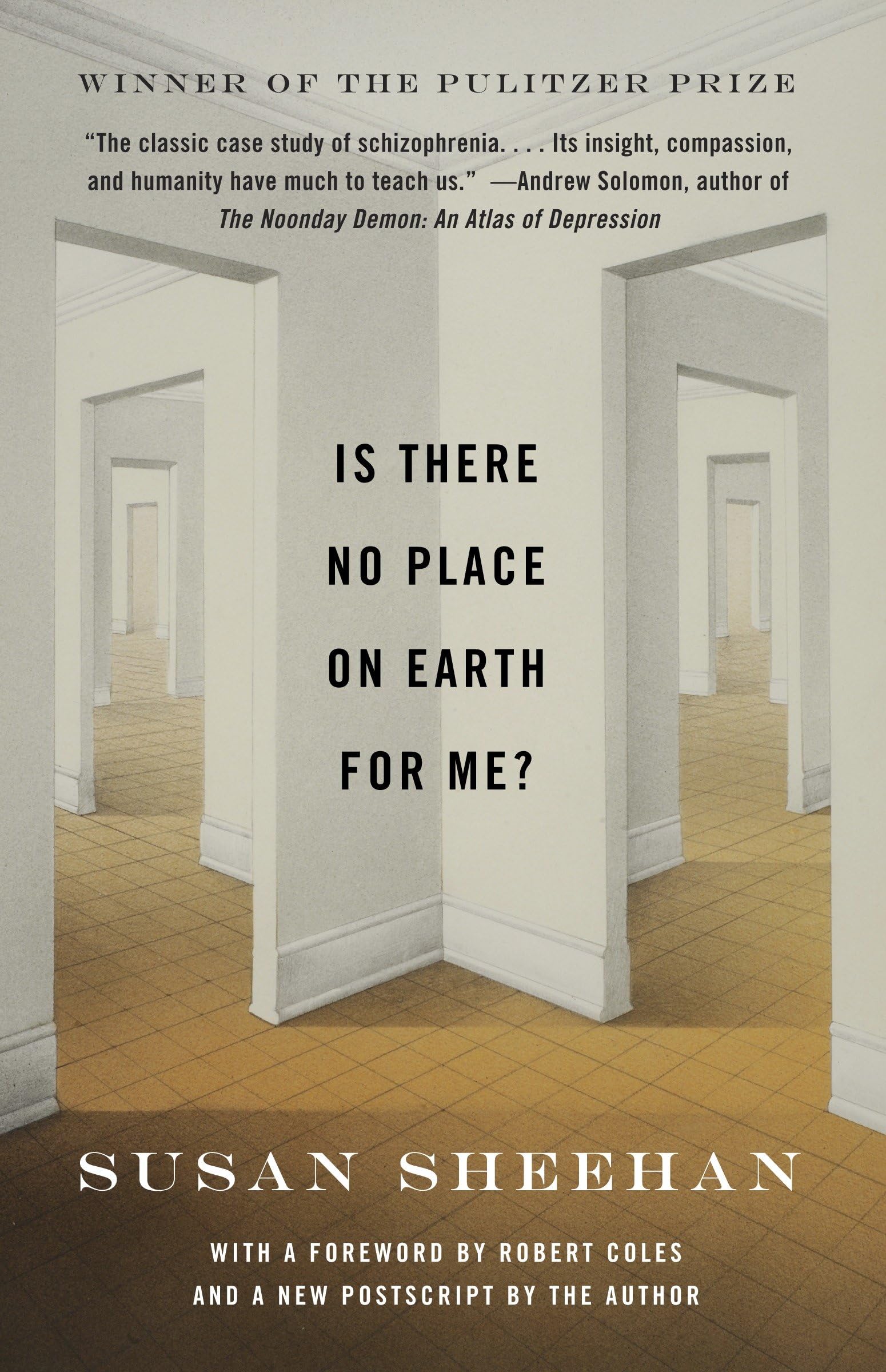
Is There No Place on Earth for Me? [Sheehan, Susan, Coles, Robert] on desertcart.com. *FREE* shipping on qualifying offers. Is There No Place on Earth for Me? Review: Interesting and eye opening - I found many interesting things in the book, but what jumped out at me most was to see that some of Sylvia's doctors and her parents couldn't separate out the person from the illness. Sylvia's violent, disrespectful behavior wasn't the illness, but I think the illness made it more difficult for her to control herself; many times it appeared she could control certain things if she WANTED to - she appears driven not just by the illness, but by her emotions, as well. Having had a child with issues, I had to understand the "issues", but still discipline him and provide necessary boundaries so he knew how far he could go with me and the rest of humanity despite his challenges. I think it's helped him to grow into a person who can actually live in the world with all of it's rules and standards. If I hadn't disciplined him and had merely medicated him and with sentimentality let him away with everything, he'd be locked up today, somewhere. Review: Heartbreaking but often hilarious - I've read and re-read Is There No Place on Earth for Me at least a dozen times since it's publication. I bought a new copy when I couldn't find the first (after Hurricane Katrina it was easy to forget what was lost and what was saved). I have 2 paperback copies and now the Kindle edition, which was updated by Sheehan and makes it worth the purchase. Sylvia Frumkin is one of the most irritating, obnoxious, imperious, often (unintentionally) hysterically funny, and tragic people I've ever read about, including fictional characters. The book covers some of her childhood and troubled adolescence, when her first major psychotic break occurrs, and describes the endless cycle of hospitalizations which consumed the rest of her life. Through her journey we learn a great deal about the history of treatment of mental illness in the USA (especially New York state, where she lived and died) and witness her futile struggles to accomplish goals most adults take for granted, like having an apartment and a job. Some reviewers stated they learned more than they wanted to know about mental health treatment and facilities and Sheehan is very thorough in that regard, but she provides a broader understanding without losing focus on one individual's fate. It's painfully clear Frumkin, and too many others, might have had a slightly easier time if the numerous psychiatrists who treated her had paid attention to her history, especially with medications. The background information shows how the landscape changed over the years, as more foreign, non-English speaking psychiatrists took jobs in state institutions because U.S. doctors could find better-paying jobs elsewhere. This is crucial to understanding some of the problems Frumkin and others deal with as they are misdiagnosed or simply unable to communicate adequately with someone who doesn't speak/understand English sufficiently and lacks cultural familiarity with a foreign country (i.e., the USA). One doctor diagnoses her as manic-depressive because he doesn't realize her wild references to Mary Poppins and other fictional and real people demonstrate typical schizophrenic symptoms. What's more disturbing is the almost whimsical way her medications are prescribed and administered. Under-dosing occurs constantly, failing to note which drugs and doses are more beneficial, and inexplicably lowering doses or switching to another drug without compensating for the dosing requirements/adjustments between the two contribute to Sylvia's problems instead of helping them. Sheehan's unflinching portrayal of the Frumkin family shows the agony of living with a deeply troubled child/sibling while demonstrating how much her parents contribute to her problems. Mrs. Frumkin is too self-involved to realize the antagonistic remarks she frequently makes to Sylvia only make the situation worse and Mr. Frumkin lives in a constant state of denial that blinds him to the fact his daughter will never be "well." Joyce, Sylvia's older sister, is the most sympathetic family member but she cannot curb her parents' behavior any more than she can control Sylvia, and she has her own demons to battle (almost entirely due to Mr. Frumkin's treatment of her from childhood as an overachiever, never quite meeting his expectations). There is so much more I haven't covered I could write 20 pages and still not be done. It is often funny as hell due to Sylvia's absurd behavior (at times obviously meant to draw others' attention) and particularly non-stop monologues that juxtapose references to her real life, hallucinatory thoughts, and a cast of characters from Paul McCartney to Captain Kangaroo to the "best friend" she ever had, Camilla Costello, "Abbott and Costello's daughter." Is There No Place on Earth for Me is exceptional and one of the most moving and enlightening books about schizophrenia, and mental illness treatment, I've ever read. That I frequently laugh out loud probably explains why I can re-read it again and again.
| Best Sellers Rank | #3,095 in Books ( See Top 100 in Books ) #1 in Schizophrenia (Books) #4 in Medical Professional Biographies #10 in Popular Psychology Pathologies |
| Customer Reviews | 4.4 4.4 out of 5 stars (132) |
| Dimensions | 5.19 x 0.87 x 8 inches |
| Edition | 2nd |
| ISBN-10 | 0804169187 |
| ISBN-13 | 978-0804169189 |
| Item Weight | 10.2 ounces |
| Language | English |
| Print length | 384 pages |
| Publication date | January 14, 2014 |
| Publisher | Knopf Doubleday Publishing Group |
A**D
Interesting and eye opening
I found many interesting things in the book, but what jumped out at me most was to see that some of Sylvia's doctors and her parents couldn't separate out the person from the illness. Sylvia's violent, disrespectful behavior wasn't the illness, but I think the illness made it more difficult for her to control herself; many times it appeared she could control certain things if she WANTED to - she appears driven not just by the illness, but by her emotions, as well. Having had a child with issues, I had to understand the "issues", but still discipline him and provide necessary boundaries so he knew how far he could go with me and the rest of humanity despite his challenges. I think it's helped him to grow into a person who can actually live in the world with all of it's rules and standards. If I hadn't disciplined him and had merely medicated him and with sentimentality let him away with everything, he'd be locked up today, somewhere.
S**A
Heartbreaking but often hilarious
I've read and re-read Is There No Place on Earth for Me at least a dozen times since it's publication. I bought a new copy when I couldn't find the first (after Hurricane Katrina it was easy to forget what was lost and what was saved). I have 2 paperback copies and now the Kindle edition, which was updated by Sheehan and makes it worth the purchase. Sylvia Frumkin is one of the most irritating, obnoxious, imperious, often (unintentionally) hysterically funny, and tragic people I've ever read about, including fictional characters. The book covers some of her childhood and troubled adolescence, when her first major psychotic break occurrs, and describes the endless cycle of hospitalizations which consumed the rest of her life. Through her journey we learn a great deal about the history of treatment of mental illness in the USA (especially New York state, where she lived and died) and witness her futile struggles to accomplish goals most adults take for granted, like having an apartment and a job. Some reviewers stated they learned more than they wanted to know about mental health treatment and facilities and Sheehan is very thorough in that regard, but she provides a broader understanding without losing focus on one individual's fate. It's painfully clear Frumkin, and too many others, might have had a slightly easier time if the numerous psychiatrists who treated her had paid attention to her history, especially with medications. The background information shows how the landscape changed over the years, as more foreign, non-English speaking psychiatrists took jobs in state institutions because U.S. doctors could find better-paying jobs elsewhere. This is crucial to understanding some of the problems Frumkin and others deal with as they are misdiagnosed or simply unable to communicate adequately with someone who doesn't speak/understand English sufficiently and lacks cultural familiarity with a foreign country (i.e., the USA). One doctor diagnoses her as manic-depressive because he doesn't realize her wild references to Mary Poppins and other fictional and real people demonstrate typical schizophrenic symptoms. What's more disturbing is the almost whimsical way her medications are prescribed and administered. Under-dosing occurs constantly, failing to note which drugs and doses are more beneficial, and inexplicably lowering doses or switching to another drug without compensating for the dosing requirements/adjustments between the two contribute to Sylvia's problems instead of helping them. Sheehan's unflinching portrayal of the Frumkin family shows the agony of living with a deeply troubled child/sibling while demonstrating how much her parents contribute to her problems. Mrs. Frumkin is too self-involved to realize the antagonistic remarks she frequently makes to Sylvia only make the situation worse and Mr. Frumkin lives in a constant state of denial that blinds him to the fact his daughter will never be "well." Joyce, Sylvia's older sister, is the most sympathetic family member but she cannot curb her parents' behavior any more than she can control Sylvia, and she has her own demons to battle (almost entirely due to Mr. Frumkin's treatment of her from childhood as an overachiever, never quite meeting his expectations). There is so much more I haven't covered I could write 20 pages and still not be done. It is often funny as hell due to Sylvia's absurd behavior (at times obviously meant to draw others' attention) and particularly non-stop monologues that juxtapose references to her real life, hallucinatory thoughts, and a cast of characters from Paul McCartney to Captain Kangaroo to the "best friend" she ever had, Camilla Costello, "Abbott and Costello's daughter." Is There No Place on Earth for Me is exceptional and one of the most moving and enlightening books about schizophrenia, and mental illness treatment, I've ever read. That I frequently laugh out loud probably explains why I can re-read it again and again.
K**M
Good story great price
Required for college. Good story great price.
K**N
Awesome book!
I bought this book as I needed it for one of my college classes and I seriously can't put it down. It's a true story of a woman living with schizophrenia and where she fits in, in society. Something that's challenging for her and many others. It brings great insight and understanding which is probably why our professor put this book in our syllabus!! But it's a great read even if you don't have to have it for a college class!
T**R
Too Much Underlining!
The book itself is in good shape, it just had a lot more underlining in it (and all in red) than most used books I've ordered in the past. But it's the information in the book that's great, so I'll overlook the underlining an appreciate the intrinsic value of the written words.
S**R
Closest Description of What the Psychotic Experience Really Is
Susan Sheehan's work is not only brilliant, it is a masterpiece. I have read Is There No Place countless times as I have cooped with my own SMI and survived the rejection that accompanies discrimination against us. I never thought I would survive because I was very, very like Sylvia Frumpkin in so many ways that it frightens me to day. It is impossible to describe what the experience of craziness is because so many physical and mental factors are involved. Sheehan captures the irrational, conflicting, and colliding energies of the acute phases of some forms of major mental illness so well that I can imagine how my family felt. Sheehan is a true witness. We need more of them. Without banging any drums she lays bare the devastating role that money, never rationally invested, goes in decreasing the chances ouir chances of recovery. Tolerating us is not an accurate indicator of the resolution of the stigma against us.
C**A
This book should be required reading for all psychiatry residents ...
This book should be required reading for all psychiatry residents. I am a professor of psychiatry and read this on the recommendation of my own therapist. I just bought four copies to give to the residents I supervise. This is the story of a patient with schizophrenia, who has spent her life in and out of a state hospital in New York. The author brings the patient, Sylvia, to vibrant life by actually living with her in the hospital. The Pulitzer was well deserved.
M**A
An amazing, life-changing book
I've just re-read this book ... I had first read it when it was published in a series of articles in The New Yorker about thirty years ago ... and it is just as compelling and haunting to me. Through the brilliance of its author, Susan Sheehan, Sylvia Frumkin is brought to life in all her agonized glory. You will never forget her.
J**N
AWESOME
M**R
I love this book too. So wonderful she is so feisty and belligerent. I love it. Does wonders for the female schizophrenia ladies amongst us. Girl power! I love her! 🥰
M**R
I love this book. It's the best account of someone living with schizophrenia that I have ever read. And I have read tons of them and I should know as I have schizophrenia too.
L**.
This an interesting book as a case study of Schizophrenia, but I have to admit it seems somewhat 'dated' since it's original publishing in 'New Yorker' Magazine as a column, in the 8o's. It is highly original as a work and allows the reader to enter the world of the patient/out-patient Sylvia Frumkin. A lady who suffered greatly with the illness. This book is a challenge to read and in my opinion, there are better books on the subject: "The Day The Voices Stopped", 'Recovered Not Cured', 'The Quiet Room' and 'The Centre Cannot Hold' are all far more interesting and more updated versions of similar subject-matter. 'Is There No Place on Earth For Me' however is well-written and at times deeply fascinating but realistically it seems that hopefully the treatment of Schizophrenia has advanced massively since this book was written.
Trustpilot
1 week ago
2 weeks ago