Desert Online General Trading LLC
Dubai, United Arab Emirates
Desert Online General Trading LLC
Dubai, United Arab Emirates


🖨️ Print Your Imagination with Precision!
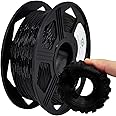
The YOYI YOYI 3D Printer Filament is a high-quality 95A TPU filament designed for professional-grade 3D printing. With a diameter of 1.75mm and a dimensional accuracy of +/- 0.03 mm, this filament ensures exceptional print quality and flexibility. Each 0.8KG spool comes vacuum-sealed to maintain its integrity, preventing nozzle jams and ensuring smooth extrusion. Ideal for indoor printing, it offers strong adhesion and low shrinkage, making it a reliable choice for all your 3D printing needs.


| Manufacturer | YOYI YOYI |
| Brand | YOYI YOYI |
| Item Weight | 1.76 pounds |
| Product Dimensions | 7.87 x 7.87 x 2.76 inches |
| Item model number | YOYI-TPU |
| Is Discontinued By Manufacturer | No |
| Color | Black |
| Material Type | Thermoplastic Polyurethane |
| Manufacturer Part Number | Flexible TPU001-Black |
T**3
First Time Using TPU
Still a beginner, and so far it's been working on my A1 granted I've only tried simpler designs. Initially I had stringing with the generic profile, but after lowering the temperature, fan, and speed the prints are much better. TPU reminds me of polyurethane bushings, it's plasticky but has some flex and a hint of grip. Overall I think it's worth a try or at least 95A to start with.
C**.
Nice TPU
Prints really well on an A1
B**N
Flexible but not very elastic (stretchy); prints nicely once you learn the tricks...
This filament is flexible, but not super-elastic--which is sort of weird, because the filament itself IS stretchy--but the printed objects typically aren't...for example if you printed a drinking straw in "vase mode", the result would act much like a real drinking straw---you could easily collapse it with your fingers or bend it in half, but just like a plastic straw, you couldn't stretch it. (Don't use this to make straws incidentally; I doubt it's food-safe...but I digress:)I had a number of issues starting out with this, including blobbing ("zits"), stringing, under-extrusion and poor layer adhesion. Here is how I solved them, one by one:The under-extrusion was solved by watching a print: soon I realized that because the filament itself IS somewhat stretchy, that it was sometimes stretching and springing back during printer-head movements without actually advancing the filament spool---resulting in under-extrusion. This was solved by getting an upgraded spool-holder with low-friction ball bearings, so that even the slightest tug on the filament now turns the spool instead of just stretching the filament.I overcame the other issues in Simplify3D by using the following settings (all other settings left at the default for a 0.40mm nozzle starting from PLA at Medium quality):Extruder tab: Coast at End, 0.20mm; Wipe Nozzle, 5mm (this helped with blobs), no retraction, 1200mm/min (slow)Temperature: Primary Extruder, Layer 1 Temperature 250C (this solved the layer adhesion issue), heated bed 60CCooling: Layer 1 Fan Speed 0 (basically no fan cooling at all, ever; to help with adhesion)Advanced: Perform retraction during wipe movement, Avoid crossing outline for travel movementsThe last two settings helped with blobs and stringing, respectively. I was sort of shocked that I had to go that high on the temperature and omit cooling entirely, but until I did that, the layers just weren't adhering properly, especially building something up at a 45-degree angle--the filament would just droop and fall past the previous layer. Making it really hot helped each new layer stick to the last one.Once those settings were dialed in, this printed just great on my direct-drive Qidi X-Plus. Bowden-tube printers typically have a harder time with flexible filaments, so remember that avoiding retraction is a huge help, and if you're still having trouble also try slowing down the print speed. (And check how your spool is feeding!)If flexy-but-not-terribly-elastic works for you and especially if you have a direct-drive extruder, you should be able to dial this in just fine and get some great prints with it!P.S.: I resurrected this filament a year after this original review, having simply set it on a shelf (no bag) and used it to build some replacement parts, and it still prints great. This time I'm printing at a more conventional 220C with 100% fan speed starting at layer 2, and it's working just fine. So it definitely has some great shelf life (with no particular care needed) and doesn't absorb moisture at all!The thicker your printed parts, the more solid (hard) they will seem. I made a rod with about 1/4" diameter and it's really flexible. I also printed a wedge-shaped door-stop, about 2" long and 3/4" tall at the wide end, and even with only 30% infill it's pretty much a solid stiff block. So keep that in mind when evaluating whether this filament will work for your purposes.Lastly, regarding the stretchy part, if you print something super-thin (like threads or rubber-bands) this filament DOES stretch quite a bit, but not as much as a regular rubber band would, and as the parts get larger, it basically gets harder and much more solid, not really rubbery at all.
L**N
Prints well
Why did I give it 4 stars? It's because it wouldn't stick to my glass bed. It also doesn't stick to carpenter's tape or maybe my carpenter's tape is bad. I applied purple Elmer's glue stick on the glass bed and it started printing well. I didn't have to do that with Overture and Sainsmart. So far, it's printing really nice!
T**.
👍
It would be even better if this product could be launched in a matte version.
K**P
Worked on a Prusa i3
To my surprise, it worked on a Prusa i3 (built in 2015). I experienced no binding issues at the extruder. Using Cura, most of my TPU prints were very slow around 20 mm/s, but this was due to not knowing how hard to push the printer. I usually print around 60mm/s. Able to print at 50mm/s and it was successful for my application. Temps used: start at 228 end at 213, 60 on the bed. The finished look of the print looks like a fishing lure due to the way it reflects light. Probably due to my print quality.
J**.
Good
Good
J**N
Strong and Durable 95A TPU Filament, but Comes with a Learning Curve
I recently used 95A TPU filament to create rubber-like pads for a laptop stand, and I must say, the end result has been nothing short of impressive. This filament earns a solid four-star rating, mainly due to its exceptional durability and the professional finish of the final product, though it does have a slight drawback in terms of user guidance.One of the standout features of this TPU filament is its incredible strength. It’s extremely difficult, if not impossible, to rip or tear by hand, which speaks volumes about its quality. For anyone looking to print items that require a high degree of flexibility combined with durability, this filament is an excellent choice. It perfectly mimicked a rubber-like texture for my laptop pads, providing a soft yet sturdy support.However, there is a significant learning curve associated with this filament, especially for those new to printing with TPU. The primary challenge lies in the lack of general print speeds and settings provided. TPU, known for its elasticity and flexibility, can be tricky to print without the right settings. Beginners might find it particularly challenging to achieve optimal results on their first few tries without comprehensive guidance or instructions.Despite the initial challenges, once the correct settings are figured out, the filament is incredibly effective. The prints I achieved after some tweaking were highly impressive, showcasing the filament’s potential for both practical and creative applications. It would be beneficial for the manufacturer to include more detailed instructions or tips for printing with TPU, especially focusing on temperature, speed, and extrusion details, which are critical for mastering prints with this material.Overall, this 95A TPU filament is a fantastic product for those who need strong, flexible materials for their projects. While it may not be the easiest for beginners due to its demanding print requirements, the effort is well worth it. With some patience and experimentation, you can truly unlock all the impressive features this filament has to offer. I recommend it to anyone looking for high-performance, durable 3D printing materials—just be prepared to spend some time mastering its use.
Trustpilot
3 weeks ago
2 weeks ago