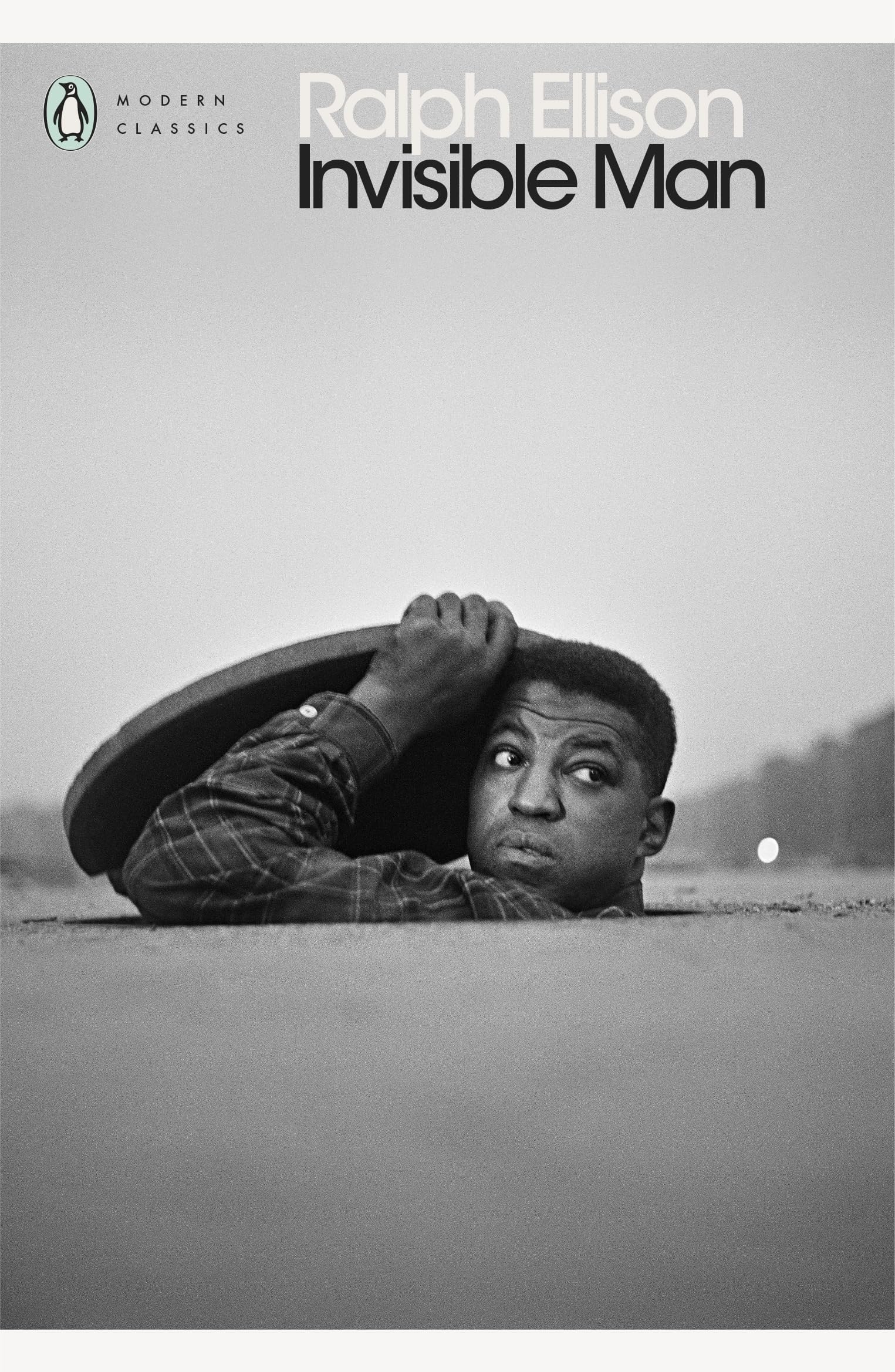
Invisible Man (Penguin Modern Classics)
Product ID: 50422960
Desertcart purchases this item on your behalf and handles shipping, customs, and support to Uruguay.
Buy Invisible Man (Penguin Modern Classics) 1 by Ellison, Ralph, Callahan, John (ISBN: 9780141184425) from desertcart's Book Store. Everyday low prices and free delivery on eligible orders. Review: Black humour - This belongs up there with Boccaccio, Rabelais, Cervantes and yes Chaucer. It is an absolute romp through black America, as if someone had asked the author to tell them about what it meant to be black and he'd said to them and to himself "I'LL show you...' And in the showing there is a great reserve of humour though as with The Sellout one could never be sure of the intention of humour, as though it were an unconscious product of the skin colour interface. Yet in the end it is common humanity in an existential quandary that comes to the fore, or rather takes a back seat. On the way we are treated to various religious, political and downright tragic scenarios and strategies for each of which the orator in Ellison has a rip roaring speech. Great stuff! Review: A Literary Dream - Invisible Man is Ralph Ellison’s 1952 novel about a young black man, who gets thrown out of university for accidentally offending a wealthy patron. He then tries to make a life for himself in New York. This is a literary novel, and I sometimes found it irritating that symbolism seemed more important than a sense of reality. However, a few lines early on in the book sum up how I’ve come to feel about Invisible Man: “People talk of metaphorical significance of this or that scene. Seems like a puzzle or a children’s game. But a dream sometimes tells us things in the shape of metaphor, and this is no children’s game. This is real and serious.” When I wake up from a dream, I do not review it for realism, and give it a low star rating if the content of the dream has been one of personal symbolism rather than a realistic story. People who have studied dreams - Carl Jung for example - emphasise their strange, metaphorical nature. Dreams deal in the pictorial and the figurative. They reach into areas of taboo, with which the waking mind does not feel comfortable. Invisible Man often inhabits this sort of realm. A number of scenes have the dreamy power of exploring taboo – the famous one at the beginning of the book involving a sharecropper’s family, for example. There’s another telling passage towards the end, where a woman shares with the unnamed narrator a fantasy that she could not think of sharing with anyone in the normal run of life. Then almost as the book closes, the narrator actually has a dream that reproduces images from his waking life. The images are wild and chaotic, but strangely are not clearly the result of a dream until the narrator wakes up. So that’s how I see the book, as a kind of literary dream reaching into all the dark areas of life that waking minds would rather leave alone. I don’t think it always works. Sometimes the novel seems disjointed because it is disjointed, and not because it is reproducing the fragmented nature of a dream. Nevertheless, the book is remarkable, perhaps more in the thinking about it afterwards rather than in the reading of it. Dreams themselves are rather like that. I would give Invisible Man a three for the experience of reading the book, five for the thinking about it afterwards.


| Best Sellers Rank | 15,132 in Books ( See Top 100 in Books ) 282 in Fiction Classics (Books) 1,379 in Literary Fiction (Books) 2,495 in Contemporary Fiction (Books) |
| Customer reviews | 4.3 4.3 out of 5 stars (8,110) |
| Dimensions | 12.9 x 2.5 x 19.8 cm |
| Edition | 1st |
| ISBN-10 | 0141184426 |
| ISBN-13 | 978-0141184425 |
| Item weight | 416 g |
| Language | English |
| Part of series | Modern Library 100 Best Novels |
| Print length | 608 pages |
| Publication date | 2 Aug. 2001 |
| Publisher | Penguin Classics |
K**R
Black humour
This belongs up there with Boccaccio, Rabelais, Cervantes and yes Chaucer. It is an absolute romp through black America, as if someone had asked the author to tell them about what it meant to be black and he'd said to them and to himself "I'LL show you...' And in the showing there is a great reserve of humour though as with The Sellout one could never be sure of the intention of humour, as though it were an unconscious product of the skin colour interface. Yet in the end it is common humanity in an existential quandary that comes to the fore, or rather takes a back seat. On the way we are treated to various religious, political and downright tragic scenarios and strategies for each of which the orator in Ellison has a rip roaring speech. Great stuff!
M**S
A Literary Dream
Invisible Man is Ralph Ellison’s 1952 novel about a young black man, who gets thrown out of university for accidentally offending a wealthy patron. He then tries to make a life for himself in New York. This is a literary novel, and I sometimes found it irritating that symbolism seemed more important than a sense of reality. However, a few lines early on in the book sum up how I’ve come to feel about Invisible Man: “People talk of metaphorical significance of this or that scene. Seems like a puzzle or a children’s game. But a dream sometimes tells us things in the shape of metaphor, and this is no children’s game. This is real and serious.” When I wake up from a dream, I do not review it for realism, and give it a low star rating if the content of the dream has been one of personal symbolism rather than a realistic story. People who have studied dreams - Carl Jung for example - emphasise their strange, metaphorical nature. Dreams deal in the pictorial and the figurative. They reach into areas of taboo, with which the waking mind does not feel comfortable. Invisible Man often inhabits this sort of realm. A number of scenes have the dreamy power of exploring taboo – the famous one at the beginning of the book involving a sharecropper’s family, for example. There’s another telling passage towards the end, where a woman shares with the unnamed narrator a fantasy that she could not think of sharing with anyone in the normal run of life. Then almost as the book closes, the narrator actually has a dream that reproduces images from his waking life. The images are wild and chaotic, but strangely are not clearly the result of a dream until the narrator wakes up. So that’s how I see the book, as a kind of literary dream reaching into all the dark areas of life that waking minds would rather leave alone. I don’t think it always works. Sometimes the novel seems disjointed because it is disjointed, and not because it is reproducing the fragmented nature of a dream. Nevertheless, the book is remarkable, perhaps more in the thinking about it afterwards rather than in the reading of it. Dreams themselves are rather like that. I would give Invisible Man a three for the experience of reading the book, five for the thinking about it afterwards.
I**A
Good Condition
The book arrived and I have no issues - lovely quality and great value too.
R**N
Difficult but compelling read
A really powerful book about race in America in the 1950s. Strong themes of the trickster make this a compelling read, though it does drag on at times. Worth reading as a snapshot of history and historical literature - don't expect it to be easy though.
Z**P
One of my favourite books
One of those books you have to read - it is outstanding. I have a very broad taste in litterature and I have enjoyed reading books such as "Twilight" as well as "Madame Bovary". This book has everything, an amazing story, philosophy, history and, such to top it all of, it is well written.
A**.
When I discover who I am, I'll be free.
"Invisible man" can be described as a "layer book", that is, a book with many layers of meaning. At a first and simpler level, it's the story of an unnamed 20 year-old black boy expelled from his college in the South and forced to find his way in the North, in a period when the difference between these two areas of the States was extremely tangible (and sometimes shocking) for coloured people. At a deeper and metaphorical level, it's a journey from illusion to disillusion, from boyhood to adulthood, from innocence to consciousness. It's not a simple book at all, almost hallucinative in some part, and I suppose that, according to your culture and previuos readings, you can be able to find out many more levels of interpretations than the ones I found. But it's definetely an intriguing reading, never predictable, and with a few ideas which are universally shareable.
B**C
Excellent and still relevant writing
Excellent and still relevant writing about the issues faced by the African Americans in the US. Though the period in the book refers to the early 20th century, it still seems relevant today. This book (and the writer) was referenced by James Baldwin a few times.
D**N
... me and it will be forever one of my favourite ones. The concept of invisibility is one that ...
This book is was an absolute classic for me and it will be forever one of my favourite ones. The concept of invisibility is one that speaks volumes to me- in this age of narcissistic self-centred personalities, who are not concerned with knowing one's world-view or what defines an individual. I cannot even begin to explain the depths of this book. Ideally, the best thing will always be to read it and to make their own conclusions. For me, this book is a 5/5.
E**O
Um ótimo livro, trás uma perspectiva diferente das lutas pelos direitos.
L**E
Nice cover, good material
J**N
I just reread this novel, not having touched it since 1994, and was once again impressed at Ellison's abilities as a storyteller, an observer, a thinker, and a prose stylist. I found myself (as I did 20 years ago and in the 1970s when I first read it) stopping frequently to reflect, to retrace my thoughts, and to think hard about all the things this book is about. In short, this is a serious novel for serious readers. While clearly this is a novel about race and identity, it transcends those two very common themes in American literature. It challenges both the racial politics prevailing in the American South and the liberal politics (and Marxist politics) of the supposedly more enlightened North, exposing both to be merely implements of people (both black and white) who use them for personal power and gain. Among the many things I love about this novel is that it challenges the usual pattern of the Bildungsroman, the growth of the central character into some kind of disillusioned authenticity. The last chapter of Invisible Man, along with the epilogue, suggest that such a state of autonomy is a goal that always remains elusively ahead of us, receding into the distance as we try to close on it. And so the novel interrogates both the idea of racial identity and the Emersonian ideal of individuality (the two are often counterpoised in discussion of affirmative action, for instance, and the novel reveals how complicated and tangled both ideas are in practice). Ellison's prose can at times be difficult, but it is worth careful attention. Its rhythms are beautiful and at times hypnotizing, and his play with words and with myth -- arguably this is a rewritten Odyssey -- is always thought provoking. Moreover, while incorporating a number of character types -- Norton, Bledsoe, Emerson, Jack, Mary, Ras, and even Rinehart all represents kinds of people I know of -- each comes across as an idiosyncratic individual, each neatly developed through revealing specifics. This novel is obviously the product of both genius and master craftsmanship. The Vintage edition is very good -- for one thing, it includes the prologue and epilogue (I've learned that some editions, sadly, omit them). The quality of the paper and the binding hold up well; it's important to me that a book feel right in my hands and this one feels great. I'm surprised that neither the Library of America nor the Norton Critical Editions have produced editions of this work. It is worthy of either series, and much wider exposure. It is without question one of the most important American novels of the 20th century.
C**U
J'ai acheté ce livre pour mes cours en licence. La lecture était intéressante et l'édition est très correcte.
Y**.
Top
Trustpilot
1 week ago
3 weeks ago