
DOWNLOAD THE APP


Customer Services
Copyright © 2025 Desertcart Holdings Limited
DOWNLOAD THE APP
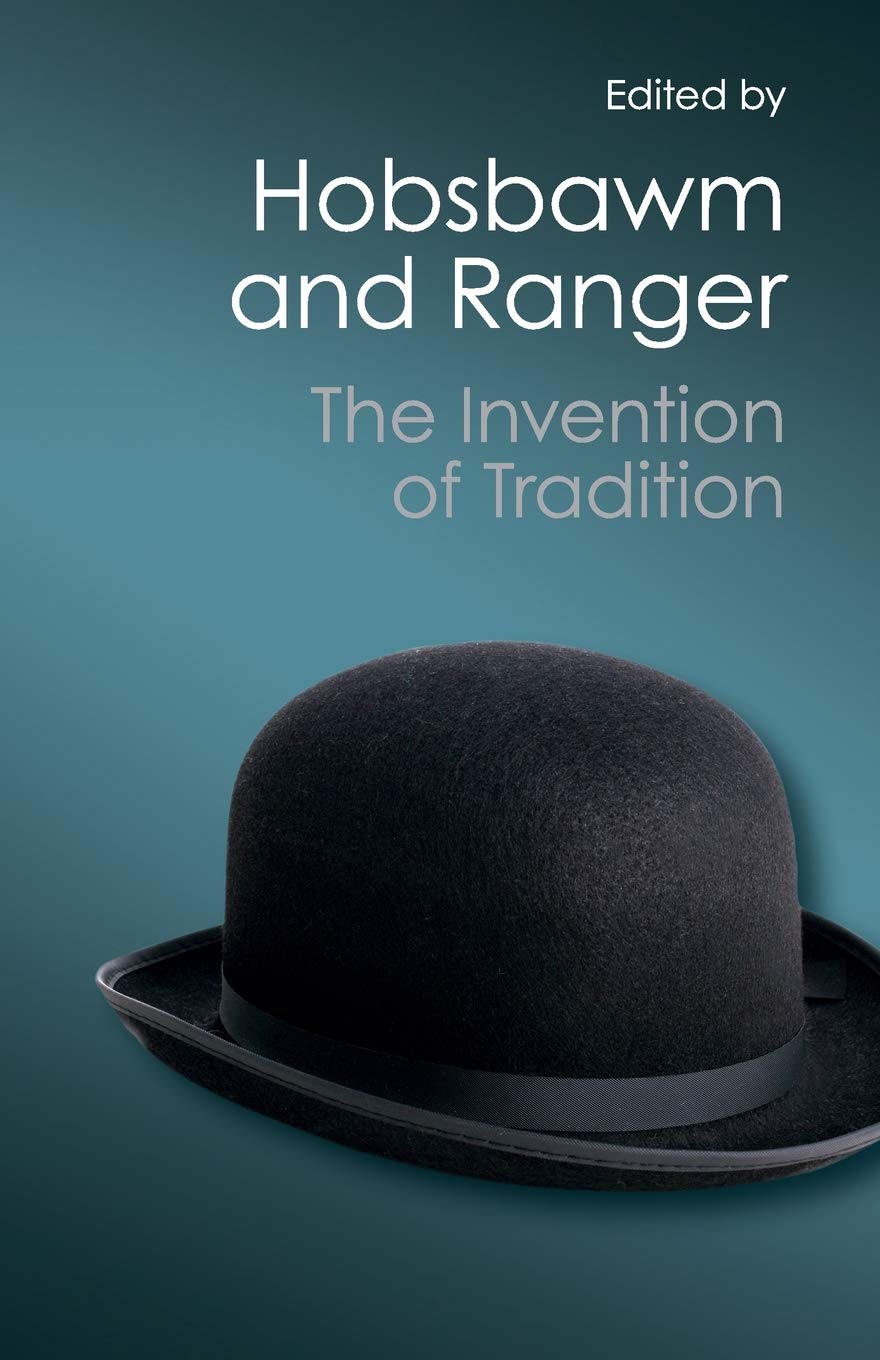
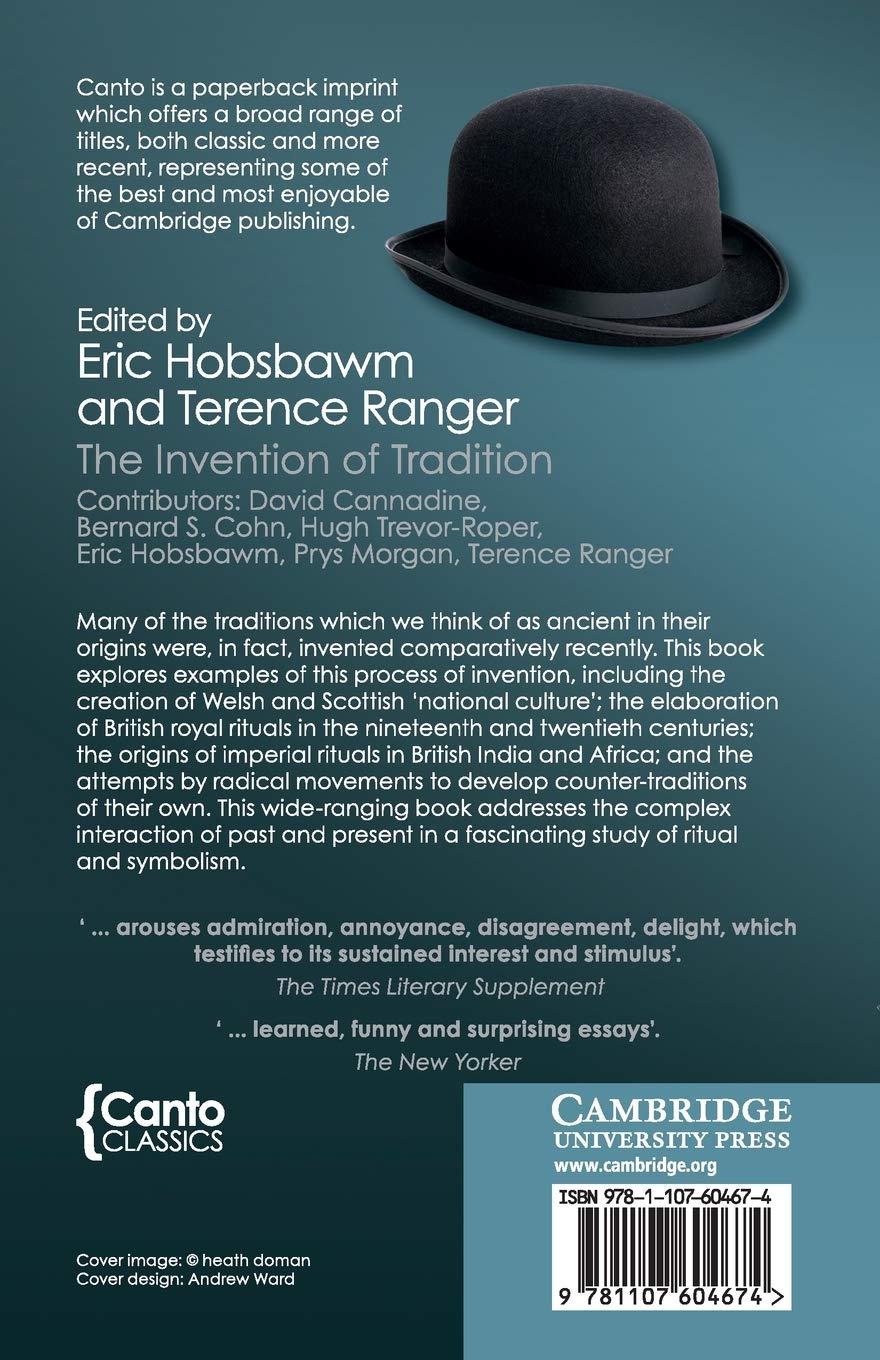
Review: An excellent Book of the highest academic standard and a must for all serious socio-political historians - I read this book while studying a post-grad course in history and had been looking for it for a while. The book is well written in a style that is easy to understand with the reader needing no previous knowledge of the subject. The authors describe how the cultural traditions that we assume have developed organically throughout the ages have in fact been reinvented, or in most cases invented, during the 19th century usually by the middleclass intelligentsia. It focuses on the cultural revivals that took place in Ireland and Wales and the origins of Scottish cultural traditions and how it was fabricated. The credentials of the authors, as historical and political writers, are beyond reproach and in this book they give a fascinating insight into how notions of national identity and culture are developed and manipulated and remind us how ethereal and subjective ideas of cultural nationalism are and how they are social and psychological constructs. One need only look at the development of the Ulster-Scots tradition in recent time to see the invention of tradition in action. The book reminds us that cultural nationalisms develop in opposition to each other and are socially divisive and can lead to more than just the simple, innocent pursuit of quaint regional customs, traditions and the differences in cultural idiosyncrasies. The book arrived on time and in very good condition. Review: Superb academic text. - Just what I needed for my dissertation.
| ASIN | 1107604672 |
| Best Sellers Rank | 126,895 in Books ( See Top 100 in Books ) 380 in Anthropology & Sociology Biographies 1,082 in Cultural Studies 1,437 in World History (Books) |
| Customer reviews | 4.5 4.5 out of 5 stars (175) |
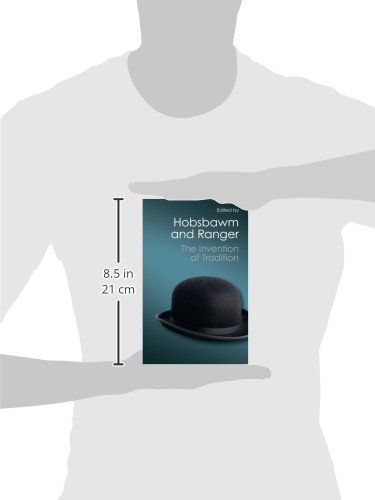
| Dimensions | 13.79 x 1.91 x 21.62 cm |
| Edition | Reissue |
| ISBN-10 | 9781107604674 |
| ISBN-13 | 978-1107604674 |
| Item weight | 454 g |
| Language | English |
| Print length | 330 pages |
| Publication date | 29 Mar. 2012 |
| Publisher | Cambridge University Press |
B**N
An excellent Book of the highest academic standard and a must for all serious socio-political historians
I read this book while studying a post-grad course in history and had been looking for it for a while. The book is well written in a style that is easy to understand with the reader needing no previous knowledge of the subject. The authors describe how the cultural traditions that we assume have developed organically throughout the ages have in fact been reinvented, or in most cases invented, during the 19th century usually by the middleclass intelligentsia. It focuses on the cultural revivals that took place in Ireland and Wales and the origins of Scottish cultural traditions and how it was fabricated. The credentials of the authors, as historical and political writers, are beyond reproach and in this book they give a fascinating insight into how notions of national identity and culture are developed and manipulated and remind us how ethereal and subjective ideas of cultural nationalism are and how they are social and psychological constructs. One need only look at the development of the Ulster-Scots tradition in recent time to see the invention of tradition in action. The book reminds us that cultural nationalisms develop in opposition to each other and are socially divisive and can lead to more than just the simple, innocent pursuit of quaint regional customs, traditions and the differences in cultural idiosyncrasies. The book arrived on time and in very good condition.
A**T
Superb academic text.
Just what I needed for my dissertation.
S**L
Very wordy
Found it very dry and wordy. The factual information is interesting, but had to read a lot of padding to get to the point. Needless to say, I only read the parts I really needed and probably won’t be reading the whole of it, which is a shame because I am interested in the subject matter.
A**R
Five Stars
Taught me a tremendous lesson about our history.
R**E
Everything you know about history is all made-up
Really enjoying this demolition of silly nationalist ideas. Are we so easily manipulated? Looks like we are! Meanwhile, we can blame English antiquaries for "Scottish" bagpipe "music".
A**Y
I don't believe a word of it but a very good read!
An extremely interesting book. I don't believe a word of it but a very good read!
J**N
Fascinating subject, uneven quality
The re-issue in paperback by a general publisher of an academic work originally from the CUP is a rare event. But even the original edition cast a sidelong eye at the general public, who might be willing to bear with academic minutiae for the sake of its astonishing revelations (to all but professional historians) on a subject they thought they knew about. If you're going to write an academic work, footnotes and all, for the "educated layman", you'd better be a good writer, lively and stylish, as well as a good academic. From that point of view, the essays in this collection are very uneven, ranging from the occasionally tongue-in-cheek polish of Hugh Trevor-Roper (on the invention of the Highland Tradition in Scotland) to the convoluted and occasionally asyntactic sentences of Prys Morgan (on "the hunt for the Welsh past"). The one invites you on an enthralling voyage of discovery, the other requires you to wade through a viscous Sargasso Sea. Nonetheless, both journeys are well worth undertaking, as are the others in the collection. But perhaps the most valuable aspect of the book is that it encourages us to reflect in general, quite aside from the specific examples studied, on the human need for a link to the past and evidence of superiority, if not now, then at least in a prior Golden Age. If human communities divide the world into "them" and "us", how do they define who "we" are? And what makes "us" special? On the lines of Voltaire's famous comment that "if God did not exist, it would be necessary to invent him." we are forced to the conclusion that if a national history and culture do not exist, it is necessary to invent them. (A process traced also by Y. Nevo and myself in our study of the early history of the Umayyad State). It appears that the need to define one's community as valid -- by reference to an historic past -- is most acute when that community is only just established or is in decline. The lessons of this book should be kept in mind when reading the history of any nation.
J**S
Five Stars
Extremely interesting and passionately explained
V**O
Trattasi di un'opera miscellanea con contributi di studiosi diversi che rivela come tradizioni ritenute antiche e autentiche siano in realtà costruzioni relativamente recenti e aventi finalità ben precise, p.es. commerciali. Un libro che rende il ns. sguardo più avvertito e smaliziato. Esiste la traduzione italiana.
A**S
The Invention of Tradition is a classic in Marxist-Critical scholarship, though it does contain some of its pernicious tendencies. First, the positives. The opening two chapters are an ingenious unraveling of the stereotypes associated with Scotland and Wales. Historically, the Highlands of Scotland are shown to be derivative of Irish civilization. The bagpipes and kilt are proven to be no more than commercial artifacts of the 18th century. But then the book suffers a bit in its arguments. The ornately done coronation of the English monarchy is shown to be more elegant than its predecessors—thanks to technology and resources—but it’s a stretch to call this invented. While the bagpipes were foisted on unsuspecting Scotsmen as their national instrument instead of the historical harp, monarchical traditions that date back to the Middle Ages but are now on TV for mass consumption isn’t invented tradition in the same sense. As you can see, the book centers almost exclusively on Britain which is where I see the Marxist liability. It seems like the authors want to use the fact that many “hoary old” traditions date only to the nineteenth century to undermine every element of British culture. Nationalities are hokum, the monarchy is silly at best and public schools (American private schools) are the result of the imperial past. In all, it seems like the collected authors are dissatisfied with the props the capitalist/liberal state relies on for stability. It’s not that the criticism is all off-based, it’s that there’s a lot of good in the liberal/capitalist order that I, for one, would be loathe to lose sight of. So while this is some of the finest scholarship of modern Marxist historians, I can’t help but feel that its theme has an underlying pernicious effect. But, by all means, read it for yourself and see whether you agree that its authors are pushing for more than the mere recognition that democratic states also have myths/stories that bend or distort history.
E**R
Ex library but nice condition, hardback, wonderful articles of prominent historians
F**O
10
P**.
The Invention of Tradition: c’est bien le livre que j’ai donné à lire et étudier à mes étudiants et étudiantes à l’Université de Lisbonne pour bien connaître et comprendre la naissance des traditions dans le quadre des nations européennes du XIXème siècle à nos jours et leur influence sur notre éducation et la vie culturelle de l’Europe.
Trustpilot
3 weeks ago
1 month ago